10 Films That Prove Disability Doesn't Hold You Back

Hollywood isn't all immaculate starlets and manicured features round every corner, instead the real success stories take another form entirely.

As a disabled person, I can tell you reader, that the able-body is a wondrous thing. What anybody with physical or mental impairment would give for full-function; to shrug off the shackles we were born with though, I couldn't say. An even more incredible phenomenon is the human spirit. It is an element within us all, regardless of our biological stature. It is a piece of the human fabric uniting us all as one. The heart does not take into account whether a person is ill or different. It does not matter what race or creed a person identifies with, or their sexual preference. The human spirit looks beyond the obstacles disabled individuals face and casts them aside, proving that disability is nothing more than a word. In the run-up to the Academy Awards, amidst the furore of summer blockbusters, film fans often preoccupy themselves with movies deemed the best or most entertaining. With the Oscars only a couple of weeks away, it is forgivable to get caught up in the whirlwind debate present in the cinema forum. Films like 12 Years a Slave and Dallas Buyers Club expose the atrocities of slavery and FDA shortcomings, while Nebraska and Philomena cast an inquisitive eye at the lives of an older generation. This is not an article deposing their importance, rather an ode to a collection of films bearing equal significance. McQueen's masterpiece is the film on the world's lips, but today we take a step away from the buzz and focus on pictures tackling disability with similar provocation and authority.

10. Ray (2004)

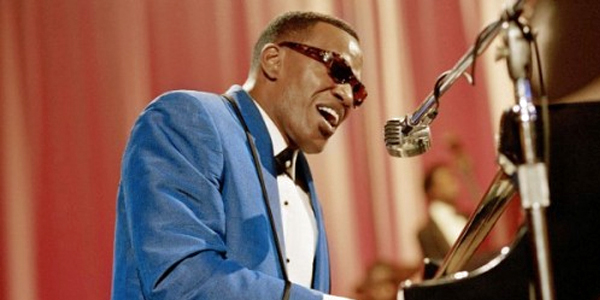
Kicking off the list is the true story of American soul legend, Ray Charles. The film traces the path he took from a humble Southern upbringing, his blindness at the age of seven and the rise to almost mythical status in the Fifties and Sixties. Portrayed by an Oscar-winning Jamie Foxx, Ray is a riveting example of the life you can lead regardless of disability. Taylor Hackford captures the essence of a life with physical impairment in a number of key scenes; in the sense that it doesn't inhibit on a person's life as much as it provides that little bit extra to their personality. For Ray, the only moments of discomfort or uncertainty due to blindness are the beginning steps as a child, but he learns quickly - in no small thanks to his mother's insistence - that he must be independent. Instead the film shifts the focus to his ascension to the top of the music charts and his personal troubles with drugs and adultery. If he has any troubles, the inability to see is not one of them. The film also targets civil rights troubles rife at the time with Ray refusing to play to a segregated audience. This act, along with his unique way of using his shoes to detect doors and touching a woman's wrists to judge her beauty, are just a few details that form Ray Charles as a man touched by disability but gifted a superhuman talent.

9. Men Of Honor (2000)

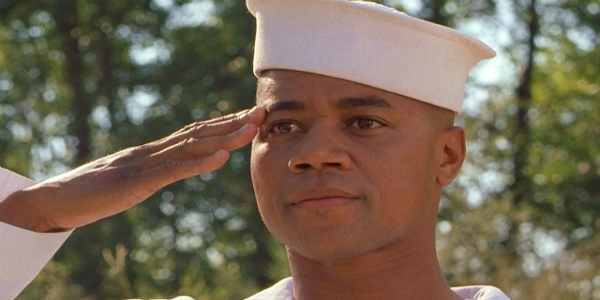
Men of Honor is the true story of Carl Brashear, the first African American Navy Diver, and it deals a double-blow to both disability and racist attitudes - the latter taking the forefront in terms of narrative structure. Cuba Gooding Jr. has always been a likeable actor, and he continues in the same vein in Men of Honor. Robert De Niro stars alongside as Leslie Sunday, Brashear's diving trainer, who is determined to see the protagonist fall flat on his face and out of the Navy. The tale is one of racial intolerance and the growing relationship between these two adversaries. De Niro is relentless as Sunday and tireless in his pursuit of Brashear's career. He is hateful and ignorant, with a chip the size of Texas on his shoulder. However their previously tense relationship is pieced together and solidified following an accident aboard a ship that cost Brashear his leg. Despite loss of limb, he continues to fight for his dream of a career in the Navy - culminating in him stepping inside a 290lb diving suit and walking ten steps with an artificial leg. The result is a grandiose finale of a flawed film, emphasising the will to succeed overcoming the limitations of the human body. Men of Honor may not have been as thrilling or centred on the issue as much as other films on this list, but the time it spends on disability is as poignant as you will see. It may be cheesy but the story is a testament to the physically-disabled out there willing to do well; no matter the affliction.

8. The King's Speech (2010)

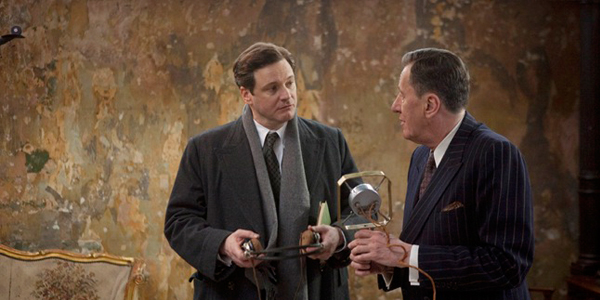
Colin Firth faced a considerable amount of competition the year he won the Oscar for The King's Speech. Jesse Eisenberg and James Franco stated their claims with The Social Network and 127 Hours, and Javier Bardem was wonderful in Biutiful, yet it may have been Firth's ability to manipulate the audience into believing his stammer was authentic that won him the award. The King's Speech is a very human film for one centred around the Royal Family - well, why wouldn't it be? They are human after all, but that is what it does to great effect. Tom Hooper presents King George VI in a relatable way; speech impediment on show for all to see. His fear and anger is evident throughout, even explosive at times. Life with a disability is never easy, and the notion that you are different to others is always on the mind. This is something the film captures well, and it is an idea that transcends all forms of impairment. Bertie, as he is affectionately known by his family, is embarrassed by his disability and understandably so, but with the help of his speech therapist, Lionel (performed to perfect by a wonderful Geoffrey Rush), he overcomes his problem, ascends to the throne and delivers a broadcast to the nation in a wonderful, lyrical segment of filmmaking.

7. The Sea Inside (2004)

The Sea Inside is Alejandro AmenĂ¡bar's follow up to atmospheric chiller, The Others. Like the previous film, The Sea Inside is delicate and careful-handed in its approach to the subject matter, blanketing it in meticulously-crafted emotion and depth. It tells the tale of Ramon Sampedro (Javier Bardem), a quadriplegic who seeks to end his life following a diving accident. It seems an almost impossible reality for somebody to want to end their own life; but the film is excellent in its ability to position viewers in the centre of the debate. Bardem is on top of his game here in a role that would be difficult for the highest-skilled of actors. He is trapped in his body; imprisoned in his biological shell. His every need is attended to by his devoted family; and he serves as the poster child for a human rights group seeking to change the laws in Spain surrounding euthanasia. You may question how this shows disability doesn't hold Sampedro back. The answer is mature and nearly inconceivable unless a person is placed in the same circumstances. He wasn't always paralysed, instead an experienced traveller and a ladies man as the film depicts. Sampedro overcomes the tragedy by campaigning for the right to end his life, with his body is 'already dead' and is nothing more than a hinderance. His right to choose to die is the one thing he has left, and by doing so, he conquers a disability that would entomb him until his demise in his own way. It is a subtle victory, but The Sea Inside analyses the effect the situation has on everybody involved. The film may not show a triumph of the human body, but it depicts the triumph of the human spirit beautifully.

6. Mask (1985)

What Mask does better than any film on this list is focus on disability in teenage years. The teens are a time when people discover sex and become obsessed with their image. For Rocky Dennis this obsession could have easily been one the weighed heavy on his shoulders. Born with a massive facial deformity, he was always going to stick out in the class photo. However, the film focuses on the trials and tribulations of school and teenage life, rather than dwell on the fact that Rocky is different. In some ways he is, but those are to do with his infectious personality. Eric Stoltz takes the character through very relatable circumstances such as falling in love and making friends. He is loved at home by his mother (Cher) and her biker-gang friends (Sam Elliott among others) take him on as one of their own. Though the film ends in Rocky's death, it is a celebration of his life as well as everybody's life. Life can be a beautiful journey filled with fond memories if you take it the right way - just like the protagonist does here. He gets along in life as a popular and friendly individual, regardless of his physical deformity. Add to that a killer soundtrack by Bob Seger (and Bruce Springsteen in the re-release) and you have a heart-warming tale of what it takes to fit in and be a teenager.

5. Born On The Fourth Of July (1989)

The first Tom Cruise film to appear on the list and by no means the last, Born on the Fourth of July, is a searing biopic of Ron Kovic. He was paralysed fighting in Vietnam and turned to protesting against the war and for human rights. When people think of great Tom Cruise performances, they think of films like Jerry Maguire, Minority Report and Interview with the Vampire. However this is the one that showcases his talents to their full extent. Kovic starts out an idealistic teen with his whole life ahead of him; idolising the troops and basking in a misplaced patriotism. His world comes to a screeching halt when he is wounded and rendered quadriplegic. Oliver Stone shows the viewer Kovic's ordeal in the filth of a military hospital and life back home following his discharge from duty. He is left a broken man, physically and mentally; terrified of cracks and bangs, cursing his immobility, his inability to have sex, and the betrayal he feels his country has dealt him. To this day, Kovic is still an activist for the cause, and this is where the film relates to the article. He could have sat and wallowed in his grief but he has become a key figure in the fight for pacifism (an oxymoron indeed). Born on the Fourth of July follows him through all emotions, from the lows to the highs, as well as analysing other quadriplegics like Willem Dafoe's character; a veteran who took his disability in a different direction: "F**k Nixon, f**k 'em all!" he says, hiding down in Mexico, drowning his sorrows in booze and women. Disability can be a nightmare, the film seems to philosophise, but you'd be damned if you didn't go out and do something with your life anyway. Kudos to Oliver Stone for that at least.

4. I Am Sam (2001)

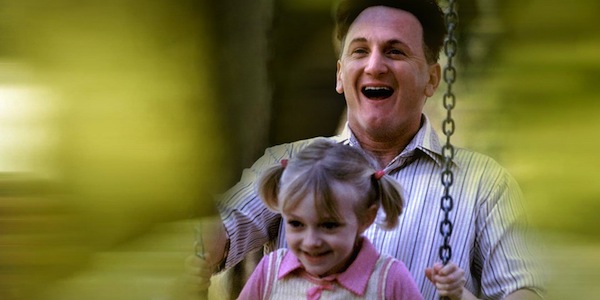
Sean Penn has made quite a name for himself as the go-to guy if you need somebody to knock a performance out of the park. Forget what Robert Downey Jr. quips in Tropic Thunder about going home empty-handed from the Oscars, Penn's role here is one that only a select few could emulate. It is a character unlike you have ever seen before from the Hollywood powerhouse, but it is his most endearing to date. He stars as Sam, a remedial man fighting for the custody of his seven year old daughter, Lucy (Dakota Fanning). It would be fair to say that Penn loses himself as Sam as he has done across his entire body of work. The film is unflinching in its portrayal of the protagonist. His daughter surpasses his age mentally, which is brought up a couple of times to be used against him in court. The limitations of his mental capacity are exposed in stressful situations; at work and at home. Sam is thrown into life as a single-parent when the mother refuses parental responsibility; a task any man would find difficult, let alone somebody with Sam's impairment. The key word here is love, and that is all Sam has for his daughter. He loves her with all his heart, and despite his disability, he fights to prove himself a worthy father in the eyes of judicial system and social services, all while fending off pushy foster parent Randy (Laura Dern). With his lawyer's (Michelle Pfeiffer) help, Sam enters courtroom proceedings that judge his competence as a father and where Lucy would be better off living. I Am Sam makes the audience question the law and its capacity to judge what is right. When a parent can love a child as much as Sam loves his, how can anybody seek to take that away? The legal implications of Sam and Lucy's relationship and her well-meaning are resolutely discussed in the film, and director Jessie Nelson presents both sides of the argument with aplomb, but Sean Penn's Sam represents a father with qualities that should be the core of any parent-child relationship, forcing us to look into ourselves for them. In this regard, the disability raises Sam to something we can only hope to be.

3. Rain Man (1988)

Dustin Hoffman gives one of the all-time great cinema performances as Raymond Babbitt in Barry Levinson's Rain Man; the cross-country drama about two brothers and the mental disability of autism. Tom Cruise crops up on the list again as Raymond's brother Charlie, who takes offence his father has left his fortune to his disabled brother and embarks on a trip to Las Vegas in a sort of blackmail-type deal. Along the way, Charlie experiences the true nature of his sibling's condition, and what was an original act of defiance and greed turns into a journey of self-discovery to find the true-meaning of brotherhood. Raymond's disability is severe, there is no other way to put it. He finds social interactions difficult and his routine must be adhered to strictly otherwise he becomes distressed. Autism also presents him with an incredible talent for numbers (not money however). He can count how many toothpicks have fallen out of a box in a matter of seconds (246 to be exact), and a trip to a Las Vegas casino ends as a very profitable venture for Raymond and Charlie. You could say his autism is exploited in this sense, but it also proves that disability can provide gifts beyond recognition. Charlie learns so much about his brother (how he saved him from being burned as a child) on their journey together. His brain is flawed but beautiful, something to be admired and respected, not pitied. Autism may appear debilitating at first, but Levinson's light comic moments and interactions show Ray to be a magical human being.

2. Forrest Gump (1994)

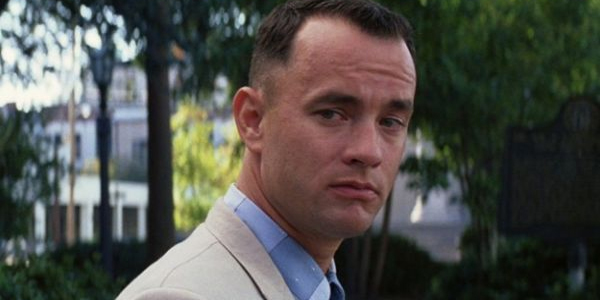
I almost put this at number one, trust me, it was close. Forrest Gump is a film that everybody has seen, and if they haven't seen it, they should do. Featuring Tom Hanks as the titular protagonist in what is a career-defining role, Robert Zemeckis' film follows a mentally disabled southern boy as he accidentally maps out the significant events of 20th century American history. From Vietnam to Watergate, Forrest has a hand in all of it - and doesn't even recognise the magnitude of his achievements. He defies racism and class boundaries by doing nothing but be himself. He is loveable and charming and obedient, acting without question and with the utmost regard for his peers. He equates the world and obstacles through the wise words of his "Mama" (Sally Field), and journeys through life searching for lost-love with his childhood friend, Jenny (Robin Wright). We all wish we could be Forrest Gump in some way or another. He doesn't judge and he doesn't hate. His simplistic view of the world should be admired, as it paints a beautiful picture of what life can be. When there is so much fighting and killing, we should try and be a bit more like Forrest and save those who need saving, in every sense of the term. Forrest literally leads people in his way of life during the final third of the film, and we should continue to follow in his example. It will continue to inspire us as a race and lead us to lighter times ahead. The film goes to show although we may just be a feather on a breeze, flying by for a split-second, we have the capacity to do good - and should do at every chance.

1. My Left Foot (1989)

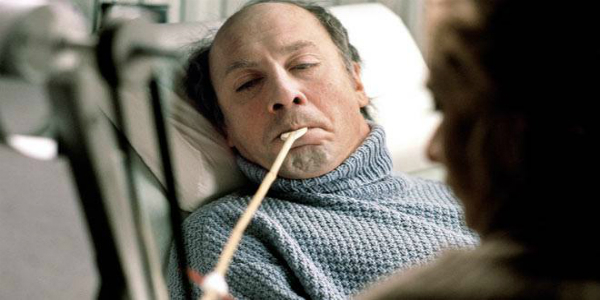
Daniel Day-Lewis' performance in My Left Foot could have gone one of two ways. If he was a lesser actor, it would have come off as offensive and unbelievable. It just so happens that he's one of the greatest actors to ever set foot in front of a camera. His portrayal of Christy Brown is unrivaled in its physical immersion into the role. It is the true story of an Irishman with cerebral palsy who learnt to use his only controllable limb - his left foot - to great effect. He managed to become a painter and writer, and some would say a cantankerous philosopher; "F**k Plato!" he rages in one scene. He is a brilliant mind trapped in a body that does not work as he wants it to, but does it stop him? No, it doesn't. He defies his physical shell and uses what he does have to make his way in life. Despite his condition, he is a hopeless romantic, charming a few girls with his skills, but this is as equally heartbreaking as it is heartwarming. His mother (a wonderful Brenda Fricker) tirelessly looks after Christy and the whole family, struggling to pay the bills and keep their home. The acting between the two leads is poignant and emotional, plunging the depths of human relationships, disregarding his disease for those scenes. He may not have had the rest of his body, but Christy Brown still managed to become a successful writer and talented painter in the face of adversity. He is critical of the world and resentful of the hand he was dealt at birth, but he does not let it weigh him down - he trudges on as a shining example of what it means to achieve the impossible. What do you think? Are there films we've missed out on the list? Do you have any opinion on the representation of disability in these films? Let us know in the comments below.

 
Posted On: 
Contributor
Contributor

I love all things imaginative, from the page to the screen, and nurture a soft spot for Donald Sutherland and Daniel Bryan.