10 Films That Prove Disability Doesn't Hold You Back
4. I Am Sam (2001)
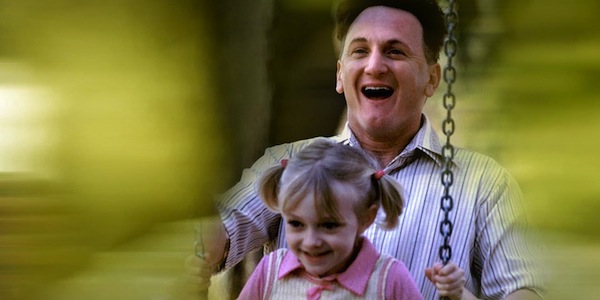
Sean Penn has made quite a name for himself as the go-to guy if you need somebody to knock a performance out of the park. Forget what Robert Downey Jr. quips in Tropic Thunder about going home empty-handed from the Oscars, Penn's role here is one that only a select few could emulate. It is a character unlike you have ever seen before from the Hollywood powerhouse, but it is his most endearing to date. He stars as Sam, a remedial man fighting for the custody of his seven year old daughter, Lucy (Dakota Fanning). It would be fair to say that Penn loses himself as Sam as he has done across his entire body of work. The film is unflinching in its portrayal of the protagonist. His daughter surpasses his age mentally, which is brought up a couple of times to be used against him in court. The limitations of his mental capacity are exposed in stressful situations; at work and at home. Sam is thrown into life as a single-parent when the mother refuses parental responsibility; a task any man would find difficult, let alone somebody with Sam's impairment. The key word here is love, and that is all Sam has for his daughter. He loves her with all his heart, and despite his disability, he fights to prove himself a worthy father in the eyes of judicial system and social services, all while fending off pushy foster parent Randy (Laura Dern). With his lawyer's (Michelle Pfeiffer) help, Sam enters courtroom proceedings that judge his competence as a father and where Lucy would be better off living. I Am Sam makes the audience question the law and its capacity to judge what is right. When a parent can love a child as much as Sam loves his, how can anybody seek to take that away? The legal implications of Sam and Lucy's relationship and her well-meaning are resolutely discussed in the film, and director Jessie Nelson presents both sides of the argument with aplomb, but Sean Penn's Sam represents a father with qualities that should be the core of any parent-child relationship, forcing us to look into ourselves for them. In this regard, the disability raises Sam to something we can only hope to be.