10 Films That Were Secretly Remade

What do Pamela Anderson and Humphrey Bogart have in common?
Hollywood has an unhealthy addiction to remakes, and it could very well be the death of them. The big studios didn't used to be quite so brazen in their endless recycling of old ideas and expansions of lucrative franchises, mind. Nowadays we're used to, say, the news that King Kong is going to be remade for a fourth time, not five years after Peter Jackson helmed his own three-hour epic rendition of the big dumb monkey film. What's the point in hiding it? They know people will go and see it. Audiences are loyal to their brands, characters, and recognisable trademarks. It was a long time before tinsel town realised people were so receptive to obvious redos of previous movies, however. They used to try and hide it. They used to go to great lengths to conceal their remakes, back in the day. Actually, there's even some recent examples of films which were blatantly exactly the same as existing movies - same characters, same premise, same plot - but which Hollywood tried to dress up as something else. They'll shift the setting to somewhere different, switch up the cast, even change things over to a completely different genre. And we're not just talking, like, Jumanji the animal-based magical board game becoming Zathura, the space-based magical board game. We mean real, honest-to-goodness stealth recyclings of old ideas dressed up as something wholly new. Films you won't believe they got away with pretending they were original or unique. Films that are either respectful homages, total rip-offs or weirdly similar, depending on your point of view. There are ten films that were secretly remade.

10. Edge Of Tomorrow Is Groundhog Day
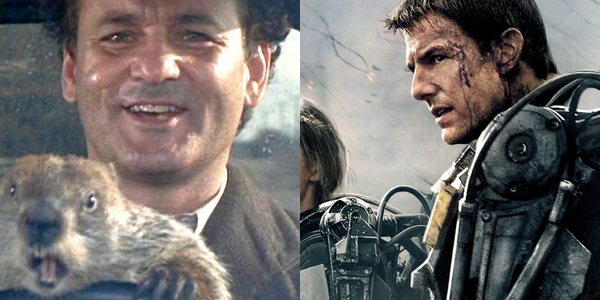
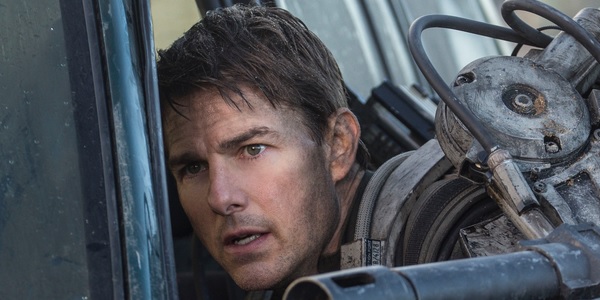
Groundhog Day is a stone-cold comedy classic, the singular achievement which was heralded above all others when director Harold Ramis sadly passed away earlier this year, and undoubtedly the greatest achievement of Bill Murray's career. Probably Andie Macdowell's, too, but we pay a lot less close attention to her's. The performances are all dead-on (shout out to Stephen Tobolowsky!), there's countless iconic lines of dialogue, and the tone is just right. Right at the core of all that, however, is the real reason Groundhog Day has become some firmly lodged in the film-watching populace's consciousness: it's that irrepressibly ingenious premise, the idea of a man trapped reliving the same day over and over again, until he gets it "right". Ramis said he was inspired by Buddhist conceptions of reincarnation, and originally the film had a much darker tone, with Murray's desperate weather reporter repeatedly committing suicide in various gruesome ways, hoping to escape the waking nightmare of his neverending day in Punxsutawney, Pennsylvania. Now imagine that same premise, with a similar amount of death, albeit transposed to a summer sci-fi blockbuster template, rather than a Bill Murray rom-com. Congratulations, you just pitched Edge Of Tomorrow, this year's big comeback film for Tom Cruise which was surprisingly great! The poster boy for Scientology got roped into gunning down alien invaders over and over again, until he managed not to get squished by them, with a similar dark vein of humour to Groundhog Day. Technically we guess the rip-off happened with the Japanese novel it was based on, All You Need Is Kill, but whatevs.

9. The Big Lebowski Is The Big Sleep

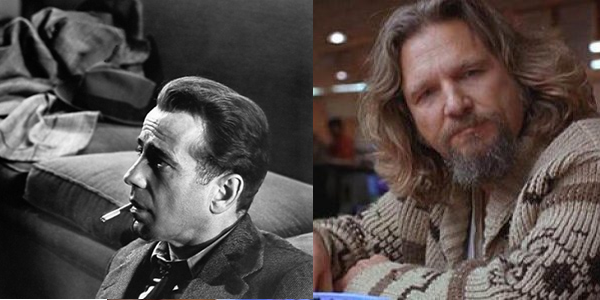
A classic of forties Hollywood film noir, The Big Sleep had the dream team of Howard Hawks directing, from a Raymond Chandler novel, with Humphrey Bogart playing the famous detective Philip Marlowe alongside Lauren Bacall as femme fatale Vivian Rutledge, and a script penned by William Faulkner, Leigh Brackett, and Jules Furthman. Not bad, huh? Hired to help settle the gambling debts of a young woman by her rich father, it turns out that Marlowe's actually become entangled with a familial conspiracy involving the disappearance of a young man, blackmail and multiple murders. Roger Ebert described the film as being about the "process of a criminal investigation, not its results". The film isn't a traditional whodunit, and had such a convoluted plot that even the filmmakers couldn't figure it out, with neither the director nor the screenwriters knowing whether a certain character was murdered or had killed himself. Not even Chandler could enlighten them on that one. A purposefully messy crime story with a mostly innocent detective stumbling across a mystery much bigger than himself, hm. What if you swapped out Bogie's gumshoe for Jeff Bridges as a bowling stoner with a grudge against the Eagles? The Big Lebowski is a fairly obvious, unabashed homage to Raymond Chandler novels, but The Big Sleep specifically. The names are even similar! Beyond that, however, the complicated mystery plots - stuffed full with red herrings and dead ends - are pretty much identical, as are a lot of the major story beats. You can be forgiven for not noticing the similarities, however, since the convoluted story of Lebowski seems as much down to The Dude's pretty strict drug regimen, bowling commitments and insane group of friends mucking things up.

8. Last Man Standing Is Yojimbo

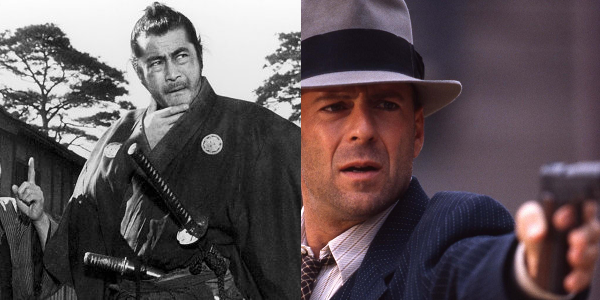
Hollywood bloody loved Akira Kurosawa. Not enough to ever fund any of his films - at least until the eighties, when he was getting on a bit and superfans George Lucas and Francis Ford Coppola co-produced his samurai epic Kagemusha - but they were rather fond of pinching his plots, taking all the Japanese people out of it and moving the setting for the Feudal East to the American West. Yojimbo is one of the most oft-pilfered stories in Kurosawa's filmography, and you can see what makes the basic concept so appealing to screenwriters. So much so that even the director himself changed his upcoming production Sanjuro to be more similar to it, slotting in Toshiro Mifune's ronin character for another appearance after his first was so successful. Like Groundhog Day, it's the simple premise of Yojimbo that is so enduring, and so easy to adapt to other settings. Mifune stars as the masterless, wandering samurai towards the end of the Edo Period, who comes upon a town ruled over by two rival criminal gangs. Enjoying a challenge and given offers by each party, he decides to play the two sides off against each other, his manipulations eventually freeing the town of the ne'er-do-well's control in the process. Funnily enough Kurosawa himself got the idea from a Dashiell Hammett novel from the same era and genre of The Big Sleep, but it's Yojimbo that is so often cited in stealth remakes. Such as, for example, Walter Hill's 1996 action film Last Man Standing, starring Bruce Willis. Simply exchange Mifune for Bruce Willis and Edo Period Japan for Prohibition-era Texas, and you've pretty much got this underrated film nailed. It's not got the best critical or commercial reputation, but seeing Bruce updating the classic Man With No Name story to a particularly volatile time in American history is a lot of fun - and whilst many didn't realise the similarities, it is a "credited" remake of Yojimbo. Whether that was actually mentioned in the credits, well...

7. A Fistfull Of Dollars Is Also Yojimbo
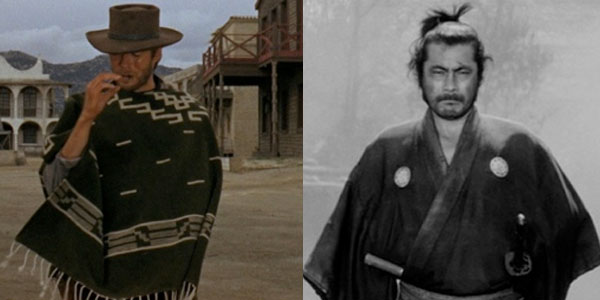
Oh yeah, speaking of Men With No Name, Yojimbo also served as the basic blueprint for the first Sergio Leone's Dollars Trilogy of spaghetti westerns. We say basic; A Fistful Of Dollars is even closer to Yojimbo than even Last Man Standing, or eighties sci-fi film The Warrior And The Sorceress, or that one episode of Samurai Jack. Rather disingenuously, the film was marketed with the tagline "This is the first film of its kind. It won't be the last," despite everyone who'd seen Yojimbo realising that the movie was effectively an unofficial and unlicensed remake of it. Kurosawa was one of those savvy folks, commenting that Leone had made "a fine movie, but it was MY movie" and consequently suing the Italian director. Leone ignored the said lawsuit, eventually being forced into settling out of court, reportedly for 15% of the worldwide receipts of A Fistful of Dollars and over $100,000. Yeesh. To be fair, the similarities are pretty hard to ignore: this time around, the wandering samurai is instead Clint Eastwood's wandering gunman in the American West, caught in a battle between gangs in a desert town, and even redoes the scene were Mifune defeats a man with a gun using only a knife and a sword with Eastwood survives being shot by a rifle by hiding an iron plate under his clothes. It's pretty shameless, which is probably why Leone found himself several thousand dollars out of pocket. The director attempted to defend himself by citing the same Dashiell Hammett stories and Carlo Goldoni's eighteenth-century play Servant of Two Masters as alternate sources of inspiration but, c'mon, man. You ain't fooling nobody. The similarities between Yojimbo and A Fistful Of Dollars are so bleeding obvious that we can't believe he ever tried to convince people otherwise, and we're actually kind of impressed that he thought he could essentially remake the film in secret. Cheeky so-and-so.

6. Assault On Precinct 13 Is Rio Bravo
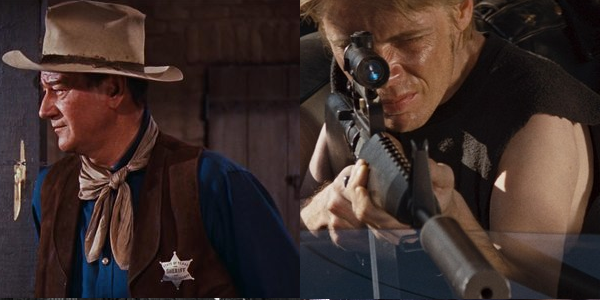
Not that we're suggesting that Westerns are the principal rip-off merchants in Hollywood - far from it. They're just as susceptible to being unofficially remade as any other genre. The original Rio Bravo wasn't made with the best intentions - was made as a response to High Noon, an allegory for blacklisting in Hollywood, which star John Wayne gleefully joined in with - but there's no denying it has a solid premise. Wayne's Texas Sheriff John T Chance rolls into the titular town having arrested the brother of a powerful local rancher, hoping it'll help out his buddy, the drunk local deputy (played by Dean Martin). The rancher and his buddies don't take too kindly to that, and it's up to the sheriffs and the rest of their rag-tag group to hold off the gang whilst trapped inside a single building. It's a neat little premise, with some in-built tension and the single location making for a claustrophobic atmosphere. In fact it was such a success that Wayne himself remade it a scant seven years later, with Hawks directing again and Robert Mitchum in the role of the lush. Four years after that the pair made Rio Lobo, another film with basically the same set-up. None of these were technically remakes, but Wayne and Hawks being on board meant that they got away with it. A little less official was when John Carpenter swiped said set-up for his second film, 1976's Assault On Precinct 13. This time the action is updated to a crime-infested ghetto in South Central Los Angeles, where an officer delivers a gang member he's just arrested to a local precinct that's in the process of shutting down. Which is unlucky, since then the rest of the gang turn up to bust him out, and it's up to him, what's left of the staff and even a plucky prisoner to fight them off. Carpenter acknowledged the debt to Rio Bravo, originally titling his screenplay The Anderson Alamo, and wrote it under the pseudonym John T Chance.

5. Airheads Is Dog Day Afternoon

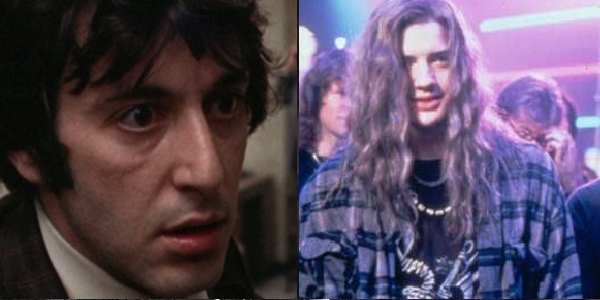
Dog Day Afternoon is a funny one. Based loosely off a true story about a bank heist, the film is nonetheless far from a gritty, realistic crime drama. Al Pacino's first-time crook Sonny Wortzik attempts to rob a bank with his two idiot friends, in order to pay for his wife's sex reassignment surgery. Things go wrong almost immediately as one of his accomplices, Stevie, freaks out when the last of the trio, Sal, pulls a gun. Sonny allows Stevie to scarper and they carry on the robbery as a duo, where they realise they've arrived after the daily cash pick-up and there's only $1,100 left in the vault. To compensate, they first nab a bunch of of traveler's cheques (which turn out to be useless) and then, once they realised the bank is surrounded by police, decided to take everyone inside hostage. It's a farcical comedy of errors, albeit grounded in a real-life setting. Like Rio Bravo/Lobo/Precinct 13 et al, it's mainly about what happens in a confined space, as a bunch of mismatched characters are forced to interact (along with Sonny and Sal's own quirks the hostages include a guy who has an asthma attack and another who's diabetic, both of whom have to be attended to). Which sounds like a pretty good premise for just a straight comedy, huh? Maybe one with another surprisingly diverse cast? Well, step forward Airheads, the 1993 comedy starring Brendan Fraser, Adam Sandler and, um, Steve Buscemi, for some reason? In Airheads the situation escalates even quicker than in Dog Day Afternoon. In this case it starts of with a pretty crummy band called The Lone Rangers who hope to make their big break by getting a local radio station to play their demo tape. When the DJ refuses, the three of them end up taking him and the rest of the station hostage until they agree, and things start getting out of hand. Airheads is more of a straight comedy than Dog Day Afternoon, but each deals with a group of would-be criminals who end up in way over their heads, despite having pretty simple goals, and each film serves as a commentary on popular culture and the status quo. So that's what Adam Sandler and Al Pacino have in common.

4. Barb Wire Is Casablanca

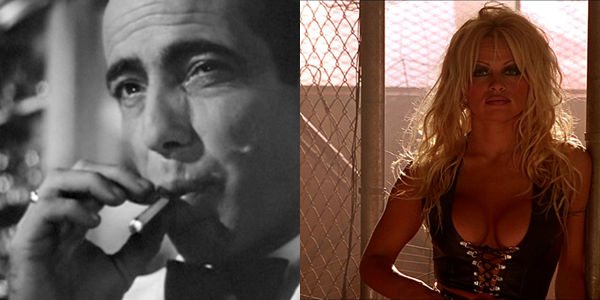
Seriously? You need us to explain what Casablanca's about? We guess not everybody's seen it, somehow. You really should, though. It's considered a classic for a reason (ie because it totally is one). Humphrey Bogart is a spurned lover who sets himself up as the head of a cool club in unoccupied Africa during the early days of World War II. Everything's going pretty well until the woman who did the spurning, Ingrid Bergman, turns up. And she's brought along her new husband, a Czech freedom fighter on the run from the Nazis. Bogie has to choose between letting the dude get locked up so he can have Bergman all to himself, or helping the war effort by ensuring safe passage for this hero with his connections. It's a crazy good film, no doubt helped by the amazing cast and the palpable chemistry between Bogie and Bergman, despite the pair of them not getting on at all off-screen. Then there's the ubiquitous score, the lines of dialogue that have entered popular culture (even if some of them are incorrect), the tragically romantic ending...sigh. Still, it looks all old, doesn't it? Casablanca was not only about the Second World War but was produced during it, making it something of a curious period piece about the very period it was filmed. Wouldn't it be so much more entertaining if it was set in a nebulous future during the "Second American Civil War," starring Pamela Anderson? We guess somebody must've had that exact thought process to bring Barb Wire to the screen. Or at least to adapt it from its comic book source material. Barb Wire sees all the genders of Casablanca's cast switched but otherwise the plot unfolds in pretty much the exact same way, except with more hand grenades, sci-fi tech and silicon implants. And car chases. Nobody involved with the film admitted its debt to Casablanca but Roger Ebert pegged it from the off in his review, whilst making endless unflattering comparisons. But come on: dystopian sci-fi Casablanca starring Pamela Anderson is totally something you wanna watch now, right?

3. Oblivion Is Wall-E

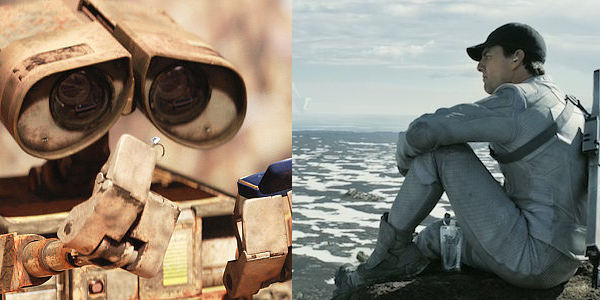
Wall-E might be one of our favourite Pixar films, if not our absolute favourite. Doesn't make us cry as much as Up, mind. Or that one bit of Toy Story 3 where you think it's gonna end with Woody and Buzz dying a fiery death. Anyway, we're getting off track! The plot of Wall-E, if you're unfamiliar, is that Earth has long since been abandoned by humans. Mainly because we got too fat and wasteful. Which means the surface of the planet is just covered with junk, and all the technology we left behind. One such bit of tech is the eponymous robot, who is designed to clean up the abandoned globe in anticipation of mankind's return...at some point. They're not really clear on that. It's obvious Wall-E has been doing his job pretty dutifully for a fair old while, and gotten a little bored of it. Which is why he's so excited to first come across some honest-to-goodness green plant life amongst all the trash, and then the appearance of the sleek, iPod-esque beauty EVE, whose mission is to transport said plant to the humans and show them it's okay to come back to Earth now. Obviously, Wall-E falls in love with her. Yes, robots can do that. It's a Pixar film and it's MAGICAL, okay? It's also pretty much the exact same plot as the live-action Tom Cruise film Oblivion, which came out a few years later. They're so similar, in fact, that someone took the audio from an Oblivion trailer, mashed it up with the visuals from a Wall-E trailer, and they sync perfectly. https://www.youtube.com/watch?v=IugWw7KxoZY Oblivion sees Cruise cleaning Earth up after it was decimated by the same nuclear weapons which saw off an alien invasion. The rest of humanity are floating up in space, having a whale of a time, until a mysterious female in a capsule turns up and discovers indications that there might still be life on the planet, and rushes to give them information to the people upstairs. There€™s even a Cruise presents the lady with a little plant, which is pretty uncanny. And obviously things end up not being what they seem, conspiracies and cover-ups, yadda yadda yadda. The important takeaway is that Tom Cruise managed to be less charming than an imaginary CGI robot despite playing the exact same role in what's essentially an unofficial, uncredited remake.

2. Old School Is Fight Club

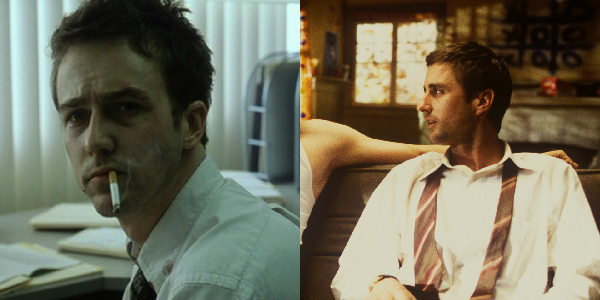
This is a particularly weird one, but stick with it - especially because the people behind the unofficial retelling have basically copped to it. Fight Club is a classic of the late-nineties male mentality, when dudes across the Western world were convinced they were being emasculated by the rise of consumer culture and the so-called "metrosexual". Rather than doing the whole hunter-gatherer thing our lizard brains insisted upon, we were nesting in our own homes with flat-pack Ikea furniture and wasting our lives watching TV. What we should've been doing is dreaming up imaginary friends and fighting strangers, topless, in the basements below seedy dive bars, right? Who's with us? It's a silly story when you put it like that and, well, it's also pretty silly in practice. The whole film is about Ed Norton's unnamed narrator trying to reclaim some supposedly lost part of his masculinity, mainly by opting out of modern culture - his office job, his nice house, his respectable life - in favour of something more visceral, more pure. Or more childish, depending on your point of view. And then it all turns out to be leading up to a terrorist scheme to explode a load of banks and free the world of their corporate tyranny, dreamt up by Brad Pitt's Tyler Durden who - SPOILERS! - is actually a figment of Norton's imagination. There's no such twist ending to Old School, the frat boy comedy starring Luke Wilson, Vince Vaughan and Will Ferrell. Otherwise, though, it's a pretty faithful retelling of Fight Club, albeit making it wholly humorous in the same way Airheads did for Dog Day Afternoon. Director Todd Phillips admits as much in the film's DVD commentary, with entire lines of dialogue dropped into Luke Wilson's character as he swaps his unfulfilling life for running a university fraternity. During which time he spends a lot of time in basements with dudes. And at one point gets caught using the copier for non-work stuff. Seriously, Chuck Palahniuk should've probably consulted his lawyer. Although he never came up with anything as inspired as this.

1. Everything Is Seven Samurai

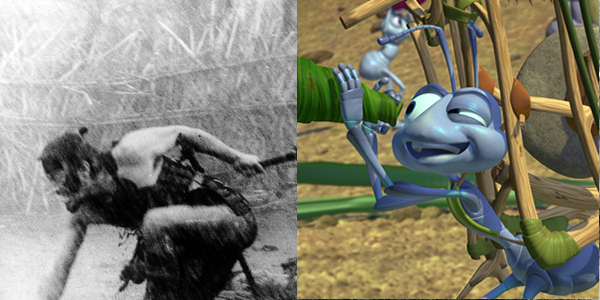
Akira Kurosawa really can't catch a break, the poor guy. Yojimbo is rivalled only by Seven Samurai in the amount of films which have begged, stolen and borrowed from - with Hollywood the most common culprit. Arguably the director's most famous film, this feudal Japanese epic involves a small farming village under siege from a group of bandits who keep turning up and stealing all their crops. A few enterprising farmers decided to recruit a group of wandering, masterless samurai to their cause, intending for them to fight back the next time the bandits turn up. Which they do, and there's some glorious Kill Bill-style blood sprays all over the place as soon as the swords get drawn. It's like watching a beautiful water fountain. Except with clarion. Seven Samurai has been described as one of the greatest and most influential films ever made, and is one of the few Japanese films to have such worldwide penetration. Film nerds know Yojimbo, pretty much everyone knows of Seven Samurai. Which is partly down to the pub quiz trivia that The Magnificent Seven, one of the greatest and most influential westerns ever made, took its entire premise from Kurosawa's original. Director John Sturges specifically took Seven Samurai as his template for a film about seven American gunmen hired to protect a small Mexican village. From bandits. Who want to steal their crops. At least Sturges had the decency to credit Kurosawa for the plot, which is more than we can say for John Lasseter and Andrew Stanton. Tom Cruise may have stolen Wall-E, but Pixar had already ransacked the Seven Samurai (along with Aesop's fable of The Ant And The Grasshopper) for their second film, A Bug's Life. Seriously. Look, just go through the synopses we gave for The Magnificent Seven and Seven Samurai, swap out the villagers for ants, the bandits for grasshoppers, and the samurai/gunslingers for circus bugs. Exact same film. And they thought they could get away with it, too. They didn't reckon on us meddling kids, though.

Contributor
Contributor

Tom Baker is the Comics Editor at WhatCulture! He's heard all the Doctor Who jokes, but not many about Randall and Hopkirk. He also blogs at http://communibearsilostate.wordpress.com/