10 Films That Surprisingly Boosted Sales Of Food And Drink

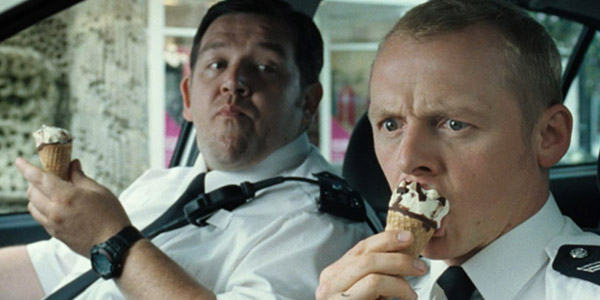
"Do you want anything from the shop?"
For a writer it's an easy shortcut to giving your character a simple personality quirk that separates them from the pack. A predilection for, even an obsessive dedication to, the consumption of a certain food or drink can say more about your character than pages of dialogue ever could. After decades of adventure in space and time on Doctor Who, the renegade timelord will still happily offer up a jelly baby to diffuse a tense situation. For the fans, that also means a chance to emulate their heroes in a more everyday sense than battling aliens and saving the world. An endorsement from a favourite fictional character can go above and beyond any real life celebrity spokesman, even if they think fish and custard is a winning combination. So, perhaps inevitably, when a character becomes popular and has a particular culinary enthusiasm, the fans will soon be consuming the same thing. For the marketing man this is the Holy Grail of product placement. Anybody watching the recent Teenage Mutant Ninja Turtles reboot can't have failed to notice the insistent plugging of Pizza Hut. Perhaps informed by the notion that the beloved 1980s cartoon series resulted in a boost in pizza popularity (as if there was ever a previous time in which pizza was a little known niche food interest), Pizza Hut clearly imagined that the association with the Heroes in a Half-shell would have turtle fans desperate for their particular brand of greasy flatbread. Audiences are savvy enough to know when they're being given the hard sell, though, and haven't really responded to Pizza Hut's efforts here (although at least it's a little more appropriate than the wholly ill judged Hunger Games-Subway tie-in). The real big taste influences come in unintentional, or at least unsponsored, product placement. Just look at these ten films that gave their characters' favourite food and drink the kind of sales boost marketing departments can only dream of.

10. You Don't Mess With The Zohan - Baba Ghanoush

For all that it was described by The New York Times as "the finest post-Zionist action-hairdressing sex comedy I have ever seen", You Don't Mess With The Zohan is a fairly standard Adam Sandler vehicle. Featuring Sandler as the eponymous counter-terrorism agent turned hairdresser, ...Zohan may seem to feature a more ambitious political context for the erstwhile Little Nicky, but ultimately it boils down to the same puerile humour as ever. As a result, Zohan's target teenage audience were not all that likely already to be huge enthusiasts for Levantine food. Nevertheless, Sandler and Robert Smigel's screenplay spent a remarkable amount of time attempting to draw humour from the love of hummus amongst Israelis (and Palestinians). In the film the mashed chickpea dip is used for everything from tooth paste to fire lighter, but it is the similar, but less widely known, baba ghanoush that enjoyed a surprising new popularity in the aftermath of a reference in the offensive comedy. The film probably served simply to make its audience aware of the existence of the dish, which is made with aubergine (eggplant) rather than the chickpeas, and thus more inclined to order it through newfound familiarity. Either way the proprietors of Middle Eastern and mezze eateries definitely noticed an upturn in baba ghanoush orders after ...Zohan's release, so at least somebody benefited from the movie.

9. The Blood And Ice Cream Trilogy - Cornetto

"Do you want anything from the shop?" It was just scripted by Shaun Of The Dead writers Edgar Wright and Simon Pegg as a way of having hero Shaun stagger hungover through the street in a zombie-like state, unaware of the literal zombie world around. As a younger man, the Wall's coned ice cream product had been Wright's hangover cure of choice, so Cornetto went into the film as layabout best friend Ed's desire in the same situation. It was Wright and Pegg's call back heavy style of comedy that made the Cornetto thing a bigger deal, with a facsimile of the earlier film's dialogue used in the same team's spiritual sequel Hot Fuzz, after which Wright joked that they were making a "Three Flavours Cornetto trilogy". Ultimately the third film, The World's End, would only make a very passing reference to the ice cream, more from obligation than humour, but the association between Wright, Pegg and Cornetto was already established and set in stone by then. The association with gory apocalyptic films may not initially have seemed an appealing one to the ice cream giant, but by the time they gave any feedback the films were already hits. In the press tour for The World's End, Wright described the company as "very pleased with the namecheck", and no wonder they were when the movies gave the ice cream a whole new fanbase, creating demand in the US where Cornettos have never been available.

8. Twilight - Mushroom Ravioli

What does a vegetarian vampire eat? If you ever wanted to know the answer to that question, Twilight provides the answer. And, somewhat surprisingly, that answer is "mushroom ravioli", which admittedly is weirdly specific. OK, so actually Edward and the Cullen clan are "vegetarian" in the sense that they do eat animals rather than that they don't, with drinking animal blood being a preferable alternative to human, but that doesn't mean the sparkly one isn't interested in mushrooms as well. All of this is explained to sullen heroine Bella on their first date at restaurant Bella Italia (because the first thing that anyone looks for in a restaurant is one that shares your own name). It is during this meal that the courting couple share some mushroom ravioli, apparently because writer Stephanie Meyer's research consisted of calling the first Washington restaurant she could find and asking about their specials. As with virtually every other thing associated with the inexplicably popular series, the real Bella Italia gained a big tourist boost thanks to its association with Meyer's book and an even bigger boost when Catherine Hardwicke's film shot there. "Guests have flocked to the restaurant from around the world to dine on the ravioli" the restaurant states. In fact there have been so many thousands of mushroom ravioli orders that Bella Italia have turned it into a ready meal for Twi-hards everywhere.

7. Popeye The Sailor - Spinach

It's a story surrounded by myths and counter-myths, but the facts are these: perennially popular cartoon sailor Popeye derives his super-strength from spinach and this has made viewers keen to give the leafy vegetable a try. With the Fleischer Studios animated short films produced from 1933 becoming the most popular incarnation of the character, many have assumed that Max Fleischer invented the spinach connection. Certainly E.C. Segar, creator of the original comic strip, initially had Popeye attribute his strength to rubbing the head of Bernice the Whiffle Hen (not a euphemism), but Segar had introduced the spinach element shortly before it appeared on film. The Fleischer films definitely popularised the idea, though. There is also an even more popular story that Popeye's love of spinach originates from a myth about the vegetable's high iron content owing to a misplaced decimal point in a Victorian science paper. This in itself is a myth, as Segar actually selected spinach because it's rich in Vitamin A. The most popular story about Popeye and spinach, though, is that the cartoons were so popular that he single-handedly saved America's spinach industry during the Great Depression. Apparently Popeye popularity boosted spinach sales by 33% in the mid-1930s. There is plenty of debate about how much this can be attributed to Popeye specifically, but research suggests a positive Popeye effect on spinach consumption continues to this day in areas where Popeye cartoons still air. There is even Popeye brand canned spinach these days, the ultimate real world representation of a fictional character's market influence.

6. E.T. The Extra-Terrestrial - Reese's Pieces

While the affinity of lovable leathery xenomorph E.T. for peanutty snack product Reese's Pieces may seem like an obvious and unsubtle slice of corporate product placement and therefore run counter to the theme of this list, it was actually an association that big brands weren't especially keen on and Reese's parent company Hershey's would not pay anything to be appear in the film. Despite Steven Spielberg's success on previous film Raiders Of The Lost Ark, E.T. was in no sense a guaranteed success. Few people foresaw it becoming the highest earning film of all time. Indeed, many found the concept of the ugly alien in a suburban household a little off-putting. One set of people who weren't convinced were confectionery giant Mars, Inc. whose own space themed name didn't carry over into support for Spielberg's alien feature. The director was keen to include Mars' rainbow-coloured, sugar-coated, chocolate favourite M&Ms as the candy enticing enough to lure the extraterrestrial from a hiding place. Mars' rejection of any involvement in the film would result in Spielberg and company turning to the far less well known Reese's Pieces. Having only been introduced a few years earlier, the candy shelled peanut sweets were not widely popular at this point, but within a couple of weeks of the film's enormously successful release sales had gone through the roof. Estimates on the amount that sales increased include anything up to three times what they were before. In a broader sense, the movie not only made Reese's Pieces a household name, but helped establish the whole nature of modern movie-marketing tie-ins.

5. The Big Lebowski - Kahlua

The Coen brothers filmography is full of movies with critical acclaim and a whole heap of awards. None of them, however, can compete for pure, obsessive cult fandom appeal with laconic rug-based mystery The Big Lebowski. Despite its relative box office failure on release, this endlessly quotable meandering bowling comedy-cum-Raymond Chandler riff has inspired legions of Little Lebowski Urban Achievers in a level of devotion that borders on a literal cult. Dudeism (or The Church Of The Latter Day Dude if you're not into the whole brevity thing) is a pseudo-religion with over 200,000 adherents, formed on the basis of following the lifestyle advocated by the film's laid back, dressing gown clad protagonist The Dude. When you've got that kind of following, merely inspiring a fanbase to share your beverage of choice seems almost insignificant in comparison. Essentially a throwback to the 1960s and 70s, the pairing of the stoner hero with the once fleetingly popular White Russian cocktail made perfect sense in the Coens' script. After the film gained its increasingly dedicated following, though, the somewhat niche drink, a mix of vodka, milk and coffee liqueur, gained a huge boost in popularity. Given the lack of variety in options of coffee liqueur, this was naturally good news for Mexican rum and coffee based drink Kahlua, but during one "Lebowski Fest" even milk sold out within a one-mile radius of the bowling alley.

4. Wallace And Gromit - Wensleydale Cheese

Ever since they spent a bank holiday building a rocket to the moon, Wallace and Gromit have been a much cherished British institution. As the British public have taken the eccentric inventor and his faithful canine companion to their hearts, Nick Park's plasticine creations have influenced people's taste in cheese, about which Wallace is crackers. Crumbly Yorkshire favourite Wensleydale got a name check in the duo's moon mission debut A Grand Day Out as the cheese that Wallace speculated might make up the lunar surface. The choice of cheese was not really about flavour and more about how Park liked the sound of the name. Nevertheless, as the Oscar winning short films continued and Wensleydale became established as Wallace's favourite, audiences starting buying the cheese like never before. By the early 1990s the Wensleydale Creamery was close to bankruptcy. Thanks to the association with the Wallace and Gromit shorts the company was not only saved but went from strength to strength. Turnover quadrupled in the wake of the claymation characters' endorsement. It became so successful that a mere mention of perry-based cheese Stinking Bishop in the feature length Curse Of The Were-Rabbit had the small Gloucestershire based farm that produces it worried that demand could completely outstrip supply.

3. James Bond - Vodka Martini

At least in part created as a vehicle of wish fulfillment for mid-level naval intelligence functionary Ian Fleming and his snobbishly specific tastes, James Bond just happened to become the star of the world's highest earning film franchise (adjusted for inflation). Fleming's novels are full of Bond's particular culinary tastes (there are seventy different meals in the whole series, one short story even drops in a recipe for scrambled eggs). The films haven't always embraced the superspy's love of a prawn curry and a sly doner kebab, but his high functioning alcoholic habits have survived the transition pretty much intact. From Bollinger to Bourbon, Bond's heroic alcohol intake has always been a key feature of the series and has always influenced the tastes of his audience, but one drink is associated with the misogynist dinosaur more than any other: vodka martini, shaken not stirred. Martinis, a cocktail that mixes spirits and vermouth, had been popular since the prohibition era but almost always made with gin. Indeed, Bond's first martini recipe, the Vesper, contained three parts gin to one part vodka. By the time of the 1960s film series, though, Fleming had switched Bond to a purely vodka based version of the cocktail, something that Sean Connery ordered in the series' most iconic film, Goldfinger. Thanks to Connery and Goldfinger and the associated cool of Bond, vodka started being used more and more often in martinis and the cocktail enjoyed a 60s revival. As the franchise became a major target for modern product placement, naturally Bond's drinking habits were up for sale. Heineken saw a big boost in sales after Bond was seen drinking a bottle of the Dutch beer in the billion dollar hit Skyfall. A much vaunted deal with Polish vodka producers Belvedere, however, will see him return to his martini roots in the upcoming Spectre, no doubt with an associated jump in the cocktail's popularity once more.

2. The Avengers - Shawarma

If an unremarkable Adam Sandler comedy can have a noticeable effect on the popularity of Middle-Eastern food, just imagine the results of a similarly throwaway gag in one of the biggest movies of all time. That's just what happened when, seemingly out of the blue, the Avengers' outspoken hero Iron Man broke up the big final battle scene by asking Captain America: "Have you ever tried shawarma? There's a shawarma joint about two blocks from here. I don't know what it is but I want to try it." Perhaps realising that this joke had no punchline, director Joss Whedon later reassembled the Avengers for a silent post-credits gag that showed them enjoying the spit-roast-meat-in-pita-bread treat. (In the time that had passed since shooting the movie, Chris Evans had grown a beard and was wearing some dodgy facial prosthetics, hence why he's covering his face in the shot above). The whole thing gets even more geeky when you consider that apparently the use of shawarma is actually a call back to Whedon's Buffy The Vampire Slayer star Nicholas Brendon. The actor reputedly won the role of Xander in the cult TV hit with an audition in which he enthused about the little heard of Levantine specialty. In the weeks that followed The Avengers' massively successful release audiences seemed to decide en masse that, like Tony Stark, they didn't know what shawarma was but they really wanted to try it. In Los Angeles, an 80% boost in sales was reported in one shawarma restaurant following the film's release. One can only assume that sellers of baklava are on tenterhooks awaiting a similar reference in Age Of Ultron.

1. Sideways - Pinot Noir

While you might expect films of the broad mainstream appeal of Skyfall or The Avengers to have their impact on sales of associated products, a small scale indie film about a couple of not very likable guys having mid-life crises is less obviously going to exert such an influence. Nevertheless, perhaps the most famous example of a film's influence on wider food or drink tastes is the so-called Sideways Effect that occurred in the wake of Alexander Payne's 2004 drinking tour dramedy. In the film, Paul Giamatti's pompous, thin skinned wannabe novelist Miles is associated with Pinot Noir wines because the difficult to cultivate but ultimately rewarding grape variety is a fit for his character. In the same way, Miles denigrates the mainstream popularity of Merlot, famously yelling "I am NOT drinking any f*cking Merlot!" in an oft quoted scene. Regardless of the fact that wine quality is about far more than just the difference from one grape variety to another, the film quickly created a new market for Pinot Noir wines, while Merlot suffered in comparison. While the downturn in Merlot popularity was probably not all that significant in the longer term, Pinot Noir's Sideways boost has continued to this day. In the months following the movie, Pinot Noir sales were up 16%, but even ten years later there is still an ongoing increase of 9%, perhaps the greatest example of even a low key movie's ability to effect ordinary people's tastes and choices. Ever had your dinner menus dictated by on screen diners? Leave your film-food favourites in the comments below.

Contributor
Contributor

Loves ghost stories, mysteries and giant ape movies