10 Films That Worked As Prequels And Sequels
X-Men, Jason Bourne, The Godfather and more!

Follow-ups to movies have been part and parcel of the cinema industry for decades now, with prequels, sequels and spin-offs dominating release schedules every year.
There have been more than a couple of howlers within that time, but, should you look back on the most acclaimed releases in film history, you'll find that there have been nearly just as many good sequels as there've been bad.
One thing you may also notice with a lot of these follow-ups is that they actually blend prequel and sequel together, both elaborating on the events leading up to the previous entry, while telling a story that reveals what comes next. It's a delicate balancing act to get right, but when it works? Boy, does it work.
Some of the greatest follow-ups in filmmaking history have taken this pre-sequel approach, telling a story that takes into account both the past and present of previously established characters. Some of the filmmakers to nail this approach include Francis Ford Coppola, Steven Spielberg, Paul Greengrass and Tony Gilroy, and in one or two occasions, you may not even realise the sequel you've been watching is also technically a prequel too.
Here we’ll look at ten of those films which have as much backstory as they do continuation. Spoilers ahead.
10. X-Men: Days Of Future Past

The X-Men films have had a difficult story to follow and understand ever since X-Men Origins: Wolverine hit cinema screens in 2009 and caused vast continuity errors in the series.
X-Men: Days of Future Past came along in 2014 with the hope of amending and revising some of these mistakes by altering the timeline. It merged the old cast led by Patrick Stewart as Charles Xavier and Ian McKellen as Magneto with the new one led by James McAvoy and Michael Fassbender as those same characters.
It did this through the use of time travel, with Wolverine being tasked with changing the past, due to his regenerative abilities making him the perfect candidate to send back in time and survive the trip.
The film opens in the bleak dystopian future where Sentinels are programmed to exterminate mutants and ends in the past with Wolverine waking up in the X-Mansion to find his X-Men comrades alive and well, thereby expunging anything that happened in X-Men: The Last Stand.
9. Jigsaw

Jigsaw is the eighth instalment in the long running horror franchise of Saw films.
Set near a decade after the death of John Kramer/The Jigsaw Killer in Saw III, it opens on crooked criminal Edgar Munsen informing police that he has to decide who will die, otherwise Edgar himself will die, with the same kind of gruesome tests and traps and tape recordings you’re familiar with occurring shortly after this.
In the end it comes down to Detective Halloran and pathologist Logan Nelson, with Logan revealing in a series of flashbacks that he was the fifth participant in the initial trap ten years ago set-up by John Kramer, which turns the film into a prequel/sequel hybrid.
He states he was the one that mistakenly mixed-up the labels for Kramer’s x-rays that made his inoperable brain tumour go undiagnosed, and as a result was placed in one of Kramer’s games. Knowing Logan made a mistake, Kramer saves him at the last moment and makes him his savage apprentice, with them working together to make the barbaric Reverse Bear-Trap device seen in the first Saw film.
8. The Godfather Part II

Originally titled ‘The Death of Michael Corleone’, The Godfather Part II is a masterclass in making a worthwhile sequel. It was the first sequel in Oscars history to win an Academy Award for Best Picture, with director Francis Ford Coppola coming up against himself in that same category for his work on The Conversation, which released the same year.
Part II acts as both a prequel and a sequel to the 1972 classic, detailing the rise of Vito Corleone (played by Robert De Niro), from his humble childhood beginnings in Sicily in 1901, to him founding the Corleone family in New York City, as well as the fall of his son Michael Corleone (Al Pacino), being the new Don of the Corleone crime family circa 1958-1960.
7. Twin Peaks: Fire Walk With Me

Twin Peaks: Fire Walk with Me was released in 1992 and is highly derided by Twin Peaks fanatics who grew to be charmed and captivated with the two TV seasons that aired in 1990/1991 until its cancellation.
Fire Walk with Me centres on the investigation into the murder of Teresa Banks as well as the last seven days in the complex life of Laura Palmer (with the investigation into her murder being what the TV series centred on).
It ultimately raised more questions than it answered, with Special Agent Dale Cooper having a minimal role and Donna Hayward being recast altogether. The film itself was also far darker than its charming television predecessor.
That said, Fire Walk with Me is almost a sequel set during a prequel. There are scenes involving the mystical and mythological Black Lodge where time is non-linear, and where Cooper observes and meddles with what happened to Laura Palmer before her murder in her dreams.
6. 300: Rise Of An Empire
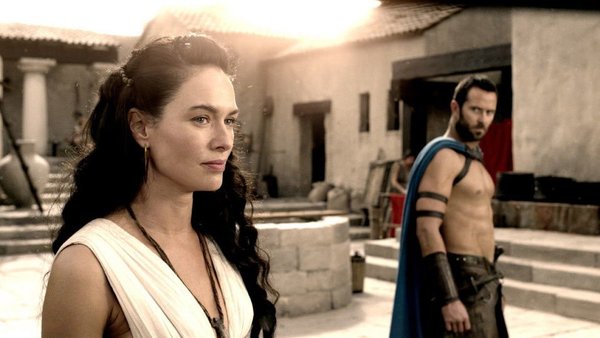
Director Zack Snyder chose to not return to direct the 300 follow-up, instead going to work on the Superman reboot Man of Steel. Without his direction, 300: Rise of an Empire is all over the place with its timeline.
The film's story happens before, during and after the events that transpired in 300. The plot not being in one set time period is a central reason why it faced much criticism when it was released in 2014, with others scrutinising the film's creative direction.
It had to deal with the issue of the main charismatic protagonist Leonidas dying at the end of the first film. As a result, it swapped Gerard Butler for Sullivan Stapleton as Greek leader Themistocles.
Initially it leans on giving King Xerxes a backstory where he watches his father Darius die and mourns him, with it being revealed how the new character of Artemisia (Eva Green) became one of his generals. It then skips forward in time to the Battle of Artemisium that was concurrent with the Battle of Thermopylae unfolding in the original 300 film. It then skips forward again to The Battle of Salamis that occurred after the events that transpired in the first 300 film.
5. Mamma Mia! Here We Go Again
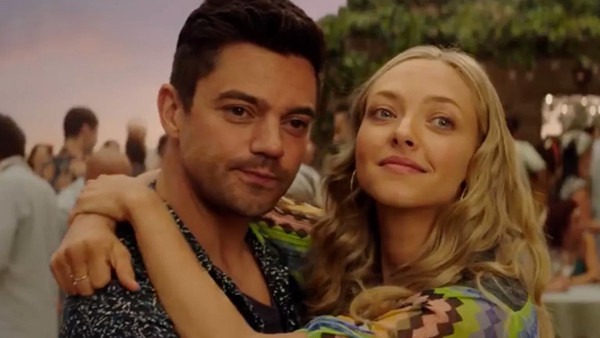
After the overwhelming success of Mamma Mia in 2008, the fifth highest-grossing film of 2008, Universal Pictures quickly went to work on following it up with another jukebox musical with whatever ABBA songs were leftover/weren’t used in the first film.
The first film centred on Donna coming face to face with three ex’s from her past. Mamma Mia! Here We Go Again is set after the events of the first film but is full of lengthy flashbacks that delve into Donna’s youth in 1979 and those romantic relationships with her former partners, with Lily James playing her in past scenes and Meryl Streep playing her in the present.
Thankfully they did this with other actors too, which meant audiences were subjected to less of Pierce Brosnan crooning his way through ABBA tracks. Some past scenes even replicate the drama and emotions of what’s taking place in the present.
It paid off for Universal Pictures when it grossed $395 million worldwide, with the studio now keen on revisiting ABBA’s greatest hits once more in order to complete the trilogy.
4. Fast & Furious
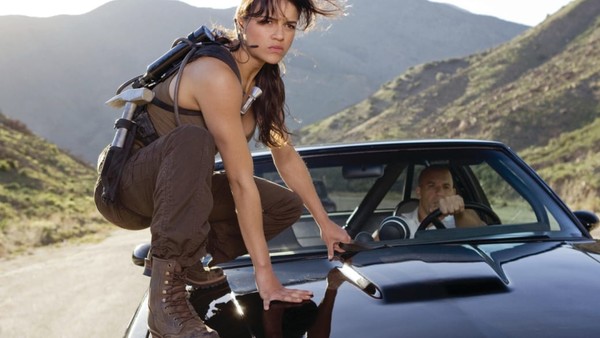
Fast & Furious, the fourth instalment in the franchise, acts as both a sequel to 2 Fast 2 Furious and a prequel to The Fast and the Furious: Tokyo Drift. It brings back central stars Vin Diesel, Paul Walker, Michelle Rodriguez and Jordana Brewster to the fold.
The F&F timeline was first scrambled and screwed up after Vin Diesel chose not to return in 2 Fast 2 Furious due to script issues and working on Chronicles of Riddick, and afterwards in the third instalment Tokyo Drift when the entire cast chose not to return (minus an uncredited cameo at the end from Vin).
As a consequence, producers chose to create a separate spin-off with Tokyo Drift. When the main stars of the franchise then chose to return for the fourth film (simply titled Fast & Furious), the timeline ended up being messed with yet again. Fans sought out explanations when the character of Han who died in Tokyo Drift showed up alive and well in Fast & Furious, with it later being revealed that Tokyo Drift happens after Fast & Furious 6 and overlaps with some of Furious 7.
To complicate things more, as revealed in the F9 trailer, Han appears to have survived the explosion that was thought to have killed him in Tokyo Drift.
Who knew street racing could have such complex timelines?
3. Sin City: A Dame To Kill For

Sin City: A Dame to Kill For acts as both a sequel and a prequel to its 2005 counterpart, Sin City.
Director/creator Frank Miller stated when the film was announced its stories would interlink with the events of the first film, which is how they were able to bring back Mickey Rourke as Marv after he died in the electric chair in The Hard Goodbye story. Bruce Willis meanwhile was able to return as a ghost watching over Nancy Callahan, after dying in the That Yellow Bastard (Part II) story in its predecessor.
Chronologically the stories are muddled, with a strong argument being made online that there should be a beneficial edit made of both films that put the stories in order.
Regardless, it was hard for viewers to keep up with when Sin City: A Dame to Kill For hit cinema screens in 2014. There was a lack of context and it was difficult to follow the interlinking stories and timelines after nine long years in-between the films, with many actors having been recast, like Josh Brolin for Clive Owen, Jeremy Piven for Michael Madsen and Michael Clarke Duke for Dennis Haysbert.
2. The Bourne Ultimatum

The Bourne Supremacy left viewers on a scene in New York where Jason Bourne calls the Deputy Director of the CIA, Pamela Landy, where she reveals his original name and date of birth and asks him to meet with her, only for Bourne to let her know he’s watching her from a distance with the line "Get some rest, Pam. You look tired."
This scene would ultimately be a teaser for what was to come, when three quarters of the way through the next film, The Bourne Ultimatum, the scene is once again shown with the line once more repeated.
It becomes a crucial and critical part of the plot for Ultimatum and displays there’s a time overlap between Supremacy and Ultimatum. It was reworked and reconstructed (and reshot) to show the events of Ultimatum have caught up with the ending of Supremacy and ingeniously sets up the conclusion to Ultimatum, making the threequel a mixture of sequel and prequel.
Parts of the following film, The Bourne Legacy, with Jeremy Renner make you question the timeline too, as they occur at the same time as Ultimatum.
1. Indiana Jones And The Temple Of Doom

Although it's easy to forget, the Indiana Jones series isn't structured like a traditional trilogy, with the second entry in George Lucas and Steven Spielberg's action adventure saga, The Temple of Doom, taking place an entire year before the events of Raiders of the Lost Ark.
Despite this detail, Temple of Doom's status as a prequel is largely immaterial to the main story. The film doesn't deliver any twists or turns that would cause viewers to reappraise Raiders, and it's largely because of that the perception remains that Temple of Doom is a sequel in the traditional sense.
While that may be the case, the fact remains that the second instalment in the Indiana Jones series is indeed a prequel. Raiders of the Lost Ark takes place in 1936, whereas Doom is set a year prior in 1935.
The third entry in the saga, The Last Crusade, would serve as the first "true" sequel to Raiders, with it being set in 1938 - two years after the first Indy film, and a year before the outbreak of World War II - albeit with a brief flashback to 1912 at the beginning.
Watch Next
Quiz: How Well Do You Remember Indiana Jones And The Temple Of Doom?
