10 Frustrating Movies That Went Nowhere

Good or bad, these movies left you scratching your head, wondering: "What was the point in all that?"

A common criticism that movie-goers tend to levy against motion pictures of all kinds is: "Nothing happens." This, of course, is a phrase usually employed to denote that the movie was either boring, there was little action or dialogue to speak of, or the narrative didn't go in the direction they expected. Sometimes it can be all of those things. A lot of the time, though, "nothing happens" feels like something of a misguided complaint - just because the story was subtle or understated doesn't necessarily mean that nothing actually went on; there was still a "point." Take Lost In Translation, for example, a movie which has pretty much earned a status as the poster child for a "nothing happened" film, for good or for worse. Although many are quick to brandish it as boring because there is little "plot" to speak of, though, to say that nothing happens is far too glib a statement: for the characters in the movie, at least, a hell of a lot happens... the emotional connection shared by Bill Murray's Bob and Scarlett Johansson's Charlotte is something life-changing and transcendent. There just aren't any explosions to speak of. So "nothing happens" is a term that gets thrown around far too often, and one which is rarely used to accurately describe the movie in question. What we've gathered for this article, however, are 10 movies which could rather fairly be described as having "gone nowhere." Be it because the plots were convoluted and failed to make a point, because the films ended without making any sort of statement, or the story went nowhere, these are the motion pictures that had us scratching our heads at the end, asking: "What was the point?" Please note: spoilers within...

10. Broken Flowers

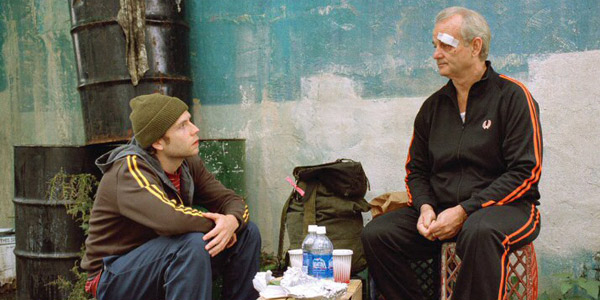
One of many later stage, "sad" Bill Murray movies, Broken Flowers was written and directed by respected auteur Jim Jarmusch, and tells the story of apathetic lothario Don Johnston, who - upon learning that he has a grown-up son he's never even met or heard of - sets out on a quest to find out what's going on. The movie has Murray, in typically brilliant deadpan form, driving across country and visiting those women who could potentially be the mothers, played by a slew of talented actresses, including Sharon Stone, Tilda Swinton, Frances Conroy and Jessica Lange. And for the most part, Broken Flowers is great, witty fun. Murray nails a role that he was born to play, and the segments that he shares with each potential mother are humorous, surprising and interesting (in that order). The problem with Broken Flowers comes with its ending, which is so vague and ambiguous that it near-on dooms a movie that felt like it had a point as one which feels like it really doesn't. We don't find out the truth about Don's son; the film ends at what feels like its halfway point instead, with our character standing on a crossroads. All that for nothing?

9. Somewhere

If Lost In Translation managed to tell an affecting and romantic story in a stripped back style that favoured less action and more lingering, Sofia Coppola's follow-up, the vaguely titled Somewhere, is an experiment in minimalism. Indeed, Coppola's film - which is set almost entirely in a Los Angeles hotel - seems set-up purposely as an exercise in subtlety. The storyline is summed up in just a few words: "Sad film star mopes around hotel with his daughter." Unlike with Lost In Translation, however, the lack of focus and aimless narrative makes Somewhere harder to love. What's interesting about Somewhere is that Coppola clearly knows what she's doing; the film is called "Somewhere," after all, and the story is thin to such a point that it could have only been done that way on purpose. There is the tiniest hint of a story arc for Stephen Dorff's central hero, Johnny, sure, but the lack of narrative is there to symbolise the character's empty existence (just as with the film, Johnny's life is going nowhere). Still, despite lovely cinematography, and great performances, Somewhere never really justifies its increasingly meandering nature.

8. Berberian Sound Studio

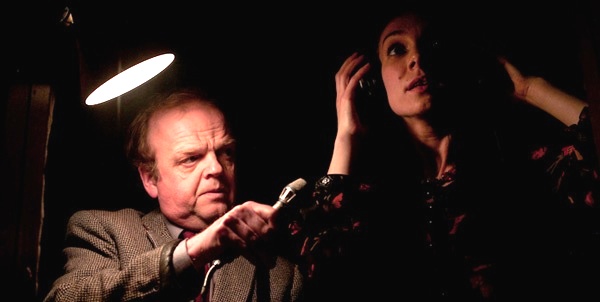
Berberian Sound Studio has to be one of the most downright confusing and frustrating movies ever made. Set in the 70s, it stars the wonderfully talented Toby Jones as a nebbish sound technician, who travels to Italy to do work on a giallo horror film. Slowly, however, things began to unravel, and the lines between fantasy and reality begin to blur. Interesting as that sounds, Berberian Sound Studio only ever succeeds in being incomprehensible - trying to work our what's actually happening in the movie is something of an exercise in futility. Of course, the emphasise here is on film deconstruction, but the movie seems to want to say something else - what, exactly, who knows? Is it an anti-horror film? A satire? A homage? All three? And because trying to get your head around the weird plot isn't interesting like it is with say, Primer, attempting to understand this flick is exasperating. It does looks and sound great, however; it's just a shame that the events depicted are so haphazardly constructed that the only sane reaction to a viewing of Berberian Sound Studio has to be: "What the f*ck was the point?"

7. To The Wonder

Making use of writer/director Terrence Malick's freewheeling, dream-like style almost to the point of parody, To The Wonder - which stars Ben Affleck, Olga Kurylenko, Rachel McAdams, and Javier Bardem - is all style and little substance; rather odd, for a director who usually has so much to stay. The biggest problem here is that Mallick has apparently fallen too much in love with his own filmmaking techniques. We float around for almost two hours here, weaving in and out as the characters (none of whom seem "real") resort to humourless, sombre voice-overs. The film, which explores the relationship between a couple who move from France to Oklahoma to start a new life together, clings to all those Malick trademarks - but whereas the majority of his other films are emotionally engaging, To The Wonder feels bland and empty. So much so, in fact, that by the time it's all over, it doesn't leave you with anything to linger on. There's a feeling that Malick was instead so focused on creating an atmosphere, he forgot everything else. After all, atmosphere isn't the only thing you need to make a good film; you need a story, too.

6. Prometheus

All questions, no answers: it's almost as if the screenwriters who penned Prometheus thought that by posing an endless stream of empty rhetorics on pretty much all the "big" subjects, including science, religion and philosophy, that Prometheus would naturally feel like a smart movie with a lot to say for itself. Uh-uh. Ridley Scott's long-awaited prequel to his 1979 film Alien, a classic of science-fiction and horror cinema, proved that posing questions with no clue as to the answers is the cinematic equivalent of shooting yourself in the foot... over and over again. Ouch. Prometheus follows the crew of a ship who - having discovered a series of markings in a cave on Earth that suggest the human race might have been "engineered" by an alien species - travel the lengths of space in order to meet their makers. Having spent half an hour setting up the plot, Prometheus chooses to spend the remaining 90 minutes restating the same questions it posed in the beginning. The characters spend the whole movie restating the exact same questions, with no progression made; the movie goes to space, and yet it goes nowhere at the same time.

5. A Field In England

There aren't enough films set during the English Civil War - let alone ones that have their heroes going on a mad drugs trip. With this premise, and the talented director Ben Wheatley behind the camera, A Field In England had the potential to be something special. And yet the final result is that of a movie that is irritating in its willingness to go too far off the deep end - that's to say, this right, black and white hallucination of a movie suffers from being too vague. It's clear that the filmmakers don't really know what the film is trying to say; it's ambiguous for lack of better options. The plot starts simply enough: O'Neil, an alchemist, forces a group of Civil War deserters to aid him in a search to find a hidden treasure which he thinks to be buried in a field. Before long, though, narrative comprehension is totally abandoned, and the film becomes as hodgepodge of half-developed ideas, strange images, and moments of bewilderment. Given the drug-inducted nature of the plot, a general sense of craziness was expected... but not to such an extent that it becomes a headache to follow; there's a "for the sake of it" quality to all the madness.

4. Southland Tales

Somewhere along the line, you have to admire Richard Kelly for trying to do something "big" for his follow-up to the brilliant indie flick Donnie Darko... and at the same time, you want to slap him in the face and ask why he tried to do so freakin' much in one movie. Because Southland Tales, without a doubt one of the most curious failures in cinematic history, is an unbridled mess - a picture that attempts to deal with so many themes, subjects and topics, that the final film fails to offer up anything engaging about absolutely any of them. It's a work of misguided insanity.

Is there another movie in existence that skims over so many ideas and questions and still manages to go absolutely nowhere at all? The plot, way too convoluted to describe here, finds itself set in a futuristic Los Angeles rendered with an overtly satirical edge. Kelly seems to have written Southland Tales as if he were recently diagnosed with a terminal illness; everything in his brain goes into the melting pot that is this relentlessly painful allegory for nothingness - musical numbers, random political discourse, gun turrets (?). 144 minutes long, and yet... zip.


3. The Master
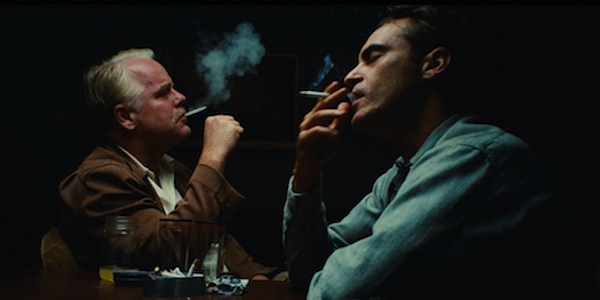
The Master feels, all at once, like the best movie ever made and the worst movie ever made. Almost everything about it, from a production point of view, is perfectly rendered: the acting, courtesy of Joaquin Phoenix, the late Phillip Seymour Hoffman, and Amy Adams, is top notch; the cinematography is spectacular; the music is strange and cerebral; the tone is mesmerising. And yet, for all of that, the movie can't escape "What was the point?" territory because there really doesn't seem to be one. Having watched the movie, the consequences just aren't made apparent. In other words... the story meanders, and gives its characters nothing particular interesting to do, despite powerhouse performances. The film flirts ever so closely with self-indulgence (and maybe even pretentiousness), but just manages to steer clear of those territories on account of its finer points, and yet... what? What do we come away from The Master thinking about? What is it trying to tell us? The fact that the answers to these questions remain unclear even after multiple viewings is a major issue. If there is, indeed, a point, it's dangerously out of sight.

2. Event Horizon

Granted, Paul W.S. Anderson isn't the most acclaimed director in town, nor is he renowned for ever having made a movie of actual worth, but out of all his pictures, Event Horizon remains the most interesting. Unfortunately, what could have been great ends up feeling totally and utterly pointless because the director doesn't seem to know what, exactly, he's making a movie about. A shame, since the plot, which hones in on the crew of a space vessel who investigate the reappearance of another vessel, long vanished, is an inherently interesting one. What lets Anderson's movie down is that, minute by minute, it all becomes terribly incoherent as layers of religious iconography are randomly thrown into the mix - it doesn't help that Event Horizon is also edited to such a frenzied place that it eventually becomes impossible to actually see what's happening. It all ends up feeling rather like you've been whacked over the head halfway through watching a film, desperately trying to piece together the story beats whilst suffering a concussion. Credits rolling, Event Horizon ultimately feels like a big waste of time.

1. Inside Llewyn Davis

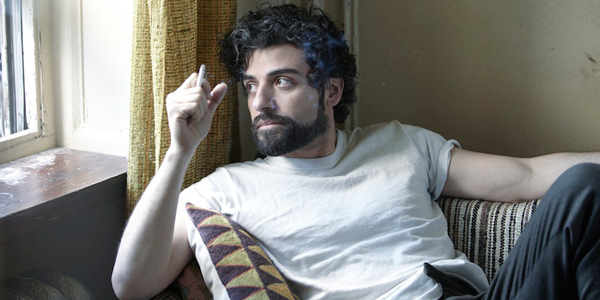
Inside Llewyn Davis is perhaps one of the best films on this list, and yet, despite the fact that it's a solid flick, it's hard to pretend that this movie - written and directed by the Coen Brothers - doesn't feel a little bit pointless. Granted, given that the story is centred around a folk singer who finds himself caught in limbo, there's probably a good reason why Inside Llewyn Davis lingers on the "well, that went nowhere" spectrum - Davis himself, after all, spends the entire movie going nowhere; he's neither good enough nor bad enough to find his place as a legitimate musician. The plot here is noticeably thin. Llewyn (Oscar Issac) spends much of his time sleeping on people's couches, arguing with his ex-girlfriend, and occasionally taking a gig; the movie is purposely (and somewhat beautifully) etched in a state of melancholia, which only further serves to generate the feeling of aimlessness that comes hand to hand with a viewing of the film. So despite the fact that Inside Llewyn Davis clearly isn't a bad movie, for some reason it's still near on impossible not to come away wondering why the movie was made... or why it actually exists at all. Like this article? Let us know in the comments section below.

Contributor

Sam Hill is an ardent cinephile and has been writing about film professionally since 2008. He harbours a particular fondness for western and sci-fi movies.