10 Gangster Movies That Mess With Your Brain
Where gangland meets cloud cuckoo land.
The gangster movie occupies a pretty traditional place in the cinematic lexicon. In terms of story, there's not a vast amount of air between Goodfellas and the Godfather, between Mean Streets and Miller's Crossing - and Infernal Affairs and The Departed are practically the same film.
Now, these genre touchstones may well be in place for a reason. They're the mise en scène of these movies, the plot points, archetypes and grace notes that provide a shorthand to tell the story and a shortcut for audiences to become invested in those stories. But after watching dozens and dozens of films with the same imagery, the same symbolism, the same stereotypes and the same damaged, violent protagonists, any kind of a change is a welcome one. That's why it's heartening when you come across a film that takes those well worn tropes and stabs them in the eyes, dressing them as clowns and mailing them to minor celebrities.
To put it another way: these movies range from odd, surreal little chamber pieces to outlandish, grand guignol splatterpunk to Lynchian headf*cks to kiddie musicals, for the love of god.
These gangster movies will screw with your equilibrium and mess with your brain - and as usual, here be spoilers...
10. Performance (1970)
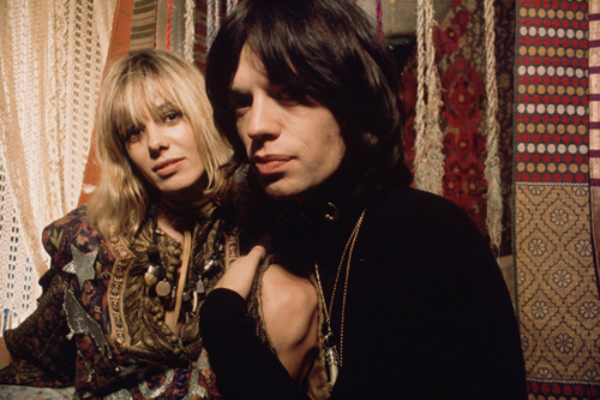
A whacked out, unsettling and vaguely occult curiosity, Performance was the result of Warner Bros executives deciding to make a film starring Rolling Stones frontman Mick Jagger, on the basis that The Beatles A Hard Days Night had raked it in. As anyone who has seen Performance realises, that's like trying to cash in on One Direction by reforming the Mahavishnu Orchestra. A study in transgressive identity politics, Performance was co-directed by Nic Roeg and Donald Cammell, two men who would become famous for their surreal artistic visions in years to come.
James Fox plays Chas, a violent gangland figure on the run, and Jagger plays Turner, the reclusive rock star that takes him in to better understand him, hoping to revive the demon that fueled his art, knowing that its likely that Chas will simply murder him.
Initially indifferent to the mystically inclined Turner and his lifestyle, Chas finds his sense of self disintegrating as he slowly begins to merge with Turner. The film's climax sees Chas criminal associates locating him and bringing him home, the implication being that he will be killed. Before he leaves, Chas does in fact pull the trigger on Turner, who seems to accept his role in the drama being played out.
However, as the car pulls away, Chas is shown to have Turner's face.
9. Bugsy Malone (1976)
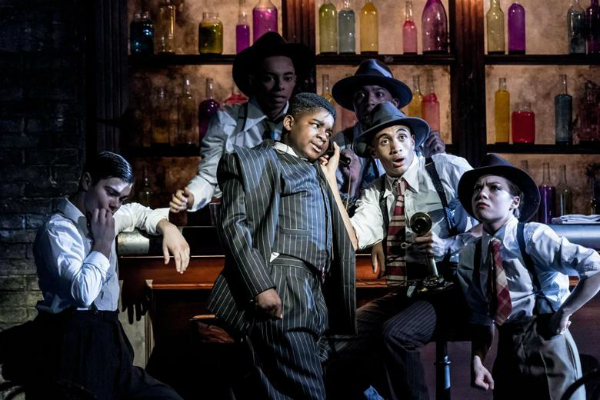
Directed by Alan Parker, who would later become more famous for The Commitments and Angel Heart, this odd, odd little musical is loosely based on the Prohibition era in the United States, and the gangster culture that sprang up around the illegal sale of liquor.
Why is it odd? Well, the film was marketed towards children and families, and starred nothing but children in every role, from the leads (including Scott Baio and a thirteen year old Jodie Foster) to every extra - all dressed in period clothing, carrying tommy guns that fired custard. To be shot with one was to be splurged, a kiddie-friendly paintball-style equivalent of being machine-gunned to death.
Bugsy is hired to help speakeasy boss Fat Sam in his dealings with archrival Dandy Dan, whos been splurging his men. At the end of the film, a splurge fight takes place in Fat Sams place, everyone becoming liberally covered in custard until the piano player begins to play, and the cast all sing along together, realising that they dont need to quarrel and can be friends.
With a plot that echoed the grim, bleak conceits of film noir and musical numbers dotting the narrative, it's difficult to see who on earth Bugsy Malone was supposed to be for. Children wouldn't understand the plot, and adults were - quite rightly - properly creeped out by the young teens wandering around in adult clothes, simulating hard-boiled speech while miming choreographed musical numbers to pre-recorded songs sung by adults.
8. Sonatine (1993)
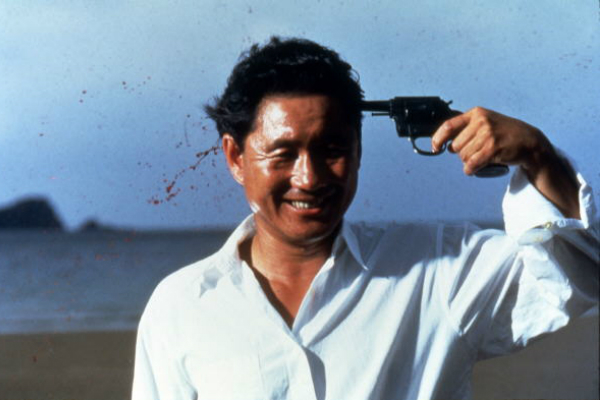
While the US has produced scores of films dedicated to the supposed activities of the Mafia, Japan has an even longer tradition of creating movies that feature the Japanese equivalent: the Yakuza, with just as long a tradition of specific imagery and symbolism relating to the subgenre. Written and directed by the celebrated auteur Takeshi Kitano, Sonatine is an elegiac, existential and off-kilter film.
Kitano also stars as the world-weary Murakawa, a Yakuza enforcer who is sent on a job that appears to be pointless, only to be ambushed and to have his men shot at. Fleeing the scene and regrouping at a beach house, the survivors of the hit team agree to lay low and wait for the trouble to blow over. Engaging in silly games to mark the time, the men of violence find that even these aimless distractions are coloured by elements of the violent lives they've left behind.
A kind of peaceful contemplation descends upon the group: but, eventually, those violent lives come to find them again, and Murakawa determines to find the bosses responsible for their betrayal and end the issue between them once and for all.
Beautifully shot and framed and hauntingly evocative, Sonatine is all the more remarkable considering that Beat Takeshi was mostly known for being one of Japans top three television comedians when he made the film: it's the equivalent of Blackadder's Rowan Atkinson writing and directing Nil By Mouth.
7. Point Blank (1967)
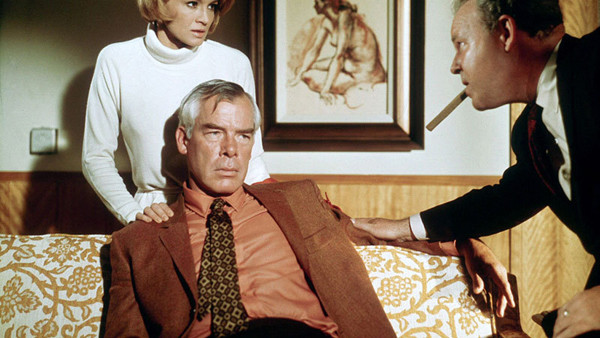
An adaptation of thriller The Hunter by Richard Stark (Donald E. Westlake, writing under a pseudonym), John Boorman's strange, unbalanced revenge potboiler has long been regarded as one of the finest films of the sixties. The material was adapted once again in the West by Brian Helgeland in a much more straightforward film, Payback with Mel Gibson.
In Point Blank, Lee Marvin's Walker is an armed robber betrayed and left for dead on the island of Alcatraz when his partner and his wife conspire against him, who returns for the money he was swindled out of. An American thriller with an artistic European sensibility, Point Blank is a harsh, fiercely idiosyncratic film at odds with its subject matter.
Walker is a practically superhuman protagonist, seemingly carved from granite, preferring to let his actions do the talking.
Really though, Point Blank is about memory and trauma, pain and loss: while the vengeance-fuelled plot shuttles forwards with increasingly brutal urgency, the sins of the past unravel behind Walker in disorienting fashion.
Given the almost dreamlike style of the film, the question has been asked for years: is Walker dead, killed by his betrayers on Alcatraz? Are these flashes of memory his life flashing before his eyes in his last moments as he fantasises revenge?
6. Branded To Kill (1967)
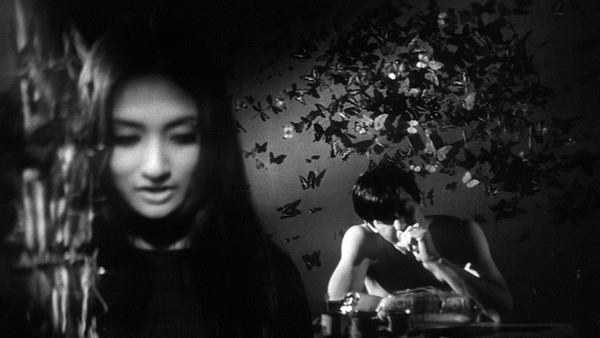
Seijun Suzuki's Branded to Kill is very obviously a product of the sixties: a surreal, sketchily plotted existential Yakuza noir that broke boundaries upon its release and has since, like Point Blank, become a cult sensation amongst film buffs. Hanada, the third best hitman in Japan and a man with very specific erotic fixations, chiefly the smell of cooking rice, is hired to perform four assassinations.
While falling in love with the woman who provided the last victim, Misako, he fails the assignment, and is then himself hunted by the Japanese underworld's almost mythical Number One Killer, a legend whose methods threaten to drive him mad.
Laying siege to the apartment Hanada is hiding in, Number One eventually just moves in, and the pair end up synchronising eating and sleeping, and wandering around together with arms linked, all up until the final scenes, in which its revealed that Number Ones assassination method is simply to exhaust the victim until they're an easy kill.
Suzuki employs weird time lapses and sudden grotesque close-up images to unsettle and disorient the viewer - all groundbreaking techniques in 1967.
Branded To Kill is an oddity, but a marvellous one, decades ahead of its time.
5. The Chase (1946)
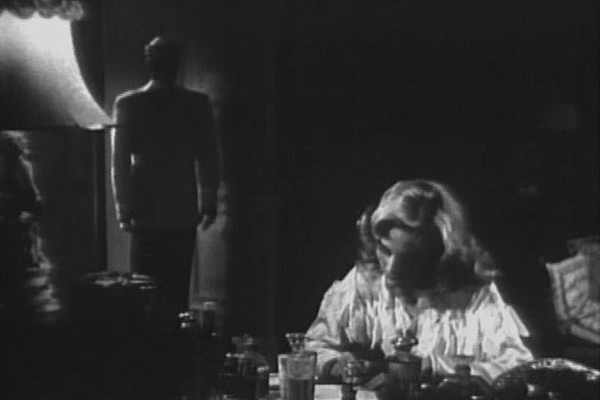
Arthur Ripley's dark, expressionistic film noir tells the tale of war veteran Chuck Scott, suffering from terrifying dreams caused by post-traumatic stress disorder, who is hired by a wealthy businessman as a chauffeur. He soon discovers that his new boss is a criminal and a murderer, and that his wife Lorna is trapped in a loveless marriage with the cruel, game-playing tyrant.
Falling in love, the two abscond to Havana together, chased down by Lorna's husband. Lorna is murdered with Scott's own knife, and he's the prime suspect. He runs from the police through the claustrophobic back streets of Havana, until he himself is finally killed and then he wakes up back in Miami again.
The whole trip to Cuba had been a dream, a nightmare brought on by the pills he was taking for his PTSD.
Recalling almost too late that he'd promised Lorna hed escape with her to Cuba, Scott flees with her once more, once again pursued by the husband. This time however, the evil man is killed on the road, and the pair make it to Havana to embrace in the same nightclub that Scott saw in his dream...
In this movie, reality becomes fantasy and fantasy reality - the effect of the film is already nightmarish, so Scott's extended dream sequence feels no more unusual than the rest of the film. And has he truly woken up or is Lorna about to be stabbed once more, and Scott forced to flee through Havanas choked streets once again?
Will the chase ever be over?
4. Revolver (2005)
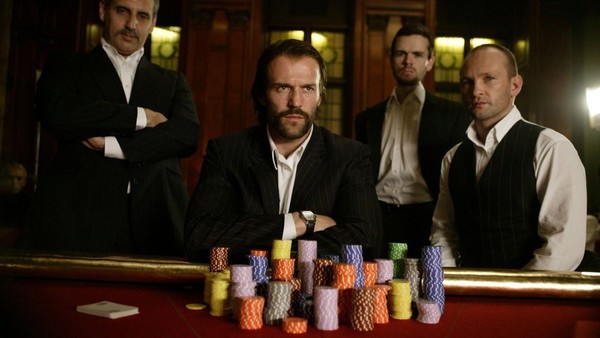
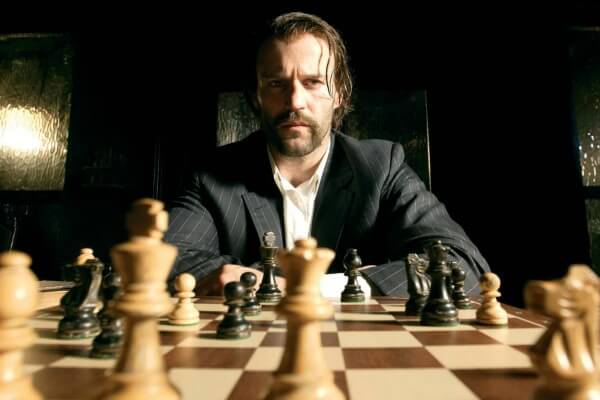
A bizarre hybrid of Matrix-style cod-philosophising, melodramatic cod-opera and stylish English cod-gangster movie, this was Guy Ritchie's fourth feature film and by far his most ambitious (that's if you dont count trying to make an actress out of Madonna in Swept Away).
Jake Green has spent his seven year prison sentence with two men in the cells on either side of him, a chess genius and a con man, who claim to have discovered The Formula, a technique that will allow the user to win any game they play.
When he is released, he uses The Formula to exact revenge against the mob boss that put him there but he appears to be dying of a rare blood disease, and more than one person seems to be trying to kill him
That premise doesn't begin to delve into the twisted plotting and labyrinthine narrative Ritchie's trying - with limited success - to put over in Revolver. But fair play to the man for trying, as even at its most laboured, Revolver is a mind-bender of a movie, subverting every trope of the kind of lazy crime thriller that Ritchie made his name with.
A treatise on the nature of the ego and the power of letting go of what which controls you, Revolver is confusing but never confused, often baffling but never bullsh*t.
3. Mad Dog Time (1996)
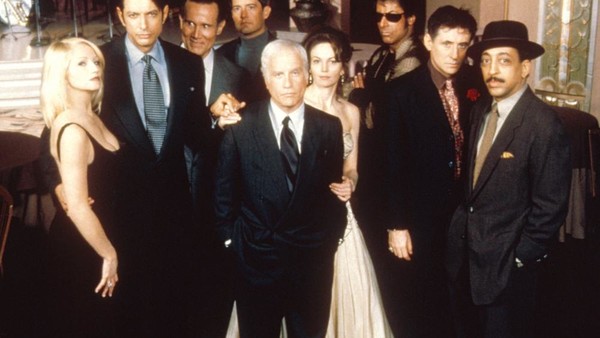
A personal favourite, this - also known as Trigger Happy and directed by Larry Bishop, the son of Joey Bishop of the Rat Pack, Mad Dog Times story takes place in a Vegas-style underworld of nightclubs and casinos.
Mickey Holliday is the absentee boss Vic's enforcer and unofficial hitman, while Brass Balls Ben London has been running the racket without him. You see, Vic's about to be released from a mental institution. A rival boss is set to try a hostile takeover, and sends his enforcers to challenge Holliday. They fail, because Mickey is a badass, and because this film sets up duels between mob hitmen where they sit behind ornate desks facing each other. You know, like Edwardian gentlemen used to do it.
There are power plays and general skulduggery - Holliday has been sleeping with his boss mistress (and her sister) while Vic's been indisposed, while London is only trying to take over his business - but it's these weird little touches that make Mad Dog Time such a peculiar pleasure to watch. That, and the cast (thats Billy Idol and Gregory Hines with Kyle MacLachlan and Jeff Goldblum in the above clip), which rivals most Robert Altman flicks and the fact that the whole thing apparently takes place in Vic's head.
Yes, this strange, strange film may well be entirely taking place in the addled brainpan of Richard Dreyfuss mob boss, a reality the film keeps alluding to with frequent close-ups of Vics eye, before going all out right at the end to zoom in through the iris, showing a kaleidoscopic starscape with Sinatra playing in the background.
Does that mean each of the characters represents a part of Vics tortured psyche? Is he making up the whole gentlemans duel thing too? Who knows.
2. Yakuza Apocalypse (2015)
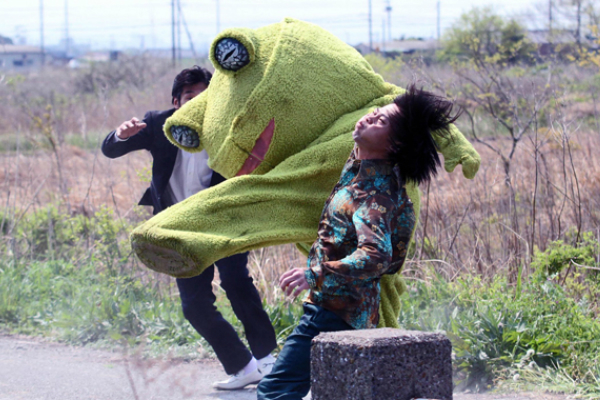
Last year's Takashi Miike production, Yakuza Apocalypse, more than lives up to the title. Kamuira is a vampire yakuza oyabun who can only feed on the blood of the innocent, passing on his undead might to his most loyal follower Kageyama when he's destroyed by the international syndicate he abandoned years ago.
Kageyama is a wannabe, desperate to be yakuza but allergic to tattoo ink and roundly mocked for it by his peers. Becoming a vampire yakuza lord changes things quite a bit for him, but with great power comes great responsibility - and that means avenging his mentor.
All of which sets him in the path of apocalypse...
Faced with revolt, the foreign cartel summons an unstoppable martial arts monster: a man in a frog mascot costume, the worlds toughest terrorist, who in turn summons an end-of-the-world bringing kaiju monster that looks suspiciously like a much (much) larger version of him.
There's no one better than Takashi Miike in making the sublime ridiculous and vice versa, and this is a throwback to some of his earlier, silly work - just with a veteran's sensibility and a higher budget.
Yakuza Apocalypses' unique, lunatic charm is that it plays the stupidity completely straight, and mercilessly takes the mickey out of the rest. Takashi Miike is still one of a kind.
1. Keyhole (2012)
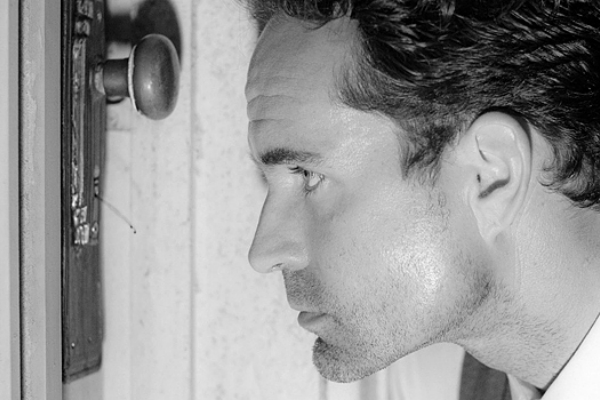
A gang of villains stages a home invasion of a haunted house and finds themselves under siege by police without and ghosts within - but their leader, Ulysses Pick, used to live in the house and his wife is still upstairs.
Narrated by a naked old man chained in the attic, celebrated artist and director Guy Maddin's Keyhole is an abundance of style and substance often divorced from one another, owing a good deal to F.W. Murnau and David Lynch in equal measure.
The gangsters invading the once happy home could be dead themselves, and the ghosts alive: in fact, the whole story could be the concoction of a lunatic.
By turns bewildering, terrifying, captivating and oddly moving, Keyhole is completely unforgettable. Who is the drowned girl Ulysses carries into the house, and can she really read his mind? Why doesn\t Ulysses recognise the gangs hostage as his son? Why do all the doors in the house need to be negotiated before they can be opened? Why is there a bog in a courtyard in the centre of the house? And why the constant repetition of the key phrase, remember your disease?
Dreamlike and completely engrossing, Keyhole is less a linear movie and more a cinematic experience: a dreamscape, claustrophobic and vibrant despite the pecked black and white: a silent movie that won't stop screaming.