10 Genius Techniques Directors Used To Get Great Movie Performances
The Blair Witch Project terrified the actors for real.

The success or failure of a movie can depend on so many things, but above all else it's whether or not a director and their cast are on the same page or not.
The annals of Hollywood are littered with legendary stories of the clashes between singular filmmakers and A-list talents, the results of which are either disastrous or miraculous. Usually disastrous, if we're honest.
And while many of the historical on-set feuds between directors and performers amount to nothing more than romanticised abuse, often directors will find brilliantly clever ways to manipulate the desired performances out of their cast.
At best these techniques can probably be considered cheeky and at worst pretty immoral, but each was at least a creative way to strongarm a visceral response from actors who, otherwise, would've struggled to create such a naturalistic response.
While they were certainly risky tactics, ultimately nobody was harmed by the deception long-term, and in each case the movie was unquestionably all the better for it...
10. Bryan Singer Secretly Told Everyone They Were Keyser Söze - The Usual Suspects

The Usual Suspects is one of the most ingeniously constructed and executed thrillers of the 1990s, its intentionally convoluted plot propped up by both its killer final twist and, of course, its awesome ensemble cast.
But in order to sew the seeds of paranoia and confusion throughout the film, director Bryan Singer decided to mess with the heads of his principal gallery of criminals.
According to star Kevin Spacey, Singer convinced Kevin Pollak, Stephen Baldwin, Benicio del Toro and Gabriel Byrne that they were the film's shadowy criminal mastermind Keyser Söze, only for them to view a preview screening of the film and discover that Spacey's Verbal Kint was the masked gangster all along.
Hilariously, Byrne was so incensed by the deception that he had heated words with Singer outside the screening room, but considering how brilliantly the trick informs the performances and imparts the film with so much ambiguity, it was doubtless a genius move.
9. Steven Spielberg Shot The Film In Chronological Order - E.T.

Steven Spielberg is able to work with child actors better than perhaps any other filmmaker past or present, as best demonstrated by the fantastic performances of Henry Thomas and Drew Barrymore as young Elliott and Gertie in his sci-fi masterpiece E.T.
But Spielberg hatched a very specific plan in order to wring the maximum amount of believable emotion out of their acting, by taking the extremely uncommon approach of shooting most of the film in sequence.
Despite how cost-prohibitive this typically is, Spielberg felt it would allow Thomas and Barrymore to bond with the E.T. prop in a very real way over the course of the shoot, and that this growing feeling would transpire through to the audience also.
And Spielberg was absolutely right - the quarantine sequence and Elliott's final farewell with E.T. are as heart-wrenching as they are because, by that point in the shoot, the kids had become so familiar with the "character."
The added expense was clearly worth it, between the universal critical acclaim and $792.9 million worldwide box office, on a mere $10 million budget no less.
8. William Friedkin Refrigerated The Bedroom Set To Keep The Cast Uncomfortable - The Exorcist

William Friedkin has quite the reputation for being a hothead filmmaker who will do whatever it takes to get the desired performance out of an actor.
On The Exorcist, this included randomly firing guns on set to startle actors - loaded with blanks, at least - slapping Father William O'Malley across the face and yanking Ellen Burstyn on a harness so hard she sustained a severe back injury.
But this is all messed-up, old school Hollywood abuse and there's nothing really clever about it.
What was very smart, however, was Friedkin's decision to have Regan's (Linda Blair) bedroom be refrigerated to temperatures below zero, in order to keep cast members Blair, Max von Sydow and Jason Miller believably anxious and uncomfortable. It also ensured that their icy breath would be visible on-screen.
Given how much of the movie ends up taking place in the bedroom, and how brilliantly convincing their antsy performances are, it was a smart choice, albeit one that came at considerable discomfort to the cast.
In subsequent years, Blair claimed shooting the film caused her to develop a real hatred of being cold.
7. Alfred Hitchcock Told Joan Fontaine Nobody Liked Her - Rebecca
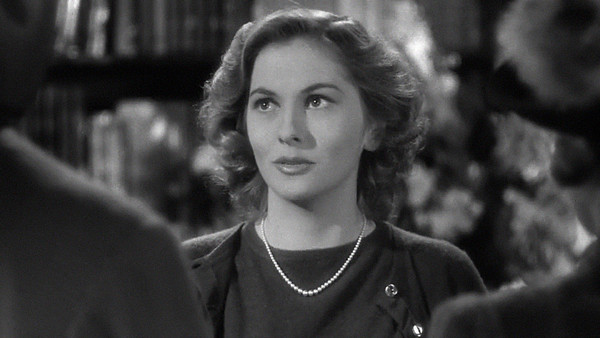
Like William Friedkin, Alfred "Actors Are Cattle" Hitchcock had a reputation for putting his leading ladies through hell, as best evidenced by his flat-out abuse of Tippi Hedren on The Birds (a result of rejecting his romantic advances, apparently).
More than two decades prior, however, Hitchcock took a decidedly less-creepy approach to manipulating his lead actress, Joan Fontaine, on his classic 1940 thriller Rebecca.
Fontaine played the nervy and naive new wife of widower Maxim de Winter (Laurence Olivier), and in order to ensure Fontaine played-up the twitchy paranoia to maximum effect, he told her that nobody on the set liked her.
Comically, Hitchcock wasn't totally fibbing: Laurence Olivier had previously asked the director to cast his eventual wife Vivien Leigh in the part at her request, despite Olivier not actually thinking she was well-suited for it. Marriage, eh?
When Fontaine was eventually cast, Olivier claimed to have endured plenty of strife from his lover about it, and probably wished Hitch had just complied with his "request."
6. Ridley Scott Didn't Tell The Cast About The Chestburster - Alien

Ridley Scott's sci-fi masterpiece Alien is jam-packed with iconic and unforgettable scenes, but none more so than the terrifying screen debut of the Xenomorph, which bursts out of Kane's (John Hurt) chest and scuttles away, much to the crew's horror.
In a masterstroke from Scott, he decided not to prep the cast on exactly what they would be seeing. They knew the alien would reveal itself, but the specifics - namely the spurting blood - were kept out of the script.
As such, the thoroughly freaked-out reactions from the cast - especially a beside-herself Veronica Cartwright - are completely genuine, and absolutely enhance the intensity of the scene.
Scott said of his decision to ambush his cast in this way, "The reactions were going to be the most difficult thing. If an actor is just acting terrified, you can't get the genuine look of raw, animal fear."
Hilariously, Weaver said, "Everyone was wearing raincoats - we should have been a little suspicious. And, oh God, the smell. It was just awful...All I could think of was John, frankly. I wasn't even thinking that we were making a movie."
Nobody received permanent psychological scars (probably) and the result is one of the most intensely unsettling scenes in cinema history, so this was clearly a win-win.
5. Stanley Kubrick Used George C. Scott's "Practice" Takes - Dr. Strangelove

Stanley Kubrick is another filmmaker well-noted for his dictatorial attitude on-set, most famously tormenting The Shining's Shelley Duvall to the extent of giving her a nervous breakdown.
But way back on Dr. Strangelove, Kubrick was playing 4D chess with his cast - and sometimes actual chess between breaks in filming, in fact - such as famously "forgetting" to tell Slim Pickens, who played Major Kong, that the film was a satire in order to evoke a more straight-laced performance.
But Kubrick's most deliciously devious manipulation emerged when directing the legendary George S. Scott, who of course played the unforgettable General Buck Turgidson.
Scott wanted to play the part more pared-down, and realising he wouldn't budge, Kubrick ultimately tricked Scott by asking him to perform Turgidson as larger-than-life in "warm-up" takes at the start of every set-up.
Kubrick ended up largely using these takes while discarding the more serious ones where Scott was actually, you know, trying.
Scott was pissed off enough that he vowed to never work with Kubrick again, even if he did eventually confess that Kubrick made the right choice for the character.
4. Bennett Miller Exploited Steve Carell's Self-Loathing - Foxcatcher

Bennett Miller's Oscar-nominated drama Foxcatcher is best remembered for its against-type performance by Steve Carell as murderous multimillionaire John du Pont.
And in order to help Carell reach the insidious ugliness necessary to play the part - and land a Best Actor Oscar nomination for his trouble - Miller employed a very specific, totally genius tactic.
In his own words, he told Carell, "Write the worst thing about yourself - the thing you wouldn’t tell anyone, not even your wife - on a piece of paper and put it in the pocket of your sweatpants. Just have it right there, and know that it’s in a place where, if I was a dick, I could just grab it."
Miller didn't elaborate on which specific scene this was, but nevertheless said it "might be [his] favorite thing [he's] ever put on film."
Considering how the funnyman is absolute bone-chilling throughout the movie, it was a smart technique which clearly helped get Carell where he needed to be mentally.
3. Derek Cianfrance Made Ryan Gosling & Michelle Williams Live Together During Filming - Blue Valentine

Blue Valentine is often cited as one of the most heartbreakingly authentic and believable movies ever made about relationships - specifically their breakdown.
The performances of Ryan Gosling and especially Michelle Williams were universally praised by critics - the latter earning a Best Actress Oscar nomination - and that's in large part due to writer-director Derek Cianfrance insisting that the two develop a close personal relationship prior to and during shooting.
This didn't just mean going out on a few dates or having a few nights on the town, though: Gosling and Williams ended up renting a house, filling it with their own clothes and possessions, buying groceries per their character's budgets, making home movies and taking a family portrait with their screen daughter, and even acting-out arguments.
This reportedly even extended to Cianfrance encouraging Gosling to enter Williams' bedroom and attempt to initiate sex with her, but when she rejected him, he ended up sleeping on the couch.
The results speak for themselves, because you'd be hard-pressed to think of a more convincing movie couple than this one.
2. The Directors Kept The Cast In The Dark (Literally) - The Blair Witch Project

Love it or hate it, The Blair Witch Project benefits immensely from the totally convincing trio of performances at its core, with Heather Donahue, Michael C. Williams, and Joshua Leonard entirely believable as three student filmmakers lost and terrified in the woods.
But they were only acting so much, as writer-directors Daniel Myrick and Eduardo Sánchez continually tricked and toyed with them over the course of the eight-day shoot.
For starters, many of the Burkittsville townsfolk interviewed at the start of the film were actually planted actors, unbeknownst to the three.
But for the actual shoot in the dense Maryland woods, the actors were only given vague hints about where to go, using a GPS device to locate the clues. These clues were actor-specific and encouraged improvisation, while insisting that each actor not show their instructions to their co-stars.
Further still, the directors would harass the actors when they bunked down in their tents for the night, blasting sounds of children screaming through a boombox and even stealing their food.
And for an added troll, Myrick and Sánchez ensured to have the shoot end on Halloween night, meaning the actors emerged from the woods only to be surrounded by suited-up trick-or-treaters. Gnarly.
1. Werner Herzog Trolled Klaus Kinski - Aguirre, The Wrath Of God

The stories of shooting Werner Herzog's 1972 historical drama Aguirre, the Wrath of God are the stuff of legend, particularly the tough time Herzog had working with his infamously hot-tempered star, Klaus Kinski.
Though Herzog wanted Kinski to play the part with a tranquility, reflecting the character's confidence in his crusade, Kinski was adamant that he portray Lope de Aguirre as larger-than-life as possible.
Kinski couldn't be dissuaded, and so Herzog quite ingeniously gave him the 'ol acting rope-a-dope, insulting and irritating Kinski to the point that he would fly into a rage.
Herzog then ensured to have a scene ready to shoot just as Herzog calmed down, preventing an exhausted Kinski from getting too energetic and over-the-top during filming.
And this is honestly one of the more chilled-out stories of Aguirre's production, a shoot where Herzog threatened to murder Kinski and then kill himself if he tried to quit the film. Yup.
Nevertheless, the madness resulted in what remains one of the most evocative films of Herzog's entire career and a sure epic for the ages.