10 "Godly" Directors Who Have Been Idolised Out Of Proportion
Which famous directors are getting a lot more credit than they probably deserve?
 There are some directors out there who have reached that elusive "immortal" status. The filmic equivalents of bonafide gods, appreciated and beloved by millions of people all over the world - their names frequently cited in conversations about the "greatest filmmakers of all time." And for most of these folk, their reputations are well deserved: Charlie Chaplin, Alfred Hitchcock, Stanley Kubrick, Martin Scorsese... these directors have crafted some of the best and most important motion pictures in existence. And yet not everyone who finds themselves lumped into this category deserves all the praise. That's to say, there are a heavy number of directors who have - quite simply - been idolised all out of proportion. Directors whose names we hear and are exposed to constantly, have reached the status of "god-like entity" in their associated genres of filmmaking, and are lauded as being seminal in all the ways that only a brilliant director can be. And yet, the more you delve into their bodies of work, the more you realise that the hype machine has been working in a state of overdrive for a number of years. Join us, then, as take a look at 10 such directors; all of whom have their merits, but aren't quite as formative as their reputations would have you believe...
10. Quentin Tarantino
 Quentin Tarantino is one of the most influential directors of his generation; a film obsessive who learnt everything he knows from working in a video rental store, he burst onto the scene with Reservoir Dogs in the early '90s and pretty much blew everyone away with the sheer audacity and uniqueness of his debut. There's no denying that Dogs is a great film, of course, and the same goes for Pulp Fiction, Jackie Brown, Kill Bill, Inglourious Basterds and Django Unchained - these are all the works of somebody who has a clear and unashamed love of cinema. Everyone knows, of course, that Tarantino's idea of a film derives from taking bits and pieces from hundreds of other films and pulling them together to create something fresh; he's the directorial equivalent of a hip hop artist, and he's always wore his influences on his sleeve. The problem, though, is that his pictures, though ripe with memorable dialogue cues and witty cultural references, lack substance; you rarely take anything away from a Tarantino movie other than a checklist of films you should go see. next. And his pictures - Jackie Brown aside, perhaps - lack any sort of emotional heart or proper plottings. He also seems to be regressing as a filmmaker; his pictures are becoming more noticeable in their homage-clad style, less interested in trying to seamlessly blend elements of originality with all those cinematic references. Still, because Tarantino serves as something of a poster boy for every movie buff who aims to take Hollywood by storm, his shortcomings are rarely touched upon; people idolise him because, after all, he's one of the geeks.
9. George A. Romero
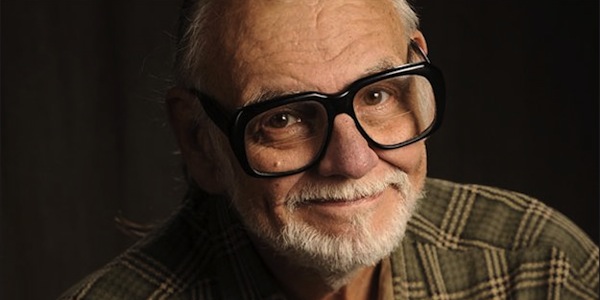 George A. Romero's name is pretty synonymous with that of the "zombie flick," which makes a lot of sense given that the man pretty much invented the modern zombie film as we know it - at least, he took an established legend and made it his own. After all, the zombies we think of today didn't exist until Romero made Night of the Living Dead - lots of people don't seem to realise that such creatures aren't age-old or traditional "monsters" in the same way that vampires and werewolves are. Romero invented them. As a result, Romero is pretty much hailed as something akin to a god within the realms of the horror genre. And though he deserves credit for giving us one of the best and most appealing subgenres in horror cinema, his standing as a "legend" seems a little stretched; after all, he made two great zombie films in Night of the Living Dead and its arguably better follow-up, Dawn of the Dead, and has spent the last three decades churning out middling sequel after middling sequel; hardly the sort of stuff you'd associate with such a legendary figure. There's no denying his influence, but sometimes it pays to take a step back and approach things with a level head. Romero is a notable figure... but - and let's face it - he's nothing akin to the "god" that so many people seem intent on pegging him as. But thanks for the zombies, George.
8. Darren Aronofsky
 Darren Aronofsky's most devout fans will have you believe that he's some sort of Messiah clad in human form - only a man of such high born standings could have pulled off something like Noah, surely? And so here's another very talented filmmaker who has been idolised to the point where we all probably think he's a lot better than he actually is. Which is to say, Aronofsky is a flawed filmmaker, his work borders on the pretentious, and he might have made pretty much the same film twice with Black Swan and The Wrestler (half-joking there, but some could probably argue that point rather well). So there is a feeling that runs through even Aronofsky's best works that seems to say: "Look at how deep this is; can you feel how freakin' deep this is?" to the point that it is almost off-putting. There's no denying that Requiem for a Dream, which is absolutely his best film, is so overwrought that is actually hurts. And in fact, pretty much all of Aronofsky's works seem to hoover in a perpetual state of overwroughtness that genuinely makes them all feel like the offspring of somebody who is trying way too hard. Is it possible to be a truly "godly" filmmaker when your works feel so self-consciously styled? Then there are his "total nonsense" films, which are Pi and The Fountain. Many will argue the worth of these films as highly philosophical and intelligent pictures, and yet they both go to exactly the same place: nowhere.
7. Brian De Palma
 Brian De Palma was one of the original film school "brats" alongside the likes of Steven Spielberg, George Lucas and Francis Ford Coppola, and though he's often regarded as one of the best and most talented filmmakers of his generation, there's barely any proof in his body of work to back that statement up. Okay, maybe that's a little harsh: De Palma was the man behind the camera on Carrie, after all, but that film aside (which is probably the "closest" any of his works come to being perfect), almost every single one of his pictures is a muddled mess. Which is to say, De Palma doesn't seem to be able to handle all of the aspects that are required to be a true director - he focuses way too much on visuals (which are usually awesome, of course) and rendering his flicks like Hitchcock films that he forgets that there are other things that need his attention, too. So pacing is pretty much a major issue in all of his pictures, including the likes of The Untouchables and Scarface, two of his better films (films which also, by the way, highlight De Palma's ineptitude for choosing the right musical cues - awful). De Palma's flicks are also frequently cheesy, and he isn't particular good with actors - they all seem lost. Scan the man's filmography and you'll notice the lack of consistency between works. There are a few great flicks, but nowhere near enough to justify his reputation. Perhaps he should have been a cinematography instead?
6. Michael Mann
 Michael Mann entered the pantheon of "god-like" directors a decade or so ago, despite never really having earned his place there - his name alone seems to be enough to generate excitement, but nobody really seems to know why. You just assume that Michael Mann is a great director because he made Heat, and also because everybody keeps telling you that he's a great director. So here's an example of a "good" filmmaker with a lot of shortcomings, whose reputation has sort of ushered him through the door. Somebody needs throw him out. Michael Mann's Wikipedia page denotes the following (no doubt he added this part himself): "Total Film ranked Mann No. 28 on their 100 The Greatest Directors Ever and Sight and Sound ranked him No. 5 on their list of the 10 Best Directors of the Last 25 Years, Entertainment Weekly ranked Mann No. 8 on their 25 Greatest Active Film Directors list." Michael Mann? Seriously? There's no doubting the fact that Michael Mann's films look amazing; he has a unique visual style that is almost always complimentary. But where's the substance? Heat might well be his greatest achievement, but there's not enough meat - it's a two hour story padded out to three. The Last of the Mohicans? More interested in how it looks than the story it tells. The Insider? Surely one of the most overrated movies of the past 20 years? And what else? Miami Vice was downright terrible; Public Enemies was cold and boring and a waste of a good premise. It might seem petty to just reel of Michael Mann films and reduce them to a few words to make a point, but that is kind of the point; Mann is a good filmmaker (no more, no less) who is frequently mistaken for some sort of deity.
5. Christopher Nolan
 Arguably the most popular director of recent times, at least in mainstream circles, Christopher Nolan also seems to be regressing somewhat as a filmmaker as the years have gone on; his early pictures like Following and Memento were genuinely innovative and intelligent in both their methods of storytelling and in actually having something to say; his later works, such as Inception and The Dark Knight Rises, are so bombastic they can barely function as films. Much has been written about the "overrated" nature of Christopher Nolan's work; he can't write dialogue (indeed, everything his characters say nowadays tends to sound like it's been written by a professional speech writer); he can't direct action; his work is cold; his characters are dull and uninteresting and exposition-obsessed. One could probably argue those points into the ground for days on end, of course, and though the man certainly deserves credit for crafting some of the most interesting blockbusters of recent times, such criticism do have real weight. The problem is that Nolan is seen as something of a "god" in this day and age - his inspires such high levels of excitement from millions of fans that any detractors might start to wonder what they're missing. But the truth is that Christopher Nolan is probably more overexposed than he is overrated. The man does what he does, and he does it well enough. Such extensive coverage inspires nit-picking of the highest order, however. And that's it.
4. Ridley Scott
 Ridley Scott is one of the few directors on this list who rarely contributes to the writing process inherent to his pictures; as a result, his entire body of work feels scattershot and impersonal, and yet the man has earned a reputation as one of the best directors of all-time on account of his few great pictures: Blade Runner, Alien, and (at a push) Gladiator are all wonderful films, sure, but what else has Scott done to earn such high praise and accolade? Surely a truly great director should know how to bring out the best in pretty much any script he chooses to bring to the big screen? Uh-uh. It's true that his pictures almost always look beautiful (indeed, he's often praised for his handling of the visual aspects), but so many of them fail to show any real substance and he frequently directs on autopilot. Take a quick scroll through his filmography and look at all the duds; they far outweigh the movies that are actually worth your time. So very frequently it really does kind of feel as though Scott has been pegged as something of a legend without any real evidence to back it up. There are just too many failures. Gone are the days, then, where the words "A Ridley Scott Film" should conjure up the levels of hype that are so frequently conjured up whenever he announces a project. Did you see The Counselor?
3. Jean-Luc Godard
 Werner Herzog had it right when he said: "Someone like Jean-Luc Godard is for me intellectual counterfeit money when compared to a good kung-fu film." Surely the famed French-Swiss filmmaker is one of the most overrated directors in the history of the medium, given the fact that he's constantly lauded as some sort of pioneer of cinematic invention, breaking down the narrative barriers and what not? But really, is it possible to truly enjoy a Godard film that isn't Breathless (if even that)? Does Godard verge so far past the realms of pretentiousness that we need to come up with a new word to describe his filmmaking ventures? Perhaps. Die hard Jean-Luc Godard fans will tell you that you need to see "ten or fifteen" of his pictures to truly appreciate his genius, which doesn't make a lot of sense: if you have to immerse yourself so deeply into a filmmaker's canon in order to see what he's getting at, what's the point? Life is much, much too short for that level of futility, surely? So the problem with Godard, really, is that the "intelligent" aspects of his films are so arrogantly rendered and free of life and entertainment value that they're merely dull. His films feel like they've been made just for critics. We'll leave you with Ingmar Bergman on this one, who said of the "great" filmmaker: "Ive never gotten anything out of his movies. They have felt constructed, faux intellectual and completely dead. Godard is a f*cking bore."
2. Terrence Malick
 Terrence Malick assured his own legacy as a "godly" director when he disappeared off the face of the Earth having made just two pictures in the '70s, the brilliant Badlands and the very, very good Days of Heaven. Given the critical success of those movies, and the unique way in which Malick wrote and directed them - dream-like; ethereal - and the fact that he went away for 20 years before returning to the realms of cinema made him into a big deal. The levels of hype associated with war film The Thin Red Line were massive, and though that picture split opinion upon release, it still ranks as one of his best films. Okay, so three pretty great movies, right? That's the sign of a talented filmmaker, isn't it? Maybe, maybe not. Since Red Line, Malick's work ethic has increased ten-fold, but the quality of his pictures has sagged and the man has only succeeded in exposing himself as one of the most pretentious directors working today. So much so, in fact, that his recent ventures - The Tree of Life, To The Wonder - have lessened the effect of his previous efforts. That might be a shallow way of looking at things, but the man has pushed his "style" so far in recent times that we've almost reached the point of self-parody. What is The Tree of Life, after all, if not a ponderous and ultimately overwrought exercise in self-satisfaction? It cannot be, after all, a movie made for public consummation, can it? Who has the patience for such a lumbering mess of ideas that amounts to such a purposeful but entirely lazy vagueness? And you can use those same descriptives to describe his follow-up, To The Wonder, which exists only as an example of Malick buying into his own legacy; the man has truly lost it.
1. David Lynch
 David Lynch seems like a great guy. In real life, that is. But hearing him talk about films is a completely different experience to actually watching any of his movies, which are - for lack of a better descriptive term - downright bewildering in their complete and utter aimlessness. Lynch has amassed an army of fans through the apparently "dense" and "puzzling" nature of his works; works which he frequently shoots in a dream-like, hazy style, as if that makes up for the lack of substance or proper narrative flow. When you hear the words "David Lynch," then, there's this instinctive tendency to find yourself thinking: "Oh, David Lynch made this? How exciting." But that's before you remember that you don't actually like any of David Lynch's films; that they are boring and tedious. That David Lynch is actually wasting your time with every movie he makes that you set out to see (except The Elephant Man - that's great), because there's absolutely no way in hell he knows what he's trying to say with any of them. It's a trick. A masquerade. And the reason he gets away with it? Because there's no way for anyone to prove or disprove that his movies are utter genius. It's become easier, for some reason, to praise overlong, pretentious works like Mulholland Drive instead of calling them out for the pointless mindf*cks that they actually are. Indeed, sniffing glue and staring at a wall splattered with a few colours in a smokey room is about as rewarding as any David Lynch movie that isn't The Elephant Man. Truly, the glass isn't even half full; it's totally empty. Like this article? Agree or disagree? Let us know in the comments section below.