10 Great Filmmakers Best Remembered For The Wrong Films

Are we discrediting some of cinema's best directors by forgetting their best movies?
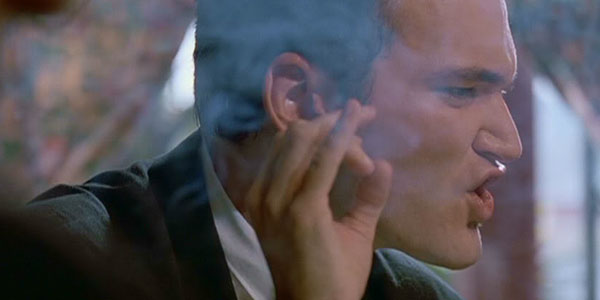
Usually, cinema's true classics are the ones to last longest in the collective memory: Coppola has his Godfathers (the first two only), Hitchcock has his Vertigo, and Kurosawa has his Seven Samurai. And we do remember great directors for their "greatest films." Most of the time. There are some filmmakers, however, whose greatest works find less fame than some of their other movies. Often, it's for monetary reasons: financial flops, regardless of quality, have a tendency to get forgotten, while a filmmaker's most commercially successful film might end up being their best-remembered, regardless of quality. This list runs on the idea that a "wrong" film is not the best work of the filmmaker in question. Of course, quality is subjective - you may disagree with some or even all the entries on this list. But even if you find the "right" movies selected to be personally disagreeable, the following are, at the very least, still underrated among the general populace, and deserving of the chance to be appreciated on a wider scale. Here are 10 directors and the films they should be best remembered for...

10. Steven Soderbergh

Best Remembered For: The Ocean's Trilogy (2001-2007), Traffic (2000), Erin Brockovich (2000) Should Be Remembered For: The Limey (1999) The Ocean's films brought him fame and fortune, while Sex, Lies and Videotape, Traffic and Erin Brockovich brought in the accolades for Steven Soderbergh. The (now-retired) director took Hollywood's 'one for you, one for me' rule literally, however, and it was in his 'one for me' projects that Soderbergh often performed his most interesting experiments. One of these, The Limey, came between the critical and commercial success of Out of Sight and Erin Brockovich, and also happens to be the former filmmaker's best film. Soderbergh borrows fragmented 60s editing techniques to toy with The Limey's basic, B-thriller narrative, in which an old con (Terence Stamp) is released from prison then flies to LA to avenge his daughter's death. The editing makes for a disorientating - but ultimately invigorating - experience, one that plays out in kaleidoscopic colour. Also on his best form is Stamp, who plays the titular cockney thug with his typical coldness, softened by a buried melancholy unseen in most of his other performances. The Limey may be minor in scope, as an indie with a mere $10 million budget, but Soderbergh repeats what he did with Sex, Lies and Videotape back in 1989 by showing budding moviemakers how to make something substantial out of very little. The Limey is vibrant and odd, memorable and endlessly rewatchable.

9. Sidney Lumet

Best Remembered For: Network (1976), Dog Day Afternoon (1975), Serpico (1973) Should Be Remembered For: The Hill (1965) For the traditionally accepted Lumet classics, take your pick: 12 Angry Men, Dog Day Afternoon, Serpico, Network, The Verdict, Before the Devil Knows You're Dead... Yet Lumet's very best film is so often overlooked, mostly because it's so difficult to get hold of these days. That would be The Hill, Lumet's 9th feature and easily one of the most criminally underseen movies ever. The setting is a military prison camp in WWII Africa, where former Sergeant Major Joe Roberts (Sean Connery) and his fellow inmates are repeatedly made to climb the camp's infamous sand hill in the tortuous desert heat. While the storytelling is predictably economical, The Hill is also aesthetically a step above most Lumet movies, the restricting single location urging the director to up his visual game. The performances, though, are as ever Lumet's priority, and he draws understated, vanity-free performances from the whole cast. That includes Sean Connery, who's the best he'd be in his entire career here, a blistering match for Lumet's later collaborator Al Pacino. It remains uncertain as to why The Hill is still so unknown; Woody Allen for one ranks The Hill alongside The Treasure of the Sierra Madre and Double Indemnity as one of the great American movies.

8. The Coen Brothers

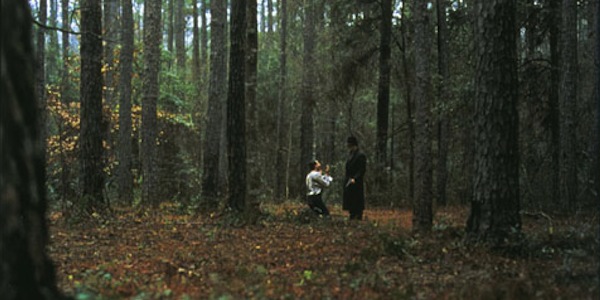
Best Remembered For: No Country For Old Men (2007), Fargo (1996), The Big Lebowski (1998) Should Be Remembered For: Miller's Crossing (1990) Fargo was the mainstream breakthrough embraced by Oscar, The Big Lebowski is the cult comedy so popular it's barely even cult anymore and No Country For Old Men is what conventional wisdom would say is the Coen brothers classic. But what of Miller's Crossing, the Coens' homage to prohibition-era gangster movies and labyrinthine film noir? A masterpiece of plotting, Miller's Crossing is ironically both one of the brothers' least-watched films among the general public and a summation of what they're best known for: offbeat dark comedy and genius wordplay. The Coens didn't just pilfer from the past for Miller's Crossing, but invented their own tough guy language. It's a key reason why this tale - of a Man With No Name-type antihero (Gabriel Byrne) playing warring gangs off against each other - endures: there's so much talent evident in the screenplay that every line of dialogue comes across as a witty one-liner for the ages (one particular highlight: "I suppose you think you raised hell." "Sister, when I've raised hell, you'll know it"). But it's not just about the words, as glorious as they are. Miller's Crossing also bears some ravishing autumnal photography and a cast that's right at home in this tribute to classic cinema; Byrne is wonderfully sardonic, John Turturro is appropriately slimy and Albert Finney brings an old-school weight to proceedings that towers over every scene. You also get Steve Buscemi talking faster than he's ever talked before, which just about seals the deal.

7. William Friedkin

Best Remembered For: The French Connection (1971), The Exorcist (1973) Should Be Remembered For: Sorcerer (1977) If you have an Oscar winner (The French Connection) and a box office smash (The Exorcist), as well as a major flop long out of print (Sorcerer) under your belt, chances are you're going to be remembered for the former two rather than for the latter. The pity is that Sorcerer is genuinely William Friedkin's best film, one that not only could've been a hit (had Star Wars not been released at the same time, commercially trouncing it), but really should've been. A remake of Henri-Georges Clouzot's The Wages of Fear, Sorcerer takes the same essential plot - four men race across a desolate South America to put out an oil fire, driving trucks laden with dynamite - and updates it with a 70s grunginess. It's one of the few remakes that holds up to the original, retaining the tension of Clouzot's film while adding a dimension of horror and a hallucinatory, sweat-soaked atmosphere. Friedkin makes the environment threatening in a heightened, almost stylised way, while always keeping a sense of realism at the fore, especially in his casting of an international ensemble of character actors, rather than conventional stars. Derided upon release, Sorcerer's currently undergoing reassessment: it's made Tarantino's top 12, Stephen King ranked it number 1 in his list of "movies that never disappoint," while some critics are now even calling Sorcerer a better movie than than the original. It also happens to be Friedkin's favourite amongst his own works.

6. John Boorman

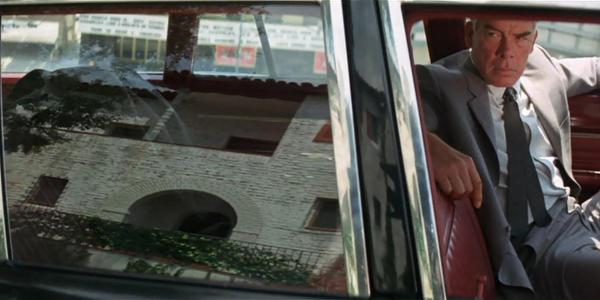
Best Remembered For: Deliverance (1972) Should Be Remembered For: Point Blank (1967) Yeah, it's a taut exercise in colouring the backwoods thriller in as dark a shade as possible, and that duelling banjos stuff is pretty catchy. But for John Boorman's greatest film, one need look further back than 1972's Deliverance - that's back to 1967, to his sophomore effort, Point Blank. Not just because Point Blank has all the requisite thrills of a gangster movie - though a rough-and-tumble, surprisingly brutal night club fight scene and a moment in which the 'hero' quietly infiltrates a henchman's lair are both suitably nail-biting - but because Point Blank is much deeper than that. With a B movie budget and premise - a thief known only as Parker (Lee Marvin) seeks revenge after his best friend betrays him and leaves him for dead - Boorman creates what could be the quintessential movie of 60s Hollywood experimentation. It's chilling and psychedelic, a hazy hardboiled noir set in the California sun, with an eerie soundtrack and masterful, evocative editing. Frankly, no one ever used Lee Marvin as effectively as Boorman did in Point Blank, Boorman playing on the actor's taciturn thug archetype and making him into some terrifying yet strangely sympathetic walking spirit. The imagery and editing technique has influenced others down the line (Soderbergh used it as a touchstone on The Limey), and it's obvious why - the simple sight of Marvin's dead-eyed gangster walking down a corridor, his shoes clip-clopping rhythmically as he goes to kill the man who deceived him, will stick with you for good.

5. Robert Altman

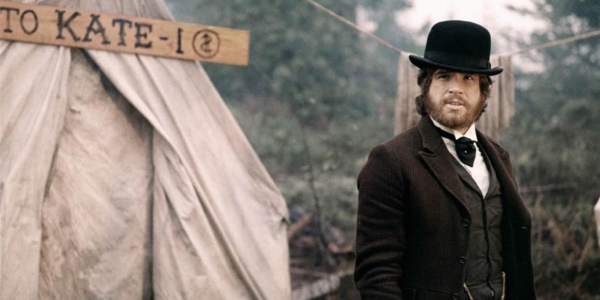
Best Remembered For: MASH (1970), Nashville (1975), Gosford Park (2001) Should Be Remembered For: McCabe & Mrs. Miller (1971) Robert Altman is the godfather of the ensemble picture, so of course the films he's best known for are those featuring sprawling casts and wandering narratives. The film that tones down his hit-and-miss ensemble approach most satisfyingly, however, is quite probably also his best film, and one of the finest westerns ever made: McCabe & Mrs. Miller. The story of a gambler (Warren Beatty) and a cockney madame (Julie Christie) opening a brothel in a quiet northwestern town, McCabe & Mrs. Miller is a revisionist western requiring Altman to trust his instincts with just two primary actors. He doesn't change the mould completely - he applies his taste for realism and overlapping dialogue even here, resulting in what feels like one of the most genuine films made in the western genre. And for all those people hankering for a gunfight, McCabe & Mrs. Miller has one, but it comes after Altman has successfully made it feel like there's a great deal at stake, raising the tension to almost unbearable levels. Roger Ebert was a fan - he said of the movie: "Robert Altman has made a dozen films that can be called great in one way or another, but one of them is perfect, and that one is McCabe & Mrs. Miller" - but there's also an argument that The Long Goodbye, made with regular Altman collaborator Elliot Gould, is the director's best. An adaptation of the Raymond Chandler novel that uproots private detective Philip Marlowe to 1970s LA, it's a looser film than McCabe & Mrs. Miller, but that's part of its laid back charm.

4. David Fincher

Best Remembered For: Seven (1995), Fight Club (1999) Should Be Remembered For: Zodiac (2007) Subjectivity already dominates this list, so I'll admit from the off that David Fincher's supposed masterpiece, Fight Club, does little for me. And Seven, a serial killer film obsessed with the grisly details without taking much notice of the human impact, now feels largely like a dry run for Fincher's later true-life serial killer procedural, Zodiac. That's not to say Seven isn't in itself a minor classic - it's just that Zodiac is superior as a thriller, as a mystery and most of all as a compelling human drama. Zodiac is the youngest of the films on this list, but the time that's already passed is enough to tell that the project has so far been the most perfect fit for David Fincher. The director's fastidious nature, combined with his gothic visual styling, has resulted in one of the most fascinating procedurals ever committed to celluloid. It didn't set the box office on fire on release and the Oscars didn't even recognise it, but that's no indication of Zodiac's quality: a two-and-a-half hour study of obsession surrounding San Francisco's Zodiac killer, this is Fincher's best to date. With a superb cast, including Jake Gyllenhaal, Robert Downey Jr. and Mark Ruffalo, and a script full of painstaking period detail and intrigue, Zodiac becomes more than a serial killer movie. Perhaps that's why audiences tuned out back in 2007 - Zodiac deals less with the gory murders and more with the after-effects of the crimes, a far cry away from Fincher's more conventional Seven.

3. Jean-Luc Godard

Best Remembered For: Breathless (1960) Should Be Remembered For: Bande A Part (1964) (Or Any Number Of Other Films Made Post-Breathless) Breathless heralded in a kind of rebellion of form in cinema, the effects of which can still be seen today. Yet it's not just Breathless that inspired a change in film, but the entirety of Godard's 60s period - accepting Breathless as 'the one' would require you to ignore the 14 other films he made in that period, all of which make an attempt to revolutionise cinema and some of which are ultimately better than his most famous movie. Truth is, for any fan of Godard, a whole host of films could take Breathless' place (Contempt, Pierrot Le Fou, Masculin Feminin, Alphaville and Weekend all have their fans). It's not that Breathless is a bad movie - far from it - but it's an influential first effort, and assuming Breathless is Godard's most overwhelmingly outstanding among his films is to assume his career ended with his debut. In reality, a filmmaking career of five decades and counting began there. As for Bande a Part itself, it's here because it's Godard's most accessible and enjoyable work, and has been just as influential as any other Godard movie. Bertolucci's The Dreamers outright steals one of its scenes, while Tarantino has paid homage to the film throughout his career, borrowing its dance scene for Pulp Fiction and naming his production company after the film.

2. Quentin Tarantino

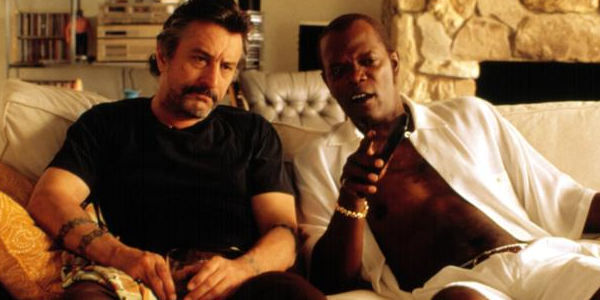
Best Remembered For: Pulp Fiction (1994), Reservoir Dogs (1992), Django Unchained (2012) Should Be Remembered For: Jackie Brown (1997) Jackie Brown is the runt of Quentin Tarantino's litter - like some long forgotten family heirloom, it resides somewhere in the house of QT, discarded and seemingly of no use to anyone. Everyone knows Reservoir Dogs, Pulp Fiction, Kill Bill, Inglourious Basterds and Django Unchained as well as they know the argument that Tarantino has a penchant for self-indulgence. But that argument would be discounting Jackie Brown, a crime flick like no other in Tarantino's filmography, what most people call his leanest movie, what everyone calls his most 'mature' movie, and what some people consider to be his outright best. Alongside the brash nature of Tarantino's other work, Jackie Brown is a much simpler film, and it's one that's been easily lost in the noise. But it's in many ways the writer-director's most complete movie, and the one that rewards repeated viewings perhaps more than any of his others. The cast is across-the-board outstanding; Robert Forster is remarkably unremarkable as weary bail bondsman Max Cherry, Pam Grier is both feisty and vulnerable as the eponymous drug-running air hostess turned police informant, and the best use of De Niro in years comes in Tarantino casting the renowned actor as a slovenly, dim-witted thief. Props must also go to Samuel L. Jackson, who gives his best performance ever as plainly psychopathic gun-runner Ordell Robbie, who shifts from hilarious to downright terrifying from scene to scene. Yet at the heart of Jackie Brown is the most extraordinary thing for a Tarantino movie: an actual heart, the romance between Max and Jackie achieved through quiet understatement. Mark Kermode considers Jackie Brown the greatest Tarantino movie, and is among a growing number of critics who find it to be Tarantino's most wholly satisfying work.

1. Orson Welles

Best Remembered For: Citizen Kane (1941) Should Be Remembered For: The Trial (1962) There's no question that Citizen Kane was influential on the cinema that came after it. But the general idea that Welles' career starts and ends with his first picture is absolutely false; Kane is justifiably a classic, but as Welles' other films are slowly reappraised and re-evaluated, a rich body of work spanning decades becomes ever more apparent. With restored prints and 'director's cuts' closer to Welles' original vision increasingly available, The Magnificent Ambersons, Touch of Evil, Chimes at Midnight and F For Fake have all revealed themselves as classics in their own right. But perhaps no Welles film is as accomplished as The Trial, the director's cool, sci-fi tinged adaptation of the Franz Kafka novel. An urban horror about a man tried for a crime without being told what he's accused of, The Trial is a waking dream, or more closely a nightmare, and it not only looks and feels like no other film made by Welles, but it's unique in cinema on the whole. The black and white cinematography is monochromatic perfection, and Anthony Perkins is superbly dry as doomed protagonist Josef K, but The Trial's dense, almost impenetrable intelligence and wilful weirdness is what makes the film so powerful. And if you want further proof of the film's unparalleled greatness within the Orson Welles catalogue, just look to the man himself - even Welles considered The Trial "the best film I ever made." Like this article? Let us know in the comments section below.

Contributor
Contributor

Lover of film, writer of words, pretentious beyond belief. Thinks Scorsese and Kubrick are the kings of cinema, but PT Anderson and David Fincher are the dashing young princes. Follow Brogan on twitter if you can take shameless self-promotion: @BroganMorris1