10 Great Films Banned By The Catholic Church

The Catholic Church doesn't always like the great films, and we have to respectfully disagree with them when it happens.

Beginning in 1933 the Catholic Legion of Decency, a Catholic film register with an aim for the "purification of the cinema," wrote reviews and rated films on a regular basis. Since then it has changed name and position many times but still continues to write regular movie "reviews" (they are more like short synopses) and provide a Catholic-oriented rating system. This system doesn't hold much power outside the Church but it goes as follows; A-I: Suitable for all audiences A-II: Suitable for adults and adolescents A-III: Suitable for adults only A-IV: For adults with reservations B: Morally objectionable in part C: Condemned by the Legion of Decency O: Morally offensive (in 1978 B and C ratings combined to form O) This list concerns those films given the C or O rating depending on which side of 1978 they fell. These films were provocative and controversial enough to be banned/condemned by the Catholic Church. Whilst reading this list it is important to remember that these reviews are the opinions of Catholic Bishops at the time. Especially myself, as a Catholic, cannot stress enough the fact that these are not a representation of the opinion of all Catholics, merely the committee who authored them. I certainly do not agree with all of these opinions and am confident that a film's artistic merit is maintained, despite any religiously based reviews.

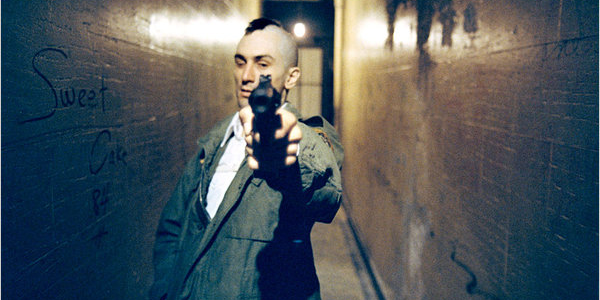
10. Taxi Driver (1976)

"Irrational violence lacks a distancing objectivity and its attempts to shock are excessively graphic in scenes of bloodshed" Scorsese's timeless masterpiece about a man's want to join society came under much scrutiny at the time and is irreversibly conjoined with John Hickley Jr.'s attempted assassination of President Ronald Reagan. Needless to say, its a an utterly ingenious film and is hailed by critics and moviegoers alike. However, the Legion of Decency condemned the film and reasoned the the film's violence was "irrational" and "lacks a distancing objectivity". Unfortunately for them, these two reasons are in part what makes the film so brilliant. The irrational violence acts as a vehicle to demonstrate Travis Bickle's emotional corruption and also builds him as a unique and fascinating character. Scorsese's success in not distancing the audience allows a clever and terrifying insight into the type of societal degradation and utter loneliness experienced by Bickle. Taxi Driver is a brilliant film; not one for the light-hearted, but albeit brilliant.

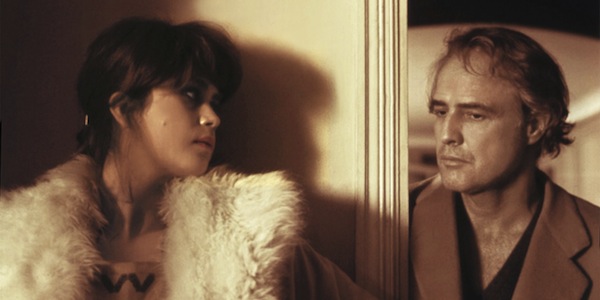
9. Last Tango In Paris (1972)

"Adds up to very little and the sex scenes, while not pornographic are needlessly extended and explicit." 'Last Tango in Paris is one of the great emotional experiences of our time' said Roger Ebert in his highly affirmative review of Last Tango upon it's release. And that's what it truly is; a great emotional experience. So? What is the greatest demonstration of emotion capable by any human being? A sacrifice of one's body in the most intimate way possible? SEX! Exactly! For the Church to characterise the sex scenes as "needlessly extended and explicit" seems to show little appreciation or understanding of the film's artistic merit. Yes, it goes a little over the top at times, but the scenes are necessary and a showcase of the acting talents of Marlon Brando and Maria Schneider, as well as the directorial brilliance of Bernardo Bertolucci.

8. From Russia With Love (1963)

"Espionage thriller marred by some scenes of sadistic violence, casual sexual encounter and suggestive dialogue" James Bond is one of the most visceral and thrilling characters of all time. His wit, suave, and heroism is universally popular and popular worldwide. It is confusing, to say the least, that the Catholic reviewers would ban only one film and not the whole series. The 'sadistic violence' spoken of in the review is clearly nothing compared to modern day action films so one could possibly believe that the Church's objection is in reference to Bond's promiscuity? Then why didn't they state it outright? Speculation is really going to lead nowhere and the best assumption is probably that some aspect of the film conflicted with Catholic affairs at the time and that led to it's condemnation. Needless to say the Bond series is wall-to-wall fun and absolutely thrilling. I doubt the Legion of Decency gained any supporters with this review and definitely did not hinder the Bond franchise with it's worldwide success continuing to this day.

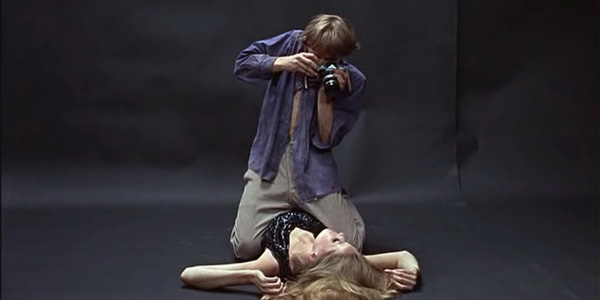
7. Blow-Up (1966)

"His cold and impersonal film, however, is unconvincing in its pessimistic vision of modern life. Nudity in a sexual context" Blow Up is possibly the greatest example of 'show don't tell' cinema. Every shot is used to it's fullest, not a single frame wasted. By now you will have noticed that all these criticism's by the Legion of Decency follow the same formula; use clever adjectives to critically degrade the film and then state the reason for the film's disapproval. That way, someone who hasn't seen the film will turn a blind eye and simply accept the judgement, as is the case for Blow-Up; a little known gem. Having seen the film I can tell you it is really quite beautiful and exquisite. "Cold and impersonal" - so what? The film's mood and feeling can be interpreted in many ways, depending on how the viewer responds to its content. Blow-up shows you the lives of it's characters simply as they are. Any interpretation is purely dependent on what you draw from their experiences - total genius on Antonioni's part.

6. The Good, The Bad, And The Ugly (1966)
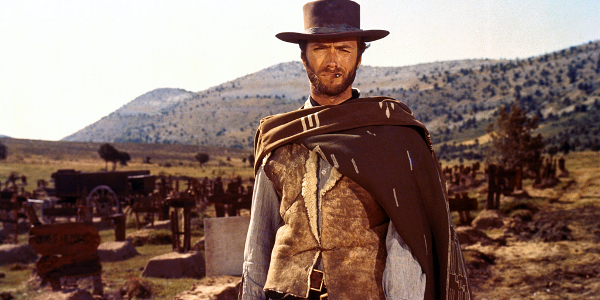
"Directed with some class by Sergio Leone, the movie's good is overwhelmed by the bad and the ugly." Nice pun. Despite not stating the good, bad, or ugly parts of the film this Catholic criticism states outright that whatever good there is in the film it is suppressed by the supposed evil. I don't even think these kind of statements deserve a response. Instead I will simply state this; 'The Good, The Bad, and The Ugly is the Western upon which all other Westerns are based €“ period.' This film is truly masterful in defining a genre, it has everything; gritted teeth, shootouts, cowboy hats, an awesome soundtrack, long shots, tumbleweeds, just to name a few. If you want a Western; look no further, there really is no logical explanation for the Church's condemnation of this film.

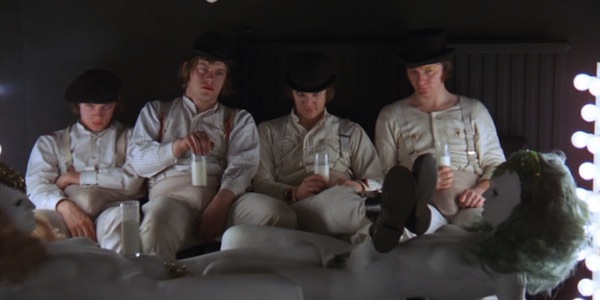
5. A Clockwork Orange (1971)

"The Kubrick-Burgess message about the human right to a free will is not very new or startling...excessive violence and nudity in a sexual context" The age old taboo €“ A Clockwork Orange. Of course this was going to crop up somewhere, and with good reason. Possibly the most controversial film ever, it was banned in Great Britain for nearly forty years and in the short period it managed to stay in screens sparked violence and crime throughout the country. In some ways the Church's condemnation is fair enough and obviously it is targeted at the first thirty minutes of the film. However, some could argue that one; the message of free will is unique and presented in a very unique and inventive way, and two; that the 'excessive violence' is in fact filmed in a way such that the audience is extremely distanced and removed from the brutality. Either way, it should be made clear that A Clockwork Orange is very provocative and shocking €“ not something for those already on edge.

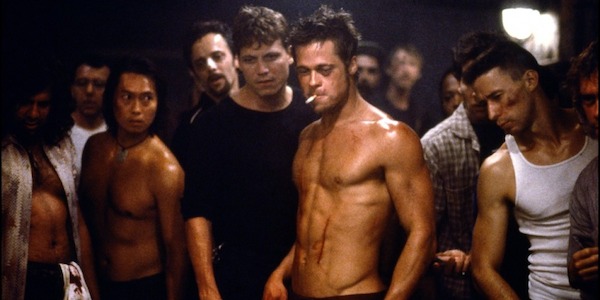
4. Fight Club (1999)

"A punch-drunk fantasy of macho brutality and mindless terrorism against that society before the plot self-destructs in a meaningless ending. Excessive violence, sexual encounters, nudity, rough language and profanity." You know that "excessive violence" spoken of in A Clockwork Orange? Fight Club is similar, just en masse. Fight Club was the first film that completely floored me, left me dazed and speechless for the next day and a half. To call it a "punch-drunk fantasy" with a "meaningless ending" is taking the criticism a little too far. Yes, it is violent. Yes, it is insane. Yes, I wasn't ready for it the first time I saw it €“ and probably shouldn't have. In the end, however, a total condemnation of the film seems very totalitarian but does come with accurate warning. Although graphically not the worst thing you'll see Fight Club manages to get under the skin and really change the way you look at life. It takes a certain kind of maturity to completely understand and walk away from intact.

3. Requiem For A Dream (2000)

"A lewd homosexual act as well as a few sexual encounters, nudity, graphic portrayal of drug addiction, some violence and recurring rough language." To anyone who has seen Requiem; you're not alone €“ I cried too. To anyone who hasn't seen Requiem I recommend that you grab a box of tissues, sit down, and watch it. This film is one so great and emotionally devastating that anyone and everyone will be walking away from it sobbing. Here, I think the Legion of Decency has completely missed the point of the film. Everything director Darren Aronofsky did was vital to full enforcing the message and meaning of the film and is not "lewd" in any sense of the word. Just because something is graphic and raw that does not mean it's offensive and crude. Requiem for a Dream is supremely powerful in its ability to truly make you feel for and with the characters. Basically, it;s a brutally devastating masterpiece for the ages, even if you should watch it at your own risk.

2. Angels In America (2003)

"Angels in America has flaws and numerous troubling aspects that would make many Catholic viewers unable to endure it. An unqualified recommendation is therefore difficult." This one was always going to be trouble with the Catholic church... A mini-series adaption of Tony Kushner's play regarding the AIDS crisis and centring on the lives of homosexuals was bound for Catholic disaster. However, for this reviewer to claim it unendurable and seemingly refuse to provide a recommendation is an absolute travesty and, in my opinion, a shame to Catholic journalism. Clearly, the 'problem' with Angels are the gay sex scenes throughout the series and to completely ignore the show itself because of these is very pre-Vatican II and fuel to the fire that surrounds the Catholic church in it's present day. I, as a Catholic, must respectfully reject this review and say that I was not at all offended by anything in Angels. In fact, I found it majestic in presentation and its evocative images a source of deep thought and consideration of the world around me truly beautiful.

1. Scarface (1983)

"Brian De Palma's ugly, turgid, foul-mouthed and violent movie owes little to the original and is classic only in the sense of its crude self indulgence. Perversely excessive violence." The reviewer here really went to town with their description of what is commonly regarded as a masterpiece in crime cinema. Scarface is clearly a 'crime doesn't pay' film, so to condemn it seems a little unnecessary but to call it "turgid, foul-mouthed and violent" really is just excessive in itself. Plus, it's like attacking the sky for being blue. At the time, it is understandable that the violence be considered excessive despite the fact it was used to accurately portray the dreams and ambitions of the character - Tony Montana is a man of excess. Here, it seems, is another example of the Church's outdatedness. This didn't hold back the film at all. If you've got a few free hours go and see it I guarantee you'll enjoy yourself and come away with a new fear for chainsaws.

Contributor

Student from Sydney, Australia. Fascinated with the films of Jean Cocteau, Darren Aronofsky, Federico Fellini, and Martin Scorsese. Also an avid watcher of The Sopranos, Breaking Bad, and Dexter (no spoilers please). Moreover, loves to play sport and challenge the laws of the English language.