10 Great Films That Lost Money On Ambitious Sets
3. The General (1926)
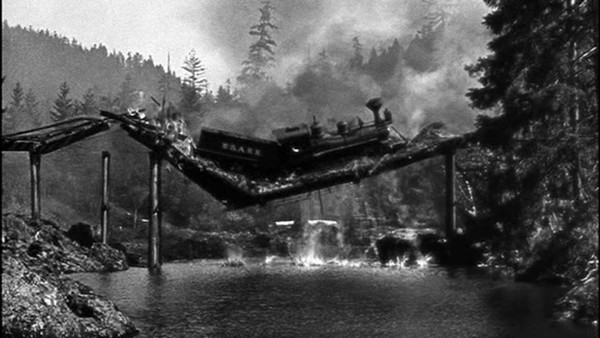
Nowadays, The General is regarded as one of Buster Keaton's finest works. Orson Welles even called it the greatest ever made. In 1926, however, it was panned, and resulted in Keaton's termination from United Artists.
It's challenging to understand why exactly critics and audiences were so underwhelmed at the time, but the cause may in part have been contemporary expectations of comedy. The General is in some ways a naturalistic drama, despite its gesture characteristics of the silent age. Its differences from its contemporaries, and the causes of its public failure are subtle: while melodrama, such as Chaplin's madly successful The Kid, was congruous with comedy and its overstated pantomime, The General was often sombre and understated. It also depicts relatively grim visions of war: masses of weary-looking troops and horses, terrified victims, and insensitive colonels.
Keaton was furiously inspired, and had enough power to demand more and more money from the studio. He made lavish purchases, such as a few authentic Civil War locomotives, and hired massive a crew to construct and manage epic sets over a lengthy production. He was meticulous with mis en scène, even constructing a dam in order to adjust the water level of a river.
Several fires broke out on set, costing an additional £40,000. Not to mention, several of Keaton's train stunts, with one false move, could have easily killed him. Ultimately, he would lose the rights to his previous work to cover his losses.