10 Great Films That Never Got An Oscar Nomination
 Every year when the Academy Award nominations are revealed there are always bound to be a handful of snubs, its just inevitable. Sometimes a film may pick up a handful of nominations but miss out on a few choice categories (this year's Best Director pass for Argo's Ben Affleck is one of the most controversial), or an actor who thinks they are headed for the podium may miss out on their nomination all together (Leonardo DiCaprio nabbing the gold for Django Unchained seemed like a sure thing before January 10th). But sometimes the Academy completely misses the mark and fails to nominate a great film in ANY category. How can a group of people who take pride in saying they honor the best in film fail to miss recognizing so many great films? With the Oscars just a few short weeks away, we have compiled some of the greatest cinematic achievements that were very deserving of multiple Oscar nominations, if not wins, that the Academy completely missed recognizing.
10. Donnie Darko (2001)
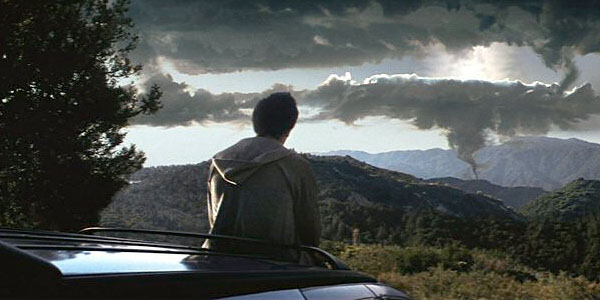 Richard Kelly's stunning and confident directorial debut Donnie Darko was poorly overlooked by both audiences and the Academy in 2001. The film was a low budget masterpiece that few got the opportunity to discover when it was initially released. The film, which contains a plot device featuring an airplane crash, was released a month and a half after the September 11th attacks, so it naturally found a tough time finding an audience. It wasn't until the subsequent DVD release that the film got the exposure it needed, sadly this was too little too late in getting it to Academy members to discover. Had Donnie Darko been given a better opportunity for exposure there is no doubt Kelly's richly complex and masterful screenplay would have been nominated in the Best Original Screenplay category, a category the Academy historically reserves for more edgier and profound work (Citizen Kane, Pulp Fiction).
9. Leon: The Professional (1994)
 Thanks to more complex work by those involved, great action films such as The Dark Knight and this year's Skyfall, are now given a second look by Academy members as more serious contenders for major awards, instead of just throwing them a few technical award bones (Sound, Visual Effects). In 1994 however that mentality was not the case, and the thrilling and often touching action film Leon: The Professional was vastly overlooked at the Oscars. The story of a reserved lonely hit man (Jean Reno) who gives refuge to a young orphan (Natalie Portman) that witnesses her family murdered by a corrupt DEA agent (Gary Oldman) is not your everyday run of the mill action film plot line, but it was a very well received film with audiences and critics when released. Sadly, action films, thanks to the success of Schwarzenegger and Stallone, were not taken very seriously by Academy members in the 90s, and the commanding performances from Reno, Oldman and Portman (in her film debut) were wrongfully snubbed for consideration. Even Oscar tradition of nominating masterfully crafted action films in the tech categories failed to recognize the editing and sound departments of Leon: The Professional with any nominations. Thankfully Leon: The Professional has stood the test of time and is a trailblazing film in the action genre, which the Academy will now give a second look at.
8. Sin City (2005)
 Sin City, Robert Rodriguez' faithful adaptation of the Frank Miller comic series is a film ahead of its time, both in the visual treatment of the story, and in the minds of the Academy. Rodriguez has always been a supporter of shooting films digitally, even in the technical revolution's infancy. He took the new format to a whole different level with Sin City, creating a universe that came off the screen like few movies can achieve. Shooting on digital cameras and relying primarily on green screen CGI to pull off the black and white neo-noir look he was attempting, Rodriguez and the resounding success of Sin City paved the way for how much more imaginative a film-maker can be with the proper tools. In 2005, digital film-making in Hollywood was still a taboo subject, and was not taken serious enough by the elitists as an "art form". Sin City was not recognized by the Academy for its artistic endeavors, surely a travesty that the groundbreaking Cinematography, Art-Set Decoration or Visual Effects were not honored with nominations. Adding to the shame of the Academy, the brilliant performance from Mickey Rourke as the iron-jawed hero of the film, Marv was also criminally overlooked for a Best Supporting Actor nomination. 3 years later, Slumdog Millionare, a film shot entirely digitally won 8 Oscars including Best Picture and Cinematography, thus ushering in the digital boom as accepted art, but Sin City was the film that lit that spark.
7. The Big Lebowski (1998)
 The Coen Brothers have been shown a lot of love from the Academy over the years, with the majority of their work being recognized for Oscars. The Coens themselves are the winners of 4 golden statues for their work, but a sad blemish on the Academy's rapport with the Coens is most definitely The Big Lebowski. This completely original comedy feast is a vulgar and hilarious story about The Dude (Jeff Bridges), a burnt out hippie who involuntarily gets twisted in a kidnapping and extortion plot while he is participating in a bowling tournament. Joel & Ethan Coen have a mastery of the medium that few others have, and The Big Lebowski is a prime example of how brilliantly they create likeable yet detestable characters who swerve through a labyrinth plot line that most writers would kill to create. The Big Lewbowski, released early in 1998, was the follow up to their Oscar winning masterpiece, Fargo, so although they now had the Academy's attention, somehow The Big Lebowski failed to garner any Oscar nominations. Not present is a nomination for Best Original Screenplay for Joel & Ethan Coen's Shakespearian opus of coarse language. Nor is there a nomination for John Goodman (who many say was snubbed for his role in Argo this year) in the Best Supporting Actor category for his hilariously intense portrayal of a gun crazy Vietnam vet. The biggest falter is not recognizing Jeff Bridges for his memorable performance as The Dude, one of the most popular and beloved cinema characters of the past 20 years. This is a bummer, Academy. This is a bummer, man.
6. Paris, Texas (1984)
 Paris, Texas had its first screening at the Cannes Film Festival in May of 1984, winning 3 awards including the unanimous choice of Palme d'Or. The positive critical reception for the film was overwhelming, and when released in November of 1984 during the peak of the Oscar race it was no doubt it would be a front runner. The film, a haunting portrait of a man (Harry Dean Stanton) who resurfaces after a 4 year disappearance to reconnect with his abandoned son (Hunter Carson) and wife (Nastassja Kinski), is the kind of stuff the Academy eats up. However, when the Academy Award nominations were announced in February of 1985, Paris, Texas was grossly overlooked. Paris, Texas should have been a front runner for the Best Picture award, as well as nominations for Best Director (Wim Wenders), Best Actor (Stanton), Best Supporting Actor (Dean Stockwell) and Best Original Screenplay (Kit Carson and Sam Shepard). Even Robby Muller's vast and beautiful cinematography or Ry Cooder's original guitar score failed to pique Academy interest. All involved delivered top notch work, but it just didn't seem to strike a chord with voters as it became one of the biggest Oscar snubs of the 80's.
5. King Kong (1933)
 Imagine the impact seeing King Kong must have had on cinema audiences when it was released in 1933. King Kong is considered by many to be one of the great American films of all time, for its innovation and technique, and it becomes more baffling to think that King Kong was never nominated for any Oscars. Although the Academy was only in its 7th year when King Kong was released there was no doubt that the staggering box office and rave reviews the film netted would attract attention to the Academy. For a film that became a cultural phenomenon overnight, its puzzling how the Academy overlooked this classic. One of the obvious standouts in King Kong is the film's dazzling special effects, which still seem potent today, however back in 1933 there wasn't a high volume of effects heavy films around and a Best Special Effects category didn't exist. Another oversight is Max Steiner's rousing music for Best Music Score. One cannot imagine the impact the film has without Steiner's fantastic cues springing to mind. The biggest attraction of King Kong is the film itself, and C0-Writer/Director/Producer Merian C Cooper was unjustly passed over in the Best Screenplay, Best Director and Best Picture categories. If creating an iconic classic that can survive 80 years and 2 sub par remakes doesn't get you an Oscar nomination, who knows what can?
4. Aguirre, The Wrath Of God (1972)
Directed by
Werner Herzog" src="https://d2thvodm3xyo6j.cloudfront.net/media/2013/02/AguirreGroup1.jpg"> The film that deservedly put writer/producer/director Werner Herzog on the map is also one of the greatest Oscar misses of all time. A film of dreamlike brilliance, Aguirre, The Wrath Of God is considered by many to be one of the best films ever made. It is a mainstay on every film school curriculum (On a personal note, I saw this film for the first time from a 16mm dupe print in film school) and is the most celebrated of all of Herzog's collaborations with his frequent leading man, Klaus Kinski. Oscar nominations? Zero. The film, set in the late 1500's, tells the story of a Spanish expedition led by Don Aguirre (Kinski) in search of El Dorado through the jungle. How could the Academy overlook Kinski's near maddening performance in the lead, as a man who imposes more fear than respect to his soldiers while bringing both them and himself up river and into insanity. The film was an arduous and problematic shoot, the crew dealing daily with the dangerous Amazon river, inclement weather and of course, Klaus Kinski. Throughout the disasters going on behind the camera, director Herzog manages to thread the film together and capture some beautiful and haunting images centered around a powerful and captivating story. This would be the criteria for any Best Director or Best Picture nomination, yet Herzog was left off the ballot, as well as cinematographer Thomas Mauch for his surreal and imaginative cinematography. As a consolation, Aguirre, The Wrath Of God will continue to amaze audiences for years to come, Oscars or none.
3. The Night Of The Hunter (1955)
 The Night Of The Hunter is exceptional for many reasons, one being that this classic noir thriller from 1955 was not nominated for a single Oscar. The Night Of The Hunter is a chilling story about a former prisoner and "Man Of God" (brilliantly played by Roberty Mitchum) who becomes violently obsessed with finding his former cellmate's hidden fortune, who's only whereabouts are known by his 2 young children. What makes this film standout from the other pulpy thrillers of its era is the way the story is told. First time director Charles Laughton (a celebrated actor in his own right) created a film of amazing depth and suspense through the expressionistic style that German film-makers had adapted in the early 1930's. The influence of those films is stamped all over The Night Of The Hunter, stark and tall shadows, warped perspective, tilted camera angles. This gives the film and subject matter a very impending sense of doom around every corner, which was a new thing for mainstream American audiences to experience. Laughton's direction became a groundbreaking method on how to craft a thriller, yet when first experienced, the Academy balked at his concepts and he did not receive a well deserved Best Director Oscar nomination, nor did the film for Best Picture, Walter Shumann's equally groundbreaking music score or the fantastic cinematography from Stanley Cortez. One of the biggest upsets is how Robert Mitchum, playing the itinerant Reverend Harry Powell with maniacal brilliance was not honored with a Best Actor nomination or even the award itself proves that sometimes, the Academy is just not ready to crown a classic, a classic.
2. The Good, The Bad And The Ugly (1966)
It has been heralded as one of the greatest cinematic achievements of all time. It launched the film career of Clint Eastwood. It is Quentin Tarantino's all-time favorite movie, and it has been one of the IMDB's 10 highest rated films for over a decade, yet The Good, The Bad And The Ugly was never nominated for an Oscar. How can a film that has spent almost 50 years influencing film-makers and styles globally not have been recognized when first released?The Academy should never be forgiven for passing over The Good, The Bad And The Ugly for any of the great contributions the film gave us, but somehow it happened. Firstly, Eli Wallach who plays Tuco the Ugly was completely robbed of a Best Supporting Actor nomination for his hilarious and downright dirty performance as the smarmy bandito, a performance that garners much more screen time that his co-star Clint Eastwood. Ennio Morricone created one of the most imitated and revered music scores of all time, yet somehow his work wasn't good enough for the Academy. The beautiful widescreen cinematography by Tonino Delli Colli was grossly passed over, as was the influential film editing by Eugenio Alabiso and Nino Baragli. The biggest travesty is not honoring the film with a Best Picture nomination or a nomination for Sergio Leone for Best Director. This probably has to be one of the greatest snubs in Oscar history, not recognizing Leone's amazing and highly influential work. The Academy must have been out to lunch in 1966, because these misses just don't make sense.
1. City Lights (1931)
 Charlie Chaplin was one of the first great movie stars, and also one of the greatest auteurs as well. City Lights, which can be easily debated as his greatest film, was written, produced, composed, edited, directed and course, starred Chaplin. City Lights, another silent film from Chaplin, was released in 1931, which at the time saw the boom of the "talkie" motion picture at its height. Chaplin decided to tell his story with the visuals, and it was released to rave reviews and widespread audience acclaim amongst a barrage of talkies. In 1931, City Lights, with all of Chaplin's contributions was not nominated for any Oscars. The Academy of Motion Picture Arts & Sciences was only in its 5th year of existence when City Lights was released, yet it somehow managed to surpass the ballots despite its success. Many can argue that Chaplin was a difficult person to work with, and a Brit with more money than anyone else in Hollywood was not very liked amongst the American industry. But politics aside, City Lights is now considered a classic, and even though not a word is uttered, it is still one of the funniest and ultimately touching films ever made. The Academy could have done the right thing and honored Chaplin for his effortless work, and he could have been the first and only 6 time nominee for one film, had the Academy realized his work deserved the recognition. Sadly, they felt he did not and Chaplin and City Lights were shut out. Are there any other great films that never received a single Oscar nomination you think we missed? Let us know what you think in the comment section below.