10 Great Horror Movies Ruined By Their Twists
They almost had it and then...

There's nothing quite like an effective movie twist. You've been sitting in the dark for hours, carefully following plot points, through-lines and character development only to be completely blindsided by the big reveal.
The movie seemed like it was telling one story, but there was this other thing going on the whole time! You can hardly wait to start it over and watch it again with your newfound knowledge. Were there clues? Are there plot holes? Time will tell!
Unfortunately, a tiny number of films have set the bar unreasonably high and have gotten viewers on the constant lookout for forthcoming twists. This has led to increasingly convoluted and nonsensical endings, all in the pursuit of that great aha moment where the audience gets the rug swept out from under them.
In the best-case scenario the twist is plausible but still unexpected, leaving the viewer satisfied as well as a bit mystified as to how they didn't see it coming. The films on this list make up the other side of the spectrum.
A twist has been shoehorned into the movie, and the only reason it is surprising is because it is so flabbergastingly out of place. An almost great piece of cinema now leaves viewers feeling cheated and usually manages to destroy the goodwill the first three quarters of the film built up. For shame, bad twist.
This list contains spoilers, obviously.
10. Tesis (Thesis) (1996)

Alejandro Amenábar's shoestring-budgeted debut feature tells the story of Ángela, a student writing her thesis on audio-visual violence who comes into the possession of a legitimate snuff film. She seeks the advice of fellow classmate Chema (who has an extensive collection of ultra-violent movies) just as she begins to feel an attraction to Bosco (another peer who seems to be harboring some dark secrets).
Much of the movie is about unravelling the mystery of the MacGuffin snuff (MacSnuffin?) film, which minus a jump in logic here and there works pretty well. Ángela and Chema quickly begin to realise that by gathering information about the tape(s) theyre putting themselves in real danger. The problem is the double twist: Bosco is the killer and Chema has known Bosco all along. A lot of improbable things lead up to these multiple reveals but the climax is what really destroys the credibility of this story.
Too many coincidences, too much secret keeping for maximum impact. Add to the fact the snuff-film factory is actually in Ángela's school and you've officially suspended the audiences suspension of disbelief. Don't worry though - Amenábar only got better with great dark films like Abras Los Ojos and The Others.
9. REC (2007)
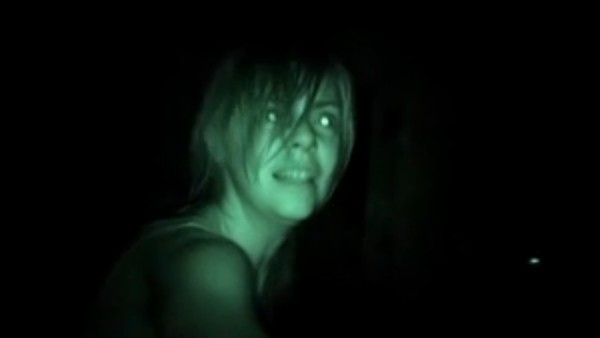
This is bound to be a controversial pick. REC is a critically acclaimed film about a reporter who gets trapped in a quarantined building with some highly contagious bloodthirsty tenants. One of the earlier and arguably more successful of the found footage genre, this movie's protagonist (also named Ángela) and her camera crew are determined to keep their cameras rolling even as the gore splatters and the bodies begin to pile up.
Up until the end, everything is gravy (not for all the dead and undead characters, but for the story). Once the building's inhabitants are cleaned out, however, Ángela and her cameraman go up to the penthouse to investigate the origins of this super virus. They discover (drumroll) that the Vatican commanded the (former) resident to research the biological cause of demonic possession. Ugh!
This is the type of movie where some ambiguity about the cause of the supernatural problem would be nice (like Paranormal Activity 1) but instead the filmmakers threw in some awful exposition that added nothing (like Paranormal Activity 4). The last scene in the dark is still quite spooky but bringing demonology into the picture was completely unnecessary.
8. All The Boys Love Mandy Lane (2013)

ATBLML should be higher on the list because the twist is so awful, but can't be because the rest of the movie isn't quite good enough to warrant it. Mandy Lane (played by Amber Heard) is the girl-next-door all the guys want. A group of her friends vacation to a remote ranch where the blood quickly starts flowing in this generic slasher; it's nothing new, but it's not so horribly upsetting either.
One by one the (admittedly annoying) teens are picked off in appropriately gruesome fashion. ATBLML reveals pretty early on that the titular characters old platonic BFFL is the murderer but waits until the climax to let the viewers know about the twist: sweet lovable Mandy is in on it. And wait for it - she then double-crosses him by reneging on their suicide pact. By this point, it probably would've been more satisfactory for them to just follow through with that plan.
Oh, and there is an old(er) farmhand character who was (kind of) looking out for the kids but failed to notice Mandy's homicidal actions. Once she dispatches her partner (with a log to the head), she and this random older gentleman drive off into the sunset for reasons, apparently. Pass.
7. The Awakening (2011)
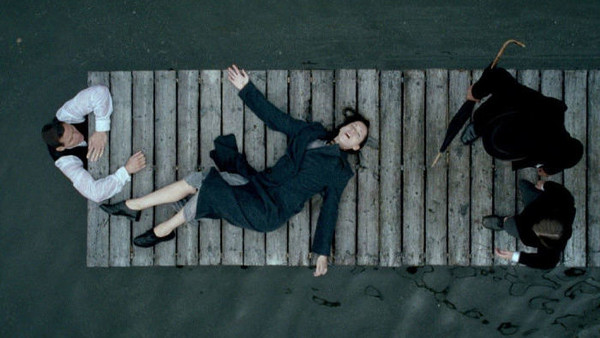
Calling a sceptical paranormal investigator to your ghostly scene is nothing new in horror films, although this type of setup has been particularly trendy in recent years. The Awakening takes a crack at it by sending Florence Catchcart (Rebecca Hall) to a boarding school to get to the bottom of a young student's death, as well as explain his peers subsequent supernatural sightings.
Florence quickly determines that a teacher frightened the boy, causing an asthma attack that would take his life. From there the story really begins to heat up. Among other developments, Florence forms a connection with a lonely child named Tom and starts running into some supernatural occurrences that she cannot manage to explain rationally. The movie hums along with some great scares; until the climax and conclusion, that is.
It turns out Florence grew up in that building and Tom is the ghost of her dead half-brother. This twist - that grief made a central character repress key facts - is used in a number of horror movies to pull the wool over the audience's eyes (Triangle immediately comes to mind).
For such a rational and clear-headed investigator, it's a bitter pill to swallow that Florence needs so much time and generous nudging from ghostly forces just to recognise/remember that shes a central piece of the puzzle.
6. Take Shelter (2011)
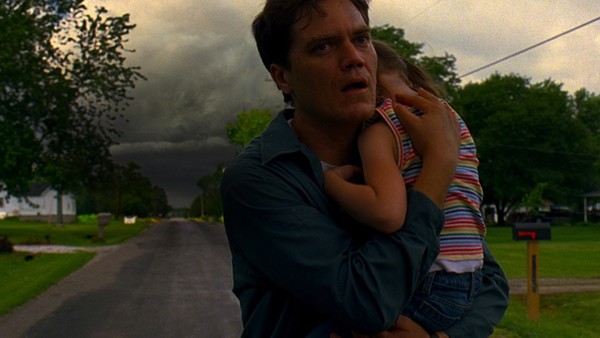
Take Shelter is actually more of a psychological thriller than a straight horror film, but the twist is so bad it merits a spot. Michael Shannon plays Curtis, a blue-collar husband and father with a history of paranoid schizophrenia in his family. He spends the duration of his screen time running around terrified that a storm is coming that will kill his loved ones, and that irrational terror ends up costing him his job, his friends, and perhaps even the family for whom hes seeking refuge.
It's an interesting drama that illustrates the destructive nature of mental illness - or so you think until the last two minutes. That's right; the twist is that everybody else is crazy! The storm is really coming, and Curtis apparently has an omniscient super power that just happens to exactly resemble his mothers genetically inclined disease.
Now, if a film like this didn't come around every once in awhile to keep people on their toes the movie-going experience might become too predictable but that fact doesn't help save this particular feature.
5. Sinister (2012)

It is admittedly very difficult to stick the ending to a horror movie. It's much easier to build suspense with creaking doors and dancing shadows than it is to pay it off with coherent revelations regarding the villain's motivations (see Mama, Insidious, etc.). That being said, oy vey does Sinister flub it.
Ethan Hawke plays Ellison Oswalt, a true-crime author who moves his family into a house with a violent past. Freaky stuff starts going down and eventually the Oswalts are forced to move out of the home in an attempt to leave the freakiness behind them forever. Then comes a reveal that makes no sense at all within the diagesis of the film: the family's being tormented by the demon are only murdered AFTER they move out of the house where the torment was occurring.
This works as a good twist to cue the audience in to the fact that some family-murder is about to go down, but nothing is mentioned as to why an ancient demon would be inclined to do it that way. Add this to the relatively weak climax (and wholly silly child-abduction) and you're all but guaranteed to leave with no recollection of the good parts.
4. The Forgotten (2004)

There's nothing worse than a trailer giving away too much of a movie. If you see Tom Hanks standing at the crossroads without a beard, why bother seeing Castaway? That being said, after watching a trailer you should have some idea of at least the type of movie that is being advertised.
From watching The Forgotten trailer, you might believe that you're in for a story about a government conspiracy, or a brainwashing cult, or perhaps just run of the mill mental illness/repression resulting from grief. These would all be sensible guesses and each version might theoretically end with a satisfying payoff.
In reality, this movie is about aliens. Aliens who have the ability to delete (some) peoples memories and also Photoshop their pictures and re-wallpaper their houses and stop their children from ageing or possibly go back in time and also bullets don't hurt them and they can look like humans sometimes.
Note to filmmakers: just because an audience doesn't see something coming doesn't make it a good twist. It's just as likely a case of bad filmmaking.
3. The Human Centipede II (Full Sequence) (2011)

This sequel actually begins with a meta-narrative twist: The Human Centipede (First Sequence) is a watchable movie in this universe. That leaves some questions open about whether or not director Tom Six is a fictional character or a real filmmaker, but those will be left for another time. For now the important thing is a character named Martin who is obsessed with the first movie and hell-bent on recreating and expanding upon the mad doctors experiments in real life.
It's a bit of an odd route, but like the Scream films before it it does breathe a bit of creative life into a schlocky franchise. By the end, Martin's victims are all dead or near-dead and he has a thrashing centipede in his guts. Or does he? After the disgusting climax the film cuts back to Martin sitting at his day job, still watching the first movie with no indication that any of the preceding events were anything more than a twisted fantasy in his mind.
Really, Tom Six? You're going to take the Dallas season-long tactic of it was all a dream thereby nullifying the entire story's worth? Torture porn or not, it's an incredibly hacky and disappointing move. There's a healthy internet debate on whether or not the ending is ambiguous but there are some pretty clear signs that it's a fantasy. That being said, the trilogy ender, Human Centipede (Final Sequence) was even more ridiculous and even less worthwhile.
2. The Village (2004)

Poor, poor M. Night Shyamalan. With The Sixth Sense the budding filmmaker dropped a startlingly impressive debut feature with one of the most earth-shattering twists in all of cinema history. From there his movies declined in an almost perfectly linear fashion (at least according to aggregate ratings) with each story becoming increasingly more stiff and generally less watchable. His first four features (Sixth Sense, Unbreakable, Signs, and The Village) all end in a twist because his first one made him known as the twist guy (and likely helped propagate the idea that all great horror movies need to end with a big turn). Going into a Shyamalan movie meant you had to keep your eyes peeled for clues lest you get blindsided in the closing act.
The only problem was by the fourth feature (and beyond) the Shyamalan brand had morphed from awe-inspiring reveals into inadequate motion picture experience. The Village's twist is not only not-good, it's not even original; the idea of a town of old-timey people who are actually living in the modern day is the subject of a YA novel called Running Out Of Time.
The publishers alleged that the author's ideas were plagiarised but that might be a disservice to the book. In all honesty, this penultimate entry could have been on Signs or (shudder) The Happening but it was always going to be Shyamalan. He wasn't the first to make people expect a big twist in horror (Psycho for example beat him by decades) but his subsequent outputs repeated downturn in quality was a phenomenal disappointment; indeed it was a shock in its own right.
This particular movie made Roger Eberts Worst Ever List and he summarises it nicely: "To call the movie an anticlimax would be an insult not only to climaxes but to prefixes. It's a crummy secret, about one step up the narrative ladder from it was all a dream."
1. Haute Tension (High Tension) (2003)

While Haute Tension deserves the banner image, the number one spot should really be a five-way tie between this film, Hide And Seek, Secret Garden, Pandorum, The Ward, and any other film that employs this completely derivative and dried up plot device: the protagonist has dissociative identity (aka multiple personality) disorder and is also the antagonist.
Just as The Sixth Sense set off a wave of horror movies with overly ambitious and ultimately unsuccessful twists (many by Shyamalan's own hand), so too did 1999s Fight Club instigate an extended era of fascination with DID in popular culture. Unfortunately, the vast majority of multiple-personality thrillers that followed fell completely flat. The shtick felt tired and played out, something the audience had seen in better-crafted movies far too recently. 2002's Adaptation even poked fun at the trend by having Nic Cage's character Donald sell a ridiculously low-brow and clichéd DID thriller on spec for six or seven figures, much to his twin brother's (the real screenwriter) contempt.
Perhaps unsurprisingly, a movie bearing more than a passing resemblance to this fake script was actually produced in 2006 (it was met with commercial and critical abhorrence). Haute Tension locked down the number one entry because it was such a great movie until those last moments. Its plot was generic (two young women evade a hillbilly murderer whilst vacationing at a family home) but the hyper-visceral violence was unforgettable and the overall execution was near flawless. Without the twist, Haute Tension would stand tall amongst the great slashers of recent memory; with the twist it can barely be taken seriously.
The aforementioned list should serve as a warning to filmmakers of all stripes: you must be very confident that your aha moment isn't destroying the rest of your work before you ever lay ink to paper, much less commit it to celluloid.
Like this article? Let us know in the comments section below.