10 Great Horror TV Shows Cancelled Too Soon
Once bitten, twice shy: Is there anything Netflix won't cancel in its prime?
These are the days of streaming, and with that comes the kind of choice never before available with regular old TV. The benefits are numerous, not least the tendency away from monoculture, but this is a double-edged sword. Gone are the days of everyone gathering around the water cooler to discuss the latest episode of X-Files, replaced with an ever-raging diarrhea of WhatsApped recommendations about the coolest new show from your zeitgeist-chasing mates.
But even old shows weren't safe from the whims of their channels, producers and financiers. And with horror's more limited viewership (it's meant for adults, you know), it is often first to the chopping block. So many great shows have been taken too soon, left hanging right when they were just getting good, when they were at the height of their powers, when they had plot threads left dangling, and when they had just set up some pretty major cliff-hangers.
We will look at the best horror shows of the pre-streaming age that got axed before they'd cooked, and survey the great bulk of contemporary horror TV shows cancelled too soon. But fair warning: There will most definitely be spoilers.
10. Harper's Island

Nobody who has seen it will say Harper’s Island was not years ahead of its time. Long before Mike Flanagan got his mitts on pretty much every horror property of his choosing, revolutionizing what we can expect from horror TV, Harper’s Island did something equally as impressive, before CBS shot it dead.
Inspired by the works of Agatha Christie, but packing considerably more blood and brutality than even the pulp novelist’s most boundary-pushing writings, the mystery-slasher series is set on the titular island, where a wedding party ignites the memory of a presumed-dead serial killer and the bloodshed starts all over again. Designed as a standalone story, Harper’s was exciting and dangerous at a time when a lot of TV was not, killing off key characters in gruesome fashion, plot armour be damned!
Unfortunately ratings went downhill from pretty much day one, and though the entire series aired, CBS were not inclined to green-light a second season. What second season? we hear you cry. Well, that would be the second season in an anthology format, with each series dealing with a new story and set of characters, a la American Horror Story - a whole two years before AHS hit screens. What could have been…
9. First Kill
Twilight did a lot of damage to the teen vampire brand and good will established by Buffy the Vampire Slayer, and the years following the vamp boom have been rough on the genre. Nonetheless, plenty films and shows have sought to revive the creatures of the night - and some have even been, dare we say, successful?
Teenage vampire series First Kill mixes biblical lore, world mythology, high school and young lesbians with sharp teeth - the likes of which Coleridge couldn’t possibly have imagined when penning the retrospectively sedate Christabel. Sixteen-year-old vamp Juliette Fairmont (Sarah Catherine Hook), must make her first kill as a rite of passage, but she finds herself struggling with the ethics of it all, and her spicy feelings towards new girl Calliope Burns (Imani Lewis).
Campy tone and silly names aside, the series was a hit with teen, lesbian and gay audiences. Despite clearing at least 100,000,000 viewing hours (yes, that’s a hundred-million) in its first month on Netflix, the streamer axed the show. While many claimed this was an attack on queer media, the reality of it is that Netflix has become ruthless in recent years and if a show isn’t at the very top of its game from the off, it has to go.
8. Chucky

God only knows there’s enough Chucky media out there, what with the evergreen supernatural slasher franchise having spawned seven original series films, one remake, two short films and one three-season show. Nonetheless, the cancellation of the Syfy series was a major blow to fans.
Easily the best Chucky media of the past decade and a half, and arguably the best since the original trilogy, Chucky (the show) takes everyone’s favourite pint-size ginger killer and lets him flourish in a way the films just never had time for. With no need to close on the character’s death or defeat after a couple of hours, the series takes the mini man out of the box and lets him unleash bloody chaos around Hackensack city, while also laying out some serious background on Charles Lee Ray, the, uhh, “real” killer who inhabits the doll’s body.
Alas, the fun really does come to an end, and Syfy gave the little guy the boot after just three seasons, leaving several plot threads dangling. Talks of a mini final series or possibly a film went down, but nothing came of them - so we’ll just have to make do with what we’ve got.
7. Late Night Horror

The BBC has a rather strong record on horror, remaining innovative and exciting across the majority of its century in broadcasting (so far). But that doesn't mean the people in charge always make the right move.
Horror anthology series Late Night Horror lit up screens in the late 1960s, running for a six-episode season on BBC2, and featuring the writing talents of Roald Dahl and Arthur Conan Doyle behind its stories. But its black and white tales of vampires, ghosts and child murderers was too much for audiences at the time, many of whose exposure to the horror genre was solely through novels, short stories and radio plays. By 1970 the show was cancelled amid a slew of viewer complaints.
Running against the grain of its innovation, the BBC has a spotty history of archiving, failing to archive and preserve some pretty major material - including even big-name titles like Doctor Who. And so, as Late Night Horror was cancelled so soon, there was no impetus for the corporation to store, archive and preserve the existing episodes correctly, meaning there is only one episode of the show available today - The Corpse Can't Play, about a murder at a child's party - recovered on a 16 mm reel in the 1980s, with the others being lost to time.
6. Ash Vs Evil Dead

Ever since Sam Raimi first put his name to an Evil Dead movie, he's had a rough old time of it. Trying to wrangle back the rights to the first film caused him to remake it within the second film, and production nightmares and litigation involving the producers held up the third film until five years after that. Since then, there have been soft remakes, soft reboots and one direct continuation - the latter of which didn't hold out for nearly as long as anyone wanted.
That direct continuation is Starz TV show Ash vs Evil Dead, which pits Bruce Campbell's Ash, and a host of characters new to the franchise, against the titular evil dead(ites) once again. The big guy drags himself out of a life of sloth and alcohol to save humanity (again), along the way contributing a bunch of new, blood-soaked iconic moments and cheesy quips to the franchise.
Despite the strong cult following of the IP, the show just didn't fare that well, and Starz cancelled it right as the going was getting good with a rejuvenated Ash being plunged into a post-apocalyptic future. Campbell blames the low ratings and weak reception on Starz; not due to any overt failing on the company's part but because a) nobody knew who they were, and b) this was one of their first attempts at original content, and they just didn't know what to do.
5. Jekyll
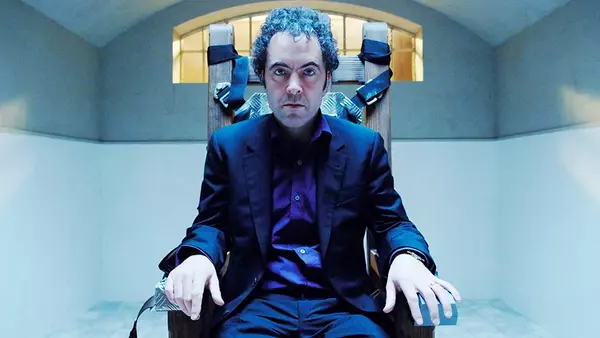
Based on Robert Louis Stevenson’s classic gothic novella Strange Case Of Dr Jekyll and Mr Hyde, the BBC’s Jekyll transported the titular character into the 21st century, as both a spiritual and hereditary descendant of the original, in the guise of perennial talent Jimmy Nesbitt.
Jekyll was in fact writer-producer Steven Moffat’s (yes, Doctor Who Steven Moffat) first foray into classic literature at the Beeb, long before he was running Sherlock or Dracula, and this is definitely where he first cut his teeth. But, whether green or not, the end results speak for themselves: Moffat’s timeless writing paired with Nesbitt’s ability to flow between character archetypes made Jekyll a delight from episode one, injecting the material with a dark comedy that Stevenson’s book does not possess.
Although the series works on its own, it does leave some tantalising plot points in the air, including a new set of powers for the Jekyll character’s children. And Moffat originally wrote a second season, but the BBC never commissioned it. Perhaps this could have been the beginning of a worthy Universal Monsters franchise...
4. 1899

Sci-fi, gothic, supernatural, psychological horror series 1899 may be difficult to classify, but that is only because the show has so many sharp twists and turns throughout its first season, spanning several centuries in its runtime and crossing innumerable metaphysical boundaries on its way there.
It begins as classic gothic horror, where the mystery of the abandoned ship Prometheus and its missing passengers dogs the occupants of the Kerberos, a passenger ship that itself becomes rapidly lost at sea. However, by the conclusion, 1899 is a psychological metafiction in which layers of unreality continuously peel back to reveal even deeper layers underneath, delving into the large lives and backstories of the passengers and crew as their realities come unstuck.
And, just as it is mounting the next stage of its narrative and beginning to shine a light on just why the Kerberos seems to be made of pixels, it ends.
Despite strong viewing numbers and ranking high in Netflix’s most watched list, it was cancelled within just a month and a half of its release. After turbulent recent years both pre- and post-pandemic, Netflix has remodelled its business approach, and has been cutting shows with ruthless abandon, implementing an insanely high standard for viewing numbers that is likely soon to leave it with only self-contained miniseries and gauche reality programs like Indian Matchmaking and Cheat: Unfinished Business.
3. Archive 81

Another victim of the Netflix scythe, supernatural horror Archive 81 has an innovative approach to narrative and storytelling that makes it stand out from other found footage films and shows.
Based on the podcast of the same name, it stars Mamoudou Athie as Dan, who is hired by a mysterious corporation to examine and restore a collection of mini cassette tapes that were damaged in a building fire in the mid-‘90s. In these tapes, Dan discovers Melody (Dina Shihabi), who is making a documentary project on the Visser (the apartment building that burned down), which supposedly holds the answers to her mother’s disappearance.
Archive 81 frames its action in the past through the discovery of the handheld footage in the present, and brings the two closer together than ought to be possible. A sinister cult in the Visser, who worship an interdimensional deity, get their claws into both Melody and Dan, all leading up to jaw-dropping ending in which Dan finds himself transported back to the ‘90s.
Despite this major league cliffhanger, Netflix axed the show, leaving us with just the one season and a whole lot of questions to keep us awake at night - perhaps forevermore.
2. Hannibal

Hannibal Lecter is an icon of the page and screen, having appeared in numerous terrifying incarnations for the past 44 years. The gentleman cannibal has primarily been explored in the movies with Anthony Hopkins in the role - a role that made him a global name - and while nobody would have expected another actor could take up the gauntlet, Mads Mikkelsen stepped into the part for TV, and promptly disappeared.
Bryan Fuller's Hannibal puts Mikkelsen into action as a pre-incarceration incarnation of Lecter, working as a doctor of forensic psychology for the FBI. Manipulating the Bureau from within, while quietly killing, torturing and eating as the Chesapeake Ripper, under cover of jurisdiction. What sets it apart from contemporaries like Dexter is its psychological depth and consistently dastardly tone, forgoing a lot of the jocular humour other similar shows rely on to balance their kills.
The show scored highly with audiences and critics across its three seasons, but ratings gradually declined and it was too costly a show to keep going on good will and happy customers alone. NBC scrapped the iconic series and left us with a bit of a cliffhanger and an incomplete arc to boot. At least we can sleep safe in the knowledge that the character lives on in other media.
1. Angel

Angel, Angel, Angel; the one that got away. More than just a Buffy the Vampire Slayer spin-off, the show grew legs of its own away from the familiarity and relative comfort of Sunnydale, transporting the action to the big, bad city of, err, angels, where the storylines were darker, the team broodier and the ending... not existent.
Angel (David Boreanaz) teamed up with a rag-tag team of vampire hunters, rogue demon slayers, inter-dimensional beings and familiar faces from Buffy over the course of five seasons, facing off against one common big bad: the evil law firm (is there any other kind?) Wolfram and Hart.
After those raucous five years on air, the show rushed towards a close in 2004, a whole year after Buffy had bowed out with a satisfying and definitive conclusion. Angel takes up residence at Wolfram and Hart HQ, Spike (James Marsters) returns from the dead, and all the major players of the impending apocalypse line up to take their shot. But the big finale never comes. Our heroes are left standing in a rain-soaked alley, preparing to take on the legions of hell (dragon and all), and then it just kind of ends.
Joss Whedon teed up the climax of the show and final season, and the WB cancelled it, catching everyone off-guard. The fifth season was already going to air, and so Whedon's powers to change anything were limited - leaving us with a half-finished finale and many regrets.