10 Great Libertarians Of Film And TV
 Libertarianism is an ideology that holds individual freedom as its highest virtue, and asserts, basically, that a person ought to be free to live their life however they please so long as it doesnt harm others. Paradoxically, Libertarianism is at once the core of the American mythos, and a fringe-movement in her politics. Libertarian ideas are enshrined in the nations constitution, the writings of its founding fathers, the fiction of Mark Twain, and the classic Westerns of Hollywood and some of the iconic characters of today and yet, while the popularity of these ideas remains strong, in many ways the country grows ever more authoritarian by the year. I wrote this list a month ago and ended up not submitting it, as the site is so apolitical (and thats a nice thing), but in light of the revelations about the current administrations invasive surveillance, targeting of political enemies and so on, Ive reconsidered. This is not intended as a treatise on the merits and flaws of libertarianism, for which this isnt the place, and I am unqualified; but simply, here are ten characters (and groupings of characters) from film and TV which, for better or worse, exhibit libertarian traits and extol libertarian ideals.
10. Ron Swanson Parks and Recreation
 Libertarianism is all about individual liberty and it should never be defined by the terms Liberal or Conservative Ill be the first to admit it. There are characters on this list in which I will be postulating and overreaching - searching for a Libertarianism that just isnt there. Taking a few Libertarian qualities the character may possess, then filling in the blanks to fit my own purpose. Then, theres Ron Swanson. Hes a good place to start this list, because theres really no subtext in his politics, and if you want a crash-course in Libertarianism and cant be bothered reading up on some Mises or Hayek, hes a good place to start. He values privacy, self-reliance, the freedom to quantities of bacon and eggs which will probably kill him, the function of the marketplace -which he astutely equates with survival in the wilderness- and savings (I promised myself when I started burying gold in my yard, I was never going to be a hoarder or a miser about it). While the show pokes a lot of fun at his eccentricity and cantankerousness (common libertarian traits), he is often the shows voice of reason.
9. Tony Stark Iron Man
 I am Iron Man. The suit and I are one. To turn over the Iron Man suit would be to turn over myself, which is tantamount to indebted servitude, or prostitution, depending on what state youre in. Much has already been written about how Iron Man 2 channels Ayn Rands Atlas Shrugged, particularly the courtroom scenes in which a wealthy industrialist Tony Stark struggles to keep his intellectual property out of the governments hands. The above quotation could easily be written-off as just another of Starks sardonic quips, but pay special attention and you will see he is exploring one of the root arguments of Libertarianism, which is self-ownership. If he, Tony Stark, owns his body, it follows that he owns his time, and the things he creates with his body and his time the fruits of his labour. While it may seem obvious that a person owns their own body, many political philosophies and standing laws, when examined closely, are incompatible with this key concept.
8. Stan Marsh and Kyle Broflovski South Park
 A big fat turd, or a stupid douche- which do you like best? Its no secret that Stan and Kyle are the surrogates of South Park co-creator Trey Parker and Matt Stone. What is a little more elusive is the political affiliation of these two men (and by extension, these surrogate characters), especially if you are under the false impression that politics breaks into only two distinct groups. Since they are, for Hollywood, uncommonly critical of the left, they have often been mistaken for conservatives (a book, South Park Conservatives, has even been written on this subject) but, their liberal stances on homosexuality, religion, immigration, censorship and drugs make them strange bedfellows with the right. The truth is, they are neither, and made this perfectly clear in the episode when they equated the election between George W. Bush and John Kerry as being like choosing between a Giant Douche and a Turd Sandwich. This irreverence has been mistaken for nihilism by some, but when pressed, Trey Parker has reluctantly admitted in interviews he is a card-carrying member of the Libertarian Party; and I posit that this confession makes Stan and Kyle little future libertarians.
7. Daryl Kerrigan The Castle The law of bloody common sense! The Castle is an Australian cult-classic. Ask 10 Australians what their favourite Australian film is, and I wager at least 10 of them will say The Castle. In Australia, it not being your favourite film is a bootable offence. Its the story of an everyman tow-truck driver named Daryl Kerrigan (whose name even near-rhymes with libertarian, try it), and his legal battle to protect his home from the government. The Kerrigans have built their home adjacent to the airport (Dad says it will be very convenient if we ever have to fly one day); the noise never much bothers them, trouble only comes along when a multinational corporation pairs up with the government to compulsorily acquire his land, to expand the runway. Translation: the Kerrigans are offered an arbitrary amount of money for their home, acceptance of which is not optional, what the mafia might call an offer he cant refuse. What follows is a legal battle that goes all the way to the highest court of the land. The film is an indictment on crony-capitalism and an exploration of property rights and real prices. Who, other than a homes owner, can really assess its value? How can anything be worth less than what its owner would voluntarily part with it for? Daryl Kerrigan also shows some understanding of the concept of natural law, for while he is uneducated about the Australian law (as is his bumbling lawyer), he understands innately that the seizure of his home, legal or not, defies some higher sense of right and wrong. While the politics of The Castle are thankfully secondary to its constant stream of jokes, it does have a little bit to say about the relationship between the individual and the state.
6. The Ghostbusters Ghostbusters
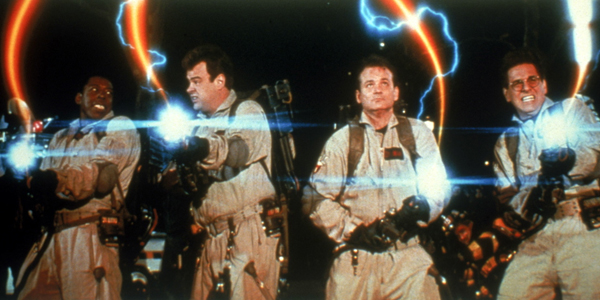 Personally, I liked working for the university! They gave us money and facilities. We didnt have to produce anything. Youve never been out of college. You dont know what its like out there! Ive worked in the private sector... they expect results! Take away the supernatural elements from Ghostbusters and you have a simple little story about three entrepreneurs that go into business together, find success in the marketplace, expand their business, create new jobs, and then have their progress hindered by the government. It would be a pretty boring movie. Perhaps 2012s failed adaptation of Atlas Shrugged should have taken note and included more ghosts and lasers. Attentive readers will by now have noticed the recurring theme of government-as-villain in these texts, Ghostbusters throws in a few jabs at academia for good measure (take that, people trying to better themselves!). The key libertarian themes here are the workings of the free market, as these men find a hole in the market and fill it (theres a joke to be made about the invisible hand and ghosts, but Im too tired for that sort of thing), and a little bit of good-old power corrupts, here exemplified by EPA agent and villain Walter Peck, who has no dick.
5. Janet Tyler - The Twilight Zone (In The Eye Of The Beholder)
 The State isnt God! [...] It has no right to make ugliness a crime! Todays more savvy audience will see the twist coming a mile away, but The Eye of the Beholder is as relevant as ever as an allegory for conformity. Janet Tyler is born disfigured, into a world that refuses to tolerate her harmless difference in appearance. Her only choices are to have facial reconstruction surgery, or to be banished from society. In the storys most overt allusion to Orwell, the propaganda of this imagined worlds leader is televised across ever-present screens, blearing ...there must be a single purpose! A single norm! A single entity of peoples! A single virtue! A single morality!. While on the surface, this episode can be enjoyed for what is says about the subjectivity of physical beauty, peer deeper, and you will see a story that is about tolerating all the differences in your fellow man, physical and otherwise. While many governments seek to create homogeneity or cohesion, libertarianism accepts that people will always be fundamentally different from each other, and that thats alright. Other peoples freedoms are to be defended, even when they exercise that freedom in ways that are unpopular, or subjectively ugly.
4. The Crew Of The Serenity - Serenity
 People don't like to be meddled with So says, with amazing clarity, a young River in the opening scenes of Serenity, after her teacher poses the rhetorical question ...with so many social and medical advancements we can bring to the independents, why would they fight so hard against us? She continues, ...We tell them what to do, what to think. Dont run, dont walk. Were in their homes, and in their heads, and we havent the right. Or as Mal bluntly puts it: I just want to go my way. As previously mentioned, it is government that often plays the villain in texts with libertarian themes. You will also note that in every single case, the government is well-meaning, benevolent, and acting with the best of intentions - The Alliance in Serenity, being a perfect example of this. They are not corrupt, using government to achieve personal wealth. They dont even seem to take personal joy in being powerful. All they want is peace and safety in the galaxy, but the way they aim to bring this about flies in the face of nature and the human spirit. Late in the film, it is revealed they experimented with releasing chemicals into the atmosphere of one planet, designed to reduce aggression in humans. Doing so, they wiped out the planets entire population, as people stopped working, stopped eating, stopped breeding and eventually just died out; and all with the noblest of intentions. The film is dense with libertarian themes, from the unintended consequences of government action, to the blow-back of foreign invasions, to the hidden curriculum and propaganda of education and above all, mans inherent desire to be free.
3. Harry Potter Harry Potter Franchise
 ...thats the Elder Wand, the most powerful wand in the world. With that, youd be invincible While Harry Potter is mostly apolitical (hes a kid, after all), we can surmise some of his potential political beliefs from his actions. First and foremost, he is anti-authoritarian and distrustful of those in power. Throughout the Harry Potter series, Harrys battle with Voldemort is consistently exacerbated by the incompetence of the Ministry of Magic. While she is no ally of Voldemort, the well-meaning bureaucrat Dolores Umbridge is one of the series more effective antagonists. Harry commits acts of civil disobedience, beginning with breaking some of Hogwarts school rules, and later escalating into acts of treason. His greatest act of rebellion may be in Order of the Phoenix, when he forms an illegal militia, and sets about training his fellow students to defend themselves, at a time when the Ministry of Magic seeks to effectively disarm them. Interestingly, in these lessons he elects to teach his army how to stun their opponents, rather than to kill - and in Deathly Hallows, when he destroys the Elder Wand but to keep his Invisibility Cloak, he demonstrates an adherence to the non aggression principle, which is, to only use force in self-defence. Libertarianism is often broken into being civil freedoms, and fiscal freedoms. We thankfully do not learn anything of Harry Potters theories on economics, but there may be a parallel between magic in these books, and technology in our lives. Many technological advances, delivered to us in large part by industry, have made its innovators tremendously wealthy, but has also improved the lives of consumers. Similarly, magic in the world of Harry Potter has improved the lives of all wizards. Even the Weasleys, who we are constantly reminded are poor, live a lifestyle which is, from the perspective of a muggle, lavish and idyllic. Even Bill Gates would give his left nut for that flying car. Also coincidentally, as is proposed by many Libertarians, the wizarding world of Harry Potter does seem to have resource-backed money, in the form of gold and silver coins. While it is highly speculative to say that Harry Potter is of any political persuasion, his distrust in centralised power, even centralised power in his own hands, is a cornerstone of libertarianism.
2. Tuttle - Brazil
 Now they got the whole country sectioned off. You cant make a move without filling out a form In Terry Gilliams twisted re-imaging of Orwells 1984, future-Englands perpetual war-machine, video surveillance and maze of propaganda have been replaced by something altogether more terrifying: paperwork. The films protagonist Sam, has been cuckolded by bureaucracy, unable to perform the simplest task without first filling out the correct government form. But inside his mind, some animalistic part of him still dreams of being free, of flying away from this cage he has grown to love. Tuttle is a heating-engineer and enemy-of-the-state. Having tired of the inhibitive rules and regulations of working within the system; he has since taken to guerrilla acts of household maintenance. This whole system of yours could be on fire and I couldnt even turn on a kitchen tap without filling out a 276/B... bloody paperwork. His death is not subtle in its symbolism, but nonetheless poetic- at films end, he disappears into a whirlwind of paperwork, never to be seen again. Tuttle is not a philosopher or ideologue, just a simple working person that wants to be left to his own devices- a libertarian.
1. Cosmo Kramer Seinfeld Ive had it with these jackbooted thugs (on Pottery Barn) Kramer dabbled briefly in Marxism during a short-stint as a department store Santa (reread that sentence... God, wasnt Seinfeld just the best?), but if we revisit some of his adventures on the show a pattern of entrepreneurship and anti-authoritarianism emerges, a potent combination which may result in a libertarian outlook. Ever the scofflaw, he partakes in illegal gambling, parking, cock-fighting, scalping, breaching airport security, perjury, Cuban cigar-smoking (and then, manufacture) and the installation of high-flow showers that buck city regulation. His many business dealings are hardly above-board, whether its enlisting a college intern for his Kramerica corporation; or his many get-rich-quick schemes (recycling, selling used records, trench-coats, Peterman reality tours) none of which are licensed, and are assumedly, all cash-in-hand. Theres an episode which functions as an allegory for abortion, in which Kramer asserts he ought to be able to put whatever ingredients he desires on his own pizza, including, to Pappys disgust, cucumbers. Theres the episode in which he cancels the mail, and in doing so, reveals a vast-government conspiracy the government propping up a bloated, unnecessary mail service - which could be interpreted as making a subversive point about Americas military-industrial complex. This one may seem like a stretch, but consider this: Kenny Kramer, real-life inspiration for Cosmo Kramer, once ran for mayor of New York on the Libertarian Party ticket. Funnily, he ran against Giuliani, who in the fictional world of Seinfeld, had been delivered into power inadvertently by Kramer himself, after a scandal involving fat-free yoghurt. While the ending of Seinfeld, in which sweet-natured Kramer finds himself in prison, may seem far-fetched and mean spirited, it is a rather realistic ending for him- during the course of the show he has broken thousands of laws. Click "next" below for our conclusion...
Conclusion Liberty is popular, it has been said. These liberty-minded characters are popular, in some cases, iconic. Who doesn't love Iron Man, Kramer or Ron Swanson? When Americans are polled on a number of issues, the libertarian views on these issues are often the more popular ones. Why then, does the Libertarian Party candidate for president routinely get less than 1% of the vote in America? Is it that fewer than 1% of Americans are libertarian? Elsewhere on the political spectrum, take the Green Party. They too win less than 1% of the vote, and yet, do their views reflect only 1% of Americans? In both cases, I think not. Why dont election results reflect the actual views of the American people? By way of conclusion, I offer this little diagram. (If it seems reasonable to you, how about an upvote?)
 And make sure you go see the new Superman, even if he is a fascist.