10 Great Movies About Old Age

From profound and reflective masterpieces to quirky comedies and tense dramas...

Growing old is as inevitable as the passing of the seasons. Some of us accept it will happen to us and embrace the wisdom of old age; others fear its approach, bringing death ever closer until eventually the final curtain falls and, as Hamlet says, we shuffle off this mortal coil. Movies about old age needn't be morbid affairs, as Alexander Payne's most recent film Nebraska certainly shows. Arguably Payne's best film to date, Nebraska tells the story of Woody Grant (an excellent Bruce Dern) desperate to get to Lincoln, Nebraska so he can claim the $1 million on a sweepstakes he believes he's won. His son David (Saturday Night Live's Will Forte, considerably more nuanced here than in his other works) tries to explain that the sweepstake is really a ploy to gain magazine subscriptions, but his father is implacable, so he ends up taking him to collect it himself. Beautifully shot in expressive black and white and featuring a raft of pitch perfect performances (June Squibb deserves a special mention as Woody's exasperated wife), Nebraska is a sweet and affectionate look at fading hopes and ambitions in the twilight of life with some superb moments of dry comedy. The following list covers ten more incredible films about life during old age, from profound and reflective masterpieces to quirky comedies and tense dramas.

10. Gran Torino

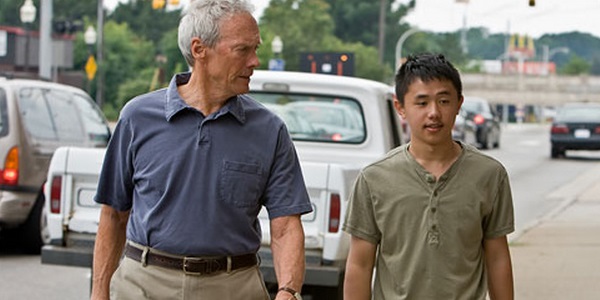
Few Hollywood stars have enjoyed such an illustrious career as Clint Eastwood - both in front of and behind the camera his filmography spans decades of film history, with his face as iconic as John Wayne and, for that, matter, any other star you care to think of. His more recent directorial efforts have been somewhat hit or miss, but with Gran Torino both his screen presence and directing abilities hit the mark. Eastwood stars as war Walt Kowalski, a veteran living alone who is alienated from the rest of his family and fueled by an anger at the world around him which borders on the misanthropic. His Asian neighbour Thao (Bee Vang) attempts to steal his prized Ford Gran Torino as part of gang initiation rites but Walt catches him in the act, and is forced to work for Walt to make amends. As their unlikely friendship develops so too do the tensions with the local gang, leading to the inevitable bloody conclusion. Gran Torino is as much an exploration of contemporary American race relations as it is about a man in old age struggling to come to terms with his past and overcoming his guilt. While perhaps no masterpiece, Gran Torino is still a film about reconciliation and redemption worth the time.

9. Le Week-End

What does a couple do when they find their relationship drifting precariously close to the rocks after 30 years of marriage? In the case of Le Week-End, they celebrate their anniversary by revisiting the place where they honeymooned all those years ago and spend a weekend in Paris. In lesser hands Le Week-End could easily have been a cliched, picture postcard rom-com for the older generation - fortunately, renowned British writer Hanif Kureishi director Roger Michell are able to take the concept and elevate the material towards something classier, ably abetted by solid, naturalistic performances from Jim Broadbent and Lindsay Duncan as the troubled couple, Nick and Meg Burrows. It balances subtle melodrama and the crisis of failing interpersonal relationships with dry humour and sparkling dialogue, resulting in an earnest film with more depth than you might expect. Perhaps the real standout role in the film is Jeff Goldblum, playing Nick's former student Morgan - it's a wonderfully quirky, eccentric performance which has you smiling every moment he's on the screen.

8. Harry Brown

Similar in theme but quite different in tone to Clint Eastwood's Gran Torino, Harry Brown sees Michael Caine, another heavyweight actor with decades of films under his belt, embroiled in the rough world of urban gang culture. Caine too plays a war veteran, who finally loses his patience with the local criminals after his friend is murdered. Stylistically, Harry Brown sits somewhere between gritty social realism and bloody revenge thriller (leaning towards the latter), with the authentic feeling North London setting a perfect stage for the increasingly brutal violence meted out. Michael Caine delivers a solid performance, but equal credit should go to his younger co-stars, all of whom inhabit their characters perfectly. Sean Harris - a great actor woefully underused - stands out in a smaller part as psychotic drug dealer Stretch. Harry Brown might not win any awards for originality, but as vigilante thrillers go it's one of the best, with Michael Caine reminding us that he's still capable of playing a strong central role.

7. Harold And Maude

Hal Ashby's 1971 black comedy certainly has one of the most unusual romantic pairings in movie history, the titular characters being a death-obsessed teenage boy and a 79-year-old woman with a passionate zeal for living life to the fullest. Harold is a nihilistic young man who gets a kick out of staging fake suicides in front of his overbearing mother, who encounters Maude while attending the funeral of a complete stranger and strikes up an odd couple friendship. Maude enjoys stealing cars (for which she has a set of skeleton keys) and decorating her home - an abandoned train carriage - with an endless array of bric-a-brac. Their mutual eccentricities are more than enough for their friendship to blossom, eventually becoming something much closer and intimate. A cult classic, Harold and Maude is a brilliantly off-beat comedy with a twisted sense of humour and foot-tapping Cat Stevens soundtrack, which can't help but remind you of a Wes Anderson film - indeed, Anderson cites it as a cinematic influence on his second feature, Rushmore - it's easy to see why.

6. The Straight Story

If you read the synopsis for The Straight Story the last person you would think of as the director would probably be David Lynch. Best known for his nightmarish exercises in subconscious horrors exploring the fractured psyches of his characters, a literally straight story of an old man traveling across America on his tractor to visit his estranged dying brother is a far cry from typically Lynchian cinema. But overlooking The Straight Story would be to do Lynch a great disservice. Lynch proves more than capable of casting a tender look at old age, and the film - based on the true story of Alvin Straight - is made all the more emotional on account of the central performance by former stuntman Richard Farnsworth, who during the shoot was himself dying from bone cancer. The following year Farnsworth committed suicide. Lynch's first - and possibly only - foray into sentimentality is a graceful work of cinema with wonderful cinematography and a pace which reminds you of a lazy summer's evening sipping beers with good friends - a charming and warm film and something of a minor masterpiece.

5. About Schmidt

Jack Nicholson has enjoyed an illustrious career by any standards, starting out as one of the great actors of the 70s New Hollywood and maintaining a high standard as he approaches his 80s. Perhaps one of the most outstanding performances of the late period in his career came with his starring role in 2002s About Schmidt. Directed by Nebraska's Alexander Payne, About Schmidt stars Nicholson as Warren Schmidt, a miserable man who retires from a job he detests to return to a home with a wife he hates almost as much. When she dies, he decides to go on a road trip and attend the wedding of his daughter to a man he considers to be well beneath her standards. But as the journey unfolds, Schmidt has to face up to his own relentless dislike of anything and anyone, and he comes to realise that, rather than constantly projecting his loathing onto those around him, life should be about positive experiences which amount to something worthwhile. About Schmidt is not without its sardonic moments - which Nicholson embodies effortlessly - and in the hands of a director such as Neil LaBute it could easily have descended into depressing cynicism. But Payne has the lightness of touch and keen observational sense of humour to traverse the tightrope between the two interpretations without tumbling off - the result is a nuanced character study and a great comedy.

4. Ikiru

What Culture recently asked which movie you'd like to see on your last day on earth, offering Akira Kurosawa's Ikiru as their selection. While a film about a man dying of cancer in post-war Tokyo might sound like a morbid viewing experience, in Kurosawa's hands it transcends expectation and touches on something deeply profound about human nature and death. Taking Leo Tolstoy's story The Death of Ivan Ilyich as his starting point, Kurosawa casts regular Takashi Shimura as a government bureaucrat who, upon being diagnosed with stomach cancer, searches for purpose in the midst of a city struggling to repair itself both physically and spiritually after World War 2. After indulging in the hedonistic pleasure of Tokyo's nightlife he discovers a purpose in the construction of a playground. Ikiru is a poignant examination of both life and death delivering well beyond its bleak-sounding premise to become something warm and humane. Often cited as Steven Spielberg's favourite film, it avoids the maudlin sentimentality of Hollywood tear-jerkers in favour of a delicate affectation, and is quite rightly considered by many to be one of the greatest movies of all time.

3. Wild Strawberries

wild strawberries Few filmmakers have been so highly praised on the one hand and described as self-indulgent and pretentious on the other as Ingmar Bergman, the Swedish director responsible for such classics as The Seventh Seal, Fanny and Alexander and Wild Strawberries, the exceptional film about an old professor reflecting back on his life. Victor Sjöström gives his final performance as Professor Isak Borg, a cantankerous old man who prefers to live in isolation away from his family. After being granted an award for his long service to medicine he travels with his daughter-in-law to accept it, and along the way reflects upon his memories, dreams and hopes as death looms. The road trip brings up recollections of childhood, sentimental thoughts the old man thought were behind him in his more naive past. Bergman is a director who has dealt with the subject of mortality on a number of occasions, but with Wild Strawberries the tone is a stretch away from his more typical pessimistic mood. Professor Borg discovers a degree of peace of mind by the end of his journey, and the film is both thoughtful and insightful, as any lover of Bergman's works will be more than familiar with.

2. Amour
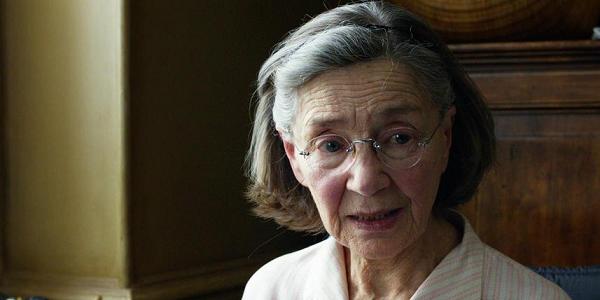
Like David Lynch, Michael Haneke is another director most famous for his transgressive approach to cinema. Haneke's movies often mine self-reflexive themes, with a body of work which suggests the Austrian is an eternal pessimist incapable of seeing any goodness in humanity. Palme d-Or-winning Amour more than redresses the balance, showing audiences that he's more than capable of depicting human nature at its most tender and compassionate. Amour begins with firemen breaking into an apartment and discovering the corpse of Anne (Emmanuelle Riva), lying on the bed with flowers scattered around her head, then takes us back in time to a night at a concert with her husband Georges (Jean-Louis Trintignant), and the stroke she has the following morning over breakfast. Rather than Haneke's usual cold, detached directing style, the viewer becomes an intimate witness to Anne's inexorable march towards death and her husband's indefatigable desire to stay by her side until the last moment. It's a powerful and often uncomfortable experience, not least on account of the central performances from Jean-Louis Trintignant and Emmanuelle Riva, the latter of whom sadly (some might say scandalously) lost out on an Academy Award for Best Actress to Jennifer Lawrence. By turns naturalistic and quietly lyrical, it's perhaps Haneke's most perfectly formed film to date.

1. Tokyo Story

Frequently appearing on both critics and directors' lists of Best Movies of All Time, Yasujir Ozu's deceptively low-key masterpiece Tokyo Story is perhaps the definitive film about the gap between the generations and the contrasting lifestyles and values of young and old. Shūkichi and Tomi Hirayama, a retired couple who live in the rural outskirts of Tokyo, travel to the big city to spend some time with their eldest son, Kichi and daughter Shige. It doesn't take long for them to realise that they have little time for their parents, who pay for them to stay at a hot springs to get them out of their way so they can go about their hectic lives. Only their widowed daughter-in-law Noriko has any time for them, showing a level of consideration and compassion their own children evidently lack. What makes Tokyo Story such a beautiful and moving experience is the understated way in which Ozu directs the drama: his unobtrusive style in which he avoids camera movements and positions the camera below the eye level of the actors lures the viewer into the scene; a privileged guest invited into the homes of the characters rather than a detached observer. Ozu was a master of understatement, with naturalistic scenes of dialogue often interspersed with cutaways to seemingly mundane events (a kettle boiling, a cat on a fence) which lend the film a feeling of authenticity which marks him as one of the greatest directors of all time.

Contributor
Contributor

Andrew Dilks hasn't written a bio just yet, but if they had... it would appear here.