10 Great Movies All Dancers Should Watch

Get into the groove and learn something.

Dance movies are an inexplicably popular aspect of our culture. It's difficult to explain their appeal to audiences - for the most part, they tend to retread over well-traveled territory, and the acting isn't what you might call stellar. When you consider the amount of people who are actively interested in dance, it seems like they should have only a really small niche demographic, one that could hardly support dozens upon dozens of films. But for some reason, they thrive. We're captivated by the abilities that the stars possess, wishing that we weren't the kind of people who could trip over our own shoelaces. And for those of us who actually have dance training, these types of movies have an added appeal. It's an opportunity to watch professionals working at their craft with the added bonus of a story that they can likely relate to quite well. Just as people with a singing background get a kick out of seeing which of their favorite actors can actually carry a tune, it's a lot of fun for dancers to see actors with a unique combination of skill and rhythm. Dance movies may be enjoyable fluff, but they're also an opportunity to look past all the flashy moves and see what actual dancers recognize as legitimate technique.

10. Center Stage

The acting isn't great in this film, we'll be totally upfront about that. But you want to know why? Because the film is populated almost exclusively with professional dancers. Center Stage assembled an impressive group of ballet dancers from the American Ballet Theater, Olympic ice skaters (Russian gold medalist Ilia Kulik played the adorable Sergei), as well as several actors with significant dance experience, including Zoe Saldana and Shakiem Evans. (Ironically, Susan May Pratt, who plays the most advanced dancer at the American Ballet Academy, is the only actor with no formal dance training.) The result is a film with a paper thin plot and dubious performances, but absolutely fantastic dance sequences. Few films are capable of depicting the real ballet world, warts and all, but Center Stage manages. It revolves around the journey of a girl accepted into the most prestigious ballet school in the country, and is determined to make it into the company despite her lack of perfect form. More than anything else, it showcases everything that ballerinas are willing to put themselves through to succeed, and for that reason, many dancers have a soft spot in their heart for Center Stage.

9. Step Up

We have Step Up to thank for unleashing Channing Tatum upon the world (whether you consider that a good thing or a bad thing is between you and your god). It was his first opportunity to headline a film, and it spawned one of the biggest dance film franchises ever. Producers insist upon churning out Step Up sequel upon Step Up sequel, even though Tatum has long since left. But none of them come close to the original, which told the age-old story of a rough-and-tumble street dancer who found himself paired up with a privileged modern dancer in a showcase that would determine their future success. Frequently, the one factor in dance films that makes them stand out from the others is the style of dance that they choose to highlight. Step Up is unique in that rather than focusing on more traditional forms of dance, such as ballet or ballroom, it features relatively new styles that are just beginning to get respect and legitimacy as an art in their own right.

8. Black Swan

Featuring Natalie Portman in an Oscar-winning performance, Black Swan certainly takes the traditional field of ballet and turns it into something radical and groundbreaking. Portman stars as an obsessive ballerina, whose mental state teeters perilously on the edge of sanity for much of the film. She's Nina, the stereotypical dancer with perfect technique yet no emotion, complete with an overbearing mother who pushes her too hard. While you've got all the usual staples that we tend to see in the ballet world, the jealousy and competitiveness and high drama, Black Swan goes so much further than that. It ventures into genuinely subversive territory, a place with odd sexual relationships, hallucinations, and a complete breakdown of reality. Black Swan takes the field of dance, which requires so much mental toughness for people to succeed, and creates a dark psychological horror film that borrows significantly from Dostoyevsky's The Double.

7. Mad Hot Ballroom

Mad Hot Ballroom is a refreshing approach to the issue of trying to introduce young people to the occasionally stuffy world of ballroom dance. It's a documentary about a program to teach urban youth about ballroom dance being promoted in elementary schools throughout the New York City public school system, with the ultimate goal of them participating in a legitimate competition. Their raw talent and willingness to learn is an inspiration, and reminds us what tremendous work can be done with effort and determination. It's an unconventional approach, to be sure, but unarguably effective. The fifth graders involved in the program learn tango, foxtrot, swing, rumba, and merengue with endearing charm. As the students explore the world of dance, we learn more about their lives, both at school and at home, which allows us a window into a group of startlingly mature preteens, united by their interest in dance.

6. The Red Shoes

The Red Shoes is a classic 1948 film about a young ballet dancer, Vicky, at the very beginning of a promising career. It features a famous exchange that undoubtedly appeals to dancers, where the head of the ballet company questions her, asking, "Why do you want to dance?" Vicky counters, "Why do you want to live?" The impresario replies, "Well, I don't know exactly why, but...I must." To which Vicky says, "That's my answer too." When her secret relationship with the company's choreographer is discovered, Vicky is forced to choose between her dance career and the love of her life. The interesting, beautifully shot film is based on a Hans Christian Anderson fairy tale, about a girl who receives a pair of red shoes from a carnival which compel her to continue dancing, no matter where she goes or what she does. When she finally removes the shoes, she dies. It demonstrates the passion and devotion most dancers have for their craft, in an artistic and emotionally evocative manner. Over sixty years later, and The Red Shoes still resonates with audiences.

5. Billy Elliot

A sensitive young boy from a rough industrial town in the north of England, fallen on hard times by the coal miners' strike, hardly seems like the stuff dance movies are made of. Jamie Bell turns in an astoundingly mature performance of a preteen who finds that he has untapped potential as a dancer, and struggles against his family to follow his dream. Most dancers can relate to the concept of dance as an emotional refuge from the rest of the world, which is something that Billy embodies throughout the film. While he's at an audition for an elite performing arts school, he struggles to put his emotions into words. When he's dancing, it's like electricity -- he's not thinking about his out-of-work dad or his dead mother, or worrying about what everyone will think of him, given the fact that everyone in his working class town derides male dancers as a bunch of poofs. It's pure and utter magic, and the look of joy on his face as his dances is captivating to watch.

4. Footloose

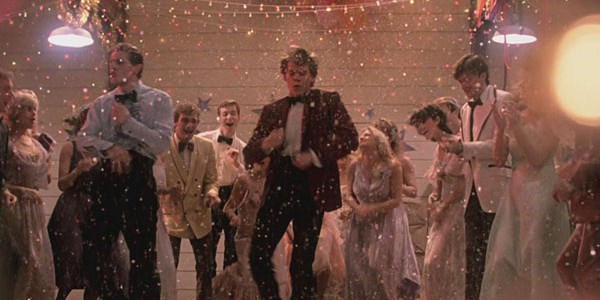
Footloose has the most 80s of all the 1980s film concepts. A rad urban teenager from Chicago has to move with his mother to a small farming community presumably somewhere in the American Midwest. To say that it's an adjustment for Ren (played by Kevin Bacon in a career-making role) is a bit of an understatement. It sorts of comes across as a sunset town (places where it was abundantly clear that black people were not welcome to stay overnight), but worst of all, there's no dancing. GASP. Dancing has been banned within the town limits of Bomont, thanks to an overzealous minister and a tragedy involving his drunk-driving son. Of course, Ren is not prepared to live in a place where his angst-ridden dance numbers are prohibited, so he channels his teenage rebellion into overturning the unfair restriction. Through the transformative power of music and teen love, he manages to convince the naysayers to allow the high school students a prom complete with dancing. And as cheesy as it sounds, it's a classic. Is it dated? Without a question. But is it also a delightfully entertaining time capsule by which future generations will define the early 1980s? Absolutely.

3. Saturday Night Fever

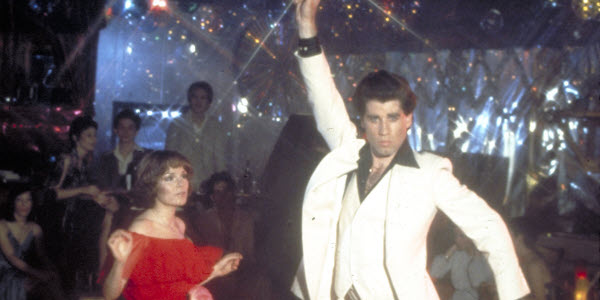
As soon as you see John Travolta strutting down the street with a paint can to the dulcet tones of the Bee Gees, you know that this is a star in the making. Tony is an aspiring dancer, who frequents Studio 54 and all of the other major clubs in New York City during the disco era. Saturday Night Fever also tries to be a somewhat gritty film that depicts real life during this time period (Brooklyn during the 1970s was pretty rough, as was the rest of the city at the time), but let's face it, the movie is all about the dancing and the hair and the costumes and the music. While disco was already a known entity in popular culture by this point, Saturday Night Fever cements it's reputation in history, particularly regarding the specific subculture that sprang up around it. People are still imitating Travolta's moves from this film, which really served to capture a style that was uniquely of its time.

2. The Full Monty

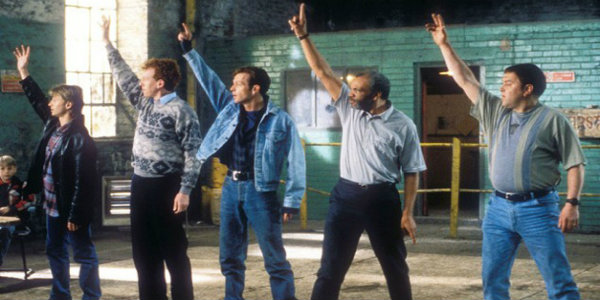
Alright, so this film is really about stripping, but close enough. The Full Monty is the story of a group of down and out laborers in a industrial town in the north of England. They're all laid off, and their self esteem is at an all time low. But they stumble upon a novel idea to make a little extra cash -- performing at a strip club. And what's more, they're going to do the full monty, so they will be quite literally exposed in front of their entire community (well, the ones who go to male strip clubs, anyway). Sure, they're not exactly the Chippendales type, but their awkwardness crosses over into adorable territory, and you root for them throughout the entire film. Losing your job is something that's incredibly depressing for most people, especially men, and it's wonderful to see them find a way to feel good about themselves again (through the power of dance). The choreography is hilariously endearing, and they manage to find a tremendous amount of dignity and liberation in something is traditionally depicted as degrading.

1. Dirty Dancing

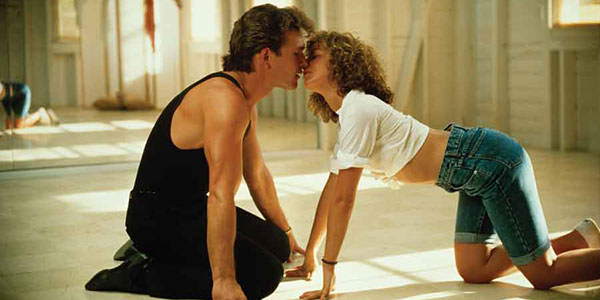
As Ryan Gosling showed us in Crazy Stupid Love (and Romain Duris in Heartbreaker, if you're of the French persuasion), no girl can resist any of the choreography from Dirty Dancing, especially the flashier moves. Patrick Swayze embodies the masculine, seductive Johnny with dance routines that will echo throughout eternity. There are a lot of reasons why this movie has been a favorite for several generations of audiences. It's partially because of how easy it is for us to put ourselves in the place of Baby, and relate to her discovering the world outside of her naive little bubble. And there's also the tremendous chemistry between Jennifer Grey and Patrick Swayze, despite the two actors famously hating each other while on set. But let's be honest -- it's mostly about the dancing. Joyful, iconic numbers that make you want to get up and start dancing around the room, or make you vaguely consider the idea of taking Latin dance lessons (don't worry, that rush of enthusiasm will pass shortly after the credits stop rolling). In terms of quality and cultural impact, Dirty Dancing is pretty much the Citizen Kane of dance films.

Contributor
Contributor

Audrey Fox is an ex-film student, which means that she prefers to spend her days in the dark, watching movies and pondering the director's use of diegetic sound. She currently works as an entertainment writer, joyfully rambling about all things film and television related. Add her on Twitter at @audonamission and check out her film blog at 1001moviesandbeyond.com.