10 Great Movies From First Time Directors
 Even great filmmakers often take a few movies to really get going. Directors like John Ford and Alfred Hitchcock worked for over a decade before making their first classics and even the most naturally gifted directors such as Steven Spielberg and Martin Scorsese took a few trial runs before they really got it together. Every once in a while though, through a combination of talent, hunger, and luck, a filmmaker will get it completely right on the first try. By virtue of being the first movies these directors made, each films shares a sense of purpose and contains passion, and energy that is often lacking in the films of more experienced directors. In addition, not only were these films good on their own terms, but many of them served as a springboard for the directors who made them, kicking off some of the most important careers in cinematic history. To qualify, obviously a movie had to have been the first full-length, narrative feature by the director, but they also must have been significant not only artistically but in terms of impact on film history and their place in the cinematic canon. These might not necessarily be the 10 "best" debut films ever made, but no other debut films have had more of an impact on the way aspiring filmmakers went about making their own movies...
10. The Shawshank Redemption
 Frank Darabont was not an amateur when he directed The Shawshank Redemption in 1994. He had worked for years as a screenwriter and had even directed a made for TV film prior to securing the rights to Stephen King's short story. Nothing he had done though hinted at what to expect from his first feature length film, which has become one of the most loved of all modern films. Despite barely making back its budget, and losing out on any important awards, The Shawshank Redemption became a fan favorite after being released on video and now of course, it's a favorite of many movie watchers, ranking number one on IMDB's top 250, and if nothing else, The Shawshank Redemption inspired dozens of Morgan Freeman voiceovers. Darabont has gone on to have a very successful career, directing films like The Green Mile and The Mist but for most viewers, he never got better than this quite remarkable debut.
9. Panther Panchali
 Satyajit Ray was the first Indian filmmaker to earn significant acclaim outside of his own country. Born into a prominent artistic family, Ray decided to become a filmmaker after meeting legendary French filmmaker Jean Renoir and in 1955 he released his first film, Panther Panchali. Shot with a budget of roughly $3000 and with no professional actors, Ray pretty much ad-libbed his way through shooting, but the result was one of the most acclaimed movies of that year as it drew raves at Cannes and earned a surprising amount of money overseas. Panther Panchali essentially just relates the daily lives of peasants living in India but the film has been endlessly praised for its lyrical realism and social impact and is often seen as a turning point in Indian cinema. Although few movie fans today have even heard of it, Panther Panchali remains one of the most respected pieces of world cinema, ranking in the top 50 in Sight & Sound's 2012 list of the best films of all time.
8. Reservoir Dogs
After getting two screenplays turned into films, Quentin Tarantino finally got a chance to show off his own inimitable style with Reservoir Dogs, an enormously important part of the burgeoning American Independent film scene. Reservoir Dogs deals with the aftermath of a jewel heist gone horribly wrong, with scenes of the planning related through flashbacks. The tension of the story comes when it is revealed than one of the members of the group is a snitch and although the audience knows right away, all the rest of the characters are left guessing to the bitter end. Reservoir Dogs serves as a precursor to Pulp Fiction in introducing the world to Tarantino's now endlessly copied use of dialogue. Gone were the days of dialogue serving as pure exposition and in was dialogue that was completely inconsequential except in establishing the different personalities of each character. Conversations now dealt with the meaning of Madonna songs and the merits of tipping and alongside quick editing and innovative song selection, Tarantino soaked the film in pure, unbridled energy. Reservoir Dogs established Tarantino as one of America's most unique filmmakers and set the stage for Pulp Fiction to send waves through the film world two years later. As a debut film, it's arguably the best in recent cinema.
7. The Maltese Falcon
 Legendary director John Huston directed this film about San Francisco detective Sam Spade in 1941 and ended up helping to establish film noir as one of the preeminent American sub-genres. The Maltese Falcon helped to establish many of the tropes of the genre, including the femme fatale, the morally ambiguous leading man, and a convoluted narrative. In addition, The Maltese Falcon benefits from one of the defining Humphrey Bogart performances, as well as the typically outstanding supporting duo of Peter Lorre and Sydney Greenstreet, and finally Mary Astor as the memorable leading lady. The Maltese Falcon was praised upon its release, being nominated for Best Picture at the Academy Awards, but its stature has grown even more since its release to the extent that is commonly regarded as one of the greatest American films ever made. The Maltese Falcon is unusual for a debut film in that nearly everyone associated with it is now a legend. Although Bogart, Lorre, and Astor were already well-known, their careers went to another level in this film while Greenstreet went on to become one of the best character actors in the business and Huston went on to become one of the most important directors in American history. In this film, everyone is in their prime and the result is one of the best films of the 1940s.
6. Badlands
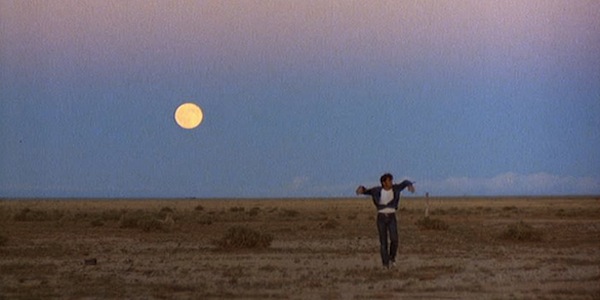 Rarely has a more unconventional debut film been delivered with as much assuredness and sense of artistry as Terrence Malick's absolutely gorgeous 1973 film, Badlands. As a former philosopher, Malick's films have always been a bit more cerebral than the average directors and while this is easily his least experimental film, it's still unlike most films you'll ever see. Loosely based off a series of murders in the 1950s, Badlands is a tale of two lovers on the run from the law that draws on Malick's interest in films of The French New Wave as well as movies such as Bonnie and Clyde. What was surprising then, and might be even more so today, is how confident a film Badlands is and how many of Malick's tropes are already working in full gear. His use of voiceovers and images of natural scenery to convey mood and emotions, his deceptively simple inter-character dialogue, and his propensity to delve into complicated ideas are all already visible in Badlands and really, its is every bit as good as his later, better financed work. Although it was very well-received at the time of its release, it took a few years before Badlands was fully appreciated by the majority of critics. Today, Badlands is considered one of the highlights of 1970's American film and remains a breathtakingly lyrical piece of cinema.
5. The Kid
 By the time Charlie Chaplin directed The Kid, he was already the most famous entertainer in the world and one of the richest men alive. He had already written and directed many of his most popular short films but in 1921 he decided to give a full length feature a try and the result was one of the most impressive debut films of all silent directors. The Kid was one of the first movies to combine humor and drama effectively and also gave the world its first child star in Jackie Coogan. Most importantly however, The Kid was a chance for Chaplin to have more than an hour to show off all his abilities and the success of the film both critically and commercially set off one of the most impressive directorial streaks in film history. The Kid is one of the most watchable of all silent films, combining humor that still works today and drama that remains quite affecting. Although Chaplin went on to make much larger and more impressive films, his debut film is still more enjoyable than all but a few debuts in film history.
4. The Night of the Hunter
 Not only is The Night of the Hunter one of the greatest debut films of all time, it is also one of the greatest final films ever made as well. Famous actor Charles Laughton directed this extremely unique horror/thriller film in 1955 and the reviews were so negative that he never made another film. However, the following decades have been kinder to the film and it is now regarded as one of the best American films of its era. The Night of the Hunter revolves around the attempts of Robert Mitchum's iconic preacher to find and steal a fortune hidden by two children of a man he shared a jail cell with. Mitchum creates one of the all-time great screen villains, but equally impressive is the film's style, reminiscent of the German expressionist films of the 1920s. Although parts of the film haven't aged particularly well, the child actors being one, the one-two-three punch of Robert Mitchum, incredible visuals, and the third act introduction of a great character played by silent film legend Lillian Gish, make The Night of the Hunter an extremely watchable movie. Even if it was the only movie Laughton ever directed, it still stands as one of the most impressive feats in Hollywood history. Not only was it a debut film, but it was an incredibly bold one that pushed the limits of acceptable cinema for the time, and one that managed to be extremely entertaining as well.
3. The 400 Blows
 The French New Wave is arguably the most influential film movement in modern cinema. Begun by former critics of the Cahiers Du Cinema magazine, The French New Wave challenged the accepted order, shook up the establishment, and redefined the limits of narrative cinema. The New Wave began with Francois Truffaut's The 400 Blows, which serves not only as a semi-autobiographical condemnation of contemporary French social issues, but also as a riveting piece of filmmaking. It follows Antoine Doinel, a misunderstood adolescent, and Truffaut stand-in, who is seen by every one as a troublemaker, although it really seems as if he's just incredibly unlucky. The 400 Blows was an instant classic, winning top awards at Cannes, kicking off the New Wave, and established Truffaut as one of the rising stars in the movie world. It's success led to the success of Godard, Resnais, Chabrol, Rohmer and further down the line to the New Hollywood of the 1970's and movies like The Godfather and American Graffiti. Without Truffaut and The 400 Blows, modern cinema would look very different indeed.
2. Breathless
 If Truffaut and The 400 Blows kicked off The French New Wave, Jean-Luc Godard and Breathless culminated it with a never before seen mixture of energy, enthusiasm, innovation, and intelligence. Released a year after The 400 Blows, Breathless was actually a story written by Truffaut but directed by Godard, who put together most of the actual screenplay on set. In a sort of happy accident, the most innovative part of Breathless was originally not part of the plan. When the original cut of the film was too long, Godard decided that instead of cutting out whole scenes, he would cut out all the meaningless motion in the actual shots themselves, leading to the now common "jump cuts," where the camera seems to jump from one place to the next. Along with a host of other innovations, Breathless was a shot in the arm to the movie world and like The 400 Blows with Truffaut, it established Godard as one of the cinematic elite. Almost as important as its innovation was its attitude. Spontaneous, rough, and bold, Breathless changed the way movies were made probably more than any movie had since the release of the movie that beats it out for number one on this list.
1. Citizen Kane
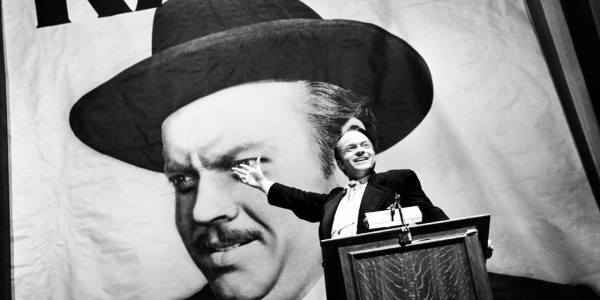 Anyone with a decent sense of film history should know that Citizen Kane, even if you don't think its the "best" movie ever, is undoubtedly one of the top five most influential movies of all-time, and without doubt the most impressive debut film ever made. With Citizen Kane, director Orson Welles revolutionized filmmaking more than any other figure since the silent age. Although immensely controversial upon its release and not very widely seen between its initial run and re-release a decade later, Kane was almost immediately noted for its use of deep focus cinematography, non-linear storytelling, and special effects that allowed the camera to go through doors, windows, and ceilings. Citizen Kane was nearly undone by its parallels to the newspaper magnate William Randolph Hearst, who did his best to keep anyone from seeing it and although he was initially successful, he ironically is now permanently associated with the film due to his efforts. It has been common for over fifty years now for Citizen Kane to be the default #1 when someone makes a list of the all-time greatest films and while whether or not it deserves the title is a topic for a different article, it more than deserves to be considered the most impressive debut film ever made. Like this article? Let us know in the comment section below.