10 Great Movies About Surviving In The Wilderness

Or not surviving, in some cases...
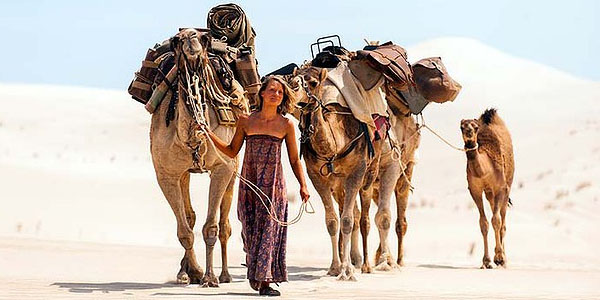
This weekend, Tracks is released in UK cinemas. Starring Mia Wasikowska and Adam Driver, it tells the story of a young woman called Robyn Davidson, who trekked 1700 miles across the Australian outback, the journey on camel back taking nine months to complete. Along the way she is joined by National Geographic photographer Rick Smolan (Driver) who begins to document her expedition. The wilderness is endlessly mysterious and fascinating to mankind - both a stark ever-present reminder of our per-civilization past and a dangerous challenge for the adventurous to attempt to overcome, its vast expanses remind us all of our own comparative insignificance. Not surprisingly, its beauty has formed the backdrop - and sometimes the centerpiece - of dozens of movies, stories which capture both its breathtaking awe and cruel, unforgiving harshness. Primal and untouched, man's place in it becomes far removed from the comforts of mainstream society. Here are ten movies which feature the great, unspoilt outdoors - films in which the wilderness itself often becomes a deciding factor in the fate of its characters, an indomitable presence every bit as forbidding and ruthless as any screen villain.

10. The Edge

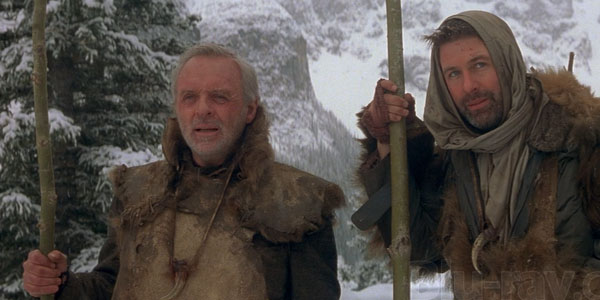
Lee Tamahori's career hasn't exactly been a notable one - since his early solid drama Once Were Warriors he's now better known for making brainless action films, with Die Another Day (possibly the worst Bond film ever made) and the Philip K. Dick adaptation Next proving that even with decent source material he still churns out sub-standard fare. The Edge, however, is a cut above his other films, notwithstanding the fact that the credit largely goes to David Mamet's screenplay and the lead actors, Anthony Hopkins and Alec Baldwin. Hopkins plays Charles Morse, a billionaire with a knack for memory, with Baldwin as his friend and photographer Bob Green, who accompanies him to Alaska for a photo shoot with Morse's young wife, Mickey (Elle MacPherson). When their helicopter crashes out in the wilderness, they find themselves contending not just with the elements but also a man-eating grizzly bear - and each other. Mamet's dialogue isn't his best by a long stretch, but The Edge is still a solid, entertaining movie, with a tight plot which trades well in wrong-footing the audience. It's reminiscent of Hollywood circa 1970, in its look as much as its study of masculinity, betrayal and justice.

9. 127 Hours

If you're not a fan of James Franco, you might want to steer clear of 127 Hours since he's pretty much the only character on screen throughout the duration of the film. Based on a true story and directed by Danny Boyle, it tells a minimal plot with a surprising amount of flair and invention. Franco plays Aron Ralston, an outdoors enthusiast who sets out on his bike for a day's canyoneering. While negotiating the precarious precipices he slips and falls into a canyon, dislodging a trapped boulder which falls onto him, trapping his arm beneath it. Realising no one can hear him calling for help, he uses a pocket knife to try and chip away at the boulder, and as time passes it dawns on him he might not make it out alive. Of course he does (the title obviously gives away the length of his ordeal) but paying a huge price in the process. Boyle makes the most of the claustrophobic location and its contrast to the vast surrounding environment, and 127 Hours features some imaginative cinematography. Franco holds the film together with a delicate, low-key performance, while the gut-wrenching close up limb-severing finale is something to be seen (or not, if you're particularly squeamish).

8. Into The Wild

Another American movie adapted from a work of non-fiction about a young man escaping from civilization, Sean Penn's Into the Wild is an altogether more expansive film than 127 Hours, taking in a whole host of American vistas as it follows Christopher McCandless (Emile Hirsch) on his journey to Alaska. It's not uncommon for people who graduate to take a year out before getting stuck in the daily grind of adult life - McCandless decided to take things a little further than most: after symbolically destroying his credit cards, he hitchhikes across the States, picking up work along the way before leaving civilization behind completely and heading into the wilds of Alaska. Here, he realises that nature can be just as harsh and unforgiving as people, but when he sets out to return he discovers that the gentle stream he passed has become a raging river, trapping him in the wilderness. Sean Penn has already proven himself to be a director with a keen eye for beautiful compositions, and his acting background seems to guarantee his directorial efforts are populated with rounded characters delivered with fine performances. Into the Wild is no exception - it's a moving, insightful meditation on hope and disillusionment which is both engaging and poignant.

7. The Grey

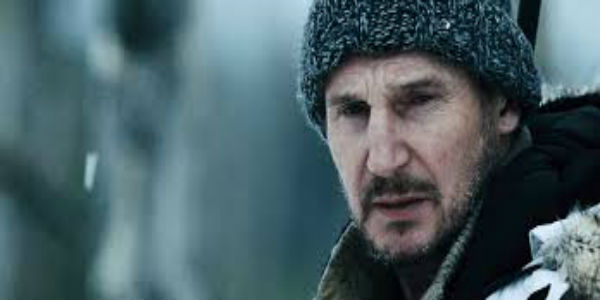
Staying in Alaska, The Grey is a Liam Neeson vehicle through and through; a gritty thriller in which he gets to flex his well-worn gruff chops. He plays John Ottway, an oil man who finds himself stranded in the wilds of Alaska along with his colleagues after their plane crashes - along with the harsh wilderness the men have to contend with a pack of hungry wolves, determined to have them for dinner. It's a formulaic set-up with a penchant for stock characters, and while it doesn't shatter any genre conventions it more than delivers the goods in terms of tension and action. Neeson, after all, is a dab hand at these kind of roles, and watching him taking on anything thrown his way is always a huge pleasure. Joe Carnahan is hardly a director noted for his subtlety, but subtly is not what The Grey is aiming for, while the merciless environment is captured with authenticity. As with many survival films, The Grey's themes ooze testosterone, with the notion of manliness pushed to its extreme. There's also a spiritual undertone bubbling away beneath the nihilistic surface, as if enduring such dreadful conditions and going up against an alpha predator represent man's ultimate challenge.

6. Alive

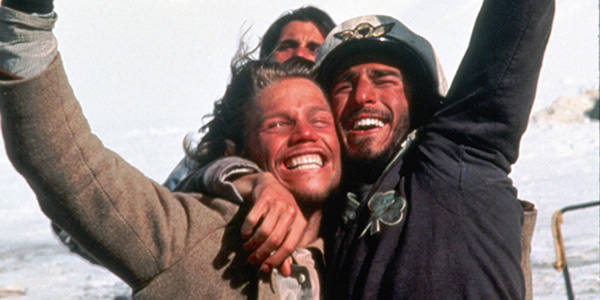
While Alive shares its basic premise of men surviving in a hostile environment after a plane crash, the similarities with The Grey end there. Another survival movie based on real events, it tells the story of the Uruguay rugby team stranded in the Andes mountains after their plane crashed in October 1972, who were forced to resort to cannibalism in order to survive. Director Frank Marshall adapts Piers Paul Read's book of the same name, preferring to emphasize the heroics of the characters rather than the spiritual themes touched upon in the opening scenes and prevalent in the original text. Given the grim subject matter, Alive is a restrained and sensitive film which doesn't seek to sensationalise the grotesque dilemma the men are faced with, and while the film is far from a masterpiece - Marshall offers none of the social commentary which also littered Read's book - it evokes the desperation the characters feel as their two month trial by nature slowly passes by. Alive more than impresses in the visual stakes, with the vast, ominous mountain on the Andes captured in the wonderful cinematography. The opening plane crash is also a superbly staged spectacle, a real edge-of-your-seat sequence which suggests that Marshall learned a thing or two about tension in the time he spent working alongside Steven Spielberg.

5. The Way Back

The words "Based on a true story" at the beginning of a movie should always be taken with a pinch of salt - filmmakers are prone to be rather liberal with "truth" - however you choose to define it - often embellishing the tale to make it more cinematic and fit neatly into a conventional narrative structure. In the case of The Way Back, the authenticity of the source material itself has frequently been called into question. Loosely based on The Long Walk by S‚awomir Rawicz, Peter Weir's The Way Back begins in a Soviet gulag in Siberia, that vast region in the north of Russia renowned for being one of the most inhospitable places on the planet. Polish POW Janusz Wieszczek (Jim Sturgess) joins up with three other inmates, including an American engineer (Ed Harris), an actor (Mark Strong) and a mean Russian convict (Colin Farrell) and escapes from the prison. To say that they have a long and arduous journey before them is an understatement. With predictably stunning cinematography from Weir's regular DOP Russell Boyd, ranging from the frozen Siberian mountains to the Gobi Desert, The Way Back infuses the survival tale with a measured political undercurrent. While it isn't Weir's greatest movie, it's characteristically elegant and features strong performances across the board, notably from Sturgess and Saoirse Ronan as the young orphaned Polish girl who joins the men on their journey.

4. Far North

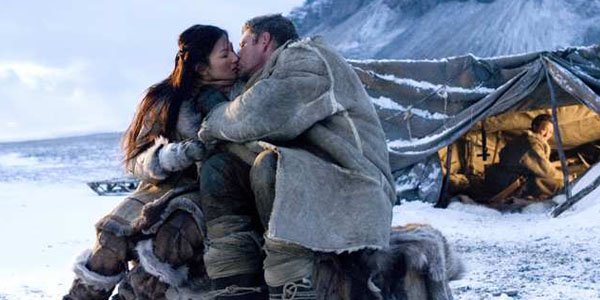
As the title implies, Far North takes us even further into the wilderness than The Way Back, perhaps as far removed from civilization as you can get, deep into the Arctic tundra. It also takes us firmly into unfamiliar cultural territory, taking as its central character a woman under the influence of a shamanic prophecy. Michelle Yeoh stars as Saiva who, accompanied by a younger woman Anja, ekes out a living amidst the frozen landscape while desperately avoiding bands of Soviet soldiers patrolling the area. After almost getting caught, the two of them press northwards where they hope to be safe, where they encounter a wounded man called Loki (Sean Bean). After they take him in and nurse back to health a relationship with Anja begins to blossom, and as the two prepare to return to civilization and start a family of their own, Salva's jealousy transforms into an unspeakable act which has to be seen to be believed. Another ravishing-looking film, Far North was unfortunately in and out of cinemas in a flash. There's something timeless about it, with only the presence of the Soviets and a hand-cranked radio hinting that it's set in the 20th century, and Michelle Yeoh's strong central performance is as expressive and ambiguous as the flashbacks which punctuate the narrative. It also has one of the most shocking and unexpected endings in film history, which brings new meaning to the mixed motif of sex and death.

3. Valhalla Rising

Nicolas Winding Refn is a director who, for better or worse, frequently explores the notion of masculinity, populating his movies with protagonists - and antagonists - of morally questionable dispositions with a disregard for the rule of law. With Valhalla Rising, Refn took this notion to the extreme, setting the film against a primal backdrop in which there are no rules to speak of. Mads Mikkelsen stars as One-Eye, a Norse warrior who travels across the land with an unnamed boy before joining up with a group of Christian Crusaders in search of the Holy Land. Split into six parts - Wrath, Silent Warrior, Men of God, The Holy Land, Hell and The Sacrifice - Valhalla Rising aims for the mythological and to some degree succeeds, with Refn's deliberately ambiguous imagery and symbolic content setting it apart from your average period piece. Having already worked with Refn on his excellent Pusher films, Mikkelsen's mute performance is strong enough to carry Valhalla Rising through, as imposing a presence as the mountains which frequently surround him. It also has moments of near-poetic brutality, as if Refn were somehow channeling Terrence Malick's aesthetic sensibilities and fusing it with Werner Herzog.

2. Walkabout

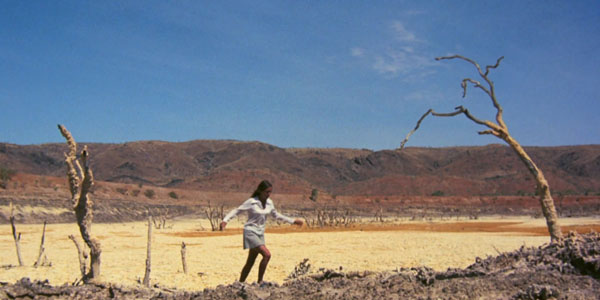
If Nicolas Winding Refn strove to make a transcendent film with Valhalla Rising but fell short with the end product, the same can't be said for Nicolas Roeg's incredible 1971 movie, Walkabout. Roeg - already a respected cinematographer before putting on his directorial shoes - demonstrates his incredible talent for crafting rich, symbolic and multi-layered films which would become his trademark for much of his career. Having already wowed audiences and critics alike with his spectacularly inventive film Performance (co-directed with Donald Cammell), Roeg turned his attention to the Australian outback for the tale of two schoolchildren who become stranded in the wilderness. Jenny Agutter and Luc Roeg star as the siblings whose picnic in the outback with their father takes a turn for the worse when he starts shooting at them with his gun, before turning it on himself. After coming across a watering hole, a young Aboriginal boy arrives and teaches them how to survive. Far more than simply a story of survival in a hostile environment, Walkabout belies its minimalist set-up (the film was shot from a 14-page screenplay) and serves up one glorious motif after another, with a carefully constructed mise en scene which uses beautiful and powerful imagery to juxtapose themes and ideas with a near-hallucinatory quality. It is a visual treat which reaches the level of pure parable.

1. Aguirre, The Wrath Of God

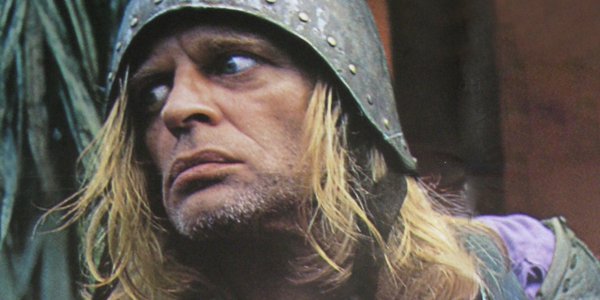
If you were to name two films in which the trials and tribulations of the production were evident in the final cut, the first which would spring to mind to most people would be Apocalypse Now. Another jungle-set film which shares both visual and thematic concerns with Francis Ford Coppola's classic war movie and was fraught with production difficulties is Werner Herzog's masterpiece, Aguirre, The Wrath of God. After conquering the Incan empire, a group of Spanish conquistadors led by Lope de Aguirre set off through the dense jungle in search of the legendary city of gold, El Dorado. With little beyond this in the way of narrative, Aguirre, The Wrath of God plunges into the depths of insanity, with Herzog regular Klaus Kinski seeming to channel his off-screen tantrum-prone personality. Indeed, this is Kinski's film as much as it is Herzog's - a screen presence rarely rivaled in cinema, and a man who quite possibly was completely mad himself. Herzog chose to shoot Aguirre, The Wrath of God in chronological order, and the payoff for this approach means that the film is lent an incredible realism, with the cast (and presumably the unfortunate crew) increasingly beaten down by the encroaching, ever-present jungle. Herzog even adapted the film during the shoot in accordance with the weather, at one point integrating a flood into the plot. Unperturbed by the harrowing and stressful shoot, Kinski and Herzog returned to the Amazon rainforests ten years later to film Firzcarraldo, a production which turned out to be even more problematic than Aguirre, The Wrath of God.

Contributor
Contributor

Andrew Dilks hasn't written a bio just yet, but if they had... it would appear here.