10 Great Movies Too Depressing To Really Love
 I am one of those weird people who enjoys depressing cinema. Ken Loach films fascinate me. I am enraptured by the canon of Ingmar Bergman and Robert Bresson's movies positively make me grin. There is, however, a limit to the above. There are some Loach, Bergman and Bresson films that are so unremittingly bleak and depressing, I couldn't say that I love them. I might feel a better person for having watched them, but they are not loveable films. Beyond those three directors, there are plenty of other films out there that are too depressing to love. They break your heart too much, they deliver unpalatable truths, they are utterly without hope. These movies are important to chronicle the truth about human existence but the truth hurts, as they say. To immerse yourself in utter gloom, please click on the next button below, but you have been warned as to the soul destroying content.
10. Grave Of The Fireflies (1988)
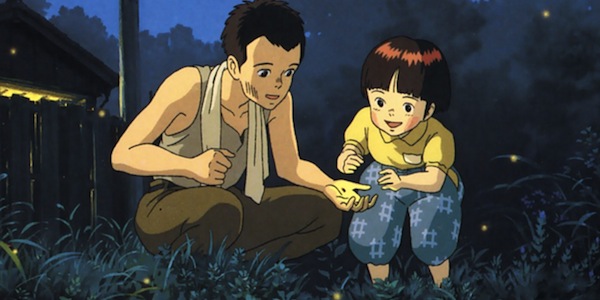 A Japanese animated film - Grave of the Fireflies is another film on this list which deals with the horrors of war. The film starts in Japan in September 1945 where a 14 year old boy dies of starvation in a station. The janitor rifles through his pocket and finds a jar of ashes and bones which he throws into a nearby field. From these ashes spring Seita and his younger sister Setsuko as well as a cloud of fireflies. Seita narrates a flashback to March 1945 and events in the run up to the end of World War Two. The city Seita, Setsuko and their mother live in is virtually destroyed by American bombers. The mother is seriously burned in the attack and goes to the clinic where she soon dies. Setsuko and Seita move in with an aunt who doesn't really want them and sells their mother's kimonos. The pair eventually move out of the aunt's house and into an abandoned bomb shelter. They use fireflies for light but they all die and Setsuko buries them. When they run out of rice, Seita is reduced to stealing it from farmers and looting houses during air raids. Setsuko dies from malnutrition and their father is also most probably dead. Seita cremates Setsuko and put her ashes in a tin. The War is over and Seita dies of starvation a couple of months later. Graveyard of the Fireflies is often seen as an antiwar film - depicting the horrific repercussions of war on an individual level. The director of the film says that the movie contains no such message and he wrote the film to honour the older generation who had lived through World War Two. Whenever it comes to films that are about war, Graveyard of the Fireflies is often overlooked, but the simple tale of a brother and sister - cast offs - trying to survive will have you bawling your eyes out. The film will provoke a lot of emotion in you as well as a welter of feelings - sadness, disgust, helplessness. It is an absolutely beautiful piece of animated cinema. However, it is too emotionally affecting to love. Far too painful.
9. When The Wind Blows (1986)
 From the pen of Raymond 'The Snowman' Briggs, When the Wind Blows is an animated film which tackles the mighty subject of nuclear war - possibly the most depressing subject there is to contemplate. James and Hilda Bloggs are an elderly couple who live in the Sussex countryside. James is trying to make sense of the news which is chronicling the escalating tensions between the superpowers. He learns that nuclear war could be as little as three days away and of course, this being the 1980s - the government is circulating Protect and Survive manuals. James is trying to follow his manual's instructions and he manages to create a lean to shelter and paint his windows white. James and Hilda experienced World War Two in their childhoods so that is their taste of war. They are confident everything will be fine as long as they obey official instructions. A missile is released that sends shockwaves through the Bloggs' home. 'Luckily' they get into their shelter and stay there for several days as instructed. Whenever they emerge, their house has been wrecked and there is no water or electricity but James and Hilda try to carry on as if everything is okay - despite their growing radiation sickness. James thinks that ill civilians will be collected from houses and taken for treatment. When no help is forthcoming, James and Hilda fall into despair. At the end of the film they crawl into their shelter and pray. Of all of the films that deal with nuclear war, When the Wind Blows is one of the more gritty and realistic films (up there with Threads). The Day After was a sombre movie but ultimately sought to soothe the American public's fears about nuclear war with the message - we will be okay at the end of it really. When the Wind Blows delivers no hopes. It is desolate, depressing and horrific in a quiet way (by only focusing on the trials of an elderly couple). Upon watching the film, the growing realisation that it is better to be killed outright by the bomb rather than die a hopeless, agonising death - dawns in the viewer. Life after the bomb is simply intolerable. Nothing functions, it is every man for himself and everyone is croaking from radiation poisoning. When the Wind Blows lays out all of these bare facts and it is sad. Desperately sad. And that is why you cannot love this harrowing film because there is utterly no message of hope.
8. Hotel Rwanda (2004)
 Fighting breaks out in Rwanda between rival ethnic groups - the Hutus and the Tutsis. Paul is a manager of a hotel and is a Hutu, his wife Tatiana is a Tutsi and this causes annoyance to Hutu extremists such as Georges who is the hotel goods supplier and also leader of the local Interahamwe - a Hutu extremist group who are slaughtering Tutsis. The violence intensifies and Paul is forced into bribery to protect his family. The neighbourhood is threatened by Hutu extremists and they end up fleeing to Paul's hotel along with various refugees, waifs and strays. Paul has to keep up a pretence of a swanky hotel whilst consoling its boarders and keeping strong for his family. UN peacekeeping forces arrive but are pretty useless because thy are unable by international law to have conflict with the Interahamwe. Foreign nationals are taken out of Rwanda but this still leaves lots of refugees and no cessation to the conflict. Eventually the UN try to evacuate a load of refugees - including Paul and his family but they are fired at and must return. Paul is at his wit's end. Eventually he tells the Rwandan Army General that if he doesn't let them leave he will report him as a war criminal. The convoy gets through the fighting and at the end it is revealed that Paul's actions saved over a thousand people from death. You cannot 'love' a film about the Rwandan genocide - it is simply too appalling to take on board the fact that 1 million people out of a population of 7 million were killed in a matter of months. And the world stood by and did nothing. Okay, Paul did a Schindler's list and rescued some people but it is only a small beacon of goodness in a glaring abyss of hatred and violence. Yes, we can laud his efforts but we can also see how the conflict turns ordinary men and women against each other. Approximately 200,000 people participated in the slaughter. In the face of such barbarism, Hotel Rwanda is a rather harrowing experience for the viewer which takes them from their living room and plonks them in the mid of one of the most ghastly genocides there has ever been. Far too disturbing to love.
7. Come And See (1985)
 In Belarus - 1943, a young boy named Flyora is taken by the Partisans to fight with them. They go to confront the Nazis and Flyora is given a very low rank. He is left behind by the Partisans and is bitterly disappointed but things get slightly better when he meets Glasha - a beautiful girl who has been left behind too. They come under attack by German planes and the noise leaves Flyora temporarily deafened. He and Glasha run back to his village and find his family gone. They sit down to dinner but Glasha is sick afterwards. Flyora believes his family are hiding in a bog but when he and Glasha go outside they see a pile of bodies behind Flyora's house. He gets hysterical and wades through the bog until the pair run into Roubej - a resistance fighter. They are taken to a group of villagers who fled from the attack and he sees his friend Yustin who has been dowsed with petrol and set alight. Flyora accepts his family is dead. In the quest to stay alive and get food, Flyora encounters some of the worst excesses of Nazism. Roubej is killed by a land mine. Flyora is locked into a hut of fellow Belorussians, he climbs out the window but the Nazis torch the hut, laughing their heads off as the people within burn to death. Flyora has more brushes with the hateful Nazis and at the end of the film, he shoots it - using his rifle for the first time. A series of pictures rewinds showing the death camps and the rise of Hitler from a young man back to a picture of Adolf as a baby. Flyora shoots them all except the picture of the baby - he cannot bring himself to shoot it. Finally we see Flyora marching into a forest with the partisans. In all honesty, Come and See must be the most realistic representations of war ever portrayed on the screen. When it was screened, members of the audience collapsed at the horror before them, horror which is particularly hard to swallow as it is seen through the eyes of a child. Director Klimov does a fantastic job in evoking the sights, smell, sounds and sensations of war and the movie is important because it is a portrayal of The Second World War on the Eastern front and it acknowledges the terrible things that were done to countries we rarely think of as suffering at the hands of the Nazis - in this case Belarus. Nazi atrocities were not just confined to the concentration camps, villages were wiped out and people mass executed in the most depraved and sadistic ways possible. Apparently at a screening, an old German Soldier who had been through Poland and Belarus jumped up and said "Everything in this movie is the truth. I will testify and the worst thing is, my children and grandchildren will come to see this film". The film is breathtaking in its scope and vision. It captures the chaos and societal collapse that comes from war - the breeding grounds for genocide and other casual war atrocities. It is a film to revere and greatly admire but due to its disturbing content, I don't think you can love Come and See.
6. Never Let Me Go (2010)
 Kathy H narrates the film and talks about her childhood growing up with her friends Tommy and Ruth in a strange boarding school called Hailsham House. The place is strange but the youngsters accept it. As they grow up they learn their terrible fate - they are mere vessels for to harvest organs from and they will die when their transplant time is nigh. As adults they move into cottages and learn that they were cloned from society's rejects. The trio become embroiled in a love triangle but as they come of age, they cannot defer their terrible fate once they are 'complete'. Adapted from the novel by Kazuo Ishiguro, Never Let Me Go is a brilliant film that ponders all sorts of depressing questions namely - how do people cope when they know they are going to die shortly? I personally wondered why the three main characters didn't just bugger off. The science fiction thread of the film is rather iffy, but as a study of romantic love that is doomed - it works great. It is a very depressing film as everyone capitulates to their fate with resignation and it will haunt you so much that you can't really say you love it. Rather - it is a film to be admired.
5. Dancer In The Dark (2000)
 Bjork stars as Selma - a Czech immigrant living in Washington State in 1964. She works in a factory and no one knows she is going blind and saving up money for her son to have a sight saving operation because he has inherited her condition. Selma slips into weird imaginations and fantasies whenever she is bored or upset. She lives in a trailer in a spot of land owned by Bill and his wife Linda. Eventually folk around her begin to realise how bad her eyesight is deteriorating. Bill knows that Selma has been stashing money away. Linda is a shopaholic and Bill needs money to fund her lifestyle and pay the bills. He spies on Selma to see where she is hiding her money. Selma's bad luck continues - she is fired from her job over a mistake he makes. She is ousted from her trailer by an angry Linda who thinks she is having an affair with Bill. Selma sees Bill counting money and realises it is her money. Selma tries to take her money back but Linda thinks she is trying to steal the money and runs off to get the police. Selma shoots but doesn't kill Bill after he tells her it is the only way she will get the money back. She takes the money and runs to the Blind Institute to pay for her son's operation before she is apprehended by the law. Bill is dead from gunshot wounds at this point. At her trial she is portrayed as a murderess and Communist sympathiser. Her friends find her money and use it to hire a lawyer for Selma but she dismisses the lawyer saying she would rather face the death penalty than let her son go blind. Nevertheless, she is terrified by death and is extremely distressed on the gallows until a friend tells her that her son's operation was a success. Relieved, Selma meets her doom. Another grim as hell masterpiece from Lars von Trier, you can tell from my plot synopsis that Dancer in the Dark is a depressing film. Selma is more sinned against than sinning - that's for sure and to watch her helpless downfall is a major tragedy. You come away from the film feeling very bleak - it is one of the most moving films you will ever see. Bjork is completely believable in her role as Selma and the character's plight is very heart wrenching. It is horrible to witness her turmoil on the gallows - she had come so far and survived so much - just to be snuffed out. The fact that her son has a successful operation is somewhat a consolation in the downfall of Selma, but she didn't deserve all the crap heaped upon her. A tragic film that is brilliant but too depressing to really love.
4. Revolutionary Road (2008)
 This depression fest comes from Sam Mendes. Frank and April meet each other and settle down to domesticity in 1950s America - having two children. They chum about with their neighbours and pretend everything is rosy until April's acting career fails to take off and Frank feels the tedium of his boring desk job. They become convinced that a move to Paris is the key to their problems. However, circumstances deprive them of this chance. Frank inadvertently earns a promotion at work and April becomes pregnant. There is much rancour and bitterness between the couple but one morning April appears calm and makes Frank his breakfast. Unfortunately this is just a hollow act of appeasement. She performs an abortion upon herself and dies. Frank subsequently gets a new job working with computers in the city and he is a devoted father. The film is amazingly well acted by Leonardo DiCaprio and Kate Winslet. It is beautifully shot and a class act all the way. It is, however, depressing as hell. You won't regret watching it - but it is unlikely to become a favourite regular in your film collection as it is such a downer. It paints a hellish picture of marriage and a vision of two people gradually descending into mutual loathing and incompatibility - trapped by the institution of wedlock. Even if they appear to be okay with each other on occasion - there is palpable tension between Frank and April during those scenes. A lot of viewers really have a strong dislike for the character April, feeling that she is cold and dispassionate. However, she is portrayed magnificently by Kate Winslet - a brave, honest performance. A grim picture indeed - so miserable that you couldn't love it.
3. Million Dollar Baby (2004)
 Maggie Fitzgerald shows up at a run down LA gym and boxing club run by Frankie Dunn. She begs him to train her, and initially sceptical by the thought of training a girl to box, he refuses but eventually gives in, impressed by her enthusiasm. Maggie starts winning welterweight fights but receives no support from her white trash family. Frankie always teaches her how to protect herself from harm in the ring but in a million dollar fight against a German boxer, she gets sucker punched from behind, falls against her stool and breaks her neck, leaving her quadriplegic. Her greedy family try to take her money but their attempts are negated. Maggie is in a rehab facility. Her leg is amputated and she talks Frankie into killing her with an injection of adrenaline. I have a close family member who is a quadriplegic through a sporting accident and I know the terrible tragedy that it is - not just for the person injured - but the family members too. Of course, Hilary Swank won an Oscar, not just because of her incredible performance, but also because the Academy loves to reward people who portray characters with a disability. The ending of the film is vey sad and presumes that quadriplegics have nothing to live for. This is not true - my family member has adapted to her life with immense grace and courage and I would say she is content in her life - she does the best to her abilities. There is no hope for Maggie in the film, it doesn't even explore some ways she could live her life despite being disabled. Her family suck and to add insult to injury, Maggie has to have an amputation. It is a film with such depressive tendencies, I don't think I could watch it again. Not just because of my personal life but because the film promises you the world and then smashes it to bits relentlessly in front of your eyes.
2. Winter Light (1962)
 Everything sucks in Minister Tomas' life. His church has a congregation of about 3/4 people, he seriously doubts God's existence and on top of that he has a cold. Moreover, Jonas, one of his few parishioners has developed a deep depression over the state of nuclear weapons development in the world. Tomas talks to Jonas but can offer him little comfort - confessing to the poor man that he has lost his faith. Jonas kills himself. Tomas' atheistic ex-mistress sends him a letter berating him as a lover and a man. They have a bitter fight and he tells her she couldn't measure up to his late wife. He also has to inform Jonas' new wife that she is now a widow. At a 3pm service he gets into a theological debate with the church sexton about God's silence when Jesus called out for him on the cross. The sexton asks Tomas why bother with the service since there is no one here. Tomas says Marta is here and begins the service. One of Ingmar Bergman's most personal films, the plot basically plays out the Great Man's demons about his faith in God and his world view. A stark, black and white film with no music, Winter Light forces you to focus on the depressing themes of the film and leaves you pondering a whole heap of issues. It is a very good film, and highly rated by Bergman himself, but is so austere, it's not the kind of film that leaves you feeling "Wow! This is a really great film I want to watch over and over!". It's a masterpiece but you couldn't develop tender feelings towards it - it's simply too heavy going.
1. Au Hazard Balthazar (1966)
 I have cried watching this which is its first indication of the depression level of this film (usually I rub my hands in glee at a depressing film). If you are an animal lover, you simply cannot love this film even though it is a genuine masterpiece from Master of Austerity - Robert Bresson. The life of Balthazar the donkey is seriously depressing as he is treated with cruelty and contempt in the film. For an animal lover, these scenes are hard to take especially as the poor donkey cannot fight back or escape his fate. The film has a human life going on - Marie - a simple farm girl is subjected to the similar callousness and cruelty that parallels Balthazar's life. The donkey becomes a metaphor for transcendence and saintliness. It is a movie about suffering - but not being broken by that suffering because to be angry and pursue vengeance would be a worse character deficit than being passive. This makes Balthazar exceptionally vulnerable. It can be compared to Bresson's Mouchette in which a young, neglected and impoverished school girl achieves spiritual transcendence via the act of suicide after being abused and demeaned by everyone around her. Au Hasard Balthazar is a beautiful and deeply meaningful film but to love it is to break your heart.