10 Great Underrated Film Noirs
 Theres been debate about whether film noir is a genre, or if its more of a mood or a style. Whatever it is, its been an indelible part of film history for the past 70 or so years. The emergence of film noir was almost an accident- during the World War II years certain American filmmakers began creating dark dramas, inspired somewhat by German Expressionism, which were coined by French filmmakers as film noir. Film noirs that came out after the 1950s became known as neo-noirs. Think of Roman Polanskis Chinatown or even Martin Scorseses Taxi Driver. Of course, the noir genre, or style, has many hidden gems, some classic, and some more modern. To celebrate Noirvember, the unofficial month of watching and writing about film noir, or whats left of it, I thought it was time to put a focus on some underrated noirs, ranging from classic to neo noir, and everything in between. These films provide directors with stories to play with stylish techniques. Most importantly, they explore the dark areas of the human soul and occasionally have very grim outlooks on life.
10. The Missing Person
 Michael Shannon is one of the most fascinating and underrated actors working today. His performance in last years Premium Rush with Joseph Gordon-Levitt ranks among the best villainous performances in recent years- his dirty cop Bobby Monday is pathetic yet extremely unhinged and dangerous. He delivers another fine performance in the little seen The Missing Person from 2008. The plot is fairly straightforward- Shannon plays private detective John Rosow, who is hired to follow a man named Harold Fullmer (Frank Wood) and bring him back home to his wife Megan (Linda Emond). It turns out Fullmer is a survivor of the 9/11 terrorist attacks. He disappeared soon after, creating a new life for himself, but was recently discovered to still be alive. This provides an unexpected connection between Fullmer and Rosow- Rosows wife died on September 11. Rosow, who suffered a horrible loss, at first, cannot understand why Harold would cause so much pain to his wife. But soon Rosow comes to understand why Fullmer decided to change the course of his life. The Missing Person has both a pleasantly old fashioned noir feel, while beautifully and tastefully relating its small scale story to the great tragedy of the 21st century. Its a small gem of a film that deserves a look.
9. The Strange Love Of Martha Ivers
 In 1928, young Martha Ivers, along with Sam Masterson (Darryl Hickman) from Iverstown (Janis Wilson) attempts to escape from life under the rule of her aunt Mrs. Ivers (Judith Anderson). Their attempt fails but that night, during a power outage, Martha kills her aunt, and the only witness is Walter ONeil, the son of Marthas tutor, Mr. ONeil (Roman Bohnen). Martha and Walter lie to Mr ONeil about what actually happened. Years later, Mr. ONeil, who was always suspicious of what actually happened that night, has Martha testify that an innocent man killed her aunt, and then blackmails her in to marrying Walter. After the 1928 prologue, we skip ahead to 1946, where we follow two parallel storylines that converge. Sam (Van Heflin) makes a stop in Iverstown due to needing his car fixed. He meets a young woman named Antonia Toni Marachek (Lizabeth Scott) who has broken her parole, which required her to go home to Ridgesville. Sam looks to his old friend Walter (Kirk Douglas), now the District Attorney, to get her out of jail. Walter is an alcoholic whose relationship with Martha (Barbara Stanwyck) is strained, and Sams return causes even more trouble, since Walter believes Sam knows Martha killed her aunt and is back to blackmail him and Martha. Stanwyck is excellent in the film. She had a gift for playing women who, while calm, collected and sharp tongued on the outside, are vulnerable on the inside. The most powerful moments in the film come when we realize how tormented Martha has been for nearly her entire life. The Strange Love of Martha Ivers is essentially about the eternal theme, very prevalent in film noir, of the past coming back to haunt you. In Marthas case, the past has never left her- shes been constantly tormented for nearly twenty years due to essentially killing an innocent man, and being married to a man she doesnt love. Kirk Douglas, in his debut role, is perfect as the man who is still, in Sams words, a scared little boy. The shadow of his father still looms over Walter, a man who dictated Walter's entire life. While Stanwyck and Douglas are great, in many ways this is Heflins film. For me, the heart of the film is the scenes between Sam and Toni. Their dialogue is like watching a tennis match. I like the contrast between Martha and Walters relationship, which is almost entirely without passion, one thats doomed- and the budding romance between Sam and Toni, which has a potentially more optimistic future.
8. Sorry, Wrong Number
 Another film with Barbara Stanwyck- Sorry, Wrong Number has Stanwyck playing Leona Stevenson, an invalid women married to former drug store employee, Henry (Burt Lancaster), now a vice president in her father's business. The movie takes place over the course of a few hours one night when Leona, while on the telephone, receives a crossed signal and hears two men plotting to murder a woman. Believing this to be her, and not knowing when Henry will be home, Leona begins investigating via telephone. She makes contact with the woman who once carried a torch for Henry, Sally Lord (Ann Richards), whose husband is a lawyer in the district attorneys office. Her husband who has been investigating Henry but Sally doesn't know why. Sorry, Wrong Number takes what sounds at first like an un-cinematic idea, a woman talking in her bed while on the telephone (it was actually a radio play first, here expanded to feature length by the play's author, Lucille Fletcher) and actually makes it very dynamic as a film. Having flashbacks help make the film more cinematic and gives the film more texture. Stanwyck, who, for much of the film cannot move from her bed, masterfully captures Leonas growing desperation (she was nominated for the Best Actress Oscar that year). The mystery is intriguing- were never quite sure if Henry plans to have her killed or if hes a red herring. Where is he during the course of the film? The film also has a pretty bleak ending for its time. I was genuinely surprised but, looking back at the events of the film, it was the perfect and inevitable conclusion.
7. Snake Eyes
 At a boxing match in Atlantic City during a hurricane, the United States Defence Secretary Charles Kirkland (Joel Fabiani) is assassinated, leaving a stadium full of eye witnesses. Two of those eye witnesses are best friends Rick Santoro (Nicolas Cage), a corrupt Atlantic City detective, and US Navy Commander Kevin Dunne (Gary Sinise), who was escorting Kirkland that night, and who was distracted by a woman, leading him to leave his post, which resulted in Kirklands assassination- though Dunne was able to kill the assassin. Santoro begins investigating what happened, which involved boxer Lincoln Tyler (Stan Shaw) throwing a fight, which was part of an even larger conspiracy regarding covering up a malfunctioning missile guiding system named the AirGuard, and a woman named Julia Costello (Carla Gugino). Santoro also learns a devastating truth about his friend. When it came out in 1998, Snake Eyes received largely negative reviews. 15 years later, Brian De Palmas conspiracy thriller actually holds up pretty well. While it suffers from a weak climax, for most of its running time its a taut, visually inventive thriller with an unique set-up and a great noir atmosphere. The opening shot alone, which, while having numerous invisible cuts, is one of the best examples of the tracking shot in film history. Cage is also really good here. His theatrical style of acting puts many people off but here it perfectly suits Santoros personality. Sinise also does a fine job here, making us understand and emphasize with Dunnes motivations when we find out his role in the conspiracy. The relationship between Santoro and Dunne is also an interesting twist on the whole James Cagney/Pat OBrien relationship from Michael Curtiz's Angels With Dirty Faces, a film about two boyhood friends, one who became a gangster and the other a priest. In Snake Eyes, the one we think is the nobler of the two is actually the more corrupt. And the consequences that await Santoro if he exposes the truth provide an interesting moral and ethical dilemma to compliment De Palmas technical bravura. What I also like about a Snake Eyes is, apart from being a very cinematic film, is also a film about how we watch and listen to movies. In the early parts of the film, we, and Santoro, witness and hear crucial events. While at first we dont understand what they mean, they become clear later on. If it came out today, I think critics possibly like the film more- hailing it as a nice throwback to De Palmas classic thrillers and 1970s conspiracy thrillers. Even so, looking back at the film, theres something oddly quaint, and almost nostalgic about a star driven conspiracy thriller released by a major studio, which makes it easier to appreciate. Its not that old of a film, but I genuinely feel, to borrow a phrase, we dont make them like this anymore.
6. D.O.A
 D.O.A begins with two impressive tracking shots, following an unnamed man from behind as he walks in and through a police station. We soon learn the man is named Frank Bigelow (Edmond OBrien), and thats he here to report a murder...his own. In flashback, we learn Bigelow is an accountant, who, while on vacation was poisoned with a lethal dose of luminous toxin- and he only has a short time to live. With nothing to lose, Bigelow seeks out the person who essentially murdered him, and the reason why he was poisoned. Fatalism, heroes doomed from the start, is a recurring world view and theme in film noir- and it doesnt get more fatalistic than D.O.As premise, a man whose body is a ticking time bomb, and whose search for answers and revenge is a catharsis for a life cut short. Bigelows investigation leads him through a mystery that involves stolen iridium and a bill of sale Bigelow notarised, but as with many film noirs, understanding the mechanics of the plot isnt what really matters- noirs are more about behaviour, atmosphere, and dialogue. In terms of behaviour, I feel this film is ultimately an exploration of what kind of person a man becomes when nothing to lose Its fascinating to see Bigelow evolve from a mild mannered accountant to an aggressive, almost archetypal film noir detective. In another film would be a bizarre character arc, but the idea of Bigelow attempting to solve his own murder allows this evolution to make sense. This concept of a man investigating his own murder, even today, is still a novel twist on the mystery genre, and it makes the search for answers all the more involving. We really sympathize with Bigelow- the scenes where he discovers he will die- he goes for a second opinion after refusing to believe his initial diagnosis- perfectly capture the dread of the situation. And Bigelows relationship with his secretary and girlfriend, Paula (Pamela Britton), his realization that he didnt really appreciate her when it really mattered, adds an even more tragic poignancy to the story. But while the story is quite grim, D.O.A is nevertheless a very entertaining and exciting thriller.
5. Panic Room
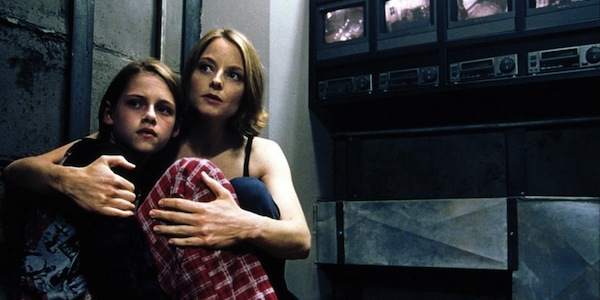 Made between Fight Club and Zodiac, David Finchers Panic Room, similar to The Game, has somewhat fallen between the cracks of Finchers impressive resume. This is unfortunate because, while Panic Room doesnt quite reach the heights of Finchers best work, its nevertheless a superb thriller, precise and almost unbearably tense. Meg Altman (Jodie Foster) and her daughter Sarah (Kristen Stewart) buy a new house after Megs recent divorce. They discover the previous owner of the house, a millionaire, had a panic room installed to protect the occupants from intruders. Even if you went in to this movie cold, without knowledge of the movies plot, it doesnt take a genius to figure out what the introduction of this panic suggests about the films plot. That very night, three men break in to the house, looking for money hid by the millionaire in the panic room. Junior (Jared Leto), the millionaires grandson hired Burnham (Forest Whitaker), who designed the panic room to help break in to the room. Junior also brings along, to Burnhams surprise, and suspicion, Raoul (Dwight Yoakam). They discover Meg and Sarah are in the house, which was not part of the plan- and when Meg is alerted to the intruders, she locks herself and Sarah in the panic room. The trick to making a one location thriller like Panic Room work is to find inventive ways to keep the plot moving forward while still keeping things locked within that one location. David Koepps screenplay works very well on this level, especially since the panic room is virtually impossible to break in to. Foster is the key to making the scenes in the panic room work- Foster has perfected these kinds of roles throughout her career, the down to earth woman who is thrown in to dangerous situations against violent men- think The Silence of the Lambs, The Brave One, Taxi Driver. Here, shes excellent as a woman who's strong yet vulnerable, smart but still in over her head. Theres tension both inside the panic room, due to Sarah having diabetes, and outside, with the men fighting amongst themselves. The three intruders are well defined. Burnham is the calm, rational one, Junior, the more impetuous, and Raoul being the wildcard, someone we know is unhinged. The script keeps things interesting by finding surprising depth in the character of Burnham, who we learn has a child whose custody he may lose. In several ways, Burnham is the most sympathetic character in the film, and Whitaker makes us believe in Burnhams everyman nobility throughout the film, particularly when he saves Sarahs life later on by giving her a shot. But while the script is sharp, its Finchers direction that makes Panic Room such an involving thriller. The sequences where Meg and Sarah make their way to the panic room and when Meg retrieve her cell phone are master classes in suspense. Also of note, Fincher, similar to Fight Club, uses visual effects to create the illusion of the camera moving through the building- its noticeable, but still a fascinating technique. Conrad W. Hall, the son of iconic cinematographer Conrad H. Hall, who replaced cinematographer Darius Khondji, gives the film a great noirish look. Panic Room is an expert thriller that, nearly 12 years later, holds up remarkably well. If youre a fan of Finchers other work and havent seen this, its definitely worth a watch.
4. Clash By Night
 Clash by Night, while filed under the category of film noir, is in many respects paints a different portrait than that of other film noirs. Theres no femme fatale or hard boiled detectives. The location isnt Los Angeles or New York but a fishing village in Monterey, California where Mae Doyle (Barbara Stanwyck, thats right, Barbara again), returns after 10 years. Her brother Joe (Keith Andes) is dating a woman named Peggy (Marilyn Monroe in one of her first big roles). Mae then meets and begins to date a nice local fisherman Jerry DAmato (Paul Douglas). Jerrys friend Earl Pfeiffer (Robert Ryan) is a film projectionist, misogynistic and arrogant. He and Mae have an antagonistic relationship, but the hostility they have towards each other suggests a sexual tension that leads to an affair. Fritz Lang, who had already made the masterpieces Metropolis and M in Germany before moving to Hollywood in the late 1930s, gives the film subtle film noir elements, but the focus in this film is more on the performances than visual style. Stanwyck gives Mae a lot of complexity, showing us a woman whos unsure of what she really wants in life. Ryan is also perfect as a man who masks his vulnerability with arrogance and hatred. Jerry may be the only one of the three main characters who's exactly what he appears to be. Douglas is incredibly sympathetic as Jerry, and his scenes where he is in anger over Mae and Earls betrayal are brutal and realistic. Clash by Night feels a lot grittier and realistic than other films of its time, though that of course comes from the film noir influence. Clash by Night could be called a domestic noir, a noir about average people dealing with the existential dilemmas, not of murder, but of regret, betrayal, and love.
3. The Wrong Man
 Director Alfred Hitchcock once told a story about how, when he was a young boy, his father sent to the police station with a note. He gave it to an officer, who read the note and locked Hitchcock up in a cell for ten minutes. After the officer let him out, he told Hitchcock Thats what we do to naughty boys. It appears Hitchcocks father wanted teach young Alfred a lesson. This incident stayed with Hitchcock his entire life, and, according to Hitchcock, inspired the recurring theme of the wrong man, a man accused of a crime he didnt commit, in many of his films. I think Hitchcocks favourite theme is most powerfully explored in 1956s The Wrong Man. This is probably due to the fact its the first Hitchcock based on a true story, that of Christopher Emmanuel Manny Balestrero, (Henry Fonda), a musician at the New York Stork Club, who is accused of committing a string of robberies. While Hitchcock could have used Mannys story as a jumping point for a more Hitchcockian thriller but instead he treats Mannys story with respect, and tells the story in a grounded, realistic fashion, shooting on location in New York and in several locations from the actual story. While The Wrong Man is usually considered a film noir, Hitchcock is also said to have been inspired by the Italian Neo-realist and French New Wave movement, which ties in to Hitchcock attempting to create a more realistic and gritty feeling film. The realistic aesthetic is somewhat of a departure for Hitchcock, whose films usually exist in a more Hollywood plane of existence. In many ways, The Wrong Man doesnt feel like a Hitchcock film, though there are still a few Hitchcockian shots, such as Manny looking at his house through a police car, with the house in the background, and a cops face in the foreground, looming large. Even before Manny is arrested, the film does a fine job of making us sympathize and relate to him and his wife Rose (Vera Miles). Theyre decent people who have plenty of money worries, and Manny goes to the life insurance policy office to take out a loan to pay for Roses wisdom teeth removal. This leads to him getting fingered by women in the office as the same man who robbed them twice. After Manny is bailed out of jail and he and Rose begin to work with a lawyer, Frank OConnor (Anthony Quayle) to prove Mannys innocence, Rose starts to suffer from mental illness, brought upon by stress and her guilt over sending Manny to the insurance office that day. While what happens to Manny was horrible, the real tragedy of the story is what happens to Rose. When the real criminal is caught, Manny asks him if he has any idea how much pain he caused his wife. Fonda, in his only collaboration with Hitchcock, conveys a devastating sense of vulnerability and fear just in his face and eyes. Miles, who would become Hitchcocks first choice for the female role in Vertigo, until she became pregnant, and who would go on to star in Psycho, gives a beautiful portrayal of a woman slowly coming apart. Her final scene with Fonda shows a woman completely distanced from reality. The Wrong Man is one of Hitchcocks most underrated films and personal films, a film that perfectly captures the fear of that day in young Hitchcocks life that shaped his entire career as an artist.
2. In A Lonely Place
 In Nicholas Rays In a Lonely Place, Humphrey Bogart, in what may be his best performance, plays Dixon Dix Steele, a Hollywood screenwriter assigned to adapt a novel. One night at a nightclub he takes home a hat check girl, Mildred Atkinson (Martha Stewart) who has been reading the book Dix is set to adapt and whom he gets to describe the novel to him. The next morning Dix is brought in to the police station. Mildred has been murdered. Dix knows one person who can give him an alibi, the woman who lives across his apartment in the same courtyard, Laurel Gray (Gloria Grahame). Laurel provides Dix with an alibi, but we know that Dix has anger issues, as evidenced by the opening scenes where he gets in to a fight at the night club, which makes us wonder if its possible that Dix really did kill Mildred. Dix and Laurel begin a relationship but the mystery of whether Dix killed Mildred hangs over the film. Dixs anger escalates to a point in the film where he nearly kills a man in the middle of the road, all while Laurel watches. We soon learn, as critic AO Scott put it, that in this world, it doesnt what you did do, but what you might do. The mystery of whether Dix killed Mildred means nothing- what matters is Dix is capable of murder. Bogart makes Dix both sympathetic and terrifying ; a man we want to love but know is capable of horrible things. This puts us in the shoes of Laurel, whom Grahame, then the wife of director Ray, portrays with both toughness and tenderness. Maybe the best way to sum up the film and the doomed relationship at its heart are the lines spoken by Dix to Laurel: "I was born when she kissed me, I died when she left me, I lived a few weeks while she loved me.
1. Dark City
 If you like a big dose of sci-fi with your film noir, or the other way around, you cant do much better than Alex Proyas 1998 Dark City, which was the late Roger Eberts favourite film of 1998. The film begins with John Murdoch (Rufus Sewell) waking up in a bathtub, which no knowledge of who he is or how he got there. Murdoch also discovers the body of a dead prostitute. He soon finds himself hunted by the police, most notably Inspector Frank Bumstead (William Hurt), and learns he has a wife named Emma (Jennifer Connelly). Sewell makes a solid and appealing film noir lead While the set up of a man with amnesia attempting to discover his past is familiar, theres a lot more lurking under the plot Dark City, including the mysterious strangers who can change the city at will, and who are experimenting with changing peoples memories and identities, aided by Dr. Daniel Schreber (Kiefer Sutherland) Side note: its funny seeing Sutherland three years before playing Jack Bauer on 24, playing such a snivelling character. The strangers conduct these experiments to discover what it means to be human. Theres also the matter of Murdoch sharing the telekinetic like the strangers. Dark City is a great exploration of how memory defines us as and asks if its possible to forge your own identity even without knowledge of your past. It also asks, much like the strangers, what it means to be human. It ultimately comes to the conclusion that the strangers were approaching the question too mathematically- without any emotion. The answer lies not in the mind- but in the soul. Its also a visual treat. Proyas, along with production designers Patrick Tatopoulos and George Liddle, creates a virtually timeless setting, a city- and a world- thats always night. Cinematographer Dariusz Wolki wonderfully conveys an old fashioned noir atmosphere. I love how Proyas begins in noir and slowly builds up the sci-fi elements throughout, leading to an amazing climax. Dark City asks its audience to go along with many bizarre and unexplained elements upfront, particularly in the Directors Cut- but if youre patient and willing to go along with Proyas vision, Dark City is a rewarding and entertaining gem of a film.