10 Greatest Existential Warriors In Film History

Put on your philosophy hat, it's about to get nutty...
Existentialism has become a buzz word that is used as an adjective to describe anything that is brooding, moody, or enigmatic, but what does it really mean? While fittingly it's hard to put an exact definition of what existentialism is, common themes in this line of philosophical thought usually have to do with topics of an individual's freedom and particularly an individual's freedom to choose their own values. The idea of a sort of radical subjectivism, where individuals are the authors, or more appropriately for this article, the auteurs of their own life, is the core pillar that unites all strands of existentialism. An individual, no matter his or her circumstances, is always free in their mind and they must acknowledge and embrace this freedom or risk living life in a phony and inauthentic manner. What follows then is an eclectic mix of characters, some of who would be proud to stand on the highest mountaintops of the Earth and declare themselves existentialists before all of creation, and others who wouldn't have the slightest clue what the phrase "existence before essence" was referring to. All figures on this list though, whether knowingly or not, carve out their own paths on how their life proceeds and on how they define themselves on their journey. In other words, they are all quintessential existential warriors.

10. Leonard Shelby - Memento (2000)

Leonard Shelby is an interesting knife-edge case. In one sense, Leonard is the exact opposite of what existentialism stands for. Leonard, who has suffered severe short term memory loss after a hard blow to the head as he tried to stop a burglar from brutally raping and murdering his wife, has come to totally define himself by his mission to take vengeance on the man responsible for this hideous crime. Of course this sort of "essentialism", where an individual denies one's own freedom to define who he or she is and insists they are compelled to follow a certain path, is what Sartre coined as "living in Bad Faith". What makes Leonard's case such an interesting example though is it seems to test the boundaries of existentialism. Leonard is incapable of creating new memories, essentially robbing him of the ability to change his perception of himself, an ability that is vital to the understanding of freedom from the existentialist's point of view. However, even in this extreme case, we see how prevalent freedom of choice really is. In the film's final scene, Leonard has a moment of clarity where the truth of his life is fully revealed to him. At this juncture, Leonard has a choice to either help himself remember the truth, or go down the road of self-deception. Leonard ultimately chooses the path of self-deception, rationalising the decision with the line, "We all need mirrors to remind ourselves who we are." Despite the fact that Leonard has forever sentenced himself to a world of reflective illusion, he can never get away from the fact that at that moment, he had a choice to make, and it is this decision that qualifies Leonard Shelby as an existential warrior.

9. Kris Kelvin - Solaris (1972)

Solaris tells the story of Kris Kelvin, a Russian Cosmonaut tasked with the job of finding out what happened to the three Cosmonauts inhabiting a space station above the mysterious planet Solaris. Once aboard the space station, Kris finds the space station in a surreal state of decay with one of the Cosmonauts having committed suicide and the other two in a serious state of mental unease. Not long after boarding the vessel, Kris himself starts becoming mentally unstable as visions of his long-deceased wife begin materialising before him. Like much of Andrei Tarkovsky's work, the film has a lot of religious and metaphysical overtones. However, the film also tangentially covers many topics salient to existentialism. Specifically though, the reason Kris Kelvin appears on this list, once again, comes down to choice. As the film progresses, it becomes apparent to the scientists that the planet Solaris is not merely a floating rock in space, but a sentient being that is attempting to communicate with them through hallucinations. Towards the film's finale, Kris is given a choice of returning back to earth or staying with Solaris. Kris Kelvin's choice is one that many undoubtedly would categorise as "false' or "illusionary", but it is Kris's rejection of an absolute understanding of reality that gives him the freedom to define himself as he sees fit. And for this, he is inarguably an existentialist.

8. Bob Dylan - I'm Not There (2007)

The typical formula for music biopics is tragedy, success, drugs, and then recovery. However, I'm Not There, Todd Haynes' Bob Dylan "biopic" is a horse of an entirely different colour. In fact, the name Bob Dylan is never spoken once throughout the film as the six different characters representing different aspects and phases of Dylan's life and career are given names like Jude, Jack, and Billy. This fractured approach to the life and times of Bob Dylan is itself an existentialist view of the man's life, for by approaching his life as not one knowable narrative, we instead see Dylan as spectrum of thoughts and ideas. Beyond the existentialist macro approach the film takes, many of the incarnations of Dylan in the film act as rebellious existential warriors, particularly the Jude incarnation played brilliantly by Cate Blanchett. This section of the film sees Dylan determined to tear down the image of himself created by the media. Realising the Idol he has become in certain circles as a dangerous ideal that would falsify his existence, Jude becomes haunted by the weight of the artificial image of, Dylan the Hero. In order to maintain some since of authenticity, Jude is left with one option: rebel against and destroy the Dylan that came before, building a Dylan free of clichés and expectations. The man who went electric at the Newport Folk Festival we're sure would approve.

7. T.E. Lawrence - Lawrence Of Arabia (1961)

"The trick, William Potter, is not minding that it hurts." This is Lawrence's response to a soldier who asks what the trick to letting a match burn out on your fingers is. Lawrence's response to the soldier may be meant to illustrate that Lawrence is a bit crazy, but from an existentialist standpoint, what's interesting about this quote and the aspects of Lawrence's personality that it illuminates, is the amount of freedom it exhibits. To the common man, there is no choice, the fire hurts and he must react as such. To T.E. Lawrence, the flame may hurt physically, but his reaction to this is preordained by no external forces and is determined by his own free will. Lawrence of Arabia is a demonstration of what a man who so fully embraces his radical freedom can accomplish. Lawrence is an English citizen with no prior history with the Arab region or people, but this in no way inhibits his belief that he can be their leader. Gathering seemingly disparate tribes together, for a long time he has them all focused on one goal, the goal that Lawrence has chosen for himself. However, the film also displays the dangers of Bad Faith as the adoration and power of Lawrence's position as Leader of Arabs quickly becomes his sole definition of his own worth and being, setting him up for an inevitable thud when the truth of his reality comes hurtling to the ground. Despite Lawrence's flaws and tendency towards auto-theism, there's no doubt Lawrence of Arabia is one of the greatest existential warriors in the history of cinema.

6. Thomas Moore - A Man For All Seasons (1966)

Thomas Moore lived in the late-15th/early-16th Centuries, was the man who wrote the book Utopia, was canonized by the Catholic Church, and brutally persecuted the followers of Martin Luther. How then can he be considered an existential warrior? As expressed a few times already in this article, one of the key components of existentialism is a flexible identity of the self. Unlike nihilism however, existentialism does not reject the formation of a self, but rather a concrete identity of the self, leaving the individual in a awkward balancing act of always becoming but never fully being. It is this precarious limbo, of being principled but not so principled that an individual's morals dictates every action, that is displayed so deftly by the Thomas Moore of the film. If you're not familiar with the life of Thomas Moore, Moore was a close confidant and advisor of King Henry VIII until the King decided to break away from the Catholic Church in order to obtain a divorce from his first wife. Henry demanded that all his subjects fall in line, but Moore, a devout Catholic, refused to do so but not without first trying to find any loophole possible. Instead of outright denouncing the king like a stubborn fool, Moore instead refused to let his enemies define his position. As he is pressed to denounce Henry VIII so that he may be tried for treason, Moore speaks in only vague terms, maintaining the principles he has chosen for himself but expressing them carefully, refusing to be pigeon-holed into a position. Eventually, he is convicted of treason anyway, at which time Moore lets his feelings be known, but not before dancing a beautiful existentialist ballet first.

5. Anton Chigurh - No Country For Old Men (2007)
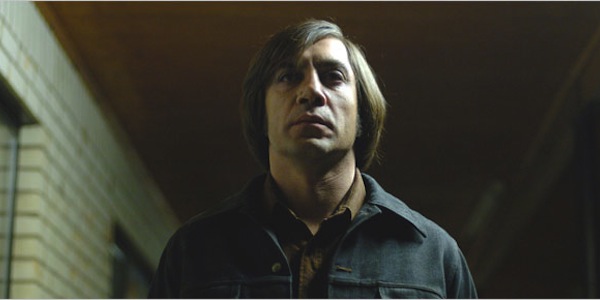
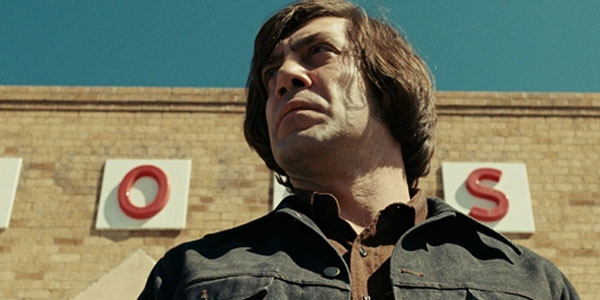
Strictly speaking, Anton Chigurh is probably more of a nihilist than an existentialist. He kills wilfully without a second thought, decides people's fate on the flip of a coin, and seems to detest all traditional values and concepts that the majority take for granted. This sort of wanton disregard for the shared foundations of humanity grows out an extreme sort of pessimism that leads individuals to conclude there is no purpose in life. While this outlook does share some similarity with an existentialist outlook, instead of viewing the nothingness as a negative aspect, existentialism chooses to look at it as freedom, a freedom in which to fill the void with your own meaning. However, despite Chigurh's apparent lack of interest in creating meaning above randomness, his devotion to enlightening people to their own freedom, and their responsibility for who they are, merits his inclusion on this list. In perhaps the film's most famous sequence, where Chigurh gets into an unnervingly tense conversation with a gas station owner, he implores the gas station owner to call a coin flip, heads or tails, to which the gas station owner replies, "I didn't put nothin' up." Chigurh responds with the menacing line, "Yes, you did. You've been putting it up your whole life, you just didn't know it." In another scene where Chigurh confronts the contract killer Carson Wells, he asks Wells, "If the rule you followed brought you to this, of what use was the rule?" This challenging of preordained thought processes makes Chigurh an existentialist, albeit a somewhat tangential one.

4. Tyler Durden - Fight Club (1999)

As soon as you saw the title for this article, many of you may have immediately guessed at the inclusion of Tyler Durden. Perhaps there is no film from contemporary cinema that is as frequently discussed in college philosophy classes today (especially classes dealing with existentialism) than Fight Club. And that's all thanks to the great existentialist himself, Tyler Durden. Durden's sole purpose is to challenge the preconceived notions people have come to accept about themselves and to get people to recognise and embrace their own radical freedom. Fight Club is not meant solely as a cathartic release for the pent up repression of man in the Age of Consumerism, but is meant to illustrate to its members the amount of extreme freedom they possess over their lives. Durden's true purpose is not to create an army of rageaholic clones, but rather a group of free men, true existential warriors. Instead of explaining the goals of Mr. Durden though, maybe it's best to take him at his own words: "You're not your job. You're not how much money you have in the bank. You're not the car you drive. You're not the contents of your wallet." "Quit your job. Start a fight. Prove you're alive. If you don't claim your humanity you will become a statistic." "People do it everyday, they talk to themselves... they see themselves as they liked to be..." "You have to consider the possibility that God does not like you. He never wanted you. In all probability, he hates you. This is not the worst thing that can happen." Need we say more?

3. The Joker - The Dark Knight (2008)

Like Anton Chigurh, the case could be made that The Joker is more of a nihilist than an existentialist. It is undeniably true that The Joker is, "... an agent of chaos," as he puts it, and derives extreme pleasure from watching the world burn, but the key to understanding The Joker's philosophical outlook is to analyze the motivations behind his actions. If The Joker were truly only a nihilist, then all of his plans would have no greater purpose than to bring the world to its actual state of nothingness. From his interactions with the film's other characters though, it's clear that Joker's real purpose is not so much to bring about a world of oblivion, but rather to challenge the assumption of the masses that the world contains within itself some ultimate essence. Because these values are so deep-seeded and ingrained into the psyches and collective subconscious of Modern Man, The Joker feels it is necessary to employ radical, even terroristic, methods to shake the foundation on which these beliefs rest on, but even the most extreme tactics taken by The Joker appear to be an attempt to root out Bad Faith. Admittedly, the differentiation is a fine one, but the distinction is nonetheless an important one. The Joker is a provocateur, bent upon exposing to people the levels of self-deception that is inherent in their understanding of themselves and the self-imposed rules they live by. As he says to Batman in the film's terrific interrogation scene, "The only sensible way to live in this world is without rules."

2. Truman Burbank - The Truman Show (1998)

Narratively, The Truman Show is about a man who lives in an artificial world constructed specifically for him with the express purpose that his life be broadcast 24/7 in front of the whole world for their entertainment pleasure, and technically speaking, this is what the film is about. However, for the more philosophically adventurous among us, The Truman Show can take on a whole new meaning depending on your perspective. Specifically, to understand the film from an existentialist point of view, you must assume the perspective of Truman himself. For Truman, Seahaven is not only his world, but it is THE world. It is the only existence he has ever known. His whole definition of who Truman Burbank is derives from the experiences he has had, which have been exclusively maintained and controlled by the show's producers. When Truman begins questioning the nature of his own reality, he is not merely exposing a conspiracy of a secret reality television show, but from his perspective, Truman is challenging the idea of an objective reality itself. This questioning the preordained essence of the world is not an insignificant one and is usually the beginning of any path leading towards existentialism. The film's climatic sequence, where Truman goes sailing to find the edges of his existence and is met with a ferocious storm that nearly kills him, orchestrated by the show's creator, Christof (but from Truman's point of view, God himself) is perhaps the most bold existentialist statement ever put on the silver screen. Then, when Truman rejects Christof's offer to live in the safe, but artificial world created for him, instead choosing to venture into the real world, Truman's transformation into the ultimate existential warrior is complete.

1. Luke - Cool Hand Luke (1967)

Cool Hand Luke may not be the most obvious pick for top existential warrior, but dig beneath the surface and his existentialist credentials are hard to deny. The film, which takes place in a shabby prison in the South, stars Paul Newman as the titular prisoner. At first an outcast among the felons, Luke's ability to take heavy beatings and punishment, and yet still remain aloof and unfazed, quickly endears him to his fellow inmates. This attention though makes him a target for the warden and his minions, leading to Luke's eventual destruction. The film heavily employs Christian symbolism, but there are also a lot of existentialist undertones at play. Luke's rebellious attitude is not one of aggressive agitation, but is rather one of simply existing. The warden, his lackeys, and the whole prison system itself, attempt to shape Luke in the image of their own liking, but Luke's rebellion is made all the stronger by the fact that he does not reactively oppose their scheming, but rather simply refuses to budge. Luke is a constant pillar of the sort of radical freedom that is at the heart of existentialism. They can beat him, they can torture him, they can manipulate him psychologically, but nevertheless, he remains: Cool Hand Luke. Some of the previous characters on this list may espouse more of the teachings and ideas of existentialism. Other characters no doubt had a better intellectual understanding of the tenets of existentialism and would make more obvious text book examples of existentialist characters in film. However, no other character has just lived the life of an existentialist as much as Cool Hand Luke, and for this reason, he tops the list of the greatest existential warriors in the history of film.

Contributor
Contributor

A film fanatic at a very young age, starting with the Teenage Mutant Ninja Turtle movies and gradually moving up to more sophisticated fare, at around the age of ten he became inexplicably obsessed with all things Oscar. With the incredibly trivial power of being able to chronologically name every Best Picture winner from memory, his lifelong goal is to see every Oscar nominated film, in every major category, in the history of the Academy Awards.