10 Greatest Films About Journalism
These reporters made the headlines in more ways than one.

For centuries, the work of the press has informed and shaped our everyday lives. Whether it be our perception of the world around us or the many debates over even the most meaningless of news topics, the distribution of factual and analytical reporting has influenced us all.
As such, it only makes sense that journalism is a recurring feature of any film plot that either includes or addresses newsworthy stories. A headline in the paper, a reporter at the scene and a news anchor behind the desk; the press are represented across a range of genres, as both heroes and villains.
The importance of journalism in society has inevitably led to some films directly focusing on the role of the press, in stories based on both reality and fiction. Pursuers of truth, corruption and of course, a good story, journalists in film can represent the very best and worst that humanity has to offer. With a long history of cinematic portrayals, this film will look at ten of the greatest journalism films of all time.
10. The Killing Fields (1984)

The Killing Fields is as of much a story about journalism as it is about survival. An adaptation of Sydney Schanberg devastating New York Times report on the Cambodian genocide, the film portrays the experiences of Schanberg and fellow journalist Dith Pran. Through the perspective of these two reporters, the powerful epic is a brutal exploration into the systematic persecution and various other crimes against humanity committed by the Khmer Rouge regime.
As one of the most gripping and harrowing cinematic depictions of war crimes ever made, The Killing Fields received widespread critical acclaim. Recipient of seven Oscar nominations, of which it won three, the film's production quality and message still holds up to this day.
Haing S. Ngor (Pran) was the biggest breakthrough performance of the film. Just like the character he portrayed, Ngor was too a survivor of the genocide, escaping to Thailand after four years in a authoritarian labour camp. With no acting experience, Ngor's performance was first of a tragically cut-short acting career. Awarded with the Best Supporting Actor award at the 1985 Oscars, Ngor became just the second non-actor to win an academy award in actor category.
9. China Syndrome (1979)

Jane Fonda, Jack Lemmon and Michael Douglas star in this eerily prescient film about nuclear meltdowns. When reporter Kimberley Wells (Fonda) stumbles across a significantly dangerous safety cover-up, she and her team pursue the story and bring it to the public's attention, much to the dismay of nuclear plant officials. Preceding the events of Chernobyl by almost seven years, what really makes The China Syndrome so prophetic is that only twelve days later, a high profile meltdown would occur much closer to home, in Pennsylvania.
The Three Mile Island accident largely substantiated the concerns regarding the safety of nuclear power in China Syndrome and silenced criticism from lobbyists who claimed that the film was pure fiction. As a result of the accident, some credit meltdown's timing with enhancing the film's marketing and ticket sales. Whether this is true, is still up for interpretation.
The China Syndrome was a great box office success, making $51 million commercially worldwide. As for the critics, the film would receive four Oscar nominations, with both Fonda and Lemmon being recognised for their great performances.
8. Good Night, And Good Luck (2005)

Set during the height of the Cold War, Good Night, and Good Luck tells the story of famed CBS news anchor Edward R Murrow and his battle against the notorious Senator Joe McCarthy.
As fear of domestic communism spread across the United States, McCarthy spearheaded an intense and baseless witch hunt that claimed the careers and lives of hundreds of innocent victims. Unafraid of McCarthy and other Red Scare agitators, Murrow used his platform and trusted reputation to become one of the senator's most notable critics, during a time when criticism was met with scandalous accusations of disloyalty and treason.
A stern and reserved man of integrity, Murrow is played by the brilliant David Strathairn who delivered with a masterful dramatic performance. Supported by cast featuring Robert Downey Jr, Jeff Daniels and George Clooney, who also directed the film, Good Night, and Good Luck received glittering critical acclaim from critics.
Filmed entirely in black and white, the mixture of real footage and newsroom drama was universally praised for setting the tone and atmosphere of this gritty journalism classic. The movie would be nominated for six Oscars, with the nomination for Best Picture being supported by individual recognition for Strathairn and Clooney in the acting and directing categories retrospectively.
7. Reds (1981)

Warren Beatty's historical epic 'Reds' is based on the life of radical left-wing journalist John Reed and his association with the rising communist movement of the late 1910s. Revolving around the events of the Russian Revolution, the sprawling three-hour epic was an ambitious and groundbreaking production. Beatty stars as Reed and acts alongside fellow Hollywood legends Diane Keaton and Jack Nicholson.
Beatty's most political film project has journalism at the very heart of the story's plot. Reed uses his ties to the Bolsheviks in Russia to gain an exclusive firsthand account of the revolution in Russia. Reed's reporting and subsequent release of 'Ten Days the Shook the World' raises the journalist's profile around the world, both for better and for worse.
Reds struggled to make significant money at the box office, with the high budget ultimately limiting the profits to just $8 million. However the film did receive widespread critical acclaim for it's educational value and romantic subplot. At the 54th annual Academy Awards, the film would receive twelve nominations, winning three. Beatty would also be recognised for his contributions by getting nominated in four different categories; acting, directing, writing and producing. Beatty would win only Best Director, which to this day is still the only Oscar he has taken home.
6. The Post (2017)

Stephen Spielberg's The Post depicts the true story behind the Washington Post's efforts to publish classified government documents that uncovered the truth behind the ongoing Vietnam War. With a cast led by Tom Hanks as newspaper editor Ben Bradlee and Meryl Streep as publisher Katherine Graham, Spielberg did not hold back on the $50 million production, a budget which is becoming increasingly rare for non-franchise films.
The epic historical drama is a courageous and timely defence of journalism, during a period where attacks on the press for perceived 'negative coverage' and 'fake news' were intensifying. Reading between the lines, it is clear that in addition to telling the compelling story of Pentagon Papers, the film also serves as an allegory for the current political climate.
"We can't have an administration dictating to us our coverage just because they don't like what we print about them" - Ben Bradlee
The Post was massive commercial and critical success. Grossing $179 million worldwide, the movie's financial success challenged the traditional standards of a blockbuster film in the modern cinema landscape. The film would receive two Oscar nominations for Best Picture and Best Actress, with the recognition of Streep's performance being Oscar nomination twenty-one for the legendary actress!
5. Citizen Kane (1941)

Considered by many to be the greatest film of all time, it may come as surprise to some that Orson Welles' masterpiece is not number one on this list. Whilst journalism is critical to the classic film's inspiration and plot, Citizen Kane is much more than another film about the press. Therefore for the purpose of this article, the fictional life story of Charles Foster Kane will be lower on this list.
In regards to the role of journalism in the film, Kane is the sole owner and publisher of the Daily Inquirer. Kane uses his financial power and natural charisma to propel the once struggling newspaper to new heights of popularity. Exaggerating stories for political motives, Kane uses the newspaper to spread his principals and agenda to the masses, eventually leading to the launch of an unsuccessful political career.
“Don't believe everything you hear on the radio. Read the Inquirer!” - Charles Foster Kane
As previously mentioned, the character and life story of Kane was influenced considerably by media mogul William Randolph Hearst. Infuriated by the supposed similarities between Kane and himself, Hearst attempted to suppress the movie's release, which ultimately had a negative impact on the film's box office performance. However, that did not stop Citizen Kane and eighty years on, it remains of the most influential films of all time.
4. Spotlight (2015)

In 2002, The Boston Globe's investigative journalism team 'Spotlight' made international headlines, with their reporting on the historic sexual abuse crimes of the American Catholic Church. Thirteen years later, Tom McCarthy decided to shine the spotlight onto the journalists that broke the story.
McCarthy co-wrote the script with Josh Singer and together they developed a captivating look into a 21st century newsroom. Not holding back on its controversial subject matter, Spotlight is a provocative and inspiring story about the reporters who dared to raise the alarm on the decades long scandal that silenced victims and prevented justice.
"We got two stories here: a story about degenerate clergy, and a story about a bunch of lawyers turning child abuse into a cottage industry. Which story do you want us to write? Because we're writing one of them” - Walter Robinson
Featuring a star-studded ensemble cast that includes Michael Keaton, Rachel McAdams and Mark Ruffalo, the film was a massive commercial and critical success. Making an impressive $98 million worldwide, Spotlight also won two Oscars, including the famed Best Picture award.
3. Network (1976)

Network is one of cinema's all time great satires. The politics of network programming are dismantled and critiqued with outrageous consequences in Sidney Lumet's timeless newsroom classic.
After being relieved of his duties for declining ratings, news anchor Howard Beale declares that he will commit suicide on his final network broadcast. Rather than take the appropriate and morally correct steps to help the mentally unstable anchorman, the network instead sense an opportunity and decide to exploit Beale to increase ratings.
As the instigator of the network's unprincipled strategy, Faye Dunaway's Diana was purposely presented as a cold and unsympathetic personality, who prioritised ratings over compassion and journalistic integrity. The Howard Beale Show eventually becomes the most popular show on television, in spite of the blatant abuse of the host's mental fragility.
"I don't think I'll listen to any protestations of high standards of journalism when you're right down on the streets soliciting audiences like the rest of us. Look, all I'm saying is if you're going to hustle, at least do it right" - Diana Christensen
Featuring an all star cast of Hollywood legends including Peter Finch, William Holden and Robert Duvall, Network was a huge critical success. Recognised today as one of the greatest screenplays of all time, the film would receive ten Oscar nominiations, winning four in total.
2. Ace In The Hole (1951)
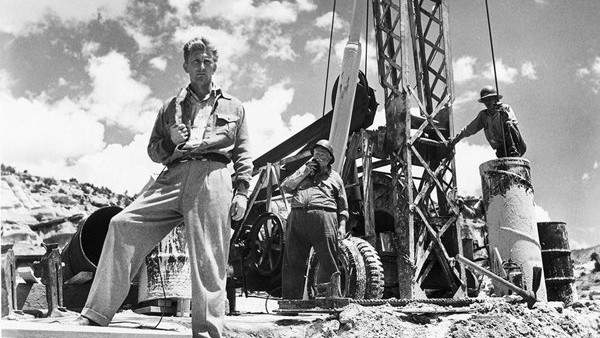
Kirk Douglas stars as Chuck Tatum, an ethically flawed reporter whose declining career has led to him landing a job in the uneventful town of Albuquerque, New Mexico. Desperate for the big story that will propel him back to the top, Tatum eventually catches a break, albeit a manufactured one.
After stumbling across a trapped cave bound treasure hunter, the reporter sees an opportunity and manufactures the incident into a frenzied media circus, that would eventually captivate the entire nation. But toying with a man's life for the sake of the story is a dangerous game and soon enough, Tatum's sinister act threatens to turn sour for the opportunistic reporter. An indictment of media exploitation, the noir classic holds a powerful and timeless lesson that all journalists should respect.
Sunset Boulevard director Billy Wilder is not exempt to the occasional ageless classic and Ace in The Hole is no exception! Like so many classics of it's era, the film was largely underappreciated when first released and despite earning two Oscar nominations, Ace in the Hole would receive mixed reviews. Now seventy years on from the film's release, the Wilder-Douglas classic is celebrated for its cynical and twisted representation of media in society.
1. All The President's Men (1976)
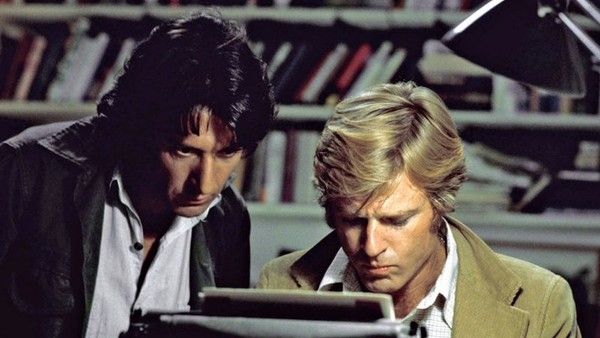
As the quintessential film about journalism, the historically significant All the President's Men is justifiably clear at number one on this list. Released just two years after the events of the Watergate Scandal and subsequent resignation of President Richard Nixon, the story of the men that rocked the White House was given the Hollywood treatment.
The impressive achievement of a release so soon after the real events was a result of an eagle-eyed Robert Redford, who had begun planning the project years prior to Nixon's downfall in 1974.
When the legendary Washington Post team of Bob Woodward and Carl Bernstein released a book detailing the scandal, Redford jumped on the opportunity and bought the story's film rights. Teaming up with fellow cinema icon Dustin Hoffman, Redford and Hoffman would star as the Woodward and Bernstein, capturing the story of America's most recognisable political scandal on film.
"Nothing's riding on this except the, uh, first amendment to the Constitution, freedom of the press, and maybe the future of the country" - Ben Bradlee
With a plot fuelled by suspense and paranoia, All the President's Men is one of many films during the 1970s to reflect a more gloomy and cynical depiction of American society. Praised for this style and historical accuracy, the film would go onto receive eight Oscar nominations, winning three in a highly competitive field of legendary films that included Rocky, Taxi Driver and the previously before mentioned, Network.