10 Greatest Portrayals Of Political Figures In Movies
Titanic figures of the silver screen.
 Fox Searchlight PicturesInspiring, villainous, controversial, benevolent, and divisive: political figures can be remembered as any of these things, but that rarely reflects the whole story. Filmmakers have long strived to put more complete portraits of these men and women to screen whether or not they get it right is another matter entirely. Certainly, the lives of our most controversial leaders, politicians and activists can make for gripping drama, and to this end, Hollywood has served the market wonderfully over the years. More often than not, these portrayals rest at the centre of some bloated political biopic, where more attention is paid to cramming in key events than to the figures on whose shoulders the entire narrative rests. The greatest portrayals endeavour to bring vulnerabilities and vices to these often-impenetrable figures in an attempt to make them more human. These films understand that while there might be definitive interpretations of someones career and of political events, there can never be a conclusive understanding of a person. Moreover, these portrayals rely on more than a rousing performance and some convincing prosthetics. The film that encompasses each figure must be selective of the material that it covers, decisive over its tone and at all times interesting and engaging the greatest portrayals of political figures are only as good as the films theyre found in.
10. Meryl Streep As Margaret Thatcher The Iron Lady
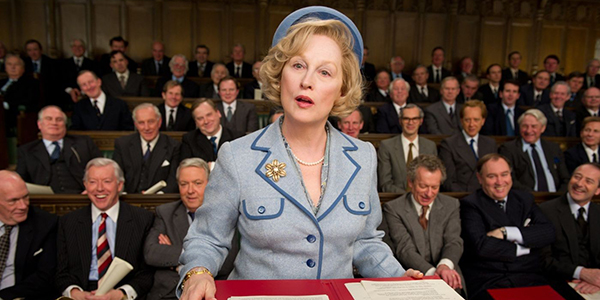 20th Century FoxWhen it comes to British politics, there can be few leaders who have been as divisive as Margaret Thatcher, the long-serving Conservative Prime Minister who served from 1979 to 1990. The film opens with an elderly and somewhat senile Thatcher, who has become a virtual prisoner in her own home. Much of the storytelling is done through flashbacks and conversations she has with the visions of her late husband, Denis Thatcher (Jim Broadbent). Over the course of the film, Thatcher grows from the ambitious daughter of a grocer, to the first female Prime Minister of Britain, all of which is framed by the image of an elderly woman struggling to cope with the death of her husband, as well as her diminished role in the political system. Sympathetic portrayals of Thatcher are few and far between, but by shying away from the politics of her leadership, director Phyllida Lloyd is able to present audiences with a Thatcher with some level of depth. Thatcher is recognisably human in this film, and while shes not always likeable (nor should she be), she never appears to be as callous and cruel as some would have her be seen. This is all driven by Meryl Streeps thundering performance. Streep lends Thatcher the stoical strength that the portrayal demands while infusing her Thatcher with the frailties and weaknesses that surely existed beneath the stalwart exterior.
9. Denzel Washington As Malcolm X Malcolm X
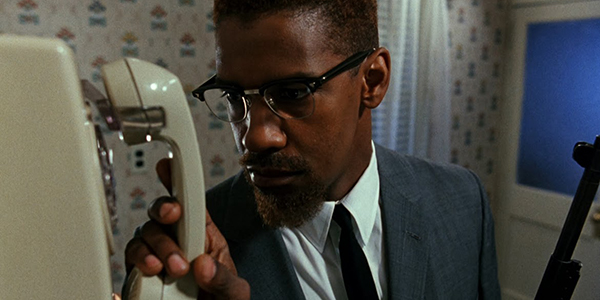 Warner Bros. EntertainmentSpike Lees smart biopic of the celebrated black rights leader, Malcolm X (born Malcolm Little), is both grandiose and intimate. Lees marriage of narrative and philosophy is propelled by Denzel Washingtons magnetic performance as X, a combination so potent that the film engages the viewer throughout its goliath 202-minute runtime, and stays with them for longer still. The film follows a mostly chronological narrative that recounts Malcolm Xs numerous transformations, from his youth to his criminal years, through his incarceration and his discovery of the Islamic teachings, to his time as a minister for the Nation of Islam, and finally his split from that group, which came with his conversion to the Sunni branch of Islam. While the film might benefit from some editing, its ambition ultimately pays off. The vision of Malcolm X that audiences are shown is galvanising but by no means imperfect. A man who has made innumerable mistakes throughout his life, but one who ultimately fights for what is right; an imperturbable force of the civil rights movement that has since become an icon of the black pride movement.
8. Sean Penn As Harvey Milk Milk
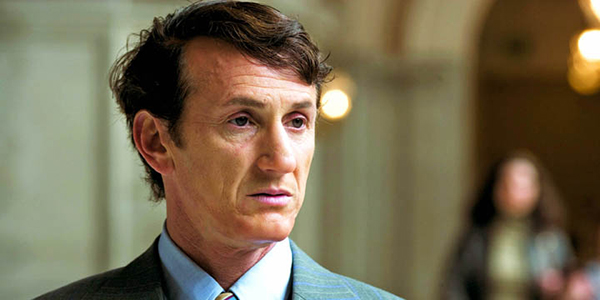 Universal StudiosPerhaps Harvey Milks story is not legendary or iconic, but its certainly deserving of attention. Gus Van Sants sweet retelling of Milks political career chronicles the rise of Milk as the first openly gay person to be elected into public office, holding a seat on the San Francisco Board of Supervisors from 1977 to 1978. Sean Penn puts together a tremendous performance as Milk, lacing every expression, line and movement with charisma and charm, while being careful not to ham any of it up. His portrayal of Milk sits perfectly with the tone of film, a jubilant man who is tortured by the injustices that plague him and his peers, and so suitably, the film is celebratory and tragic in equal measures. Admirably, the film makes no qualms with regards to how it should represent its gay activists, just as theres no attempt to camp it all up, theres also no attempt to hide away from everything.
7. Michael Sheen As Tony Blair The Queen
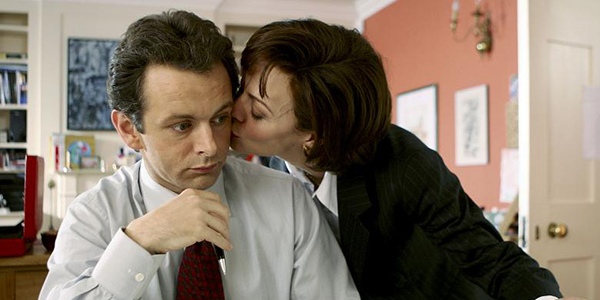 20th Century FoxIts no wonder that Michael Sheen has now played Tony Blair in 3 different films: The Deal, The Queen (both of which were directed by Stephen Frears) and The Special Relationship. Its not just that he has some of Blairs aesthetic characteristics; its the careful, precise mannerisms that he brings to the role, not to mention the worrisome veneer thats become synonymous with Blair. While it might not be the title role, the controversial figure features heavily throughout. The film is focussed on the aftermath that surrounded the death of Princess Diana, and attempts to display the inner workings of the British Monarchy through the familys matriarch, as well as through the coercive attempts by Blair to get the monarchy to recognise and respond to the national outpouring of grief. The film sees Blair as a conflicted figure, stuck between the antimonarchist sentiments of his wife and the mocking press. In The Queen, Blair is sympathetic to the plight of the British Royal Family, but aware of his responsibilities as the new Prime Minister Blair has never been played with such a distinctly human edge, hes neither the knight in shining armour nor the bumbling idiot.
6. Anthony Hopkins As Richard Nixon Nixon
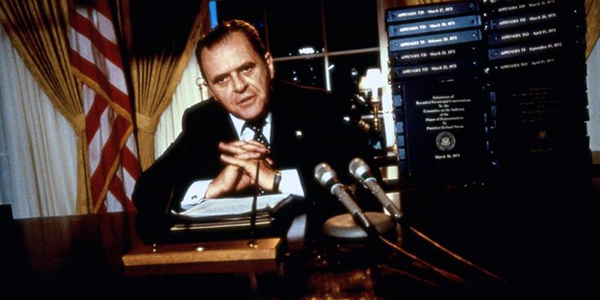 Buena Vista PicturesOliver Stone has dealt with controversial figures throughout his directorial career, and with regards to that, Nixon is his magnum opus. Charting the life of Richard Nixon, from the child of strict Quakers to the disgraced former president of the United States, Oliver Stone attempts to shed light on the suspect activities of Nixon while also trying to better understand him as a person. Anthony Hopkins, despite looking nothing like Richard Nixon, is totally convincing as the stammering head of state. Hopkins instils Nixon with a sense of forlorn isolation, his Nixon is haunted: his smiles are fleeting and his grins are false. Hopkinss portrait of a broken man sits beautifully alongside Stones direction, which while thoroughly empathetic, is no less damning in its final statement on Nixon. With a few tweaks, Nixon could easily have been a horror film it is frantic, claustrophobic and nightmarish enough, after all.
5. Daniel Day-Lewis As Abraham Lincoln Lincoln
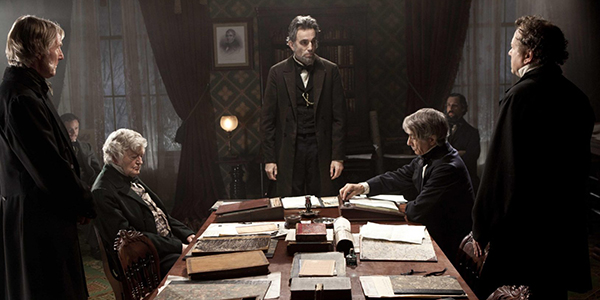 20th Century FoxMore of a political drama than a biopic, Lincoln focuses its attention on the attempts of Abraham Lincoln to pass the Thirteenth Amendment (which would abolish slavery) before the end of the Civil War. Its a quite an achievement to play one of the most revered and celebrated political figures of all time without either overcooking the performance or trivialising it; few expected less from Daniel Day-Lewis. Day-Lewis paints Lincoln as a dignified and wise individual, one who has been worn down by years of tragedy and one who has faced a great deal of political and moral strife throughout his career. Still, the overwhelming tone emitted by Day-Lewis Lincoln is one of warmth and amiability, a puckish man who jokes and tells stories to those he meets. Spielberg lends the film his typical sentimentality, ensuring that the audience feels nothing but affection for the man. Thankfully, Spielberg makes no attempt to add conflict to Lincolns character beyond what is already there: there are no childhood flashbacks, no overbearing metaphors and no schoolboy attempts at psychoanalysis of the Great Emancipator.
4. Forrest Whitaker As Idi Amin The Last King Of Scotland
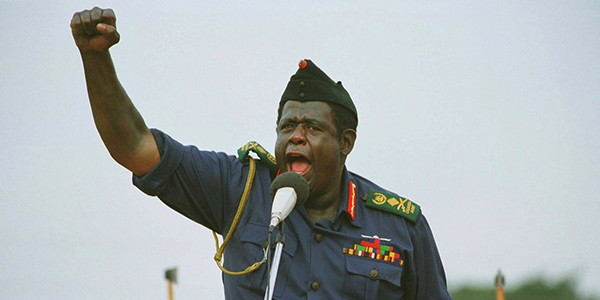
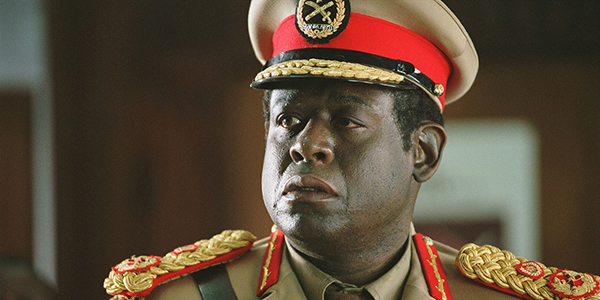 Fox Searchlight PicturesWhile heavily integrated with fictional elements, Kevin Macdonalds taut thriller, The Last King of Scotland, draws its most barbarous and haunting elements from the factual truths behind its villainous central figure, Idi Amin. Told largely from the perspective of a Scottish-born doctor, who has found himself under the tyrannical wing of Amin, Macdonalds film follows the megalomaniacal Amins descent into brutality, corruption and paranoia. Macdonalds direction ensures that the film is consistently gripping, but its Forest Whittakers performance as the deranged despot that makes this portrayal so utterly arresting. Whittaker has clearly studied his subject well, as its not just the dark side of Amin that he so succinctly relays to us. Whittaker is disturbingly charming as Amin, his smile is earnest and his laugh is more akin to a bellow, but the suspicion that Amin is truly mad never escapes the audiences thoughts. Whittaker puts together one of the most complete performances in cinematic history, and the result is absolutely petrifying.
3. Benicio Del Toro As Ernesto Che Guevara Che: Part One And Part Two
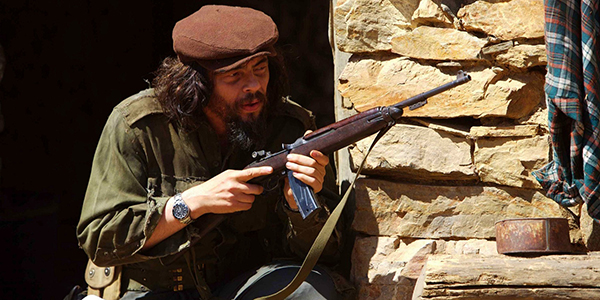 Optimum ReleasingIt takes 269 minutes, spread across two films, for Steven Soderbergh to complete his epic biopic of the Argentinian-born Marxist revolutionary, Ernesto Che Guevara. The first film follows Che on his journey to Cuba (accompanied by a group of Cuban exiles), and through the subsequent guerrilla campaign that led to the successful toppling of Batistas regime in Cuba. The second film sees Che attempting to carry the Cuban revolution over to Bolivia and ends with his execution. While the films focus most of their attention on the conflicts that Che was involved in, Soderbergh makes a significant effort to also include Ches more philosophical and political moments, such as his address to the United Nations General Assembly in 1964. Soderbergh sometimes allows his epic to trudge, but for the most part the films are expertly crafted and consistently captivating. The real treat however, is the sublime and ultimately underrated performance of Benicio Del Toro as Che. Del Toro is endearing as the revolutionary, but hes also fierce and commanding his Che is a steadfast soldier whose comrades are scarcer with each passing day.
2. Ben Kingsley As Mahatma Gandhi Gandhi
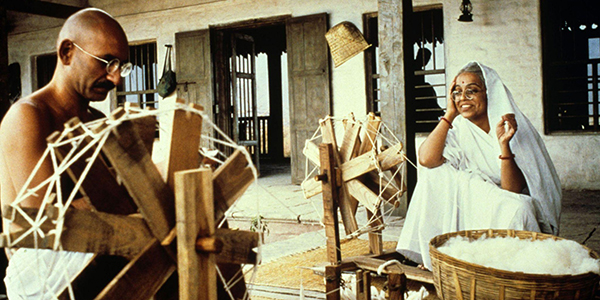 Columbia PicturesRichard Attenboroughs epic biographical film about the leader of Indias non-cooperative independence movement for home rule is rightly recognised as a landmark achievement in filmmaking. Gandhi is a triumph of thematic substance, and Attenborough keeps the core ideas of humanity and equality at the forefront of every scene. Opening with Gandhis assassination and subsequent funeral, the film then jumps back 55 years to the beginning of Gandhis idealistic campaign, which was supposedly motivated by his expulsion from the first-class compartment of a South African train because of his race. The rest of the film covers Gandhis lifelong struggle for independence and equality. Ben Kingsley is stunning in the titular role he perfectly embodies the humility and simplicity of Gandhis message. Moreover Kingsley manages to channel Gandhis sheer benevolence, not just through his uncanny physical resemblance, but also through the beautifully subtle delivery of his every line and gesture.
1. Bruno Ganz As Adolf Hitler Downfall
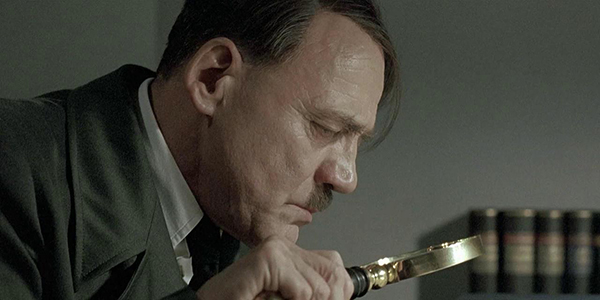 Newmarket FilmsOliver Hirschbiegels brave look at the final 10 days of Hitlers leadership is an incredibly focussed, measured and intricate study of one of historys most infamous tyrants. Hirschbiegels film is claustrophobic in its entirety, unflinching in its portrayal of events and staggeringly compassionate in its perspective. The film is imbued with a sense of chilling authenticity, thats born in equal parts out of its focus on the minutiae and its rigorous historical accuracy. Bruno Ganzs Hitler is like no other hes crushingly melancholic, ruthlessly psychotic and uncomfortably human. Where before, actors and directors have worked tirelessly to give audiences a version of Hitler that completely lacks any recognisably compassionate side, Hirschbiegel and Ganz have tried to present Hitler as a fundamentally broken man, not as some supernatural demon. The result is a film that eschews any attempt at a judgement on the Nazi regime. Downfall offers audiences a glimpse into the madness that had consumed so many lives it refuses to state the obvious, and Ganzs performance is the epitome of that goal.