10 Heart-Breaking Pixar Backstories You Probably Missed
Kids' films, are they? Pfft.

If you think Pixar movies are all endless sunshine, colourful characters and childish thrills, then you probably haven't been paying attention. Or you've literally only seen Cars. Either way, you've missed the depth beneath the pretty drawings that meant the animation studio went from being a collective of accomplished story-tellers into a formidable brand that ended up pretty much saving Disney.
The films released under John Lassiter's reign as Pixar supremo have been some of the most impressively received in critical terms of the past 20 years (now there's a revelation to take the wind out of you), and that success has been down to two things. Firstly, the animation is beautiful and cutting edge, and secondly because the stories - inevitably slanted towards entertainment - have dealt with some seriously weighty issues that are as universally important and devastatingly emotional as those personal demons Steven Spielberg allowed to influence his Amblin work.
While some will say that Pixar films are universally appealing simply because they're colourful and occasionally have jokes that parents will get, the real currency of the situation is emotion: it is the single strongest unifying point in all of the releases (and it says something that the least personal feeling film - Cars 2 - is also the studio's worst received).
And as a mark of their story-telling genius, Pixar add even more emotional depth than you might have immediately noticed by hinting at ominous devastation in almost all of their character's pasts...
10. Wall-E Had To Watch His Friends Die

The great tragedy of Wall-E is supposed to be that despite his being alone for hundreds of years he's a great romantic, driven by something as simple and as pure as the desire to hold hands and feel loved. Watch your heart doesn't melt there.
But the real tragedy is how Wall-E got to be alone: he was clearly one of a significant number of trash-bots, and while you could suggest that his sentience was an accident of programming, he's far from the only sentient robot, and it seems it was a choice rather than a malfunction (as EVE's arc confirms). So at one stage, Wall-E might have had friends, and over the course of 800 years, he lost all to malfunctions that he couldn't fix, while he fruitlessly hoarded his treasures with the simple, impossible dream of having someone - anyone - to show them off to.
Strangely, his own abandonment issues don't stop him from making his only friend - the curiously dog-like cockroach companion - wait for him while he goes off in pursuit of EVE. That seems somewhat short-memoried of him, but then perhaps that's the real tragedy: that abandonment is entirely normative behaviour for him.
9. Big Baby - Toy Story 3

Big Baby's Heel/Face turn at the end of Toy Story 3 is a particularly smart narrative move, and it gives him some resolution that the audience feels is satisfying without ever really knowing why he's a sympathetic character beyond the fact that he's a baby. But the hints are all there: even when he's in full hired muscle mode, there are suggestions of something darker thanks to Lotso's manipulation of him.
And while there is clearly some revelation of how Lotso turned Big Baby "bad" when he told him he wasn't wanted, the baby's treatment clearly runs a lot deeper than that. Consider the scene where Woody reveals the truth about what happened with Daisy: Lotso shows no sign of contrition, and in fact the way he turns on the baby and ridicules him openly for missing his mama bears all the hallmarks of an abusive parent or older sibling.
The suggestion is that this is not a new thing, and it's only when Lotso breaks the name tag that he crosses the line; perhaps that's why Big Baby is so tatty?
8. Thumper - A Bug's Life

What the hell happened to Thumper? Is he supposed to be some sort of deranged variant of Hopper and his "normal" army of grasshoppers? If that's the case, why is he basically treated like a dog? His feral nature suggests something about his treatment: he's basically Danny The Dog.
Clearly Thumper has been some seriously dark stuff: if he's genuinely just handicapped, then putting him on a leash and using him for your own malevolent ends is a pretty unforgivable crime, and while everyone's distracted by Hopper's grand evil scheme to steal all of the ants' food (which is just natural selection in process), they ignore the fact that he's made a pet out of poor Thumper.
So next time you grimace at how harsh Hopper's death is, remember that his evil was enough to make you genuinely cheer Thumper - an innocent creature put through some perverse, unnamed torture - getting beaten up when he genuinely doesn't know any better.
7. The Missing Adventurers - Up

If there was a prize for the quickest tear-jerk in cinematic history, Up would probably win it twice for the opening montage, but even when the film leaves that beautiful bleak sequence behind for a more intrepid spirit it is a surprisingly haunted film. The past plays a major part in the film's narrative themes: not least in Carl's love of Ellie, but also in everything that goes into the character of Charles Muntz.
Haunted by the ghosts of his past ridicule and his continued failed attempts to discover and capture the snipe (despite the fact that the creature apparently wants nothing more than to be discovered when Carl and Russell turn up) he is a dangerous shut-in who has crafted a bubble of protection for himself. And when he lets his mask of sanity slip, he lets on that he's basically a serial killer having "disappeared" several other explorers he saw as threats, whose only crime was basically being exactly the same as Carl and Russell. That's pretty grim.
And not only that, he also mentions the countless lost dogs he's suffered over the years, which has a faintly sinister edge to it. Especially since he's serving meat that seem so readily available to him...
6. Bullseye's Abandonment - Toy Story 2

The sequence in Toy Story 2 that details Jessies abandonment by the girl she loved more than anything in the world is arguably the heart of the entire franchise: it represents the fundamental fear of the toys existence and its a nicely packaged vignette of everything important to understanding all three plots.
But its also self-serving and makes it look like Jessies story is any more important than her counterparts, and misses entirely the point that theres arguably an even more heart-breaking story among her group: that of Bullseye.
While Jessie is able to harden herself for self-preservation purposes, Bullseye is unflinchingly naive and adoring, and the idea that he went through something even remotely similar and never learned from his abandonment beyond fear of being boxed up again is devastating.
5. The Child Trigger - Monsters Inc

Reading between the lines of Monsters Inc, Boos escape into the Monster world was not the first disaster to hit Monstropolis.
Despite the comical reaction of some of the residents who embellish their stories to seem more interesting and offer tales of laser-beam shooting monsters (ironically), there is some familiarity with the situation implied by the presence of the clean up teams.
That grand-scale response is finely honed, and it really gets you to thinking about what happened to trigger their existence. Something bad happened in the past to not only make monsters believe children are their enemy, but also to require the government agency.
And most importantly, what happened to the child (or children) who accidentally discovered the monsters world like Boo?
4. Dory's Family - Finding Nemo
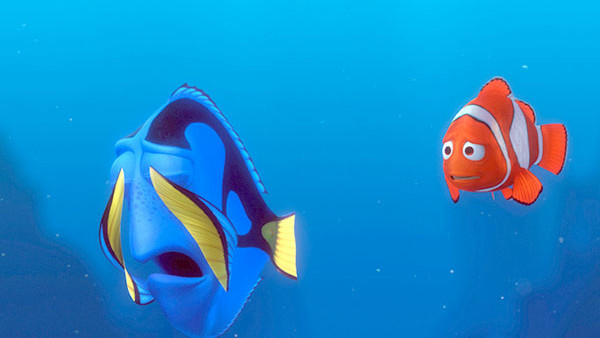
As fans discovered Finding Dory, Dory wasn't always on her own: it's just the advantage of her cursed memory that she can't remember who shes lost properly and shes happy enough floating through existence entertaining herself with her child-like imagination.
Except thats not entirely the case. With the simple, utterly disarming throwaway words: where are they? Dory confirms that she does know what she's lost, and while its almost flippantly thrown away, the implications are entirely tragic.
And even with the sequel filling in the gaps, the most devastating part is why nobody actually really looked for her.
3. Bo Peep - Toy Story 3
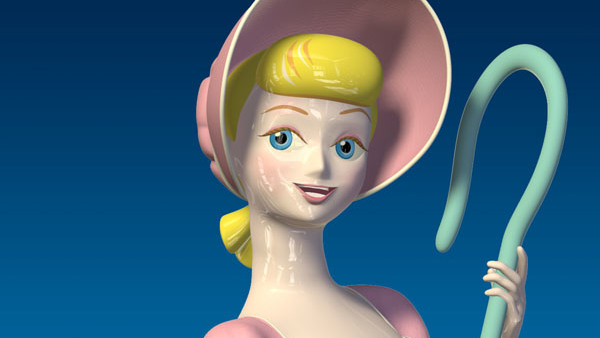
Probably the most famous of all of the hinted back-stories in the Pixar universe, Bo Peeps disappearance between the second and third films adds a distinctly emotional note to Woodys own story arc in the final film.
She is held up as the answer to his blind idealism that assures him (and pretty much nobody else) that Andy will love them forever and take them everywhere: a cruel morality tale that love isn't strong enough to quell the relentless march of time or the inevitable horror of abandonment. And the idea of her simply being thrown away, or even given away opens up a whole new narrative about the tragedy that toys don't just fall for owners who will run out of love for them, but that they'll also form relationships with other toys that are fundamentally at the mercies of the whims of hormonal teenagers.
But then, think on poor Slinky, Woody's former best friend who is basically cast aside when Buzz appears. Perhaps Bo's disappearance was a direct response to his careless treatment of the little dog's love?
2. Russell's Absentee Father - Up

Another backstory hint that has been explored before, Russell's familial history is only fleetingly mentioned in Up and revealed in short, sharp bursts that are designed not to have immediate impact because the audience (through Carl) only sees an annoying little kid who is a distraction from the real business of adventure.
Clearly Russell is a child of divorce and there's little room for him in his father's new life, which seems dominated by his new partner who views Russell as a reminder of a past life she'd prefer her man didn't have. It's your typical wicked stepmother sort of situation, with Russell forced to try and force any attention he can from his father by over-achieving as a scout as his father stews under the spell of his new love. He's got such a big heart that the idea of him being so utterly abandoned is beyond gut-wrenching.
And just how dysfunctional do a family have to be to allow their son to continue to have a relationship with the man who claims they flew away together in his house and embarked on an adventure on which they discovered a talking dog, a bird called Kevin thought mythical by the science community? Yes, it's true, but it sounds exactly like the kind of thing a kidnapper - or worse - might spin to the police.
1. Where's Andy's Dad? - Toy Story
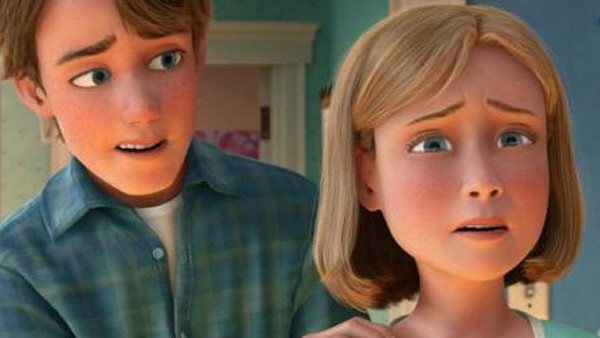
One of the most pertinent questions in any Disney film relates to a character who isn't even mentioned in passing. There's no sign of him having died, no indication that he's just walked out (beyond the house sale and perpetual fear of downsizing), and yet because his children exist, it's hard to resist the question of Andy's dad.
Perhaps it's unnecessary to pick away at the situation too much: Andy isn't exactly dysfunctional, and nor does he wear the traditional indicators of being the son of an absentee father (as Russell does in Up). Instead he's happy, imaginative and socially active, and questioning where his father is might be less of an important question as who cares?
But then you look at his toys and the pieces fall into place: his toys have learned everything they know of humanity from him, and their greatest fear is being abandoned. They are the manifested concerns in Andy that don't necessarily play out when he's happy and at play: they are the latent reflection of his own feelings that he was cast off in some way.
That's the greatest tragedy of Toy Story: not just that the toys will inevitably be cast off eventually, but in doing so that Andy is doing to them exactly what has happened to him.
Which other devastating sub-plots have you noticed in Disney and Pixar films? Share your thoughts below in the comments thread.