10 Horror Movies That Fill You With Dread
Scary cinema that cuts to the core.

Horror might be the most visceral and evocative genre in cinema, and done right, it can inspire a whole range of emotions in viewers. Catharsis, excitement, but most importantly, fear. Good horrors keep you on the edge of your seat, and often leaping right out of it.
The short, sharp shock of a jump scare is one thing, though. The truly effective horror movies are capable of inspiring a genuine sense of dread. The line is drawn between those films that startle you in a manner that can swiftly be laughed off, and those that grab you somewhere deeper, putting the viewer ill at ease, leaving an indelible mark.
There are many ways horror movies can achieve this. Some create an atmosphere of utter wrongness, an at-times inexplicable sense of doom. Others ramp up the suspense, manoeuvring likeable characters into disastrous situations. Whilst there are also those simply so chilling in their visuals that they stick with you, whether you like it or not.
The following 10 films go above and beyond in terms of creeping out their viewers. Anyone can lurk in the shadows and jump out; these films prowl with malicious intent.
10. The Descent

Neil Marshall’s low budget hit could serve as a crash course to budding horror directors on how to do a lot with a little. For not much more than £3 million, Marshall created a world awash with terror. In The Descent, the dread comes not just from the creatures dwelling underground, but from the protagonists’ gradual loss of humanity.
The film’s protagonists are a group of women on an adventure holiday in the wild Appalachian mountains. While potholing, they go way off the beaten track, and wind up in the lair of some unknown creatures, which are blind, fast, strong, and hungry.
It’s panic attack-inducing stuff for many before the creatures even feature, but what’s smart about The Descent is how the seldom-seen monsters aren’t even the biggest threat. As fear rises, any sense of calm in a crisis disappears, and the women turn on each other with devastating effect.
Many people like to imagine what they’d do were they trapped in a horror movie situation. The Descent most likely answers that question for the majority of us. While the supernatural elements provide the gloss, the depth of the film comes from the all-too-real sense of incapacitating terror.
9. Session 9

In Session 9, a crew of workmen rock up to an abandoned psychiatric hospital in order to remove asbestos from the building. What could possibly go wrong there?
Directed by Brad Anderson, who’d later make the haunting The Machinist, this is a cleverly laid out and well acted psychological horror whose true dread comes from uncertainty. We know full well that the scenario is ripe for all manner of terrors - we just don’t know exactly which will be deployed.
The structure comes from a box of tapes discovered by one of the workers. It contains therapeutic interviews with a former patient, suffering a violent form of dissociative identity disorder. From there, Anderson carefully blends slasher tropes with the more psychological approach; a killer is on the loose, but we can’t quite be sure of the who, how, or why.
Anderson is eager to give the audience something to mull over, and rides a fine line between the supernatural and the psychiatric.
8. Green Room

Forget supernatural monsters - horror doesn’t get much scarier than Patrick Stewart playing a neo-Nazi. Jeremy Saulnier’s taught horror-thriller is pure heart in mouth stuff that starts off disconcerting and ends up intensely scary.
Appropriately for its subject matter, this is a short, sharp shock of a film about a hardcore band who unwittingly take a gig in a neo-Nazi hangout spot. They’re eager to do the job and get out of there, but can’t resist blasting out a quick Dead Kennedys track that lets the skinheads know precisely what they think of them.
This doesn’t go down well, and when the band stumbles upon criminal activity, there’s no way the fascists are letting them leave. The young punks wind up hostages, trying to figure out how to get out of here with their lives intact.
Once Green Room starts rolling, it’s impossible to tear your eyes away, even if you know that what you’re going to see will be hard going to say the least. With a likeable bunch in the lead roles, and deeply despicable antagonists, it’s an easy film to get invested in, though your adrenaline levels won’t thank you for it.
7. Smile

Horror advertising tends towards the one-note - dark, murky, gruesomely titled. So kudos to Smile for not just bucking this trend on all counts but producing advertising material that’s unnerving from the off. That rictus grin, broad but sinister, is enough to invoke a serious level of fear.
Smile stars Sosie Bacon in a star-making turn as psychologist Rose Cotter. She witnesses a patient commit suicide after flashing her a terrifying grin, and it swiftly turns out that this is part of an epidemic, a curse. Catch the eye of the victim as they flash their final smile, and you’re next.
While the film heavily utilises jump scares (often very effectively), the real meat is in the terrifying visuals of unhinged grins. The movie makes a commendable effort to tackle real issues of trauma and mental health, too, forging a far deeper connection than the majority of modern gimmick horrors.
Horror is at its best when it taps into the simplest concept possible - with Smile, you’ll leave the cinema distrusting every friendly face you see.
6. The Innocents

It wouldn’t be a ghost story without the characters questioning what’s going on around them and fearing that the laws of the universe no longer apply. The 1961 classic The Innocents manages like few other films to put that feeling onto the audience.
Jack Clayton’s still truly unsettling film stars Deborah Kerr as Miss Giddens, who is hired as a children’s governess in a country mansion. Her charges are Flora and Miles, two orphans whose uncle can’t take care of them. Miss Giddens connects with both children quickly, but something isn’t right. They’re secretive, peculiar, and somehow altogether too adult. When she learns of the tragedies that took place in the property, she quickly suspects ghostly possession.
What The Innocents does so ingeniously is never fully give the game away. There are myriad examples one can use to suggest Miss Giddens is right; equally, there’s evidence aplenty that she’s simply lost the thread.
The mysterious presentation and Kerr’s increasingly desperate performance makes it clear something terrible is going to happen, but the horror could unfold in all manner of ways, and that uncertainty grips the viewer right up to the shock ending.
5. Possum
Matthew Holness first found fame playing Garth Marenghi, the Stephen King-spoofing horror author whose cult sitcom was an early ‘00s cultural highlight. Nearly 20 years later, it turns out he’s nearly as good at real horror as the fake stuff.
Possum, adapted from Holness’ own short story, stars the terrific Sean Harris as a children’s entertainer turned pariah. He returns to his family home, which he’s forced to share with his abusive uncle, but can’t shake his past.
This is reflected in about as terrifying a manner as you can imagine: he’s haunted by a puppet from his own act, the titular Possum, a terrifying spider creature that would be entirely unsuitable for children. There’s no shaking Possum; every time he throws it away, it reappears. And when a local kid goes missing, who are you going to suspect but the disgraced former puppeteer?
Holness’ film is unsettling, original, and bold, with a superb performance from Harris, who finds real balance in a difficult character. Its dramatic scenes are just as shocking as the explicit horror; the film cements Holness as a new mind in the genre.
4. Midsommar

Two features deep, Ari Aster has cemented himself as one of the modern kings of horror. Debut Hereditary is pound-for-pound one of the most scare-filled films in recent memory, but it’s his follow up, Midsommar, that burrows deeper and truly unsettles.
Starring Florence Pugh, its an immaculately made piece of work whose lush vistas and great performances only make the terror hit harder. Pugh plays a college student traumatised by the death of her family. Her flaky boyfriend is off on a research trip to rural Sweden, and she invites herself along.
This proves to be a bad mood. The plucky Americans rock up on this bucolic commune to find themselves waist-deep in folk horror. They’ve arrived just in time for the midsummer festival, but this is less frolicking and cider than human sacrifices and heads getting bashed in with hammers.
Despite taking place in wide open European vistas, Midsommar feels deeply claustrophobic, as the protagonists find themselves isolated and terrified by the ritual weirdness that unfolds. Aster’s incredible visual eye truly luxuriates in the gore, making for an unforgettable experience.
3. The Texas Chainsaw Massacre

Nearly 50 years and a dozen dire sequels later, it’s simply remarkable how little of its power the original Texas Chain Saw Massacre has lost. Made on a shoestring budget in 1974, Tobe Hooper’s early slasher masterpiece remains a stomach churningly gross piece of cinema.
The plot, such as it is, sees a group of ill-prepared kids out of gas on Texan back roads. They approach a rural house to seek help. Instead, they find a petrifying family of freaks and monsters who gleefully kill several of them before capturing series semi-hero Sally.
This film sets its tone of terror from the title on down. You know what you’re getting with this picture (well, sort of - there’s massacring, and chainsaws, but not combined), but that only enhances the fear factor. Hooper does everything he can to make what we see look like real footage, and the house of horrors is one of the genre’s great locations, with something foul around every corner.
Later entries to the canon tend to focus heavily on Leatherface, but the more we know about him, the less interesting he becomes. The original just takes us to a strange place, then hops back in the truck and leaves us there to our fate.
2. [REC]
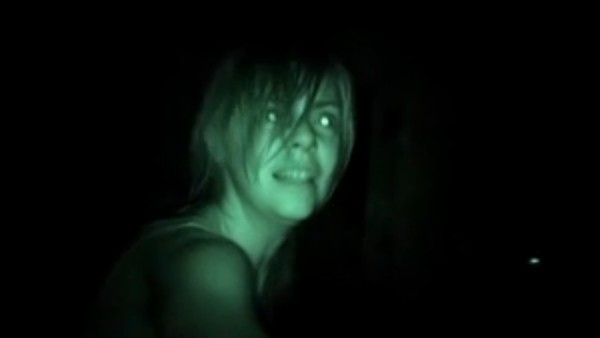
In the late 2000s, the zombie movie was reaching epidemic proportions, with undead of all stripes filling our screens. Unsurprisingly there was a lot of chaff in this particular subgenre explosion. There was also [REC].
The Spanish found footage masterpiece can stake a claim as one of the truly great zombie features, a film that offers up every type of scare there is. The premise sees a news crew following a Barcelona fire department for a night. A call comes in from an old apartment building, where things are going more than a little wild.
They arrive to find police and military already monitoring the situation. It’s not nearly enough. An old lady bites a cop; another resident turns rabid, too. Within moments, almost everyone in the block is infected, with our core survivors trapped.
[REC] reflects better than almost any film the sheer speed with which this plague spreads. Things go very badly, very quickly, meaning the jump scares are supplemented with a constant source of escalating terror; what’s more, the news broadcast style drags the viewer in ever closer. It all winds up in the attic, and perhaps the single scariest movie monster ever captured.
1. Don’t Look Now

For all the fantastical elements at their disposal, the very best horror films are most effective when they tap into a real and tangible fear. Nicolas Roeg’s stylish and influential Don’t Look Now is up there with the best for its ability to express something as deep as the loss of a child by way of a gripping, haunting horror.
Donald Sutherland and Julie Christie star as bereaved parents who hope a change of scenery might help them continue with their lives. They move to Venice for work, and things quickly get weird.
Sutherland’s John begins to see a small figure in a red coat much like his daughter’s around the city. The past has a grip on both characters and won’t let go, all the more so as Christie’s Laura attempts to liaise with the spirit world. As a serial killer creeps around the canals, the fear factor rises.
The beautiful Italian city has never looked so sinister as it does here, the labyrinthine streets and alleys reflecting the jumbled psyches of the film’s protagonists. From the overwhelming sorrow to the invested performances and the utterly wild finale, Don’t Look Now is mystifying and petrifying in equal measure.