10 Horror Movies Which Broke The Fourth Wall To Scare You
This time, you can't just tell yourself, "It's only a movie, it's only a movie"...

Some horror films will do anything to scare an audience. Not just the bad ones, either.
All is fair in love and genre cinema, and even many great horror filmmakers like Scream's Wes Craven or Halloween's John Carpenter aren't above using dirty tricks like jump scares and "he's behind you" moments to spook their viewers.
One of horror's longest-standing cheap tricks, however, is the undeniably effective gambit of breaking the fourth wall. Nothing is scarier (and occasionally funnier) than when a film acknowledges that it's just a movie, only for its monster to then threaten the viewers themselves instead of the movie's characters.
It can be as as small and comparatively subtle as an evil figure turning to stare right into the camera lens, or as dramatic and ambitious as an entirely meta movie which knows it's a movie, but there's one thing which the ten films listed here have in common. They are all horror films which turned on you, the viewer, (and their camera man) to scare audiences senseless.
Also, trying to keep the found footage cheating to a minimum here, so there's only one film on this list where the director opted to use that cop-out sort-of-meta framework.
10. The Woman in Black

Released in 2012, The Woman in Black was a terrifying piece of period horror from the thought-to-be-defunct British genre stalwart, Hammer Studios. Starring Harry Potter himself Daniel Radcliffe as a grieving father tasked with taking an inventory of a supposedly haunted remote manor, the film's creepy story saw a string of gruesome accidents befall local children after the unassuming protagonist's arrival.
This bleak flick was a tonal departure from director James Watkins' bloodier previous film, 2008's hoodie horror Eden Lake. However, despite earning a 12 rating in its home country, The Woman in Black managed to be more memorably dark than a lot of gorier entries into the genre.
The film's scary simplicity is best epitomised in the closing moments of this chilling horror.
Radcliffe's hero may be dead, but he's reunited with his son and wife in the afterlife, so at least it's not totally terrifying...
That is, until the eponymous evil turns to face you, the unsuspecting viewer, in the film's unexpected and blood-freezing final shot.
9. The Tingler

1963's The Tingler is not, by any means, the best film on this list.
But the horror from exploitation legend William Castle is easily the most infamous one listed here, and for good reason.
Following a scientist who unearths a parasite living in humans that feeds off their fear, the film's ostensible plot was simple enough. The director, however, had an ambitious vision for pulling off the movie's horror which fell in line with Castle's earlier gimmick-based horror movie conceits.
In the case of The Tingler, larger cinemas had their seats outfitted with vibrating buzzers (yes, really). Thus, when the eponymous monster was unleashed on the audience late in the film's third act, the audience would be shocked (literally) to find something writhing in the aisles.
The ludicrous gimmick was a success and like most of Castle's films The Tingler was relatively well-received for a low budget campy horror.
Unfortunately watching the film from the comfort of your phone screen leads to a pretty disappointing experience, as the movie really is lacking when shorn of its gimmick.
8. The Last Horror Movie

Released by legendary exploitation film distributors Troma in 2003, The Last Horror Movie is a tonally muddled British found footage horror.
Not as artful as the earlier Henry: Portrait of a Serial Killer, this grimy film purports to be a genuine snuff movie wherein the protagonist is a serial killer recording his own murders. Throughout the film's gory runtime, he frequently questions the audience's motivations to continue watching.
The film attempts to touch on a lot of the questions about screen violence raised by earlier films such as Michel Haneke's Funny Games and Man Bites Dog, but the low-rent look and unintentionally goofy effects make this one a little less effective.
However, the film does feature a deeply creepy closing twist, as the smug murderer informs the viewer that they're watching the only copy of this film. The last lines heavily imply that the killer is preparing to hunt down you, the viewer, although this nasty shock does admittedly work better if the film is rented rather than streamed or watched for free on YouTube.
7. In The Mouth of Madness

One of the more mind-bending horror films on this list, In the Mouth of Madness was the final film in legendary horror director John Carpenter's Apocalypse Trilogy after the dark sci-fi horror The Thing and the campier vampire film Prince of Darkness.
The story of this twisty horror owes a debt to Cthulhu creator HP Lovecraft as it follows an insurance agent's attempts to track down his missing client, enigmatic horror author Sutter Kane.
A thinly-veiled Stephen King parody, Kane is eventually revealed to be a god-like figure who created the town his supposed insurance agent is trapped in.
That's when the viewer discovers that said insurance agent is actually one of Kane's fictional creations. Not only that, but the world as he knows it is about to come to an end with the release of Kane's movie adaptation.
This surreal film ends with its shattered hero laughing to himself as he watches this film adaptation, awaiting the end of the world.
As for the title of this cursed film he's watching, and simultaneously starring in?
Come on. It's In The Mouth of Madness. Of course it is.
6. Unfriended

Released in 2015, Unfriended was a mean-spirited piece of teen horror from MTV Studios which centred its action around an inventive gimmick.
The movie's action unfolded in real time, following the gruesome fates of some unlikeable teens as the friend they bullied to death returned from the grave and offed them one-by-one. Not only this, but the film's action also took place entirely on the screen of one character's laptop.
The entire group are on an ill-fated Skype call for most of the film's runtime, meaning the audience only glimpses the gory death scenes via their webcam feeds. This inventive approach elevated an otherwise forgettable teen horror into a darkly funny success and the film won over fans with a sixty four million dollar box office.
The ingenious premise was never better used than in the film's closing moments. With everyone else dead, our ostensible heroine finally shuts her laptop, reminding viewers that the entire preceding film has been seen through her eyes.
And the fourth wall won’t save viewers from the vengeful ghoul who grabs the laptop this flick is filmed on and attacks its owner in the terrifying last shot.
5. The Devil’s Chair
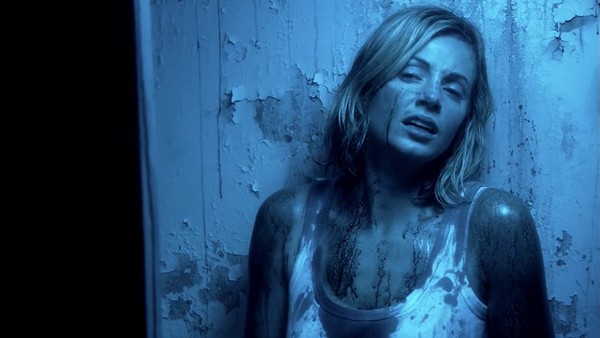
Disliked by critics upon its 2007 release, The Devil's Chair is a disarmingly simple low budget British horror.
The thinly sketched story follows a man who is committed to an asylum after the eponymous torture device kills his hook-up. Hate it when that happens.
Of course, this being a horror, some genius psychiatrist decides that after five years in the asylum, our hero simply needs to face his fears and return to the scene of the crime. What follows is a lot of creepy scenes wherein the doctor, his assistant, and our hero narrowly avoid sitting in said chair.
Finally, after an admittedly tense but overlong series of near-misses, someone takes a seat and all Hell breaks loose.
That's when this blackly comic effort features some hilariously unexpected and surprisingly creepy fourth wall breaking.
Late in the game, our narrator admits that "it all got a bit silly here", before berating horror fans with an audaciously scolding "look at this poorly written, badly acted !*$%! Is there any truth in this B-movie banality?"
Just like Gladiator.
Except here the hero is complaining about fictional films rather than real life-and-death combat. Close, though.
4. Funny Games

The most infamous and ambitious entry on this list, Michel Haneke’s Funny Games was the last in a long string of cinematic provocations from the austere auteur.
Beloved by high art connoisseurs, his earlier effort Benny's Video came close to blaming violent movies for real-life murder and crime. In comparison, this 1997 home invasion horror gave up any pretence of subtlety.
The infamous fourth wall demolishing exercise in meta horror sees a pair of well-spoken blokes break into a family's vacation home and proceed to torture and kill them. The gimmick, because even high art auteurs need one, is that these killers talk straight to the viewer during the film.
Like a pretentious Austrian Wayne's World.
What begins as some smirking asides soon turns to a disturbing Loony Tunes cartoon as the pair resort to rewinding the film's action at one point. It's around this stage that viewers can choose between laughing at the audacity or solemnly nodding along to the film's sledgehammer-subtle point of "those movies will rot your brain, kiddo".
3. Blue Velvet

From the ridiculous to the sublime...
As far from Michel Haneke's Funny Games as cinema gets, infamous screen weirdo David Lynch's Blue Velvet was the Twin Peaks creator's first deep dive into subverted images of picket fence Americana.
A suburban mystery, the film stars future Dale Cooper Kyle MacLachlan as a well-meaning teen who becomes embroiled in all sorts of dark criminal underworld scheming when he spies on his stunning neighbour.
The film's creepy, hypnotic mystery features memorable onscreen psycho Dennis Hopper as its chilling villain. One deeply unsettling sequence sees him assault a distraught Isabella Rossellini as MacLachlan watches, helpless to intervene. It's shortly afterwards that Lynch pulls off an audacious and deeply chilling fourth wall break.
Remember that potent moment when Dennis Hopper’s twisted villain stares into the screen to tell the voyeuristic viewer “you’re just like me”?
Sure, he's technically talking to MacLachlan's character, but there's no shaking the discomforting intensity of the scene which manages to address the viewer directly without losing any narrative effectiveness (cough calling Mr Haneke cough).
2. Wes Craven’s New Nightmare

Some horror films are happy with just a mere moment or two of fourth-wall breaking, but 1994's New Nightmare had bigger, and stranger, ideas in mind.
This nineties meta horror sees the demonic, dream-invading villain of Wes Craven's A Nightmare on Elm Street series horrified to see his once-ferocious onscreen image ruined by a string of stale, un-scary instalments.
What's a slasher to do?
Well, in the case of Freddy Krueger, the answer was attacking his creator, the actor who plays him, and the stars of his earlier onscreen efforts in this strange, self-referential film. Robert Englund plays both himself and Krueger, whilst actors John Saxon and Heather Langenkamp play fictionalized versions of their real-life selves plagued by their onscreen nemesis.
Trippy, funny, and damn scary, this surreal hit provided a blueprint for the later Scream series. However, none of Craven's later films broke the fourth wall as explicitly as the sight of Freddy Krueger attacking his own creator.
1. Psycho

The original and the best.
A huge influence on the slasher sub genre, Alfred Hitchcock's legendary Psycho is a tense and terrifying story of one disturbed motel manager's murderous attempts to live up to the expectations of his beloved "Mother".
Of course (spoilers?) the film's shocking twist, that Norman's mum is long-dead and he's been impersonating her for his murders, is still effective decades after its release.
But it's the moment after this revelation that set the gold standard for horror's fourth wall breaking moments. After an interminable lecture from Norman's psychiatric evaluator (one of few flaws in the film), this classic ends on one of the greatest fourth wall breaks in film history.
His narration slipping into Mother's creepy voice, Norman looks up and faces the viewer directly in the closing shot. As a skull is superimposed over his unsettling smile, he convinces himself that he's harmless despite the moment's dreadful power convincing a terrified audience otherwise.
Wouldn't hurt a fly, indeed.