10 Horror Movies You MUST Watch On The Big Screen
Bin the TV and burn your sofa; these horrors are made for the big screen.
There is no other genre that does as well at the box office as horror, and that's because they just keep 'em coming all year round, and people flock to see them. It doesn't matter whether these films have a big budget or major stars attached, people just love a good scare.
Netflix and other streamers have capitalised on this in recent years, keeping a steady flow of horror content coming directly to their platforms to entice viewers to stay home and tune in. And yet, there are plenty of horror films out there that beg to be seen at the cinema, deserving of something better than the cheapest thrills of the TV, the laptop or - shudder to mention it - the mobile phone screen.
When Phil Tippett bent his pipe cleaners and putty into nightmare fuel, he intended every miniscule detail to be writ large; when Luca Guadagnino and Gaspar Noe were making their dance nightmares Suspiria and Climax, they were intentionally creating grand spectacle; and when Patrick Lussier was putting together My Bloody Valentine 3D, he definitely wasn't envisioning people huddled around a 32" with a bowl of microwave popcorn.
If nothing else, the cinema offers an encompassing experience that just can never quite be reflected at home, offering unparalleled sound, scale, and sheer big-screen awe. So get rid of the lights, pets, children, and furniture, find that ultimate darkness, and see the following ten films at the cinema if you can.
10. As Above, So Below (2014)

The Paris catacombs are so much more than the health and safety-compliant section designed for tour groups and holidaymakers. In fact, there is a far larger network of tunnels under the city, many of which are dangerous, inaccessible, and home to who only knows what.
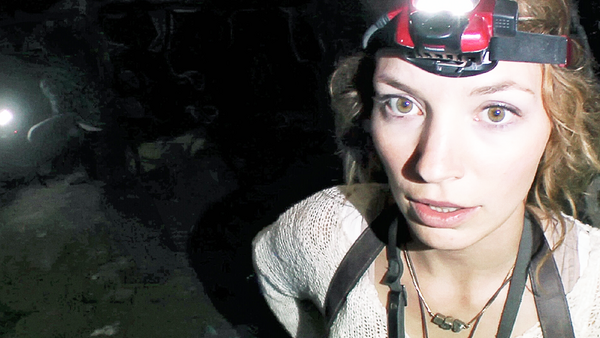
And these catacombs are where we find archaeologist Scarlett Marlowe (Perdita Weeks) in As Above, So Below, on her hunt for the, well... the philosopher's stone. Far more than just a Harry Potter title, the stone is a legendary substance that has entranced a certain subsection of explorers in a similar way to the Holy Grail. But rather than a National Treasure-esque romp, Scarlett and her companions find themselves descending through something akin to Dante's nine circles of Hell.
While found footage in general seems a TV-native format, this one is a little different. The documentarian style adds to the scope of what the film can do on the big screen, generating a claustrophobic feeling that captures what it's like to really be in the catacombs, not to mention Hell. Add to this sound that largely eschews music, focusing not on soundtrack but the minutiae of the sound design, and you've got a picture made for a great big auditorium with total audio-visual clarity.
9. My Bloody Valentine 3D (2009)

3D has long drawn the ire of the cinephile, and it's not difficult to see why. It rarely adds anything meaningful to the viewing experience, or to the film itself, and sometimes - particularly when it is retrofitted to movies - can actually harm the viewing experience. However, if the stakes are low to begin with, say with a bloody slasher romp, and the approach to the 3D is intentionally silly, the results can surprise.
Such is the case with My Bloody Valentine 3D, the Jensen Ackles-led flick about a Valentine's Day killer in mining gear. Is it gimmicky? Of course, but given this isn't exactly Shakespeare, it's half of the fun to see a pickaxe come swinging out of the screen at you. And it was the first horror film to utilise the RealD technology, banishing the red and blue glasses to the recycling bin.
The only hitch? The 3D doesn't translate well to home viewing. To get the full force of this camp, gory splatter-fest in all its glory, you have to see it on as big a screen as possible.
8. The Lighthouse (2019)

Robert Eggers went all-out on his follow-up to 2015's The Witch, digging deeper into the unspeakable horrors and darkness that have come to define his filmmaking. In The Lighthouse, Willem Dafoe and Robert Pattinson star as lighthouse keepers ("wickies") who unite on a remote New England island for weeks on end, succumbing to cabin fever, alcoholism, and the lure of the lighthouse's lens.
The Lighthouse is purposefully designed, more than any other of Eggers' films, to batter the audience into submission. The intention is very much to drop us into the wickie life, with accents, dialogue, and method acting from both leads designed to provide optimal verisimilitude with the subject matter.
The movie harks back to classic black and white horrors, using similar framing and technology, but rather than take these elements and make something traditional, Eggers uses the limitations to the advantage of his horrors. The aspect ratio and tight framing provide a visual claustrophobia that the sound design then uses to trap and fixate us. And the sound itself is frequently deafening and brutal, with foghorn drones, screaming wickies, and caterwauling seagulls all contending for the limited space in a mono mix.
In all, The Lighthouse is an atmospheric journey that begs for the bombast of the cinema.
7. Mad God (2021)

Any horror fan worth their salt would give an arm, two legs, and their firstborn to catch Phil Tippett's stop motion masterpiece Mad God on the big screen, sinking into the gore while being able to appreciate every minute detail of the tireless labour of love.
The film's journey south takes an unnamed and mute assassin through hellscape after hellscape, finding his way to the bloody heart of a ghastly, war-torn world, where he seeks to deposit a bomb and bring it all crumbling down. And it took Tippett and a large team of volunteers some 30 years to make.
Mad God is obscene in the scale and grim details of its multitudinous horrors, never settling for sanitary when there is the opportunity to wring some blood and misery out of a minor feature. Everything that can have texture does, every surface awash with bolts and grates, every creature a mass of flesh, hair, and bloodshot everything - no detail spared the Tippett treatment - but unless you're packing a 90-inch OLED at home, much of this meticulous craft will be sadly lost to the murky corners and crevices of your screen.
6. mother! (2017)

Darren Aronofsky's Caught Stealing surprised everyone this year when it threw us into a Soderbergh-esque romp, no mania, no hysteria, no drugs and prostitution, no floor vagina and snapped baby. He has, after all, spent the bulk of his career making deeply uncomfortable films - and no film is as uncomfortable as mother!
Jennifer Lawrence is the film's matriarch, trying to survive in a beautiful home beset by hordes of unwelcome guests, whom her poet husband adores but cannot control. Yes, it is a fairly overt metaphor for Mother Nature, humanity, and God - and, no, that doesn't diminish its craft.
Like many of his pictures, Aronofsky designed mother! as a rising panic; unlike many of his other films, it uses silence and deafening noise as two of its primary storytelling and genre elements, and seeing it at home surrounded by minor distractions just isn't the same. This movie demands from you the ability to experience the absolute sound of silence and the explosions of violence, chaos, and, well, literal bombs. Nothing less than full immersion in this troubling world can provide the intended stress, nor a full appreciation of the work.
5. Psycho (1998)

A dastardly experiment by Gus Van Sant, the Vince Vaughn-starring remake of Psycho had a rocky reception on release. Vaughn is an unlikely leading monster as Norman Bates, and yet there really is something unsettling to his performance when his leering closeups are projected 30-feet high.
But so few have had the chance to see Psycho '98 on the big screen, especially compared against the swathes of audiences who have seen - and continue to see - Alfred Hitchcock's 1960 original regularly. This is precisely where it comes into its own. No matter how good Hitchcock's Psycho is, it is somewhat limited by the technology of the time. It is presented in black and white, in 1.37:1 aspect ratio (or reworked into 1:85 in some cases), and it features a mono soundtrack (that, again, has been digitally altered for multichannel presentation).
Psycho '98 has a native multichannel mix and 1.85 ratio, in glorious technicolour, designed to perform in modern cinema auditoriums. Black and white is by no means worse than colour, but it is the possibilities of Van Sant's colour palette here that really come to life in the cinema. When viewed on the big screen, it is all-encompassing, and while comparisons to the original don't disappear, it does become an experience of its own, layering up sound and visual elements while capturing some of the core vibe of its forebear.
4. Suspiria (2018)

Either of the Suspirias would fit perfectly into this slot, but we look here to the remake, as Dario Argento's 1977 original is widely screened, whereas Luca Guadagnino's effort only received a limited run.
Guadagnino's Suspiria follows Suzie Bannion (Dakota Johnson), a young ex-Mennonite dancer, to a dance academy in Berlin that harbours some dark secrets - namely that it's run by a coven of witches. From the outset, the film is pure spectacle, wrangling stunning interpretive dance into the same picture as grotesque acts of violence.
Made for the cinema, every other scene is dripping with blood and other fluids, and the movie neatly juxtaposes in its palette a pulsing, vibrant red (which goes gloriously OTT in the third act) against the drab interiors and exteriors of 1970s West Berlin. And the dance practices and sequences themselves, which make up the core of the film, are the intensely choreographed sequences of the kind we would pay good money to see live on stage.
Suspiria is a night at the theatre, the cinema, and the slaughterhouse all rolled into one, so why would anyone settle for living room viewing?
3. Weapons (2025)
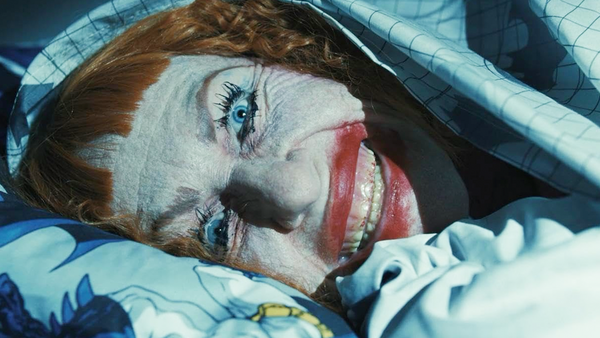
Barbarian left most of us looking for more from director Zach Cregger, and Weapons has given us precisely what we wanted while upping the ante considerably. From the get-go, the film - about a town suffering from the sudden and mysterious disappearance of an entire classroom of their children - is nail-bitingly tense and often super quiet to boot.
Cregger makes great use of distance, staging his scenes so that horrors often come from afar and end up uncomfortably close, and nowhere is this more apparent than in the cinema. This is something backed up to the hilt by the sound design, with eerie space created and then closed, and small seemingly innocuous details (a car door opening, anyone?) proving to be gasp-inducing at this scale - something more easily missed when watching at home.
The smattering of shocks, jump scares, and horrifying visuals - especially where witchy sleeper antagonist Gladys (Amy Madigan) is concerned - truly are all the more effective when you can't escape them, and this is one horror sure to become a stalwart of horror movie nights at theatres in the years to come.
2. Climax (2018)
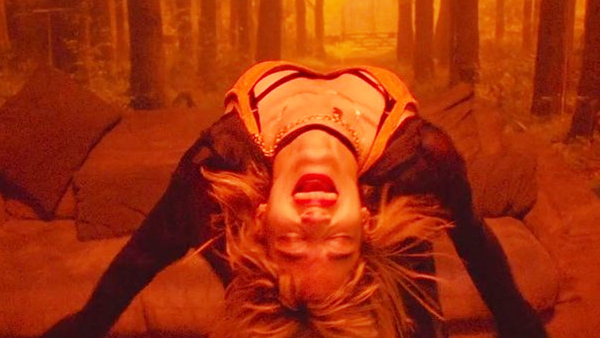
Gaspar Noe's Climax takes us back to the '90s, joining a dance troupe as they hole up out of the snow in a disused school, rehearsing for an upcoming performance, but when someone spikes the punch with acid, things take a turn for the miserable.
Much like Suspiria, Climax is a fusion of disturbing horror elements with rich colour motifs and painstaking choreography. The difference here, which elevates Noe's film above Guadagnino's, is that most of Climax is shot with long takes, including the dance numbers. In fact, we are treated to an uninterrupted sequence at the beginning of the movie that not only makes us feel like we are present, but provides tilts, cranes, and other angles that we would not be able to get even watching a live theatre performance.
The tension built by the revolving long takes is almost unbearable, no matter where you watch it, as Noe has his dancers tear each other apart under vomit-inducing red-and-low-lighting. But being trapped in a large, dark hall with Climax is the way to get the full effect of it, not just watching but really experiencing the claustrophobia and stress up close, feeling trapped in there with the dancers.
1. The Neon Demon (2016)

Nicolas Winding Refn builds his pictures around the visuals, creating fluid and malleable scenes that satisfy what he wants to see first and foremost, and allowing story to present itself through these. While not for everyone, arthouse extravaganza The Neon Demon is a true representation of this filmmaking ethos, perfectly married with its subject matter - LA's fashion world.
The film whisks Elle Fanning's Georgian rube Jesse off to the city of angels, where she meets catty models, sinister agency figures, and every kind of seedy and lecherous pedestrian the city can hawk her way. Despite the torrent of questionable characters in her way, she gets her foot on the ladder and starts climbing, rapidly becoming subsumed by the (lack of) culture.
As with most Refn films, we are treated to lush, rich visuals, with every frame a dead ringer for a fashion shoot, a mega-budget advert, or an installation. The aesthetics and cinematography are bold, bright, and - you guessed it - drenched in neon, and whether the plot satisfies the average viewer, or the kills and cannibalism make us blow chunks, this is a movie for the cinema screen. It is no less than an arresting piece of visual art, and ought to be consumed as such - out in the world, in its most authentic form.