10 Horror Sequels Not Worth Waiting Decades For
Will Doctor Sleep beat the rot?

This year's big Halloween horror release is the sequel nobody was asking for.
With an ending that manages to be both pretty conclusive and openly ambiguous at the same time, it's hard to imagine anything a follow-up to Stanley Kubrick's classic 1980 version of The Shining could do to build on what has come before without retroactively damaging it.
But Stephen King wrote a sequel novel and, in the wake of the incredible success of the two-part adaptation of IT, King is a Hollywood hot property once again.
So here we are with Doctor Sleep, a movie which not only has the impossible task of giving audiences a 39-years-later addition to a much-cherished original, but also of somehow reconciling the huge differences between King's original novel and Kubrick's original movie to make a new film that is both a satisfying adaptation of the sequel novel and a sequel to the earlier movie.
Who knows? Doctor Sleep could turn out to surprise a lot of people and be a match for its predecessor. Last year's Halloween reboot ignored all the previous sequels to make a successor that managed after forty years to recapture some of its originator's greatness, after all, and director Mike Flanagan is a serious talent whose reinvention of The Haunting Of Hill House shows a knack for getting to the scary core of a story even amidst a very loose adaptation.
Previous examples of decades-too-late sequels to horror classics don't provide much of a positive precedent, though.
10. Psycho II

At least everyone waited until after Hitchcock was dead before they started desecrating his most iconic movie.
The Master of Suspense's body was barely cold, though, before both the novel's original author Robert Bloch and the studio Universal rushed into making Psycho sequels.
Universal hated Bloch's Psycho II, the kind of post-modern slasher story which satirised Hollywood slashers in a manner that would not become popular until after the release of Scream almost fifteen years later, and ordered a completely different screen sequel.
Written instead by Tom Holland (the Child's Play director, not Spider-Man) and directed by former Hitch protege Richard Franklin, the movie version of Psycho II was both made and set 22 years after the original. It brought back Anthony Perkins and Vera Miles for a story in which a now-sane Norman Bates is released and returns home to renovate the family motel, but not before suspicion falls on him for another series of murders.
Compared to both the sequel novel and some of the later sequels, remakes, and spin-offs which swiftly followed, even though there had been a two decade gap up to this point, Psycho II is actually not too bad.
It's a horror sequel in the vein of Jaws 2: a solidly decent movie on its own terms (and far better in retrospect once you've seen how bad it gets by Part 4), but never with any hope of matching how thrilling and expertly made the original was. At least Jaws fans didn't have to wait over twenty years, though!
9. Blood Feast 2: All U Can Eat

The original Blood Feast is a significant milestone in the history of horror cinema entirely because it broke new ground in how explicit screen gore could be.
On its release in 1963 it became the first so-called "splatter film". Director Herschell Gordon Lewis threw guts, severed limbs and buckets of blood at his story of a demented caterer performing cannibalistic sacrifices to an Egyptian goddess. In a market where such gore didn't exist elsewhere, the audience for this was huge, racking up box office numbers of over $4 million on a budget barely above $20,000.
Blood Feast earns its classic status, therefore, because there was nothing else really like it at the time and every ultra-gory slasher story of a knife-wielding maniac that came after owes it a debt. It does not earn that status because it is even slightly competent filmmaking or an at all coherent and engaging story.
So, when Lewis returned to direct a sequel 39 years later in 2002 (in which the grandson of the original cannibal caterer Fuad Ramses takes up the old business), all that you're left with is every bit of the technical ineptitude and none of the shocking novelty.
It's much harder to make a movie for twenty-first century horror lovers that breaks new ground in the way that on-screen gore is depicted in the same way that shocked Blood Feast's original 1960s audience. And, without that, it really has nothing to offer.
8. The Wicker Tree

Even though it is a cult film in every sense of the word, the original 1973 Wicker Man has enough of a following that there have been plenty of attempts to get a belated sequel off the ground.
In the 1980s, Sleuth and Frenzy writer Anthony Shaffer, whose screenplay was adapted by Hardy to make the original film, wrote a script treatment called The Loathsome Lambton Worm that Hardy rejected. Hardy himself pitched a sequel entitled The Riding Of The Laddie in the early 2000s, taking advantage of Christopher Lee's Lord Of The Rings-based boost in fame.
Unable to secure funding, Hardy eventually published his "partial sequel" as a novel entitled Cowboys For Christ in 2006 before finally getting the chance to adapt it for film after the Wicker Man remake bombed. Retitled once again to signpost its link to the original, as The Wicker Tree, it was released in 2011, just 38 years after its predecessor.
It's unclear whether the movie, in which an American Christian evangelical pop singer travels to Scotland to convert the locals and gets caught up in pagan rituals, is a direct narrative sequel or just a thematic one. (Lee's role, reduced to a cameo due to his ill health, as the mentor of the pagan Scottish laird could be said to be Lord Summerisle but the movie neither confirms nor denies it).
What is more obvious, though, is that The Wicker Tree is a complete letdown, a tedious and uninvolving film damned with the faintest of praise that at least it's a better twenty-first century Wicker Man than the Nicolas Cage remake.
7. The Texas Chainsaw Massacre 2

In the twelve years between the original Texas Chain Saw Massacre traumatising audiences in 1974 and the release of The Texas Chainsaw Massacre 2, the series had lost more than just the gap in the middle of the word "chainsaw". There was an equal disappearance of anything resembling tension or any of the very real-feeling rawness of the original.
Director Tobe Hooper returned, but his approach was markedly different. In place of the tense, vérité style, building slowly to explosive bursts of violence, Hooper made a dark comedy centred around a family of murderous cannibals as a satire of the 80s American family.
The first movie did exist to provide subtle commentary on the America of the 1970s, but any subtlety was thrown right out of the window here. Perhaps that's just the nature of bombastic 80s filmmaking.
The Texas Chainsaw Massacre 2 was produced by the notorious Cannon Films, the studio famed for such anti-classic sequels as Superman IV: The Quest For Peace and Breakin' 2: Electric Boogaloo. Unusually for Cannon, though, it was actually a whole lot more expensive than its predecessor.
Costing, at over $4 million, about 500 times the budget of the first movie, Texas Chainsaw 2 ladled on the blood and gore where the first had been required to be restrained, not only becoming far less scary as a result but also suggesting that Hooper's initial success was more an accident of budgetary constraint than talent.
6. Either Exorcist Prequel

The Exorcist prequel is the movie so bad they made it twice.
There had been a fourteen year gap since the last Exorcist movie by the time that the prequel came out, but that's not really the relevant gap because the prequel essentially ignores any previous instalment beyond the original (and directly contradicts details of a similar backstory in Exorcist II: The Heretic). In fact, therefore, the prequel came out all of 31 one years after the movie it is following up. And, boy, was it not worth the wait. Twice.
Originally in the hands of Taxi Driver and Raging Bull writer Paul Schrader, the prequel, in which Stellan Skarsgård plays a younger Father Merrin having his first demonic encounter at an archaeological site in Africa, was deemed too cerebral (read: tediously slow) by studio Morgan Creek.
Schrader was replaced by Deep Blue Sea and Die Hard 2's Renny Harlin to beef up the action and gore, and the movie was almost entirely reshot. When released in 2004, as Exorcist: The Beginning, Harlin's movie was so bad that original Exorcist creator William Peter Blatty described it as "my most humiliating professional experience."
It was also bad enough that Morgan Creek gave Schrader enough money to complete his own original vision, which was released a year later as Dominion: Prequel To The Exorcist, about which the nicest thing that you can probably say is "at least it's better than Exorcist: The Beginning."
5. The Lost Boys: The Tribe

Getting nostalgically referenced these days in everything from Jordan Peele's Us to IT: Chapter Two, The Lost Boys is peak 80s vampire cheese: a slick, fun slice of pure style and entertainment, full of mulleted beachfront vampires, which is nothing if not very of its time. So, of course what this 1987 fan favourite really needed was a cheap, style-free sequel 21 years later.
Originally written as a script about surfing werewolves, studio Warner Bros. rejected The Tribe for being a Lost Boys knock-off before realising that a cheap knock-off was exactly the sort of thing that could be retooled into a cash-in belated sequel instead.
It's really not a good sign that The Tribe could only secure the services of one Corey (Feldman, with a tiny mid-credits cameo for Haim) in an era when they were hardly in demand. There is a Sutherland, but in place of Kiefer it's his half-brother Angus Sutherland.
And that is symptomatic of the movie as a whole, its approach being always to settle for something vaguely reminiscent of its equivalent in the original, rather than do anything new.
Lost Boys director Joel Schumacher gets a lot of flack for his style-over-substance approach to filmmaking (especially when he brought that approach to Batman), but he undoubtedly knows how to make a sleek, cool-looking movie. From Dusk Till Dawn 3 and The Tribe director PJ Pesce, however, only knows how to remind people of how much better the earlier movie was.
4. The Rage: Carrie 2

In the 1976 Carrie, the movie adaptation of Steven King's first novel which really put him on the map as not just a big name author but also a source to pump out decades of screen adaptations, the title character lives alone with her overbearing religious mother. So it comes as a bit of a surprise to discover she has a sister going to high school 23 years later in 1999.
That The Rage's protagonist Rachel is a sister fathered by Carrie's absent dad some time after the events of the first movie is actually largely irrelevant to what is in every other respect a charmless retread of largely the same plot beats that her sister already went through decades earlier.
The only returning character or actor is Amy Irving's Sue Snell, who as a result represents by far the most interesting part of the film. Her storyline involving her grief and trauma and years spent in a psychiatric facility before becoming a school guidance counsellor is also the only aspect of the film with any roots in King's original novel. But she is cast aside long before the movie's end.
None of the other characters, including Carrie-lite Rachel, feel like they exist in a realistic world or that their emotional trauma is something the audience is at all invested in, unlike the devastating original.
The original Carrie has been remade twice since The Rage and neither version has captured the imagination like the original did, but both were undoubtedly a better retread than this forgettable trash.
3. An American Werewolf In Paris

Apart from the title and a "based on characters created by John Landis" credit, 1997's An American Werewolf in Paris has basically no connection to its sixteen years earlier London-set predecessor.
Every other film on this list has at least a director, cast member or even character in common. This, however, is just the same broad outline of "American tourist becomes a werewolf, causing chaos in a European capital" and that's about it.
The relatively simple plot of the original is transformed into a ludicrous narrative involving werewolf societies luring victims to Parisian nightclubs and a scene in which the hero bunjee jumps off the Eiffel Tower to save a suicidal woman from diving to her death. (That woman turns out to be a far too good for this rubbish Julie Delpy, ostensibly playing the daughter of David Naughton and Jenny Agutter from the original movie, although this doesn't really play any part in the story).
Despite its inherent silliness, An American Werewolf In Paris is far less funny than its pointedly darkly comic predecessor, which was a film of genuine wit, but it also fails to pull off any of An American Werewolf In London's genuine darkness or have anything approaching the random horror of its Nazi stormtrooper dream sequence.
Worst of all, given that it had a whole sixteen years of developments in visual effects to lean on, this movie has none of the amazing werewolf transformation effects and practical makeup that made the first film so memorable. Instead all we're left with is unconvincing and unreal CGI.
2. The Birds II: Land's End

The previously mentioned Psycho II may have conspicuously failed to live up to the legacy of the earlier Hitchcock classic, but next to The Birds II: Land's End it's a masterpiece. Hell, next to The Birds II, even the Gus Van Sant version of Psycho that's virtually shot-for-shot the same as the original is a worthwhile exercise in filmmaking.
A made-for-TV movie whose tagline promises "history has a nasty way of repeating itself", The Birds II has no more excuse than that for making a movie with the same basic "random bird attacks" conceit only on the opposite coast of America and with one older character essentially saying "hey, didn't this exact same thing happen once before?"; all of which ignores that the ambiguity of just how far the bird attacks had spread or what has happened to the wider world is a large part of what makes the final shots of the Hitchcock movie so chilling.
The Birds II was directed by Rick Rosenthal who made a passable follow-up to a horror classic with the original Halloween II and an unforgivably bad one with Halloween: Resurrection. He is definitely more in the latter camp here, but even Rosenthal himself was so dissatisfied with the finished product that he took an "Alan Smithee" credit rather than attach his name to it.
Tippi Hedren, the original movie's star returning for an unrelated cameo and a fat pay cheque, still refers to the movie as a major embarrassment for her too.
1. Mother Of Tears
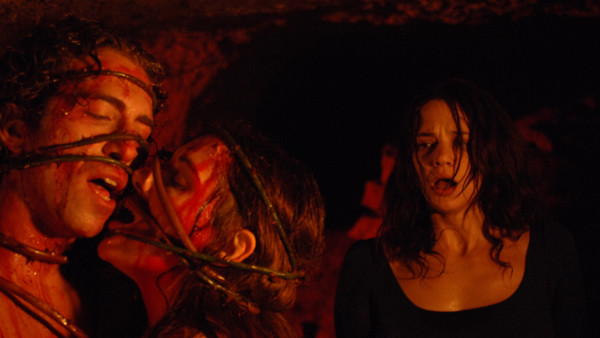
Mother Of Tears is the closest thing that the horror genre has to a Godfather Part III. After two absolute genre classics released in quick succession, a wait of some decades succeeded before the once-talented, now kind of losing it, director returned to cap the trilogy off in the most disappointing fashion for anyone who had spent the intervening years loving those earlier episodes. Mother Of Tears director Dario Argento even thoughtfully aped Coppola's misjudged casting of his own daughter in a leading role for the trilogy closer.
With the twin witchfests of 1977's Suspiria and 1980's Inferno, Argento established himself as the master of lurid, plotless nightmare fuel. Their stories ran on dream logic, but their disturbing imagery stayed with you years after the fact.
A third part was mooted during the 80s and a script was written by Suspiria writer and Inferno star Daria Nicolodi, then Argento's partner and the mother of his daughter Asia. But the couple broke up in 1985, a period that coincided with the beginning of Argento's creative decline. Nicolodi appeared in the final version of Mother Of Tears but had no hand in its screenplay.
That Mother Of Tears is kind of camp and tasteless isn't really a problem, even Argento's best work falls into those categories. No, the trouble is that it is visually flat and uncreative, lacking in any of the mad baroque grandeur of the director's previous nightmare visions. It feels like the work of a much lesser filmmaker struggling to understand what worked about the first two parts.
Doctor Sleep is perhaps unlikely to sink this much lower than its predecessor, but it will do well to even convince that it ever needed to exist at all.