10 Huge Movie Plot Twists That Make No Sense
The only surprise is that no one realised these twists don't work.

The plot twist is one narrative device that can irrevocably make or break a movie. When it works, it can elevate an otherwise ordinary movie to the realms of "classic" status. When it fails, well, you feel like you've just wasted two hours of your life.
The problem is, it's easier to name bad twists than good ones. For every brilliant piece of cinematic tricky there are four or five that totally fail to hit the mark. There are twists that make you question everything you've just seen (in a good way) and those that make you question the logic of the characters you have spent hours rooting for.
The twists to follow definitely fall into the latter category, and take suspension of disbelief to a whole new level. The only real surprise with these twists is that someone thought they were a good idea.
Just try and watch these movies a second time and still be impressed. It's harder than you might think.
10. Perfect Stranger

The Twist
In the thriller Perfect Stranger, plucky reporter Rowena Price (Halle Berry) is investigating Harrison Hill (Bruce Willis) a rich advertising executive whom she believes murdered her friend Grace (Nicki Aycox) after ending their extramarital affair.
Eventually Price manages to get Hill convicted of the murder, and that's when a passable thriller goes downright bonkers. We find out that Price was the killer all along and had framed Hill to take the fall. As it happens, Graceknew that Price's mother had murdered her father and was using that information to blackmail her. Price ended Grace's life to end the blackmail.
WhyIt Doesn't Work
A good twist will shock, but if it's well written then there will usually be enough clues along the way for the eagle-eyed viewer to spot, or for a second viewing to be richer knowing what the payoff will be. There's none of that in Perfect Stranger, a movie that seemed to tack on a shocking twist in the hope it would obscure the memory of how boring everything before that had been.
It's not an exaggeration to say that there is absolutely zero indication that Berry's character is the real killer at any point. In a scene where Price is snooping around Hill's apartment and finds potential evidence linking him to the murder, she looks genuinely shocked and scared. But why would she? There's no one else around, and sheknowsthat she is the killer.
There's no Fight Club style disassociated personality at work here. Price knows what she's doing, so who is that show for? The entire movie plays it straight, no hints, no clues, no foreshadowing. The twist comes out of nowhere and does nothing except make an already terrible movie even worse.
9. The Planet Of The Apes

Tim Burton's re-imagining of the 1968 classic The Planet Of The Apes has been largely forgotten by the world. Just to jog your memory, it featured Mark Wahlberg in the Charlton Heston role, Tim Roth as the evil ape leader General Thade and Helena Bonham-Carter as a surprisingly attractive chimpanzee.
Burton decided to do something different than the well-known twist of the original where Heston discovers he was on Earth all along. Instead, when astronaut Leo Davidson (Wahlberg) leaves the ape planet via the same time-travelling electrical storm that deposited him there, he crash lands back on Earth.
He discovers that the Lincoln memorial is now molded in the image of General Thade (Ape-raham Lincoln, you might say) and that apes are the dominant species on modern day Earth.
WhyIt Doesn't Work
The twist comes in the movie's final scene, to set up a sequel that never arrived. Presumably, the baffling development would have been explained in any subsequent installments - but as it is, it serves as a standalone scene that makes no sense at all.
We probably need to back track a bit to try and make some sense of it. The movie begins in the year 2029 and Davidson is catapulted through time to another planet in the year 5021. So, if he gets back to Earth in 2029, how did Thade get backtoo (presumably before Davidson does) and make apes the dominant species?
Too many questions and too few answers, a whole slew of sequels probably couldn't have made sense of a scene included for its initial impact rather than narrative potency.
8. Matchstick Men
The Twist
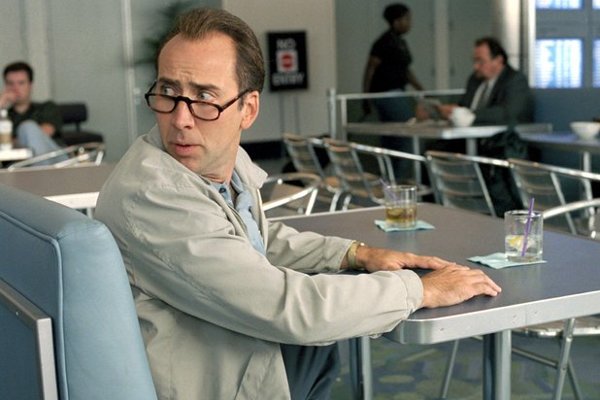
In Matchstick Men, Nicholas Cage plays twitchy, divorced conman Roy Waller, who discovers he has a 14-year-old daughter he never knew about. Naturally, he invites her to move in with him, and connects with her in a way he never knew he could. As a result he decides to go straight and renounce his nefarious ways.
This being a movie about con-men, though, all is not what it seems, and it turns out Waller never had a daughter. His "daughter" was playing a part in an elaborate con concocted by his ex partner in crime Frank (Sam Rockwell) to get the number to his safe deposit box.
WhyIt Doesn't Work
All Nic Cage movies take a certain about of suspension of disbelief, but Matchstick Men takes more than most. After this total stranger walks into his life claiming to be his estranged daughter, Waller at no point thinks to call her mother - his ex-wife - to talk about it. Frank's big con ropes in a lot of people to trick Waller, but his ex-wife is not one of them. One call to her, one question about her "daughter", and Frank's long con would be over and done with.
Infuriatingly, Waller actually does decide to call his ex at one point, only to chicken out and hang up before she answers. As with many elaborate cons in the movies, Frank's big plan owes as much to blind luck and stupidity as it does to clever plotting.
7. Skyfall

The Twist
The James Bond movies have never been about setting trends, but have always been all about following them. So when The Dark Knight and The Avengers made all of the money at the box office with movies that hinged on ludicrous schemes involving the villain getting captured on purpose, Skyfall followed suit.
After going on his usual exotic adventures, Bond (Daniel Craig) winds up on the private island of ex-MI6 agent turned cyber terrorist Raoul Silva (Javier Bardem). Bond captures him and brings him back for containment and interrogation in London, only to realise he's played into Silva's hands as he hatches an elaborate, years in the making scheme to get revenge against Bond's boss M (Judi Dench).
Why It Doesn't Work
Where to begin with this one? Silva's plan begins with a bomb in M's office - set to explode when he knows she's not in. He's not trying to kill her, but he knows MI6 will evacuate from their riverside HQ to their emergency offices in the abandoned stations of the London Underground. You can give him the benefit of the doubt, though you wonder if it's wise to rely on MI6 having not changed their emergency protocols since he worked for them.
When he breaks out from his holding cell underground, he uploads a virus onto MI6's computer system, meets up with two anonymous henchmen dressed as police officersand heads to the courtroom where he knows M is on trial in order to shoot her in the head. His plan hinged on being incarceratedso he could upload the virus to distract MI6's agents while he kills M.
But remember, he didn't turn himself in; he was captured by Bond. He had no control over how and when Bond would track him down, or even if he would. What was his plan if Bond never found his private island? What if M's trial was already over by the time he did? What if her trial was moved to a different location, or postponed?
Silva must be the luckiest guy in the world, and that's before we even get to the fact that he was somehow able to lay explosives in a place where he somehow new Bond would be in the future, in order to have a train fall on him. It must have been annoying for Silva that even his apparently Godlike foresight was not enough to defeat everyone's favourite secret agent.
6. The Village

The Twist
After The Sixth Sense, Unbreakable and Signs had shownM Night Shyamalan'sfondness for a last-scene twist to diminishing returns, he went for a fourth go round with The Village, and made everyone who saw it wish that he would just stop.
The big reveal in The Village is that the settlement we assumed existed some time in the 1800's was actually in modern day America, cut off from all modern conveniences and the outside world in general by a group of "Elders" who plot to control their subjects.
Why It Doesn't Work
The Village's anticlimax is about one step up from saying "it was all a dream". The movie attempts to address the many questions about how such a community could even exist by telling us that the elders in charge paythe government to ensure that the village will be a "no fly zone", but...where do they get the money? Think how much the US government, and the airlines, would want to get for the hassle of redirecting their air traffic away from this tiny village in the middle of nowhere.
Also, how is it possible that none of the inhabitants have seen some kind of aircraft, even distantly, in 30-odd years? What do they do when they need fabric, or tools? What about their duty to report crimes? Just because they have turned their backs on the modern world, it doesn't mean the modern world has turned its back on them.
The Village is a movie set up just to service a twist at the final moment, a twist that falls apart as soon as you apply even the most basic logic to it.
5. The Life Of David Gale

The Twist
College professor and political activist David Gale (Kevin Spacey) is on death row having been convicted of the rape and murder of his friend Constance Harraway (Laura Linney). Before his execution he tells his story to reported Bitsey Bloom (Kate Winslet) who also takes it upon herself to investigate the case.
Bloom finds out that Harraway had in fact committed suicide and Gale was framed for her murder. Gale is executed before she can make her findings public, but she then finds out he was not actually framed - Gale willingly put his fingerprints at the "murder" scene, in order to prove that innocent men get executed.
Why It Doesn't Work
Yes, Gale is innocent of the crimes of which he was accused, but wouldn't it have been a more logical response to defend yourself against the accusation? Surely, if the system works as badly as Gale believes, he would be convicted anyway? Instead of this, Gale intentionally puts his fingerprints all over his friends suicide thatis intentionally made to look like a murder scene.
The evidence presented is that Gale was with the deceased before she dies and his fingerprints are all over the bag used to suffocate her. If you're a juror or a Judge, would you believe that he had done it intentionally just to prove a point? In the end of course, Gale's plan works.
After his execution, a tape confirming that Harraway's death was a suicide is released to the public, proving Gale's innocence. Later, Bloom getsanothertape, this time showing Gale contaminating the scene with evidence to link him to the death. It's a bit risky, wouldn't Bloom's journalistic ethics require her to make this tape public, too?
Gale didn't prove that innocent men get killed, he proved that if you provide physical evidence linking you to a murder, you'll probably get convicted of that murder.The Life Of David Gale's ending also seems to paint death penalty opponents like Gale as fraudsters, willing to use the suicide of a close friend to further their own ends. The twist undermines the movie's own anti-death penalty stance.
4. Saw

The Twist
The Saw franchise started from humble beginnings. The original movie was a low-budget torture obsessed horror heavily indebted to David Fincher's hyper-stylised classic Se7en. It began with Adam (Leigh Whannell) and Lawrence (Cary Elwes) waking up in a dingy bathroom, chained to pipes. In between them is a corpse, a gun and a tape recorder.
As you probably know by now, the tape recorder contains instructions from a serial killer known as the Jigsaw Killer for tasks the duo must perform in order to save themselves and/or their family. Lawrence learns he must kill Adam or his family will die. In the end, Lawrence makes the ridiculous decision tosaw off his own footeven though there's a phone less thana foot away, and shoots Adam.
As Lawrence crawls away, the "corpse" rises to reveal that he is the Jigsaw Killer.
Why It Doesn't Work
Similar in a way to Perfect Stranger, Saw provides a tacked-on twist in its final moments that adds nothing to the story. There's no need for Jigsaw to demonstrate his word class possum skills - hisinstructions are tape recorded, so why does he decide to be present while Adam and Lawrence are demonstrating their potent combination of illogical thought and lack of problem solving skills?
Even if you can justify him beingthere, it seems unfeasible that he could lie totally stock still on the floor of that disgusting bathroom for that length of time, without either of his room mates noticing that he's breathing. Particularly since he is acutely unwell.
When I originally saw this in the cinema, I swear the whole audience groaned as soon as Jigsaw stood up. Presumably the screenwriters used the lame twistexcuse to get the audience to go "ooh, how clever". Or, in the case of the audience I was in, wonder why it was necessary.
3. Fight Club
The Twist
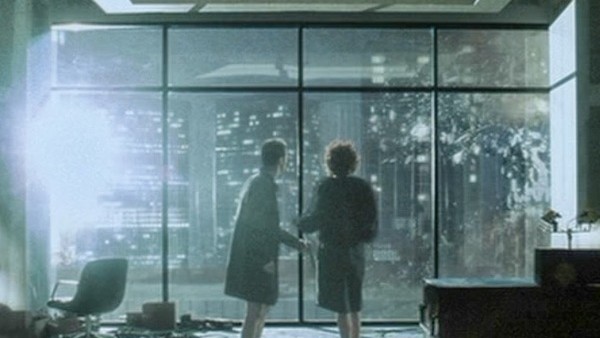
Fight Club tells the story of a disillusioned drone that, for the sake of convenience, we'll call Jack. Jackis a depressed insomniac who fills his spiritually empty life with mindless consumerism until he meets a charismatic new friend named Tyler Durden.
Tyler gives Jack a new lease on life by fighting him in a car park. The duo form a fight club for other disillusioned men that soon transforms into a quasi-fascistic cult, hell-bent on destroying modern society. The twist comes when Jack realises that there is no Tyler Durden - "Tyler" is merelyJack's disassociated personality.
Why It Doesn't Work
The big issue here is just why, exactly, anyone would want to join the fight club. Think about Jack and Tyler's first fight, in the car park of a bar. Given that Tyler wasn't there, this would just have been Jack hitting himself (much as he does in his boss' office in a later scene). In the movie we see that their regular "fights" attract a crowd and eventually move to the bar's basement.
You have to question the logic of the men in Fight Club's universe.In what world would a group of guys see a drunken man talking to himself and punching himself in the face and think: we should form a cult with this guy, and let him be our leader.
No, in real life everyone would give the visibly crazy guy a really wide berth. No fight club, no "Project Mayhem", just a really lonely guy hitting himself in the head in an empty car park.
2. The Empire Strikes Back

The Twist
Just in case you're somehow aware of the most famous plot twist in popular culture, here it is: after spending the entirety of the first part of George Lucas' space saga believing the menacing villain Darth Vader killed his father, our hero Luke Skywalkerlearns at the end of the sequel that Vaderishis father.
This was back in 1980, at the time it was widely regarded as the most amazing twistever. Back in the day when spoilers simply weren't a thing, no one saw this coming, and its massive impact is one of the reasons why it's become such a huge part of the pop culture landscape.
Empire's twist isone of the iconic movie moments that transcend normal limits, and isso well known that you can quote the dialogue even if you've never seen the actual movie. Similarly, it's so famous and beloved that hardly anyone stops to think that it doesn't actually make any sense.
But thenGeorge Lucas didn't know Vader was Luke's father when he was writing the original Star Wars, so the it's to be expected that not everything will tie up neatly.
Why It Doesn't Work
The problem is that the last-scene twist makes the all powerful Vader look like a fool...
Firstly, how does Vader not find Luke until Luke comes to him? Hisson is living peacefully on Tatooine in A New Hope, but he's hardly incognito. He's living on Vader's home planet, with Vader's family, andwith his last name. Are we supposed to believe his fatherwas totally unaware of this?
Of course, there's always the argument that Vader did not want his son involved in galactic military machinations, but...well, he chops off Luke's hand, he blows up Leia's home planet, he's not exactly in the running for any father of the year awards. It's hard to believe he had any particular concerns for the welfare of his offspring.
That being the case, he either ignores the potential threat of his son or assumes the fact that there's a kid who looks like him and shares his name is a total coincidence. It just doesn't make sense for someone as supposedly powerful as Darth Vader to think like that. He deserved having his Death Star blown up just for being incompetent.
1. The Usual Suspects

The Twist
The Usual Suspects has almost become shorthand for a shocking final scene twist. The tale is narrated by small time conman Verbal Kint (Kevin Spacey), interrogated by the Police after being found at the scene of a drug deal gone badly wrong. The mysteryat the movie's centre, of course, is the identity of brutal gangster Keyser Soze, but Kint doesn't give the Police a description. That's provided by the drug deal's only other survivor.
Just a few seconds after Verbal leaves the station, a fax comes through with the other survivor's description of Soze, which iswhen the Police - and the audience - realise that Verbal Kint is Keyser Soze. Just in time for him to drop his limp and drive off into the sunset.
Why It Makes No Sense
The movie makes it clear that Soze kills those who see his face, which is hiswhole reason for setting up the murderous drug deal. If he's going to go to such lengths to kill a guy just because they can recognise him, why does he then loiter around a police station showing his face to everyone?
He doesn't have to do it - he was granted immunity by the cops in exchange for telling them what he knew, meaning he could have left at any point instead of sitting around making stuff up. He could have left the scene of the heist before they arrived, but stuck around for no discernible reason instead.
Also, it seems his master plan to mess with the police just because he can isn't as meticulously planned as we're led to believe, becausethe fax with his face on it arrives just as he leaves. He had no way of knowing when - or if - it would arrive and if he'd have stuck around for another few seconds to talk more nonsense, he'd have been caught.
It's a lot of risk for absolutely no reward, andhardly the work of a master criminal.
Which other famous movie twists belong on this list? Share your suggestionsbelow in the comments thread.