10 Huge Oscar-Winning Movies That Nobody Really Likes
They won a bunch of Oscars back in the day, but who's watching them now?
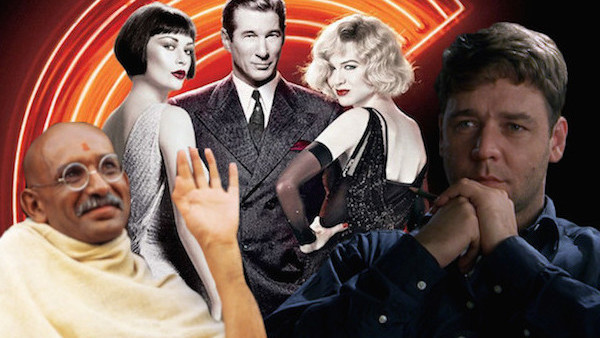
Now more than ever, perhaps, the Oscars have been unable to make themselves relevant in this modern age: there's always been a self-congratulatory, "inside" feel to the occasion, of course, but the most recent ceremony exposed the Academy of Motion Picture Arts and Sciences as the last bastion of a dying world - an entity that has failed to "get with the times," and so - as a result - faces potential cultural extinction.
Whilst this year the Oscars were lambasted over issues of race, the ceremony has often been derided for its "skill" in giving out awards to the wrong motion pictures entirely; films that, years later, hold little cultural relevance and have been forgotten or cast aside in favour of other, better movies that claimed a lot less than they probably should have.
That's where this list comes in, then: assembled here are 10 movies that won more than three Academy Awards and have either a) faded into obscurity ever since, to the point where nobody even remembers them or b) are plainly terrible and didn't deserve all the Awards glory they managed in the first place.
Basically, these are big Oscar-winning movies that have very few fans or admirers...
10. Dick Tracy (1990)

Oscar Wins: Best Original Song, Best Makeup, Best Art Direction (3)
Dick Tracy is a picture that managed to take home three Academy Awards back in 1991, and was nominated for a further 7. Granted, the Oscars it nabbed were of the musical and technical varieties, but still... who expects an admittedly two-dimensional and noticeably naff movie like this one to have so many Oscars under its belt?
This isn't a film that has aged well at all, nor is it one that many people seem to have really heard or seen. Based on the comic book of the same name and featuring a purposely luminous colour palette, it feels like a tedious affair in retrospect. Clearly the filmmakers tried to do something different, but it doesn't quite work (a fact made obvious given that you never hear anyone talking about Dick Tracy: The Movie; this film barely "exists").
Warren Beatty was too old to play Dick Tracy, for one thing, and the film totally missed the mark in the humour department: it's just not funny. Nowadays, who does a film like Dick Tracy even appeal to? Who would set out to watch it? It's like a total relic out of time, and - in all honesty - has dated rather horrifically. Madonna, as expected, is cringeworthy.
9. Crash (2004)

Oscar Wins: Best Picture, Best Original Screenplay, Best Film Editing (3)
"More like the film itself was a car crash! Am I right? Guys?" That's just one of the many wry remarks you might hear regarding Paul Haggis' Best Picture winner, Crash, which received 3 Academy Awards back in 2005 and more hatred than Adolf Hitler at a Bar Mitzvah.
Which is to say that Crash, a film about racial tensions in Los Angeles, is perhaps the most obvious entry to make this list - there are very, very few human beings on the planet who would admit to liking the film, after all. And it's not all that difficult to see why: overwrought and patronising at almost every turn, Crash reeks of self-importance and - at times - plays into the very stereotypes it's so desperately trying to subvert.
Truly, it's one of the worst Best Picture winners - if only because it's a film that almost fails entirely to stick in your memory banks. Can anyone remember with any sense of vividness a particular scene or moment in Crash, aside from "Uh, Brendan Fraser was in it?"
Is it the worst film ever? No. But there's a reason for the backlash: it's bad filmmaking.
8. Driving Miss Daisy (1989)

Oscar Wins: Best Picture, Best Actress In A Leading Role, Best Adapted Screenplay, Best Makeup (4)
When is there ever a good time to put on Driving Miss Daisy? When is anybody ever in the right mood to sit through this 1989 Academy Award winner, starring Jessica Tandy and Morgan Freeman as a grouchy old Jewish woman and her African American driver?
The answer to that question, perhaps, is "never." Driving Miss Daisy might have taken home the grand prize back in 1990, but nowadays it's rarely brought up in conversation unless people are talking about films that didn't deserve to win Best Picture. There was probably a brief period where audiences felt that they needed to like Driving Miss Daisy, due to a) the subject matter and b) because it's based on a Pulitzer Prize-winning play.
There's a reason the world has turned its back on this one in recent times, though, unshackled from the constraints of having to pretend to like it: in retrospect, it's a heavy-handed picture, free of any subtly and nuance - a lesson in race disguised as a film.
7. A Beautiful Mind (2001)

Oscar Wins: Best Picture, Best Director, Best Adapted Screenplay, Best Supporting Actress (4)
A Beautiful Mind stars Russell Crowe as John Nash, a Nobel Laureate in Economics who -- despite his genius - struggles with a mental illness. Oscar bait, then.
It is a movie that, upon being asked to judge whether it's worthwhile, a person might shrug and say: "It's alright." But an answer delivered with all the passion of a shrug does not equate to a movie being "liked," and that's the case with A Beautiful Mind: it's a wholly average slice of filmmaking, as sentimental and emotionally overwrought a picture as one might come to expect of a Spielberg wannabe like Ron Howard.
If all that sounds a little harsh, it's because A Beautiful Mind beat The Lord of the Rings: The Fellowship of the Ring for Best Picture in 2002 - the very definition of cinematic blasphemy. Whilst Peter Jackson's movie is arguably the greatest fantasy epic ever made and has assured an expansive cultural legacy years later, A Beautiful Mind has given near-on nothing to popular culture at large. Nobody talks about it. Nobody ever watches it.
6. How Green Was My Valley (1941)
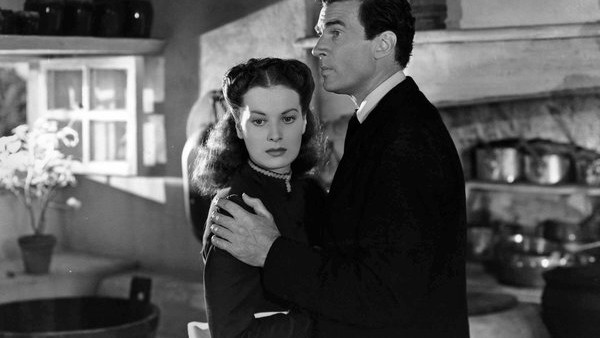
Oscar Wins: Best Picture, Best Director, Best Supporting Actor, Best Cinematography, Best Art Direction (5)
How Green Was My Valley has no edge; it's one of those Best Pictures that, even in 1941, probably had the feel of a "safe bet."
Directed by John Ford and based on the novel of the same name, the film tells the tale of a family called the Morgans, who - in 19th century Wales - struggle to cope as coal miners. To say it's sentimental would be a major understatement: this is "misty-eyed" defined.
How Green Was My Valley isn't a bad movie, but it isn't a memorable one - a fact proven by the very idea that nobody ever mentions it, even in passing. It is a wholly workmanlike picture that provides you with something to passively watch, like, say, the news or the weather, but to go ahead and say you actually like this? That you'd choose to sit down and actively watch it after you've already seen it once? Very doubtful, that.
Also: it beat Citizen Kane at the 1941 Academy Awards, which is kind of disgusting.
5. Around The World In Eighty Days (1956)

Oscar Wins: Best Picture, Best Cinematography, Best Film Editing, Best Music, Best Adapted Screenplay (5)
5 Oscars wins is kind of lot for a movie that nobody ever talks about - even to say: "It's terrible." Because when was the last time a Sunday came around and you heard a person say something like: "Anyone fancy Around the World in Eighty Days?" No, films like The Sound of Music and The Wizard of Oz and The Great Escape are reserved for such occasions, whilst Around the World in Eighty Days remains a lumbering slog of a picture.
This thing is 181 minutes long, after all, and it becomes officially insufferable after about 90 minutes. It's about as light-hearted a picture as they come, which means that - without much weight to power it - the film enters Tediousville very quickly. Its 46 guest stars - yes, you read that right: 46 - might have provided ample entertainment back in the day, but modern audiences are mostly left wondering who any of them are.
Thankfully, it's still not as a bad as the more recent remake, starring Jackie Chan and Arnold Schwarzenegger. Yes, that happened.
4. Chicago (2002)
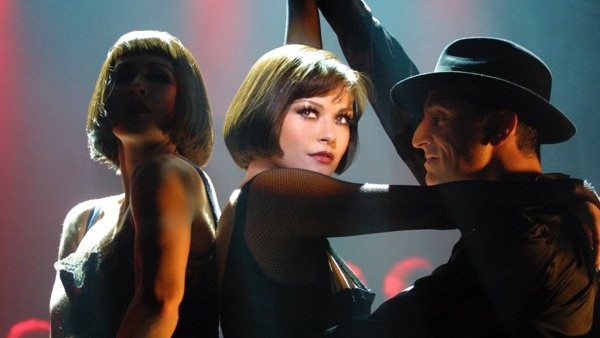
Oscar Wins: Best Picture, Best Actress In A Supporting Role, Best Art Direction, Best Costume Design, Best Film Editing, Best Sound (6)
It seems as though the only people who actually like the film adaptation of Chicago are the people who already liked Chicago to begin with. You know, established fans of the musical. Otherwise, what is there in this movie for anyone else to enjoy? How did it win Best Picture at the 2003 Academy Awards, regardless of its numerous other wins?
There are a few good numbers in Chicago, mainly in "Cell Block Tango." But even that is better viewed out of context as, like, a YouTube clip. The biggest crime committed by Chicago, you see, is that it's boring. It doesn't draw you, the characters are entirely unlikeable, and director Rob Marshall doesn't seem to know where to put the camera.
It doesn't have the scope or the reverence of a Best Picture winner, either. Which is presumably why you rarely ever hear anybody talk about Chicago. Even if you're thinking to yourself right now, "Hey, I like Chicago," give it another watch: you'll change your mind.
3. Out Of Africa (1985)
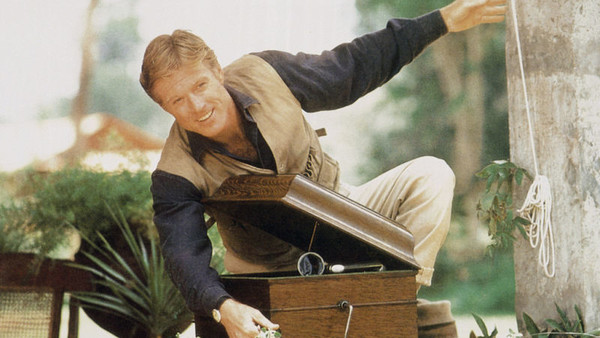
Oscar Wins: Best Picture, Best Director, Best Adapted Screenplay, Best Cinematography, Best Art Direction, Best Sound, Best Original Score (7)
Out of Africa has all the "makings" of a Best Picture winner. It's a three hour epic set against an African backdrop, directed by Sydney Pollack and starring both Meryl Streep and Robert Redford in the lead roles. It was made to win Best Picture, and that it did.
Time hasn't been kind to this one, though, and despite its 7 Oscar wins, it has revealed itself to be a lumbering bore of a picture that no sane person could ever sit through. It serves as a certified proof that a film with a massive 7 Academy Award wins can still be plainly terrible, save for its rather lovely cinematography and lush musical score.
Out of Africa isn't a film about Africa: it's a film about white people who just happen to be in Africa - a fact that hasn't helped its reputation in recent years, exactly. Ultimately, though, it's the length of the picture that gets to you: it goes on forever with no clear end in sight, or any idea of what it actually wants to be. Who likes this codswallop? Nobody, surely!
2. Gandhi (1982)

Oscar Wins: Best Picture, Best Actor In A Leading Role, Best Director, Best Original Screenplay, Best Cinematography, Best Art Direction, Best Costume Design, Best Film Editing (8)
Does the mark of a truly great motion picture lie in the notion that you'd at least sit through it twice? For all its technical achievements, can you imagine doing such a thing with the longer than three hours biopic that is Richard Attenborough's Gandhi?
Gandhi is, after all, the sort of film you admire from afar; one of those prestige pictures that you don't actively rally against, but loathe secretly. But perhaps loathe is too strong a word for this particular film? What Gandhi really is is a slog - you admire its subject, so you feel like you must admire the movie itself. Ben Kingsley's performance is good, sure, but it's the only bit you remember; the rest of the picture kind of fades into nothing around him.
Worst of all, Gandhi is episodic in nature; it doesn't have the feel of an accomplished, singular work as much as it does a flat chapter-by-chapter review of the man's "best bits." That's fine when you see it the first time, maybe, but it loses traction in further viewings.
Who sits down and says: "Time to pop on Gandhi"? It never happens. And if anyone actually liked this film, such a thing would occur. You know, from time to time.
1. The Last Emperor (1987)

Oscar Wins: Best Picture, Best Director, Best Adapted Screenplay, Best Cinematography, Best Art Direction, Best Costume Design, Best Sound, Best Editing, Best Original Score (9)
There's a good chance that some people reading this list have never even heard of The Last Emperor, a motion picture "epic" that took home 9 Academy Awards in 1988 - including the one for Best Picture. Which means that this is a film that a lot of people probably don't like on account of the fact that, hey, they've never even seen it.
If you have seen The Last Emperor, though, there's still a high chance that you didn't really like it purely based on the fact that it's a relentless exercise in indulgence. It's rare that you stumble upon a film that loves itself, but make no mistake... this one really does. As the story of the last Emperor of China, Puyi, it's a film that lavishes in its own beautifulness for 160 minutes. Bernardo Bertolucci has made some great films, but this is excessive.
Who has the patience for this? It is not a picture that has held up well over the years, and one that is rarely broached in conversation. There's a reason that films like this fall off the face of the Earth, then, never to be discussed again: nobody cares.
Like this article? What do you make of these picks? Do you legitimately like any of the movies mentioned here? Are we way off base? Let us know in the comments section.