10 HUGE Problems Facing The Future Of The MCU
The MCU faces an uphill struggle making fans give a damn about Kang.

The Marvel Cinematic Universe is the most commercially successful movie franchise ever, obliterating the combined box office of even Star Wars, the Wizarding World, and James Bond.
It is nothing short of a pop-culture phenomenon that has grown from the comparative modesty of 2008's Iron Man to a wildly interconnected universe of films and TV.
The ambition is laudable on the part of mega-producer Kevin Feige, even if it's tough to dispute the claim that the MCU's fervor has fallen off significantly in recent years.
The series is far from doomed right now - despite what some might tell you - but it's clear that there are some major creative and business issues which need desperately ironing out if the MCU will ever get back to its level-best.
If Feige and co. press on without addressing these problems, it's reasonable to predict the MCU's pop-culture dominance continuing to ebb as the years pass, even if it's tough to picture a future where the MCU declines enough to be in genuine danger.
All the same, the franchise has a bevy of issues it needs to fix as soon as possible for the sake of its growth and longevity...
10. Struggling To Replicate Endgame's Success

There's no denying that Avengers: Endgame marked a tectonic peak for the MCU - it paid off a decade-long arc which began with the first Iron Man, and for many mainstream audiences it basically felt like the de facto end of the franchise in its original iteration.
It shouldn't have been surprising that there was a significant mainstream drop-off after Endgame, which marked a soft reset for the series, and though Spider-Man: No Way Home got the casual butts back in seats, generally speaking the Multiverse Saga has been a wildly mixed affair to date.
Though we recently learned that these new movies are buildings towards two new Avengers films, Avengers: The Kang Dynasty and Avengers: Secret Wars, even the promise of a multiversal battle royale in Secret Wars will struggle to fully replicate Endgame's excitement and success.
The Infinity War-Endgame two-parter felt like such a unique cinematic epoch for not only the MCU but superhero movies as a whole, and just as many sequels struggle to match their predecessors, it too appears that this franchise may forever remain in Endgame's shadow.
And that's not to say that The Kang Dynasty and Secret Wars won't be hugely successful, because they likely will be.
But with Hollywood always expecting the next big thing to be a bigger, more lucrative event than what came before, Kevin Feige and co. might be disappointed when they probably fail to capture quite the same popular zeitgeist.
At which point it's also relevant to discuss one of the biggest elephants in the room - the Multiverse Saga's Big Bad...
9. Kang's Underwhelming Debut

Jonathan Majors received solid praise for his performance as Kang the Conqueror in Ant-Man and the Wasp: Quantumania, even if he was still ultimately stranded in a movie with dreadfully mediocre material and simply made the best of it.
For as much as Majors has serious screen presence and can clearly give the Avengers a mighty antagonist, Quantumania didn't exactly give him a particularly persuasive coming-out party for mainstream audiences or, well, anyone really.
Beyond the fact that Kang ends up being defeated at film's end and the goofy mid-credits scene featuring the Council of Kangs was ridiculed by some, Quantumania hardly convinced many that this is the bad guy the franchise wants to hedge its bets on for the next couple of years.
Hopefully future appearances will change hearts and minds, but considering that The Kang Dynasty is barely two years away from release, the opportunities to hype him up are relatively limited.
At present, it's incredibly difficult to believe he'll end up holding a candle to Thanos (Josh Brolin), as much as fans would certainly love to be proven wrong about that.
8. Filling The Void Left By Tony Stark & Steve Rogers

Though Avengers: Endgame didn't see the entire O.G. cast take their leave, it did see the departures of the two most popular frontline Avengers - Tony Stark (Robert Downey Jr.) and Steve Rogers (Chris Evans).
With Tony dying a sacrificial hero's death, Steve returning to his original timeline, and Black Widow (Scarlett Johansson) also being killed off, that left a major void in the legacy Avengers line-up.
Plus, with Hulk (Mark Ruffalo) being a part-timer supporting character and Hawkeye (Jeremy Renner) being everyone's least-favourite O.G. Avenger, the only full-timer left with his own series of movies was Thor (Chris Hemsworth).
As such, it was a given that Kevin Feige would soon start building up a new superhero supergroup, yet almost four years removed from Endgame, does anyone feel good about that?
While Spider-Man (Tom Holland) and Doctor Strange (Benedict Cumberbatch) are popular enough, they're not quite Tony Stark or Steve Rogers.
And when you consider other departing Avengers - T'Challa's (Chadwick Boseman) untimely death and the Guardians of the Galaxy seemingly being on their way out - it does rather feel like the MCU has a serious personnel problem.
This isn't to say that many of the new characters like Shang-Chi (Simu Liu) aren't fun and interesting, but Tony and Steve were truly on an entirely different level - brilliantly defined characters who even the most casual MCU fan knew inside-out.
Again, it perhaps speaks to Kevin Feige and co. struggling to replicate the success of the Infinity Saga, but Robert Downey Jr. and Chris Evans were in many ways the secret sauce that has felt sorely lacking ever since they left.
7. The Ongoing Decline In Quality

There's really no getting around the fact that the MCU's quality has declined since the start of Phase 4.
Though the first three phases certainly had their low points, it wasn't until Phase 4 that the franchise received its first critically Rotten movie, Eternals, followed by a second with the recent Ant-Man and the Wasp: Quantumania.
While there have been some bright spots, like Shang-Chi and Spider-Man: No Way Home, for the most part the post-Endgame movies have been serviceable, watchable, and relatively unremarkable.
It's near-impossible for any movie franchise with 30+ entries to sustain a consistent bar of quality, because after a point it becomes incredibly difficult to not feel like you're rehashing prior successes to inevitably diminished returns.
All the same, the newer movies feel more tossed-together and lower effort, which has certainly done nothing to lesson one of the MCU's biggest problems right now: audience burnout.
6. Audience Burnout

People will debate until they're blue in the face about whether "superhero fatigue" is a real thing, but what's less debatable is that the MCU's box office prowess has begun to wane since the start of Phase 4.
Yes, the impact of the pandemic cannot be ignored, but only one of the eight MCU movies released during the Multiverse Saga has grossed more than $1 billion globally - Spider-Man: No Way Home.
More concerningly, the recent Ant-Man and the Wasp: Quantumania colossally under-performed, and will be lucky to get within spitting distance of $500 million, bringing it dangerously close to not turning a profit at all.
15 years into the MCU, with 31 movies behind it, it's clear that the series' mainstream popularity is declining - certainly not to disastrous levels, but audiences are becoming far more discerning and choosy about which films they leave the house to watch.
Plus, with the TV and movie branches of the MCU become ever-more intertwined, watching a movie like Doctor Strange in the Multiverse of Madness - positioned as a sequel to WandaVision - ends up feeling like homework for many.
The MCU pumps out so much content these days that "keeping up" can feel like more of a job than some would like, and though Kevin Feige recently stated that the franchise is being re-evaluated to favour quality over quantity, with so many projects already on the docket it's a tough claim to believe.
Reigniting mainstream enthusiasm for the MCU will be extremely difficult, because no matter how good the upcoming Avengers films could be, a lot of people are basically over the franchise at this point.
5. The Multiverse Is Pandora's Box

Though the MCU has touched on the Multiverse prior to Phase 4, it's with Spider-Man: No Way Home that the franchise started to go all-in on introducing parallel dimensions and alt-universe iterations of existing characters.
This followed through into the multiverse-faring Doctor Strange in the Multiverse of Madness and Ant-Man and the Wasp: Quantumania's many iterations of Kang, leading up to the ultimate multiversal event that will be Avengers: Secret Wars.
As fun and exciting as the Multiverse can be to offer up near-limitless story potential, it's also something of a Pandora's Box situation because, when you can do literally anything, and characters can be resurrected with different-but-very-similar variants, why should we care what happens to anyone?
No Way Home proved what a spectacular vehicle the multiverse can be for fan service, but the recent Doctor Strange sequel offered up a disappointingly unadventurous look at an alt-Earth, and one suspects that by the time the Multiverse Saga comes to an end, audiences might be feeling a little sick of the anything goes storytelling.
Limitations can be a good thing, and tangible dramatic stakes certainly are, both of which can be so easily undermined by having basically unlimited access to a huge number of parallel universes.
And given the relatively shaky standing the MCU is on right now, it's tough to believe that Kevin Feige will take the restrained approach over hurling every last fan-serving fantasy on the screen without much narrative substance to accompany it.
4. The Increasingly Disconnected Storytelling

One of the chief complaints about the MCU since Endgame is the generally disconnected nature of the movies, which don't feel like they're part of a contiguous fabric, but rather separate, standalone stories.
And while the Infinity Saga took its time building up to The Avengers, it was absolutely necessary to ensure that audiences had an appetite for the heroes on their own before pairing them together.
In the very least, the various credits scenes made it clear that Marvel Studios was slowly assembling a superhero team, and within four years of Iron Man's release, we saw them come together for The Avengers.
But the Multiverse Saga has felt so disparate and lacking in a concise direction by comparison - it's tough to appreciate how the likes of Shang-Chi and the Eternals are going to be integrated into the wider Kang story, especially given that neither of these films have any announced follow-ups.
The more moving parts you introduce to a franchise, the tougher it is to keep them all in the same orbit, and even the Phase 4 sequels have felt relatively divorced from one another.
We've seen numerous characters semi-randomly introduced in credits scenes who could very well never appear again - Charlize Theron's Clea, for one - ensuring the Multiverse Saga feels slapdash and slung together rather than intricately planned out.
The next two Avengers movies will need to work extremely hard to corral all the expected heroes together, hugely dwarfing the already gigantic roster from the last two Avengers films.
While standalone entries aren't inherently bad by any means, the lack of substantial connective tissue after eight movies in the new era has understandably frustrated many fans.
Without a clear thread winding its way towards the Kang-centric Avengers films, it feels like the Multiverse Saga won't be nearly as rewatchable as the Infinity Saga.
3. The Rise Of James Gunn's DCU

The MCU's primary competition to date has been the DC Extended Universe - but when we say "competition," it's admittedly a pretty flimsy claim.
Warner Bros.' attempt to craft their own DC-branded version of the MCU has been a spectacular mess, occasionally turning out enjoyable movies like Wonder Woman, Shazam!, Birds of Prey, and The Suicide Squad, but just as often releasing colossal disappointments like Batman v Superman, Suicide Squad, Justice League, and Wonder Woman 1984.
The DCEU hasn't been able to hold a candle to the MCU either critically or commercially, though that could very well change with the new era of DC movies on the horizon.
James Gunn and producer Peter Safran were recently appointed as the Godfathers of a rebranded DCEU, now dubbed the DCU, which starting with The Flash will soft-reboot the existing franchise into something same-but-different.
Gunn and Safran have already confirmed that the first phase of the DCU will include movies for Superman, Supergirl, and Swamp Thing, with Gunn even taking up writer-director duties on Superman: Legacy himself.
Given Gunn's enormous success in the superhero realm, he could very well be the lynchpin which puts DC blockbusters back on the map. And at a time where the MCU is struggling to retain its prior glories, the timing perhaps couldn't be any better.
While it's unlikely that the DCU will enjoy the stratospheric level of success that the MCU has, if the movies are good, it'll remind fans that they have other avenues for quality superhero tentpoles, and need not cling to mediocre MCU fare for their cape flick entertainment.
2. The Consistently Underwhelming CGI
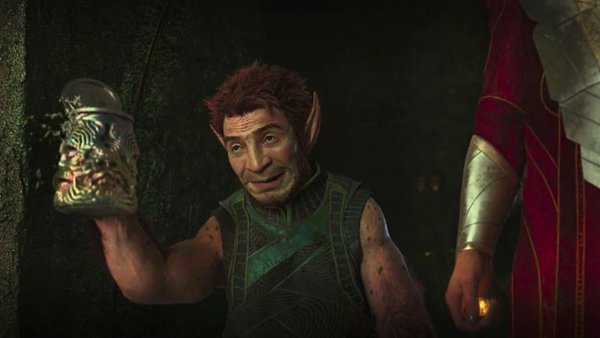
It's far from a recent complaint that most MCU movies feature their fair share of wonky CGI, because as absurdly expensive as these movies are, the deadlines imposed on the VFX houses involved are brutal to the point that work is rushed to meet immovable release dates.
We've seen it time and time again - Black Panther's final battle looked like a video game, Spider-Man: No Way Home's climax was a blurry mess, and most recently Ant-Man and the Wasp: Quantumania's artificial environments often looked like mud.
Marvel Studios probably feels that the effects are "good enough" not to bother the casual viewer, but in an era where awe-inspiring spectacle is more important than ever, underwhelming VFX are a significant issue.
Nobody expects every MCU movie to look like Avatar: The Way of Water, but amid the recent reports of how poorly Marvel Studios treats its VFX partners, it only makes a more persuasive argument that the franchise is either cutting corners or spreading itself too thin.
Considering that Thanos was a genuinely stunning VFX achievement and hugely instrumental in the success of the Avengers films, if the movies leading up to The Kang Dynasty and Secret Wars lack the same mesmerising sheen, it's only going to foster further apathy about them.
Theatrical-caliber superhero movies need to amaze the audience in ways that the small screen just can't, and in recent years the MCU has sorely lacked that wow factor, largely due to the general mediocrity of the VFX.
1. It Has Become A Victim Of Its Own Hype

Anything that gets sufficiently popular ultimately ends up suffering a backlash of some kind, and in the MCU's case it's tough not to view it as a victim of its own success and the never-ending cycles of hype surrounding each new movie.
While on one hand Spider-Man: No Way Home largely delivered upon fan-serving expectations with its three generations of the web-slinger, Doctor Strange in the Multiverse of Madness ended up wildly disappointing those convinced they'd get to see truly wild sights like Tom Cruise playing a variant of Tony Stark.
Though the rumour mill and hype cycle absolutely benefits each MCU movie short-term, when this translates to unrealistic expectations and eventual disappointment, it's not good for the brand overall.
One can only imagine how this will reach a fever pitch for Secret Wars, with fans expecting every last possible superhero they can imagine to make a cameo, enough that it's almost impossible for it to meet those expectations.
How can Marvel combat this? It's tough - trying to manage expectations would be a good start, which in turn could foster better word-of-mouth in the long run.
Using empty hype to score an astronomical opening weekend box office is short-sighted, given that the subsequent underwhelming response tends to cut off a movie's box office "legs," reducing business overall and leaving more casual fans to wait for Disney+.
But outside of the business aspect, the MCU is pretty much a runaway freight train at this point - even with so many recent disappointments, it will be incredibly difficult to stop fans from expecting way too much from the next two Avengers movies.