10 Iconic Movies That Were Initially Critical Flops
Quality is in the eye of the beholder.

As the rumbling Rotten Tomatoes debate seems to prove increasingly, film critics are a rather easy breed to hate. They have the power to make or break careers and traditionally functioned as a marketing tool for films - until the critics/fans split manifested so furiously. It doesn't help the cause at all that some seem to revel in snobbishness - sneeringly questioning the IQ of anyone who would rather go see a blockbuster with lots of explosions over an independent film with subtitles.
And, of course, their industry is a subjective one. What one person might think is the greatest cinematic achievement of all-time, somebody else may consider worthy only of a garbage heap. It's part of the beauty of art.
So it should come as no surprise that if you take pretty much any classic movie, you'll probably find somebody out there that despises it. In hindsight, they can end up looking foolish when the tide of opinion contradicts them, but it's important to remember that reviewers are only human. Hilariously wrong, misguided humans, but human all the same.
In retrospect, it can be quite remarkable when so many critics of the time are so out of step with the critics of the years that would follow.
10. National Lampoon's Christmas Vacation

After trips to Wally World and Europe, the third adventure featuring the Griswolds had them staying at home and letting their quirky relatives come to them. As expected, many hijinks ensue when both sides of the family are put together in one house for an extended amount of time. Much of it is quite entertaining, though the attitude towards animal welfare leaves a lot to be desired.
Now generally considered to be a Christmas favorite, upon its opening in 1989, the critical response was not very enthusiastic. Critiques included that the jokes were becoming redundant the third time around and that the family wasn't so easy to like anymore.
Over time, and many airings on television, perceptions of the film began to change. And it's also noted for the quality of its cast, with Chevy Chase, Beverly D'Angelo and Randy Quaid joined by a supporting cast including Juliette Lewis, Johnny Galecki, Doris Roberts and Julia Louis-Dreyfus.
9. The Money Pit

Released in 1986, The Money Pit was an updated version of the 1948 classic Mr. Blandings Builds His Dream House starring Cary Grant and Myrna Loy, based on the novel that had come out two years prior. In the new version, a couple played by Tom Hanks and Shelley Long buy a massive house for a startlingly cheap price. It's not long before the reasons for the price become apparent.
After it opened, critics by and large did not take kindly to it much at all. A consensus had been built that the gags were repetitive and that the characters, and the movie itself, were very unintelligent. Some particularly scathing words were dealt to it by famed critics Roger Ebert and Gene Siskel, the latter calling the film 'miserable', and from Variety, which called it 'gruesomely unfunny'.
Despite this, The Money Pit became popular on home video and was frequently aired on HBO and over time it has developed a cult following.
8. Once Upon A Time In The West

In 1968, the classic spaghetti Western didn't find a ton of favor from critics. Among the opinions given were that the movie was too much 'style over substance'. Another prickly point was its length - running well over two and a half hours - which was significant at the time for its rarity and hardly well-received.
But perhaps the most polarizing issue of all was having Henry Fonda play the cruel villain. Early critics clearly had real struggles with watching the man who had played so many beloved heroes act so vicious on-screen.
In stark contrast, among modern critics, the film receives near-universal acclaim.
7. The Thing

Remakes can be very trick to pull off. The Thing, a remake of The Thing from Another World and based off of Who Goes There?, a short story by John W. Campbell, is a key example.
John Carpenter's version was initially not looked at favorably in comparison to the beloved original. Somewhat unthinkably, Carpenter's graphic new vision was far from popular with critics when it was first released and audiences seemed to follow suit.
However, in the years following its failed release, critically and commercially, the general perception changed, and thankfully its tense tone and its visuals began to receive the positive appreciation that has grown into genuine classic status among fans and critics.
6. Touch Of Evil

By 1958 Orson Welles' unique style of filmmaking was already well-documented and his plans for adaptation Touch Of Evil were no exception. Before the film's release, Universal had started to get nervous and stepped in and edited it as they saw fit.
The end result was something that it seems critics and audiences alike found bizarre and far from entertaining. It was just way too bizarre, though they probably wouldn't have reacted so poorly had Welles' original off-beat vision remained in place to begin with.
The movie was later re-released in 1976 and again in 1998 with significant changes that led to a new general appraisal. These new cuts were more in line with how it was to be done originally and Touch of Evil became a favorite of movie buffs.
5. The Shining
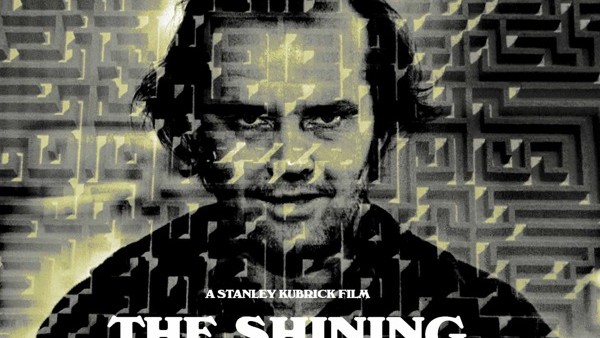
Based on Stephen King's beloved novel featuring a family stranded at a terrifying hotel and the father's descent into madness, Stanley Kubrick's cinematic version is no seen as one of the greatest horror movies of all time
But far from how it tends to be viewed today, in 1980 there wasn't necessarily a consensus on what was wrong with the movie, but there was definitely something very wrong.
Some critics found it to be over-the-top, others found it to be a bore. The performances of Nicholson and Duvall were also frequently maligned and overall the movie was portrayed as a lackluster adaptation of its source material.
Obviously, time has changed the narrative drastically and everyone now agrees that those early reviews were comically off-base.
4. Vertigo

Alfred Hitchcock's Vertigo is now considered a nearly-undisputed classic, and in some cases is considered the greatest ever made. It is frequently considered alongside the very best movies and the idea that it wasn't always adored seems illogical.
In 1958, however, it was a different story. Frequent critiques at the time were that it was melodramatic and too far-fetched. And TIME Magazine even implied that Hitchcock's commitments to television were adversely impacting his movie-making prowess.
And, similarly to Henry Fonda in Once Upon a Time in the West, some took issue with Stewart's role. Though he had played a villain in the past, when Vertigo was released, he was famous for playing characters who were noble, heroic or at least likeable. His character in Vertigo was more in line with an obsessive stalker and it was obviously too much to take.
Thankfully, that much has changed considerably.
3. It's A Wonderful Life

One of the most famously inspirational movies ever made, It's A Wonderful Life was directed by Frank Capra and is legitimately one of the most famous movies of all time. It is rightly considered a staple of Christmas culture and has seeped into wider culture thanks to the enormous affection its garnered.
But early reception for the movie was a mixed bag. While it was nominated for five Academy Awards - including Best Picture, Best Director and Best Actor - many critics weren't quick to lavish it with praise. One infamous review from The New Yorker was so strongly negative it might make you wince in pain.
It was a clerical error that put the film in the popular domain far earlier than it should have been that changed perception and cemented its legacy. Thanks to its rights lapsing, the film was syndicated heavily on TV in late 1970s, which kick-started appreciation for the classic.
2. Bringing Up Baby
947241From 1938, Bringing Up Baby features one of the most delightfully screwy premises of any screwball comedy, and the Cary Grant favourite is now considered one of his best.
Many early reviews were not so flattering of the picture though, and perhaps most famous was the negative review it received from The New York Times. Sadly, it would have a not-so-stellar turn at the box office, which saw the cancellation of director Howard Hawks' RKO contract and the perception that Katherine Hepburn was 'box office poison'.
With the passage of time, those involved with the project were lvindicated and then some. In modern times it is held up as a standard set for cinematic comedies and one of the greatest films ever produced.
1. Alien

So, nowadays the story about the deadly aliens on the spaceship is oft-mentioned as one of the greatest film you're likely to ever see. But in 1979? Not so much.
Critics were largely belittled the film: Dave Kehr called it 'empty-headed'; Roger Ebert and Leonard Maltin were originally both decidedly unimpressed before drastically changing their opinions in later years. It was often dismissed as being a mess and 'old-fashioned', and too much like many of the carbon copy 'B-Movie' science fiction films from the 1950s.
Most unthinkably of all, Sigourney Weaver's iconic performance as Ellen Ripley, now considered to be a breakthrough for women's roles in movies was largely overlooked entirely.
How times have changed as the film is now considered one of the greatest horror movies ever made, as well as a talismanic flag-bearer for the sci-fi/horror mashup. The strength of its brand in 2018, despite several flawed franchise chapters, speaks of its legend.