10 Incredible Documentaries You've Probably Never Seen
 The documentary film is an interesting creature. Film fans often find them and adore them, becoming cheerleaders for films like The King of Kong: A Fistful of Quarters and Exit Through the Gift Shop; while a large chunk of the movie-going audience seemingly abhor these slices of life on celluloid. Sure, every now and then a few good documentaries slip into the mainstream but these tend to have sensational topics (Super Size Me), are particularly current (Bowling for Columbine)or star some kind of celebrity (An Inconvenient Truth). The stigma of these films being boring or preachy is unfair. Documentaries can be just as exciting as the gluttony of superhero films that invade multiplexes and can easily make you have more feels than any super pale and sparkly vampire. Im here to change your mind. Lets start off with a freebie. Out now on numerous instant platforms and coming to theaters June 28 is a little film called A Band Called Death. Oh, you want to know what it's about? Well, here you go. In the early 1970s Detroit, Michigan was the home of Motown. Hitsville U.S.A. is responsible for everyone from Aretha to Michael and a genre of music that is enjoyed to this day. Meanwhile, in the spare bedroom of a small house three teenagers were inventing a genre all their own. The brothers called themselves Death and they were not only the first all black punk band, but the first punk band period, years before the Sex Pistols or the Ramones. The bands name and a culture that expected a different sound prevented the trio from making it big, but time has a way of fostering discovery. Does that sound like a film worth seeing? If you said no, Smurfs 2 comes out this summer and it might be more your speed. Documentary film has plenty of great stories to tell; its time to open your mind and start branching out into the non-narrative game. In hopes that youll heed my call, here is a starter pack of 10 documentaries that youve probably never seen but are totally worth your time.
10. Roger & Me (1989)
 Michael Moore is probably the most famous documentary filmmaker working today, followed closely by Morgan Spurlock. Bowling for Columbine earned him the Academy Award for Best Documentary Feature and Fahrenheit 9/11 took home the Palme dOr at the 2004 Cannes Film Festival (the first documentary feature to do so since 1956s The Silent World). Those two films made the documentary into a bona fide box office hit, an act that is impressively baffling in a documentary averse culture. While recently he has faded into the background with his latest films Capitalism: A Love Story and Slacker Uprising barely registering on most film-goers radars, it might be better to just go backwards and revisit a time when Michael Moore wasnt so steeped in political bore. Roger & Me was Moores first foray into documentary features and it is easily his most personal. Journeying to his hometown of Flint, Michigan, Moore tells the story of a town in collapse. The formerly thriving Flint, bolstered by the General Motors auto plants, is ravaged by the massive layoff of thousands of auto workers by GM. Moore embarks on a search for an interview and, more importantly, explanation from GM CEO Roger Smith. This is merely a MacGuffin; the true focus of the film is the town of Flint and its struggling people. Moore shows deep passion for his hometown and appears genuinely heartbroken in its struggle. The town is filled to the brim with interesting characters and illustrates the lengths people will go just to get by. It is somewhat saddening how current a film made in the 80s can now feel. The financial hardships of Flint could easily be applied to many towns throughout the United States today. The chasm separating the wealthy from the poor is massive and watched today illuminates a chronic illness rather than merely a sniffle. A great documentary in its time, Roger & Me might age too well for comfort.
9. Senna (2010)
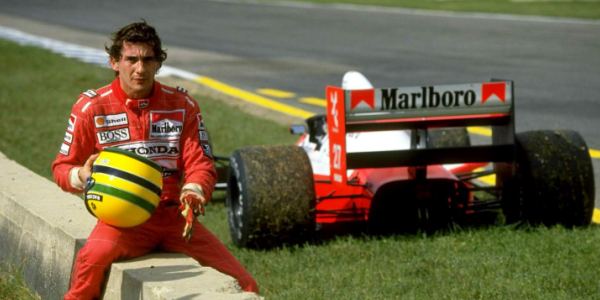 The documentary is a bastion of on-camera interviews and, ever since The Thin Blue Line, reenactments. It is a rarity that a film does not utilize the camera to capture new footage. Relying on archival footage is an editing nightmare. Pouring over hours of film just to string together a feature length documentary is a fools errand that surely will only result in a highlight reel at best and scattered mess at worst. But then there is Senna. Formula One racing is not NASCAR. While swigging beer and watching drivers make continuous left turns for hours on end (seriouslyhours), NASCAR is a crash waiting game. Formula One has winding courses at breakneck speeds and is exciting. In 1984, Ayrton Senna emerged into the world of Formula One. A 24-year-old Brazilian go-kart driver, Senna took the scene by storm. In less than four years he took home his first World Championship and became a national hero. The film chronicles Sennas rise to fame and his struggles with rival driver Alain Prost and the Formula One organization. I cannot stress enough how impressive the structure of the film is. There are no new interviews or even a running commentary. The film is composed entirely of race footage, home videos and glimpses behind the Formula One curtain. However, it always feels like a feature. The documentary is filled with drama and tension. It doesnt matter if you like Formula One racing or even sports in general, you will find yourself rooting for Senna and nervously watching races that have long since ended. Perhaps it is the lack of commentary that makes the film often feel like a narrative feature rather than a documentary. Senna is completely engrossing and will have you twisting and turning on the edge of your seat.
8. Project Nim (2011)
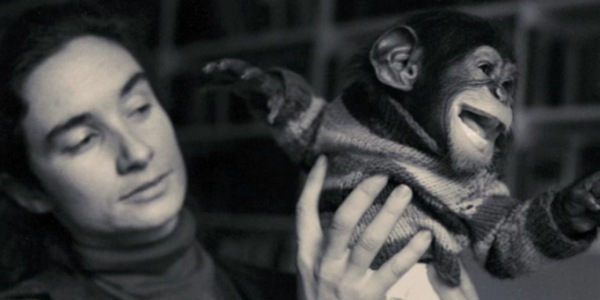 The animal kingdom is not a new fascination. We have been seeking to understand these creatures that vastly outnumber us since we first discovered their existence. Apes in particular firmly grab our attention. We share so much in common with these animals yet there are so many things that keep us separate. The most obvious of these boundaries is the ability to communicate with one another. Noam Chomsky theorized that the development of language was inherently human. Chomsky observed that exposed to the same linguistic information, a human child will acquire the ability to understand and produce language while an animal will not. In the early 1970s, Columbia University behavioral psychologist Herbert Terrace set out to prove Chomsky wrong. At two weeks of age, a chimpanzee punnily named Nim Chimpsky was introduced to his new, and entirely human, family. Nim was treated like a child and was communicated with through the use of American Sign Language. While initially a study of language in animals it quickly became more than that. The concept alone is something that could only have come from the 1970s. To not only introduce what is most definitely a wild animal into your home but to also treat that animal in the same manner that you would a child of your own seems crazy. The individuals involved however present it as if it is completely normal. The young Nim is absolutely adorable and the similarities to a small child are abundant. However, as he ages the drama begins to unfold. The participants struggle to maintain a hold on the true purpose of their study and emotions overpower all reason. Director James Marsh, of Man on Wire fame, is able to carry the audience through the valley of unbelievability and allows us to connect with the family and most importantly Nim. Project Nim is interesting as an examination of language in apes but it excels in its ability to yank on your heartstrings.
7. Into The Abyss (2011)
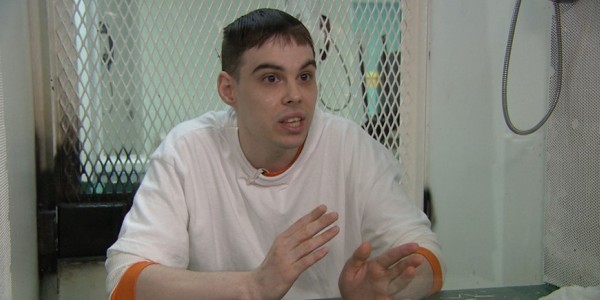 Capital punishment is on the list of things not to bring up on a first date. The death penalty is one of those topics that demands people take a side. There are those that are against it and believe that killing an individual regardless of the reason is wrong, while the other side cites exorbitant prison costs and a they deserve it mentality. I am not about to open that ugly can of worms and take a side, but it is a conversation that wont be ending anytime soon. One night in Conroe, Texas changed the lives of countless people. Michael Perry and Jason Burkett, now in prison were convicted of the murder of three individuals, all because they were looking to go for a joyride. Perry received the death sentence and Burkett got life; each one blames the other. The night of the murder is described and the effects on the entire community observed. However, the strongest focus is placed on the two inmates and how their current situation, especially Perrys with his interview filmed only eight days before his execution, has changed how they view the world and their actions. Michael Perry is the reason to see this film. He possesses a creepy quality that is quietly terrifying. His dark eyes are by no means dead; in fact he has a vitality that is hard to understand. He speaks with director Werner Herzog with ease and charm. It may just be the charm that ups his creepy factor. You can understand how anyone could be taken by this boy, despite a strong idea of the darkness he is capable of. The film is not preachy about its opinion on capital punishment. Herzog is against the death penalty but allows the audience to make up their own mind. Instead of looking to decide for you, Herzog seems more interested in continuing the conversation. Into the Abyss does not try to make you believe that these boys are good, just that even the most heinous acts are being committed not by monsters but by people.
6. The Imposter (2012)
 I shudder at the idea of a family member disappearing. The pain associated with the loss and hopeful search is hard to fathom. The searching may be the worst part. Anytime it is in the media, some little old lady can be heard quietly lamenting, that poor family. When the impossible happens and the person is found, the world smiles with the family, unless of course they find the wrong person. Thirteen-year-old Nicholas Barclay disappeared on June 13, 1994. He was playing basketball in his hometown of San Antonio, Texas (damn a lot of crap goes on in Texas), and he just never came home. Three years later, the Barclay family got the phone call they had only dreamed of; Nicholas had been found in Spain. Only, it wasnt Nicholas. Frédéric Bourdin, a French born confidence man, in a perfect storm of coincidence and desperation claimed to be the lost boy and went on to fool the police and the Barclay family, despite his French accent and staggeringly different appearance. Just in case you didnt get the gist of this. This film tells the TRUE story of a dark-haired, brown-eyed French man that successfully impersonated a blonde-haired, blue-eyed Texan boy. Thats not a joke, thats for real. It would be too easy to get caught up in the absolutely mindboggling qualities of this story, but the film pushes past these numerous potential pitfalls. It becomes less of a question of why Bourdin did this and more of how it took so long for someone to cry foul. Bourdin comes across as some kind of cartoon villain that inflicts harm without a care and becomes so wrapped up in his own ruse that he begins to lose himself. The Imposter is thrilling to watch, crafting numerous mysteries in its coherent telling of an altogether confusing story.
5. The Up Series (1964-2012)
 Ah, growing up. Not until you have real responsibilities do you start to realize just how crappy it is. Sure, little kids arent taken seriously and the younger they are the more they behave like a drunkard, but they have it great. Naps, snacks, playgrounds, toys and cartoons; if it were socially acceptable Im sure that we would all happily revert to this stage. Alas, we must grow. The interesting part of growing up is just how we do it. Starting in 1964, fourteen seven-year-olds were chosen to take part in Seven Up. The British children were chosen for their multitude of socioeconomic backgrounds. Theorizing in 1964 that the shop steward and the executive of the year 2000 are now seven years old, the film looks to determine whether or not social class is a predetermination of a persons future by reexamining the fourteen participants lives every seven years. I know what youre thinking. One entry that includes eight documentaries is totally cheating. Well no its not because its my list and you can just shut up. These films succeed best because of each other. You could potentially view each film on its own and it will work just fine. Enough clips are included to give all of the interviews context, but doing this deprives you of the fully satisfying experience of the series. In watching the films, you literally are watching these children grow before your eyes. The films concept to examine how social class potentially dictates our course in life is complex and interesting in its own right, but the emotional investment that is developed in watching these people grow is what sets these films apart. You will be shocked in the turns that some lives take and delighted with others. The series hits a bit of a zenith in 28 Up with Neils story especially punching you in the gut. The Up Series accomplishes feats that only documentary film can and it shows no signs of losing steam; 56 Up came out just this past year.
4. This Film Is Not Yet Rated (2006)
 Film rating in the United States is decidedly screwed up. Its time for a quick history lesson. Beginning in 1934, the Motion Picture Association of America (MPAA) began enforcing the Motion Picture Production Code or Hays Code as it is often referred. The Hays Code laid out exactly what was and was not acceptable in films and not abiding the rules resulted in your film not being produced. In 1968, Jack Valenti as president of the MPAA got rid of the Hays Code and replaced it with the MPAA film rating system. It turns out the system is far from perfect and maybe old white guys arent the best at choosing what we watch. With a broken system in place, Kirby Dick took it upon himself to show us just how in need of fixing it is. The process of obtaining a rating is convoluted and the ratings themselves borderline arbitrary. The ratings board, supposedly comprised entirely of parents, is shrouded in secrecy with the identities of its members being far from public knowledge. Dick goes all out, even employing a private investigator, in order to show us the MPAA inner workings and speaks with filmmakers to illustrate the struggle to obtain the illustrious rating, all before presenting his own film to the board. It is truly shocking just how little we know about the ratings that are placed on our films. The American system is deeply flawed and has murky definitions for each rating level. In addition the American aversion to sex is made abundantly clear. The shear amount of violence that is tolerated and deemed acceptable for children, since a desire to decide what is best for the children is a founding principle of the rating system, is sickening. Homosexuality is harshly punished for no clear reason other than ignorance. The film forces the system into the light for us to finally see its monstrously ugly face. This Film is Not Yet Rated will upset and frustrate you as it rightly should. Often smelling a bit like censorship the rating system may be due for an overhaul. After all, it took around 30 years for them to realize that the Hays Code wasnt right; time is running out on this system.
3. Best Worst Movie (2009)
 There are bad films and then there are films that are so bad that you just cant help but enjoy them. Coming from some sick place of schadenfreude, we embrace these terrible films providing them the cult status they eventually obtain. Midnight screenings abound and it becomes a sort of rite of passage among film fans to have experienced these pieces of garbage filmmaking. We revel in the awful and completely forget that many of these films were made in earnest and not to have their amateur quality celebrated. Troll 2 was released in 1990. Produced under the working title Goblins the film has no connection to Troll and in fact not a single troll appears on screen. The film follows a family that has moved to the sleepy town of Nilbog without knowing that the town is inhabited by vegetarian Goblins who will stop at nothing to turn the family into plants for their consumption. The film was written and directed by an Italian couple who decided that they alone were the authority on American life. The film was a major failure and only found resurgence on late night television and VHS. Michael Stephenson, the child actor at the center of the film, sets out to tell the story of the films making through the eyes of the many confused actors involved while also examining the explosive cult status the film has earned. For fans of cult films like The Room, Birdemic: Shock and Terror and Manos: The Hands of Fate, Troll 2 is required viewing. The film inhabits that beautiful place of inept filmmaking that to not find enjoyment in it is awfully difficult. Best Worst Movie is a celebration of these films fandoms, those devoted filmgoers that wait in line for a midnight showing wearing a burlap sack and a goblin mask. As almost a thank you note to those that have resurrected these long since deceased reels, the film will make you feel good about them. In addition, the film searches out the original cast of Troll 2, a bevy of first time actors just hoping to break into the business. We have long wondered what must have been going through the heads of all those involved while the film was being produced and we finally get our answer. Stephenson even brings in the mind behind the film in director Claudio Fragasso. His interviews are uncomfortable as you begin to realize that this man does not understand the reception his film has received. The emotional center is George Hardy, who played Stephensons father in the film. The man has an unbridled joy for life and his newfound fans make his smile even wider; his happiness is infectious. Best Worst Movie offers us a look back at a terrible film that eventually found the audience to lovingly embrace it; it is endlessly entertaining. Watch it as a double feature with Troll 2, you will not be disappointed.
2. Capturing The Friedmans (2003)
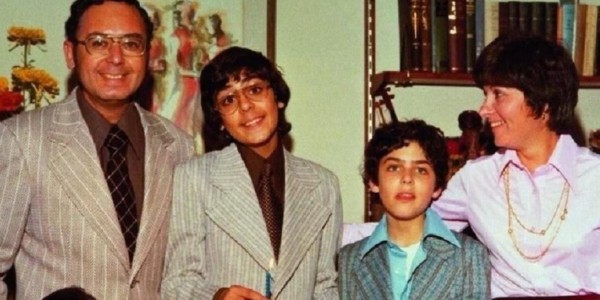 There are few things as sacred to you as your family. They may get on your nerves but at the end of the day you stand by your blood. When youre young, your parents in particular are nearly untouchable. You look up and admire them. Nevertheless they are merely people and all people have their faults, only some of these faults can be much darker than others. Director Andrew Jarecki was initially going to make a film about childrens birthday party entertainers. As he began to research one of his subjects, popular clown David Friedman, he stumbled upon a story that demanded his attention and completely changed the focus of the film. David Friedmans father, Arnold, and brother, Jesse, had been convicted of child sexual abuse. Jarecki interviews the family and many of the victims and uses stirring home video footage captured by the Friedmans during this tumultuous time as he tells a story of darkness and a family in turmoil. If I have yet to convince you of the ability of a documentary to completely capture your attention, this may be the film to change your mind. You will be sucked into the film as the story becomes darker and the family falls. The Friedmans are the image of mediocrity. An American family with loving parents and three young boys, they are happy. The darkness reveals itself gradually with Arnolds fall precipitating his sons. The trial and terrible deeds the two are accused of is as upsettingly exciting to watch as the best episode of Law & Order: SVU, but it is the effect on the family that emotionally grounds the film. As Arnolds wife, and the matriarch of the family, comes to believe her husbands guilt she scrambles to save her son. Her familys perceived betrayal takes the bad situation and makes it worse, as they struggle to maintain under the massive weight. Capturing the Friedmans dares you to turn away with a story more thrilling and complex than many narratives.
1. Dear Zachary: A Letter To A Son About His Father (2008)
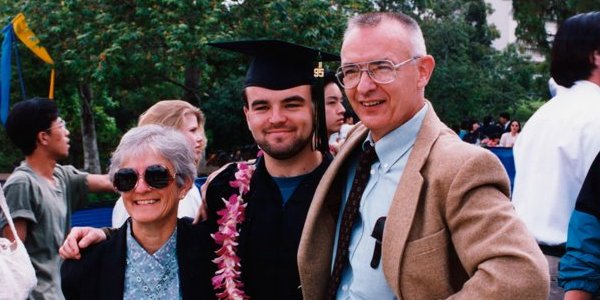 A film is at its best when it makes you feel something. I am not talking about the films that are entertaining, providing slight escapes into the fantastic, but something more substantial. There are few films that grab you by your heart and demand that you take notice. For that brief period that it is on screen it is your main focus. All else melts away and you are taken to another place. Dear Zachary is one of those films. Kurt Kuennes best friend is Andrew Bagby. The two grew up in San Jose, California and found similar weird sensibilities in each other. Kurt, an aspiring filmmaker even at a young age, would make small amateur films that Andrew would happily star in. As the two grew older Andrew continued to support Kurt, investing in projects despite the little money he had. When Andrew was found murdered, leaving behind a baby son named Zachary, Kurt was torn apart. In hopes of showing Zachary just how great a man his father was, Kurt decided to display Andrew the best way he knew how, on film. However, the story didnt end with Andrews murder and a cinematic scrapbook ends up turning into a true-crime thriller. I cannot name another film that has had such a dramatic effect on my own psyche. Director Kurt Kuenne utilizes a style of quick cuts that conveys a frantic sensibility that often leaves your head spinning. The story of Andrew Bagby is heartbreaking. A beloved son and friend, nigh a bad word is spoken regarding his character. His poor judgment in romance, budding from a deep and unfairly low self esteem, results in his demise. The admiration and love heaped on his memory never crosses into the saccharine and reads as nothing other than genuine. As the story continues to unfold and upsetting truths emerge, the film drags you farther in, whether you want it to or not. As the road veers towards true-crime Andrews parents David and Kathleen shine as beacons of parental hope and righteousness. Over the relatively short runtime of 93 minutes you will run the emotional gamut, bouncing all over from fiery hatred, to passionate spectator until most likely devolving into a sobbing mess. Dear Zachary will tear out your insides and show them to you, providing an emotionally draining experience that will stay with you for years to come. Have a few other documentaries you think should be on the list? Disagree with any of my choices? I kind of killed it, right? Let us know in the comments below and go watch a documentary.