10 Incredible Movies You'll Never Watch Again (And Why)
Not even Leonardo DiCaprio wants to watch The Revenant again...

Rewatchability is to film-making what brand recognition is to tech firms: it’s like a mark of dependability and quality that guarantees a captive audience, which is where familiarity breeds love. So of course film-makers seek to make their films rewatchable.
Then again, that doesn’t mean that every single great movie is something you’d happily go back to experience all over again. Because not every story told is one you necessarily one you want to hear again and some are so downright harrowing that you barely want to relive their memory, let alone watching them all over again…
10. Mother! (2017)

Darren Aronofsky seems to be drinking from the same cup as Lars Von Trier and latterly Nicolas Winding Refn in that his chief goal is to provoke. In fact, like those two, he seems intent on that end at the cost of traditional cinematic form, which invariably delights his ardent fans.
Mother! might as well be the flagship movie of that agenda, given its targetting of organised religion, its fetishistic violence and hysteria and its occasionally impenetrable logic. It’s well made and profound and impactful - and critics loved it - but it is not, in any way, enjoyable.
In fact, it is quite the opposite, and that’s sort of the point of it. But why you’d ever subject yourself to that sort of sensory assault again without anything sweet to sugar it is anyone’s guess.
9. The Boy In The Striped Pyjamas (2008)

There is no sense denying the fact that The Boy In The Striped Pyjamas is effective in its twisty agenda to make you feel even the slightest sense of the enormity of the horrors of the Holocaust, but it’s not something you’d ever want to revisit recreationally.
Part of the problem of the story, which adapts John Boyne’s same-titled book about two 8-year-old boys on either side of an extermination camp’s barbed wire, is that when you’ve heard it, it loses its impact. And it only loses its impact because it is so deeply, horrifyingly traumatic.
You’re led to feel some slight flicker of hope that young Shmuel will get out and he and Bruno can reclaim their “normal” lives, but then the actual ending drains every ounce of positivity out of you as both boys end up dead. And not only is it sad, but it invites you to only feel some vague, perverse triumph in the fact that Bruno’s father, one of the camp’s commanders pays for his almost flippant inhumanity with his son’s life - and feeling that is awful in itself.
8. Dunkirk (2017)

As a cinematic masterpiece conveying the emotional narrative of a historical moment (without necessarily sticking too closely to the facts of history), Christopher Nolan’s Dunkirk is unrivalled.
It is an achievement in visuals, scale and - particularly - sound that is a full-blooded assault on the senses. But to that end, it’s also almost entirely unrewarding in any kind of sentimental terms.
Yes, it is unbelievably arresting and utterly captivating, but it’s also chiefly motivated to make its audience feel the same building unease and anxiety of its individual subjects without fully telling their stories. It’s a series of emotional vignettes knitted together in a way that leaves too much of a mark to be in any way purely enjoyable.
And there’s also the fact that it actually loses some of its impact away from the cinema.
7. The Passion Of The Christ (2004)

Whether you care to call it Mel Gibson’s passion project in the name of his devout religious beliefs or a vital narrative reflecting on human condition or a vehicle for indoctrination, The Passion Of The Christ is well-made.
It looks incredible, at times, Jim Caviezel’s performance as Jesus Christ is stunning (particularly as he’s rarely been as captivating) and it does tell a compelling story. But it’s also engineered to make you feel something very particular: guilt.
There’s something distasteful in there and it’s way too perversely fetishistic of violence but it never preaches, to its credit. The issue though, is that it is intentional excruciating and after a while, that just becomes too much of a slog. Particularly when it’s also trying to remind you that YOU did it. Sort of.
6. Blue Valentine (2010)
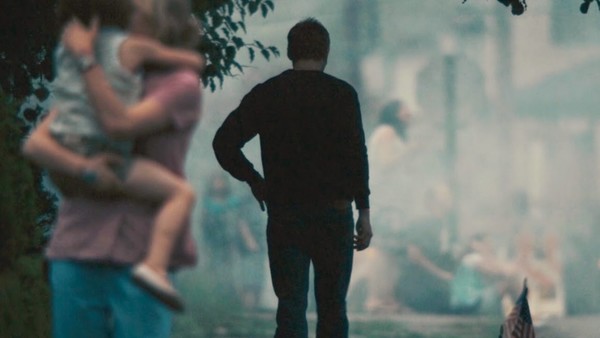
From one excruciating film to another of an entirely different kind.
Blue Valentine is an utterly spell-binding story of blossoming romance, all volatile and fresh and exciting, wrapped up in a story of catastrophic, heart-breaking destruction of the same relationship. It’s a simultaneous bookend, showing Dean Pereira (Dan Gosling) and Cindy Heller (Michelle Williams) growing apart as it explains how they came together.
Thanks to the intense chemistry between Williams and Gosling and the succinct brilliance of their performances, you feel every spark of magic and every devastating blow. And by the end, as you watch Dean walk away, broken, the emotional toll it takes on you is really not something you’d ever want to relive.
5. The Machinist (2004)

The Machinist is arguably doomed to only ever be remembered for the intensity of Christian Bale’s commitment to performing in it. He famously - or infamously - dieted for four months, dropping a third of his body weight by eating only an apple a day with some water, a coffee and occasionally a whiskey.
The result was exactly what you’d expect of someone who ate less than 100 calories most days: he looked painfully skeletal and dangerously close to death. There’s no denying it made for an incredible performance, but it’s incredibly hard to watch because that bodily cost is not something you can fake.
The film’s intent is to capture a traumatised, traumatic psychological state and it does it so well that there’s no way anyone in their right mind would ever want to revisit it.
4. Manchester By The Sea (2016)

Like Blue Valentine, Manchester By The Sea is a deeply affecting, horribly traumatic movie without ever wading into provocative, emotionally lurid waters for the sake of impact. It merely feels a deeply, deeply sad story about troubled characters in such a way that it gets into your bones and breaks them from the inside.
It’s essentially a story of how one wound that would be difficult enough to bear - the death of a family member at a young age and the effective orphaning of his son - tears open older wounds of the brother charged with being the guardian of his nephew.
And despite this sort of set-up usually leading to a revelation and a happy ending, Manchester By The Sea just piles on the misery until Casey Affleck’s lead realises he cannot have his epiphany. It’s a sad, hollowing full-stop and by then you’re so wrung out, repetition is not an option.
3. We Need To Talk About Kevin (2011)

Like many if the films explored here, Lynne Ramsay’s adaptation of We Need To Talk About Kevin is most effective because of the strength of the performances holding it together.
John C Reilly is very good without anything showy and Tilda Swinton is incredible, but it’s the performances of Jasper Newell and - even moreso - Ezra Miller as Kevin Khatadourian - their son who committed a high school massacre - that are most profound. Both kids are like daggers in your brain, awfully unhinged, sadistic, and almost Satanic.
And then as we’re told the story of what happened that day and we’re shown the added tragedy of what Kevin did (murdering his father and younger sister as well as his schoomates), it’s almost too much to bear. Watching it again is almost like being complicit in the sadism.
2. United 93 (2006)

The story of the 9/11 terrorist atrocities was always going to inspire film-making, because art is most profoundly how we understand history. Or how we re-engage with it to make it accessible, but those stories were so deeply traumatic and so close and personal that catching the right balance was also always likely to be a challenge.
Paul Greengrass’ haunting, heartbreaking elegy to the passengers on United Airlines flight 93 manages the feat and it’s largely unprecedented. The film feels like a sort of waking funeral because the story has no hope and there’s no protective barrier between its start and its horrifying tragedy, You go in prepared and it wrings you out.
While it’s an important story to tell, it feels too personal and rewatching would feel like perverse, emotional profiteering. So it’s more like a haunting museum exhibit in the end.
1. The Revenant (2015)

There are lots of jokes about how Leonardo DiCaprio literally had to put himself through Hell for the Academy to finally, justifiably acknowledge his brilliance with a shiny hunk of metal. And that performative achievement is precisely why The Revenant is fundamentally a one and out experience.
Bleached by cold sun, smothered in mud, blood and worse and practically stinking off the screen, Alejandro Iñárritu’s torrid tale of frontiersman Hugh Glass’ near-death, near-bear experience of 1823 is the very definition of an ordeal.
You watch, transfixed, as DiCaprio drags his body through the most unimaginable horrors, repeatedly until a “happy” ending involving a heavy wounding and the knowledge that the real Hugh Glass was killed by the same tribe that spared him in the movie 10 years later.
If you want to watch that all over again, there’s very possibly something wrong with you.