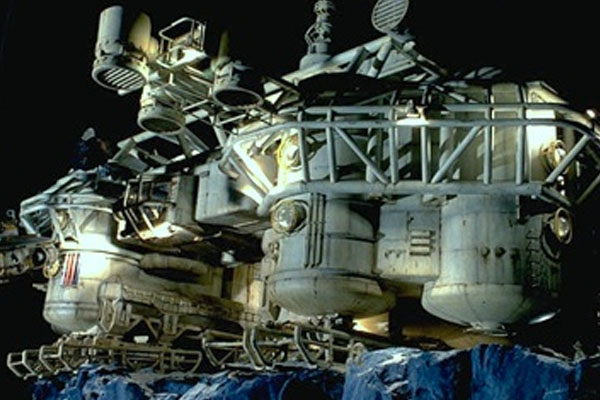
10 Incredible Sets You Didn't Know Were Built From Scratch

You won’t believe these aren’t CGI.

It goes without saying that before any movie can even start filming, it needs somewhere to shoot, and yet set design is one of those essential elements of film-making that tends to go ignored for the most part. Despite its lack of celebration, it's a key facet to the movies we watch: without realistic, immersive sets, we would be pulled out of the action. Making a massive set from scratch is almost never the easiest thing to do, but it often is the right thing to do. It€™s even more impressive when you realize that sets that you long thought fake were in fact, actually built for real. The practical nature of an environment helps actors, heightens the realism and even makes adding special effects easier after the fact. Speaking of effects, while computer graphics can work wonders when used right, there€™s no substitute for the real thing. The eye can always tell that something is off so in an age of increasingly good computer generated images, some of these modern sets are even more impressive. Sometimes all it takes is some money to work with and a creative mindset to absolutely blow audiences' minds. Its astounding how influential a film€™s location can be, and realistic sets like these ones were crucial to the successes of their respective films.


10. Allerdale Hall (Crimson Peak)

For the gothic romance film Crimson Peak, it was almost as if the massive manor of Allerdale Hall was a character unto itself. The easy thing to do would have simply been to find a real mansion, or just use some green screen, but this is Guillermo del Toro we€™re talking about here, so of course he decided to build the entire house on a soundstage. Believing that by linking the supernatural to a real setting, it would make it more believable, del Toro commissioned the structure, which was three stories tall and took seven months to build. The level of detail is incredible, the elevator was functioning, the fireplace was real, and they even had different sized versions of tall the furniture to help set different moods. The only thing that wasn€™t actually built was the gaping hole in the ceiling. The efforts to construct a memorable setting absolutely paid off and made Allerdale Hall feel like a living entity. If only that sort of detailed care had been given to element os the story as well.

9. The Sky Tower (Oblivion)

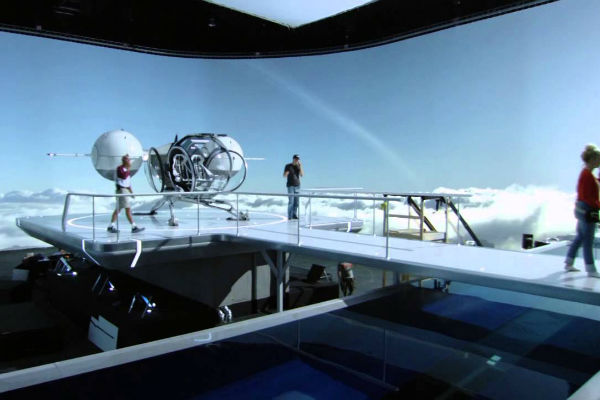
One look at the clean, crisp design of the futuristic Sky Tower and it€™s only logical to assume that it would have to be fake. But when the man in charge is a former architect, it makes it a little more understandable how a set like this was made. The modern dwelling was both a living quarters and military outpost for Tom Cruise. Suspended 3000 feet above the ground in the film, the real accomplishment isn€™t even the set but the way they constructed its immediate surroundings. The actual house set was surrounded by a massive screen on all four sides. Projected on it were images they had filmed in Hawaii, comprised of the natural wonders of a volcano, a blue sky, and a striking night. These surrounding landscapes both lit the house and made it all feel completely real. Oblivion may have been pretty derivative story-wise but it€™s hard not to praise elements such as this one. The creativity of the Sky Tower€™s construction and its stunning aesthetic make you wonder how this film wasn€™t more successful.

8. Guggenheim Museum (The International)
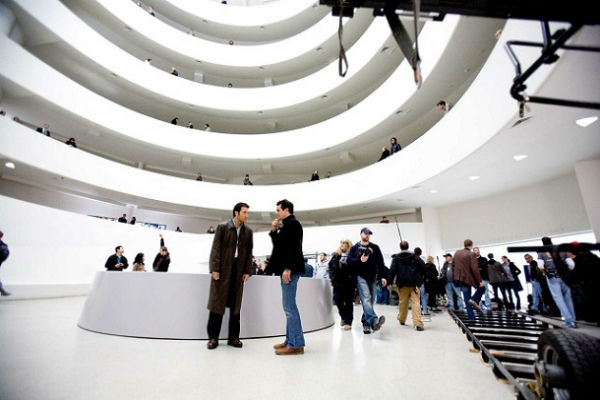
The International was not really the bombastic action flick the trailers promised, instead it was a slow-burn thriller centred around global banking. All of this tension did explode, however, in a standout sequence in the middle of the film, one that relied heavily on its unique setting. Taking place on the spiral staircase of the Guggenheim Museum in New York, Clive Owen becomes embroiled in a massive shootout, trying desperately to make his way down towards the exit without getting shot. For obvious reasons, the crew couldn€™t actually shoot up the illustrious museum, so they did the next best thing and built an exact replica of the building in Germany. With help from the actual people at Guggenheim in getting the layouts and designs right, they were able to make a startlingly realistic lookalike that had viewers questioning if somehow they had really gotten permission to shoot in the actual museum. Building up a new structure from scratch is hard enough, so the fact that The International managed to do this with a real, well-known building is all the more impressive.

7. The Freeway (The Matrix Reloaded)

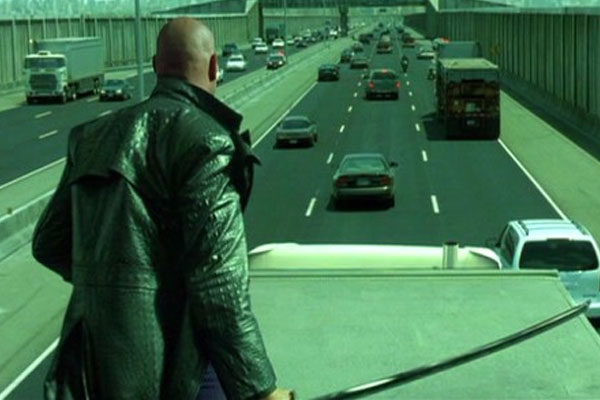
The Matrix Reloaded was considered a disappointment by many but almost everyone would agree that it nevertheless boasted an absolutely jaw-dropping action sequence in the freeway chase. It was the best scene in the movie, and it could never have worked without the freeway as a setting. Of course, the freeway it was filmed on didn€™t actually exist. Despite having a location set up in Akron, the Wachowskis opted to make their own freeway, thinking that the real thing would simply take too long to clear before use. Using a decommissioned runway at the Alameda Point Navy Base in San Francisco, they constructed a 1.4 mile long stretch of highway to stage their massive car chase. The irony of the films is that despite existing in a virtual world, it€™s this kind of dedication to putting the action into real sets instead of creating them digitally that made the series stand out. Even if Reloaded didn€™t match the ideological reach of The Matrix, it still maintained its predecessor's practical innovation, exemplified with the construction of this massive set.

6. Metropolis (Metropolis)

From the Great Wall of Babylon in Intolerance to the Chariot Arena from Ben-Hur, plenty of old movies have boasted some massive sets. Impressive as they were, it's not exactly hard to fathom that they would have had to be built, since there was no option to fake them digitally. Metropolis, however, was an outlier. Despite being made in 1927, it seems frankly impossible that the futuristic city had been constructed by hand. This was literally the dystopic city that inspired nearly every science-fiction metropolis since and there seemed to be no explanation for how it came into existence. Behind the scenes tells the whole tale of course, and thanks to the creative use of miniatures, models, paintings and mirror tricks, a bustling city complete with a massive Tower Of Babel was built on a small-scale. Even now, though it€™s clearly not real, it€™s insanely impressive that it was built, not because of its size, but because of the creativity it took to make it happen.

5. The Tesseract (Interstellar)

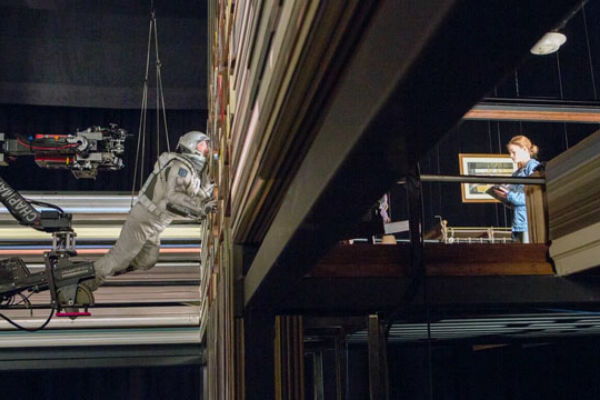
Christopher Nolan is one of the most beloved directors of this generation because he€™s consistently pulling off stuff like this. What he might lack in emotional subtlety, he makes up for with his practical elements, since he approaches all facets of filmmaking on such a grand scale. He easily could have resorted to computer tricks to create the tesseract, but he instead chose to create the real thing instead. A higher dimension is a hard thing to visualize, and even if it was a little corny that love tied Matthew McConaughey to it, the visual representation of this plane was absolutely inspired. The lattice work, the alternating axes and the repetition of the office with Murph were all actually built, making the climactic scene all the more effective. The idea of turning this abstract idea into a physical structure was incredibly well-handled. The space was both infinite and intimate at the same time, and plenty of directors could learn a thing or two from this type of approach to visual storytelling.

4. Hobbiton (The Lord Of The Rings Series)
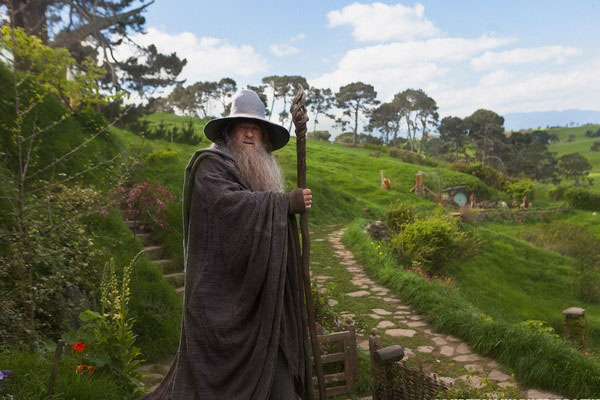
Spotted during a helicopter ride over New Zealand, it€™s amazing how a few years turned this ordinary grassy knoll into an all-out tourist destination. The Lord Of The Rings series is absolutely littered with amazing sets, with everything from massive towers to unbelievable fortresses. Their production design is unparalleled but it was this small, natural patch of land that stands out, however, simply because it didn€™t even look like it was built. They added in hobbit holes, built a bridge, constructed a mill and even went so far as transplanting trees into the scene to make Hobbiton feel like a lived-in village. But the backbone of this set was the very real New Zealand landscape. It felt as if you could actually go there and find a bunch of hobbits strolling around in real life. By enhancing what was already there, Peter Jackson evoked a very real setting, and one which would set the stage for the rest of the series.

3. The Titanic (Titanic)

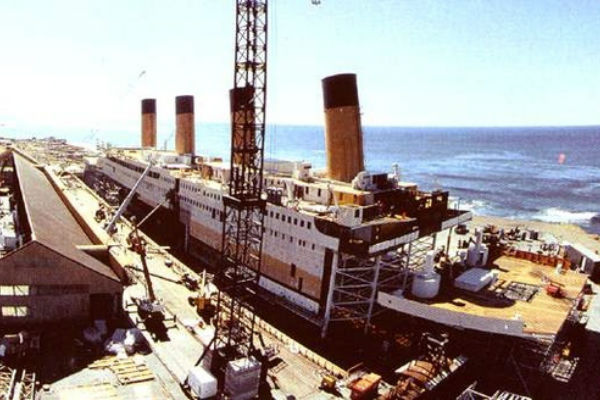
Despite having made plenty of big movies, Jim Cameron was known for being creative and practical, making a small budget go a long way. He€™d proven he could make blockbuster films through sheer creativity, but nothing helps out like money, and Titanic is what happens when Cameron gets a big budget to play with. So for his historical adaptation, he did the only sensible thing he could imagine, and built a life-size replica of the real ship. Using original blueprints for the construction, the 40 million dollar ship was built along acres of Mexican waterfront and put into a 17 million gallon water tank. The meticulously reconstructed set was afforded another layer of panache as it was built on a 50 foot tilted platform. This would allow the boat to rock, tip, and flood as the real ship did. Extravagance and opulence don't always result in creating great sets, but it€™s hard to deny just how effective Cameron€™s larger than life approach worked out here.

2. Deep Core (The Abyss)

Of course, for all of the praise that Jim Cameron rightfully deserves for the sets on Titanic, he deserves it even moreso for the lesser-seen of his outings, The Abyss. As has been established, Cameron has a penchant for building what nobody thinks is necessary, and he took that notion to the next level for this film. The underwater drilling platform that was the central setting for this film was actually built in a 7 million gallon tank. Repurposing the abandoned Cherokee Nuclear Power Plant in South Carolina, Cameron and company turned the reactor into a 40 foot deep water tank which housed this impossible set. To put in perspective just how big this all was, it was so massive that they couldn€™t even afford to fully dismantle it after use. The exterior of this drilling platform really sold the isolation that was a central theme to the film. It made them feel truly deep in the water and its real presence was an essential element to the film€™s success.

1. The Centrifuge (2001: A Space Odyssey)
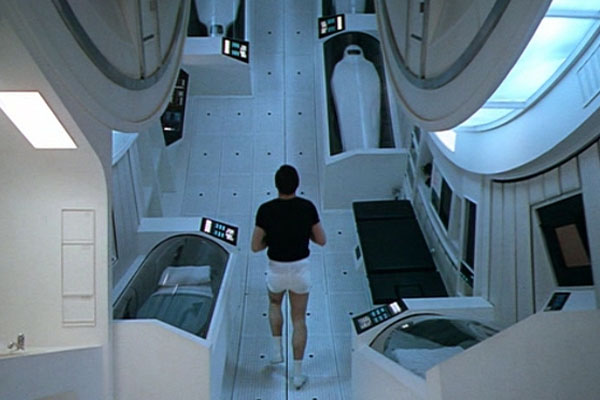
The Discovery One was a masterpiece of set building and no part of 2001€™s spacecraft was more impressive and influential that the centrifuge. This set broke ground for set creation and even almost 50 years later, it€™s still incredible that Gary Lockwood was running along the walls without any wires or special effects. To accomplish this stunning feat, Stanley Kubrick oversaw the construction of a ferris wheel-like drum, forty feet in diameter and twenty feet wide, that, when spun, would mimic the appearance of zero gravity. All of the equipment on the set had to be bolted down, and the crew even had to wear hard hats, but it worked and the results were jaw-dropping. For all of the people impressed with the sets in Inception, this was the original rotating hallway. This was the set that proved how innovative a simple indoor location could be made. Most of all, this was the set that showed how there€™s no substitute for the real thing. Are you surprised that any of these were built? What real sets were you impressed by? Let us know in the comments.

In this post: 
Titanic
 
Posted On: 
Contributor

Connor loves movies, comics, and TV, and is trying to write for people who feel the same way. When he's not sitting on the couch with his laptop, you might find him lying in his bed with his laptop.