10 Incredible Similarities Between Harry Potter And The Lord Of The Rings

One wizard to rule them all...
The similarities between J. R. R. Tolkien's The Lord of the Rings universe and J. K. Rowling's Harry Potter world are "fairly superficial," according to Rowling herself. "Tolkien created a whole new mythology, which I would never claim to have done. On the other hand, I think I have better jokes." Both Harry Potter and The Lord of the Rings have reignited an era's love for fantasy almost single-handedly; franchises as diverse as X-Men to Doctor Who and Narnia all owe something to both sets of films, which are both going strong. With There And Back Again, Peter Jackson concludes his prequel trilogy of The Hobbit, just as new Harry Potter movie Fantastic Beasts enters production; it seems we can't live with either of them, as they've become cultural icons of 21st Century cinema. Being able to see them on-screen though certainly illuminates the similarities and differences between the two stories. It may be nearly sixty years since the last The Lord of the Rings book was published, but J. K. Rowling owes Tolkien an awful lot, and not just her pen-name; themes, ideas and even individual characters can be traced back to the Middle Earth epic, and from The Lord of the Rings, much of the imagery is derived from the same mythology and folklore than Rowling mined for Potter. But what exactly are the similarities, apart from the bearded wizards, the magic and the incredible power to captivate family audiences? Let's have a look at ten areas of the franchises that are spookily similar.

10. Beginnings And Family

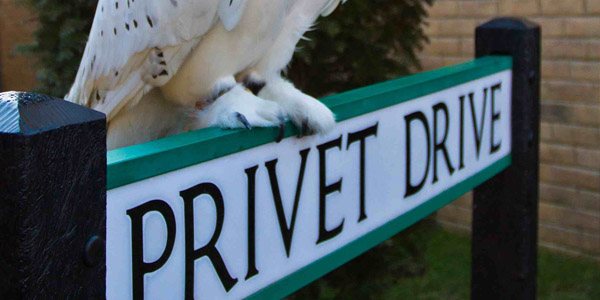
Both The Lord of the Rings and Harry Potter are monstrously huge marathon franchises, but let's start at the very beginning: well, the very beginning of the the first Rings film, at least. Because despite the apparent bliss of the Shire being a stark contrast to poor Harry living under his uncle and aunt's stairs, Frodo has more in common with young Mr Potter than meets the eye. Like Harry, Frodo lives with his uncle, Bilbo Baggins (in the films at least: the books mention a second cousin). Both stories starts on a birthday, as Harry's 11 years old when he's invited to Hogwarts, and Frodo's only just turned 33. Both Harry and Frodo are only living where they are because they're both orphaned; Harry's parents were obviously killed by Voldemort, and Frodo's parents drowned. It's only when a much taller man comes knocking that they both go off for adventure too, and just as Frodo and Gandalf become great friends over their travels, Harry sees Hagrid in a similar way by the end of the first Potter film. Of course, Frodo never talked to a snake at the zoo in his youth, but it's clear to see an influence of Frodo's sleepy surroundings on Privet Drive. The Shire is an almost stereotypical idea of where the more ordinary creatures could be from; likewise, suburban Surrey is a comparable place for a young boy with extraordinary power to live. It's from these quite simple hometowns though that both stories evolve into the fantastical.

9. Jewellery

Obviously a huge comparison between the two stories is the quest with which both protagonists are set; though Harry doesn't realise until he's some way through the story, that his quest is to destroy horcruxes, that often take the form of jewellery. On topic for this article, the very first horcrux that Tom Riddle makes is a ring. This is the ring that mortally wounds Dumbledore as he tries to destroy it, though it also contains the Resurrection Stone in it, a stone that allows you to communicate with the dead. Rather like Frodo being drawn to the power of the One Ring, J. K. Rowling ensures that the powerful ring in Harry Potter is a ring that's also brilliantly desirable to the protagonist; did I mention that both rings are totally impervious to damage, too? The One Ring in Lord of the Rings is a ring that shifts the wearer into another dimension, and into a spiritual realm, which certainly resonates with the power of the resurrection stone. But though Tom Riddle's ring doesn't make its wearer invisible, Harry, like Frodo, often wields invisibility; though he does so via the invisibility cloak, one of the three Deathly Hallows. These are bedrocks of both films; the One Ring and the Deathly Hallows are what gives both protagonists their quests, and both Tolkien and Rowling give these items mystical and horrible qualities to ensure that these journeys won't be easy rides. You can't make a three-hour film destroying any old ring, you know.

8. Trolls

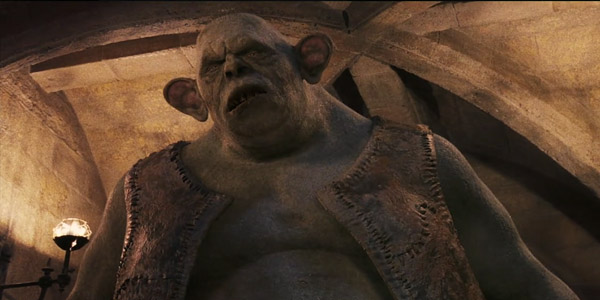
One of the earliest victories for Harry, Ron and Hermione is on Halloween, during their first year at Hogwarts (there's probably a Mean Girls comparison in there, but that's one for another day). After a troll is let loose in the school, Ron and Harry go to save Hermione, much to the bemusement of Professor McGonagall, who declares their triumph "sheer dumb luck". In similar fashion to Harry Potter, the Fellowship defeat a cave troll in the very first film of the franchise; it's Legolas that casts the arrow to kill the beast, and it's a defining moment for the gang. Both of these trolls are mountainous creatures, both had grey skin and they both have weapons; the troll in Harry Potter was brought into the school by Quirrell and the one in Lord of the Rings was taken to the cave by the orcs, and both destroy their surroundings during the battles. Both of these team efforts also resulted in the trolls falling forwards in defeat. Whilst there are hundreds of mythical creatures in both universes, it's intriguing that a troll should form an early fight with both sets of protagonists; perhaps it's because they're traditionally not particularly clever animals, and killing them requires teamwork and cunning, which bonds the group. Probably makes a better action film than the characters all getting drunk and asking personal questions, too.

7. The Villains

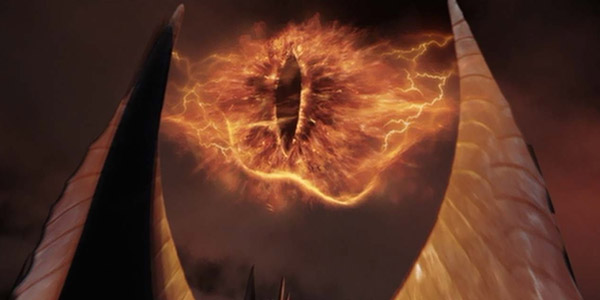
Every fairytale needs a good old-fashioned villain, and Voldemort is never far away from the action in Harry Potter. He's established from the very beginning as the principal threat of the franchise, though at the very beginning of The Philosopher's Stone/The Sorcerer's Stone, the Dark Lord is actually a disembodied sentience, clinging to life via the back of Professor Quirrell's head. Sauron in Lord of the Rings is also disembodied; he's also the dark lord of the piece, and doesn't just have the ability to see over the whole world, but can feel Frodo's presence. Similarly, Voldemort can cast projections for Harry to see, forcing pain from him; just as Voldemort appears almost as a ghost, aura or a presence in the early Harry Potter films before settling on a more concrete appearance, Sauron's presence is only felt in the Hobbit through the Necromancer. And just like Voldemort, creatures don't commonly refer to Sauron by his name, due to fear of it. The key difference between the two however is that Sauron is a demigod, and Voldemort is a wizard who believes he's got the power of a demigod. Both are killed by destroying their source of power (the ring/horcruxes), but Voldemort is actually more resonant with Hitler; he believes only in a pure-blooded race, and commits genocide of those he doesn't believe to be worthy. Voldemort's definitely a more relevant villain for a film set in the real world €“ London and the Muggles' surroundings appear in the series €“ but Sauron's the ultimate fantasy villain. That does make a fight rather one-sided unfortunately, though.

6. Nature

One of the less obvious parallels between Harry Potter and The Lord of the Rings, is in the detail of the magical worlds; it's not just Privet Drive and the Shire that share similarities, as the further we delve into the universes, the more each one reveals uncannily similar ideas. Like the Whomping Willow in Hogwarts, the Old Man Willow of Lord of the Rings is a sentient yet evil tree, determined to kill the heroes; in the extended DVD edition of The Two Towers, it swallows Merry and Pippin. Both worlds also have a giant, tentacled creature that hides in the lake €“ the Watcher of the Water lives near the Westgate of Moria in Middle-earth, and a giant squid occupies the Hogwarts lake €“ and both Hogwarts and the Shire are bordered with colossal, dark forests that the protagonists try to steer away from. Interestingly though, despite the nearby danger, both Harry Potter's and The Lord of the Rings's protagonists feel most safe at Hogwarts and the Shire respectively; there are scenes in both movies when the characters are elsewhere, dedicated to romanticising "home".

5. Giant Spiders

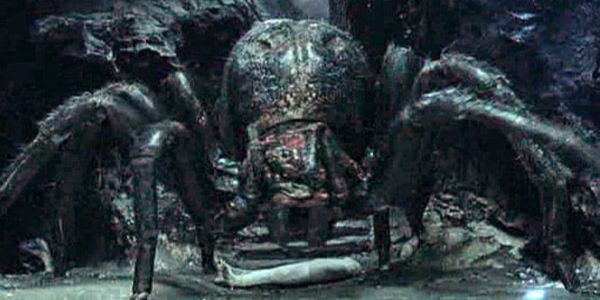
A word of warning: if you, like Ron Weasley, have any kind of arachnophobia, you're advised to skip this section completely. Rather than a spoiler alert, it's more of a spider alert. Aragog, the Forbidden Forest-dwelling spider from Harry Potter, is probably influenced by Shelob, the spider that lived in the Ephel Dúath mountains, near Mordor. As well as both bearing names that you wouldn't inflict on your kids, the two spiders are evil, but they don't side with the main villain of the story; both are known as being man-eating creatures, both live in lairs, and both could communicate with people, though we never actually heard Shelob speak. Even the etymology of the two creatures is similar, with Aragog taking the "Ara" prefix of arachnids, and Shelob taking the "Lob" suffix, meaning her name translates as "She-spider". Where the giant spiders differ though is through Hagrid; Shelob was ancient, predating the Hobbits' adventures by "ages", according to Tolkien, whereas Hagrid cared for Aragog when he was attending Hogwarts. Despite his apathy towards people, Aragog was fiercely loyal to Hagrid; quite simply, the difference between the two is that Aragog had a better upbringing.

4. Other Creatures

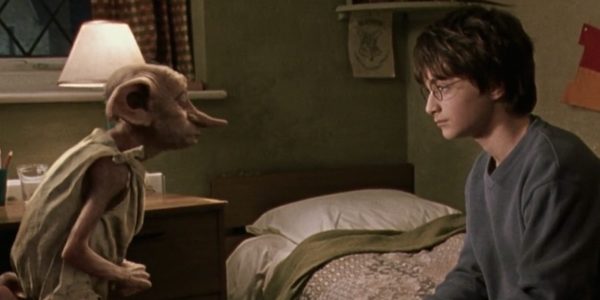
Whilst spiders might be the most terrifying creatures for many muggles reading this, they certainly aren't the only beasts to dwell within both franchises. Elves for example, are significantly higher class in The Lord of the Rings, but there's an interesting parallel between Gollum and Dobby; both are comparable CGI creations, obviously, but had you ever noticed that they both refer to themselves in the third person? Aside from that massively popular couple though, Nazguls, like Dementors, are hooded creatures in long black robes with barely any physical features; just like the dementors, who can kiss their victims into soulless insanity, the Nazguls cause nightmares, unconsciousness, and eventual death. Goblins are another creature established in both films as especially nasty characters, and there's a scene in The Hobbit where Smaug tracks Bilbo on a mountain of gold, asking where he is, that mirrors that of Harry Potter trying to stay quiet when fighting the Basilisk. Whilst it's fair to point out clear influences here and there that Rowling has taken from Tolkien, a lot of these creatures are influenced by the mythical creatures that Tolkien himself was influenced by; though as an interesting sidenote, whilst both authors used werewolves in their work, Tolkien never used the aspect of the creatures turning back into people. So whilst a lot of these comparisons are looking at Rowling's influence of Tolkien, these are creatures from other sources, that both authors were influenced by.

3. Supporting Characters

Neville Longbottom might be the hero of the series for many Potterheads, but he's certainly not the only famous Longbottom from a fantasy franchise. Longbottom isn't a character in The Lord of the Rings though, it's a location, in the Southfarthing of The Shire. But coincidentally, it's where genius gardener Tobold Hornblower first grew pipe-weed; that's something that Neville might know something about, being a herbology prodigy. Another similarly-named pairing, are Wormtail and Grima Wormtongue, who as their names suggest, are creepy and villainous, but not all that powerful. The snivelling Wormtail, better known as Peter Pettigrew to his friends (or what friends he has left), lived with Ron Weasley as his pet for the first few Harry Potter stories, before outing himself as a Death Eater and a traitor. Similarly, Wormtongue was an advisor and confidant to King Théoden before it was revealed that he was in fact a spy for Saruman. Wormtongue would go on to wreck havoc in the Shire with Saruman, just for fun; likewise, Wormtail was there orchestrating Voldemort's resurrection in The Goblet of Fire, where the pair killed Cedric Diggory with much the same nonchalance. One more allegory that can be stretched between both Harry Potter and The Lord of the Rings, regarding supporting characters, is the comparison that can be made between Fred and George, with Pippin and Merry. Both are the mischievous comic relief to contrast against the main characters, and both pretty much exclusively appear as double acts. Until Fred died of course, but let's not talk about that, because it's too heartbreaking to go through again.

2. Objects

As well as the freaky, cursed jewellery that appears in both Harry Potter and The Lord of the Rings, there are other magical objects that are shared. And rather like the creatures that both Rowling and Tolkien mined for their epics, these are items that aren't exactly original; they have roots in myth and legend too. In The Fellowship of the Ring, the Mirror of Galadriel was introduced, with its somewhat vague power of showing "things that were, and things that are, and things that yet may be." That's an item reflected in Harry Potter (if you'll pardon the pun), as Dumbledore's seen to have a pensieve, where he keeps memories to watch for later; they're almost identical basins too. Andúril, the sword used by Aragorn, is another mystical and wonderful object that was given a Potter universe equivalent in Godric Gryffindor's sword. Both are inscribed with symbols, both are suggested to be enchanted, and both swords aren't exclusively wielded by one owner, but are used by rightful heirs; Aragorn, the the Heir of Isildur, and rightful King of Gondor and Harry Potter, the heir Godric Gryffindor. The Mirror of Erised, the mirror that shows a witch or wizard whatever they desire most in the world, is interestingly though, probably influenced by the fairy tale of Snow White, and golden snitches have gone on to influence Stephen King. Now you know.

1. The Wizards

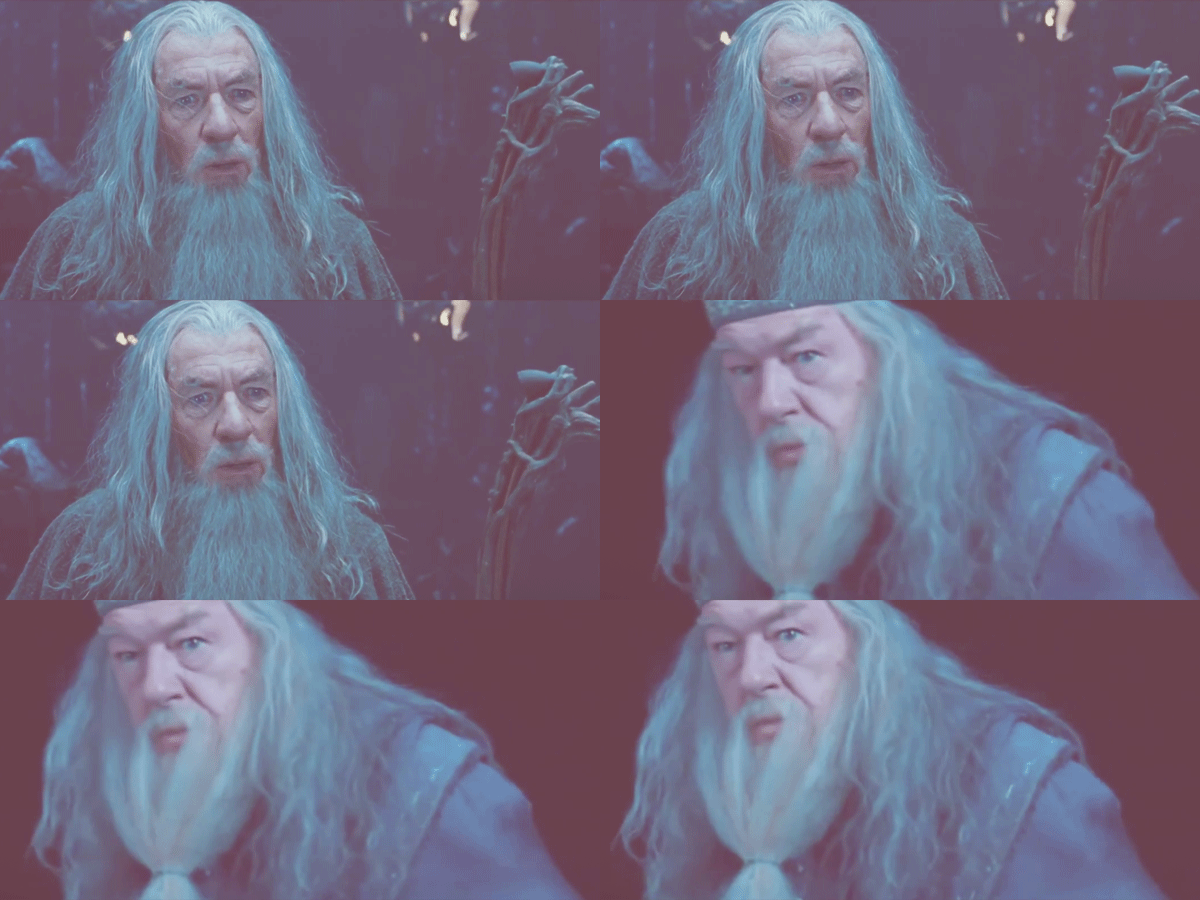
Two of the biggest characters from Harry Potter and Lord of the Rings, Dumbledore and Gandalf are often compared and contrasted, not least when they both fought each other in an Epic Rap Battle of History on YouTube. But some of the similarities between the two wizarding giants are fascinating. As well as both having splendid beards and great hats, both characters sacrificed themselves for the people they mentored, only to return later (albeit via spirit form, in Dumbledore's case). Gandalf and Dumbledore both spent time between stories collecting as much information as they could on their enemies, and both characters are used for expositional dialogue, given that they're the most knowledgeable characters of each universe. Both characters are among the kindest, yet deadliest in their stories, and both characters appear in the films without very much information given about their family, or their history; actually, if it wasn't for their young proteges, both Dumbledore and Gandolf would be really lonely characters, with a lot of darkness suggested about their respective pasts. What similarities have you noticed between Harry Potter and The Lord of the Rings though? Who would win in a fight between Dumbledore and Gandalf? Comment below!

Contributor
Contributor

Mark White hasn't written a bio just yet, but if they had... it would appear here.