10 Ingredients To Making A Perfect Modern Day RoboCop Film
It was always going to be tricky and challenging to reboot RoboCop. Paul Verhoeven's original 1987 masterpiece is revered for much more than surface level cyborg on crime action, but its poignant social commentary that fearlessly tore into the world around us. Over time those themes have expanded in relevancy, and it shows in the reboot - most notably with Samuel L. Jackson playing a caricature of Rush Limbaugh and robots filling in for American armed forces. The majority of what was depicted and alluded to in the original also rings true today too - maybe Paul Verhoeven has a time machine - as the reboot still tackles corporate greed, man and machine, and more with a sense of relevancy. Paul Verhoeven just executes this with class and brilliance compared to the somewhat miscalculated reboot; the original is the very definition of timeless. But the reboot isn't a total disaster without redeeming qualities either. If one simply removes the nostalgia goggles, it's evident that both iterations have their highs that can yield a truly genius modern reimagining. What follows is a detailed guide that plucks the very best ideas, methods, and motifs from both origin stories, that are necessary to craft a perfect modern-day RoboCop film. SPOILERS FOLLOW! Dead or alive, you're clicking Next and reading this article...

10. The Original Theme

Robocop Aside from fueling adrenaline and solidifying the action scenes with legendary status, the original composition is structured in a way to align with one of the major themes of the movie; part man, part machine. It is intentionally composed as a mixture of both orchestral and synthetic in style. Parts of it are also pretty brooding and mysterious, even better reflecting the internal struggle of identity. It is essentially perfect as it is, and really didn't need to be tinkered with outside of remastering it for higher audio quality. http://youtu.be/O_AkU8wJ1ZA Apparently, the theme from 1987 just wasn't hip enough for Hollywood executives these days, as they opted to remix the song entirely. And thus it is updated into an obnoxiously sounding rock song bearing no resemblance to any of the themes whatsoever. Even when the beats of the classic theme do kick in, it's drowned out by loud noises and an overblown tone that mimics contemporary blockbuster scores. Furthermore, why doesn't any version of the original theme play during the ending credits? This vastly inferior version would have still been preferred to a lame shoehorning in of "I Fought The Law". It just feels unsanitary not to play the classic theme after the film cuts to black. http://youtu.be/Ww-v24t7468

9. The Family Dynamic

Here is something that actually proved to be an interesting deviation to the source material. In the original film, Murphy's family is mostly written out of the story, probably so the story can pivot exclusively towards all the aforementioned themes of capitalism and corporate greed. In the reboot, José Padilha has chosen to keep these characters around and give them more relevancy to the story, something that seemed like a horrible idea in every trailer released, but actually turned out to provide some interesting and emotional scenes. Part of that struggle between man and machine involves Murphy coming to acceptance that he is still a father with a family to care for, and that is an avenue that should be explored. Despite that, in the end they could probably use a little more characterization, as they really aren't strong enough to be remembered long after viewing the film. Outside of an interesting twist where his son actually witnesses the attempted murder, they do feel relocated to characters that exist solely to be saved in a climactic showdown. Still, it's the idea of Murphy adapting to a new family lifestyle that seemingly shows untapped promise.

8. The Original Suit And Moves

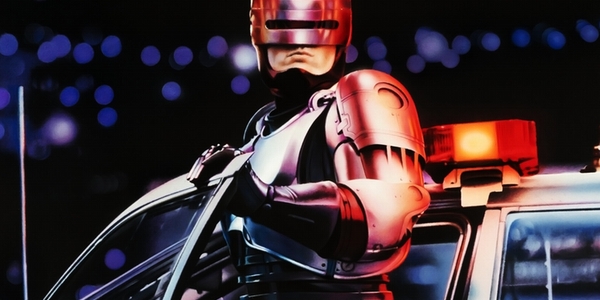
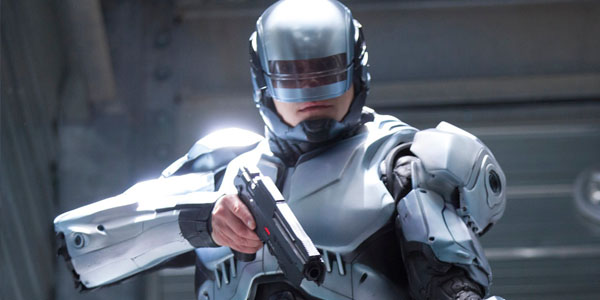
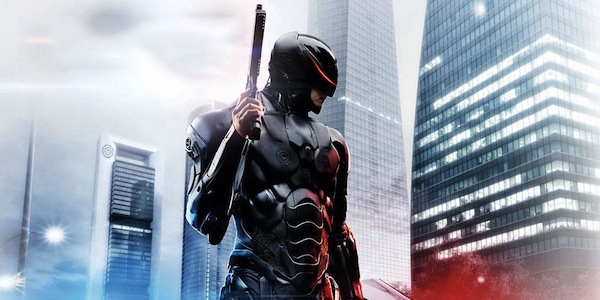
Similar to remixing the classic theme, the studio decided to modernize the classic silver outfit, which is wholly disappointing as the "tactical black" look often looks silly, whereas the modernized silver suit looked spiffy. It's like taking Superman's colors of blue and red and making them green and yellow just because the associated look is outdated. In truth, no one wants these classic outfits of idolized figures radically updated and tinkered with either, and it seems as if at some point during production the studio also came to this realization, as at the end of the film RoboCop gets his silver suit back. What's even more telling is that most of the movie is actually excellent up until the new black suit is introduced. It isn't a just a color that has changed, but RoboCop's entire combat style. Instead of honing in on the dynamics between man and machine, and going for a clunky yet indestructible exoskeleton, this version of RoboCop is highly agile with the ability to take giant leaps, and is generally overpowered in combat. It doesn't feel like you're watching a man in a machine fight crime under control of a ruthless organization, but rather your standard Hollywood action blockbuster fare. There are no memorable action scenes as a result; they simply tried too hard to make RoboCop cool in combat, instead of grounding his skillset within a degree of reality. And truthfully, it's enough to suck anyone right out of the movie.

7. More Prominent And Memorable Gangs

The 1987 original boasted a nasty and downright cruel gang led by Clarence Boddicker, a vile human being that murdered Murphy in cold blood. Much of this has to go to the credit of Kurtwood Smith's smart mouth and cocky performance, that actually feels like a villain; someone you want to see get their comeuppance. His emphatically overblown murdering of Murphy doesn't just stick with you until he gets that comeuppance, but nearly 30 years later. Even some of his goons had their eccentric qualities to them and had memorable scenes - like that one guy Officer Lewis catches taking a piss in the abandoned saw mill. The reboot most certainly does have some interesting corporate villains that encapsulate the idea of their original counterparts, but the gang presented in this version is laughably forgettable. They have no personality or characterization, they pose no threat, and their attempted murder on Murphy is as lame as possible. It's almost as if José Padilha wanted to honor the fact that a villain like Clarence Boddicker brought something extra and special to the film, but didn't know how to replicate that success within the script he was working with. In short, the gang may as well not have been in the remake, but in theory a dominant gang should be a necessity considering the film is about a cyborg cop ridding Detroit of scum.

6. Less Melodrama, More Crime Fighting

Building on that last point, RoboCop doesn't do a whole lot of crime-fighting in this reboot, which is naturally disappointing. Over half of the film is spent on either Murphy struggling with his family or going through tedious amounts of test training against other robots. It most certainly fits within the story José Padilha is telling here, but a large part of what makes the original entertaining was watching RoboCop actually fight crime. A perfect example is the grocery store robbery in the original, which sees a criminal repeatedly yelling "F*** ME" for inexplicably no reason, as he pumps shotgun shell after shotgun shell into RoboCop. As RoboCop eventually reaches the perpetrator, he bends the entire muzzle of the shotgun and then tosses the guy through a glass panel. Any version moving forward simply needs to take itself a little less seriously, and deliver on its promise of a cyborg cleaning the streets of Detroit. The emotional arcs aren't necessarily bad, but they can become overbearing after a while. A better balance must be striked in future reboots or sequels.

5. Modern Special Effects

When I say modern special effects, that isn't to say the reboot had fantastic CGI by any means; as a matter of fact it was actually quite awful at times, especially when RoboCop was shown wrestling with an Ed-209.. Realistically, the CGI should definitely be toned down in a future version, but modern special effects can still bring something new to the table. As previously mentioned, this reboot is a far more dramatic and emotional film, and there is one scene in particular were special effects are used to brilliantly convey emotion. It's also done in a way that probably couldn't have been accomplished in 1987. The scene being referred to is of course RoboCop's refusal to acknowledge his current cyborg state, insisting that he is dreaming. As a last resort to finally break through to Murphy, Doctor Dennett Norton €“ who is superbly played by the amazing Gary Oldman - presses a button on a computer that completely strips away all the metal doubling as RoboCop's body, revealing just a face and lungs. Even the special effects in this scene aren't great, but the scene powerfully illustrates that this isn't a human body in a machine; it's the bare minimum of a human being with metal for a body. Most importantly, the scene proves that modern technology can add to the story, especially emotion.

4. Social Commentary

This is an area both films definitely succeeded in - although undoubtedly Verhoeven dug far deeper - and something you just cannot have a RoboCop movie without. The reboot illustrates an interesting point fairly early on the film, by depicting the machines as a replacement for armed soldiers. Sadly, it's yet another plot point that feels drastically underdeveloped, but its mere presence brings up something far more interesting. As time moves forward, there will always be new political and social debates to pepper into the story for something refreshing. Even if the story kind of failed, the reboot proved that you can always keep building on the themes of the franchise by updating it to fall in line with more current events. Executing it just takes a great degree of care and skill. What cannot be sacrificed and never topped though, is the sharp edge and visceral bite Verhoeven's subtext defined the original version with. Nevertheless, any version of RoboCop needs the underlying subtext to feel like a RoboCop film in essence.

3. R Rating

Among being absurdly violent - something we will discuss far more in depth in a little bit - the original version received an R rating for reasons that went beyond pools of blood. Paul Verhoeven simply didn't shy away from depicting a broken city full of complete scum and vile acts. There is actually a scene where RoboCop saves a woman from an attempted rape, which seems rather dark but in the context of the film is an ugly necessity. Look at the world in the reboot; sure it has its criminals but nothing about them is threatening. And to be fair, there's just not much to do in a PG-13 film. You can't show labs of cocaine, attempted rape, strong and colorful language, or an intense seedy atmosphere that accurately portrays the ugliness of the city. It doesn't help that pretty much all of the movie is set during the daytime either. What's even more interesting is that the very act of making a PG-13 RoboCop film goes against some of the themes presented. Similar to how Omnicorp/OCP couldn't give a damn about Alex Murphy and are more focused on selling the American people a product that they think they want, Hollywood is more concerned with selling a product regardless of quality. It's almost certain that Hollywood doesn't really care how well this movie turns out, just if there's still money in the RoboCop license or not. That isn't to say all blockbuster PG-13 films are bad and helmed by heartless people, but their sole intentions are to maximize studio profits. It really is a shame too, because films such as Elysium and 300 have proven that there is interest in R-rated action films.

2. Identity

Removing the internal struggle of man and machine from any version of RoboCop would be undoubtedly more damaging than stripping the film of all its political and social subtext. Murphy's journey to regain his consciousness and identity is simply the most fascinating plot point presented. It asks the question; if you completely erase someone's memories, would it be possible for something to trigger those memories back, or is all humanity lost? Thankfully, José Padilha understood this too - otherwise the reboot would have truly been a disaster. There's also the aforementioned fact that his family is brought into the plot, which does add an extra layer to the story, even if it does dominate all of the other plot threads. On another note, the moment when Alex Murphy - in either film - finally regains complete control of who he is, is the only possible climax for telling the origin story. Furthermore, killing the man who created you for his own personal gain makes for a sweet tale of revenge.

1. Over The Top Violence

If there was a worldwide poll on the single weakest aspect of the RoboCop reboot, you would get a resounding answer criticizing the lack of violence, in a remake of what is still considered one of the most violent films ever made. For some perspective, Paul Verhoeven had to resubmit the film to the MPAA 13 times to receive an R rating, as originally he kept receiving a rating of X, which was the equivalent of NC-17 at the time. Getting into specifics, Murphy's actual death death wasn't dialed back or tame. In the original he was shot repeatedly with shotguns and handguns, limbs blown off, blood and gore depicted everywhere, and finally a bullet to the brain in what has gone on to become one of the most revered and legendary scenes in all of cinema. That wasn't the only scene drenched in blood though, as every shootout RoboCop got in was filled with blood oozing from every fatal bullet wound. There's also a scene were a criminal falls in a pool of toxic waste and reemergex as total mush, only to get hit by a car separating just about every part of his body. The showdown that sees Clarence Boddicker getting stabbed in the throat with blood squirting everywhere was also gruesome. And in the remake he just gets blown up. Maybe it was more practical for the villains, but it assuredly didn't give them a sense of personality or actually make audiences despise them. Jose Padiha also tosses away a perfect opportunity to have Murphy's left hand - which is also his only remaining aspect of human resemblance beside his face - severed amidst a heroic act. Instead, there is a scene where the right arm gets trapped and lopped off, but it's replaceable metal. Who cares? Nothing of human value was lost. It's simply stupid and disrespectful to shift the legacy of Robocop into PG-13 territory, and as evident from this entire article, dramatically affected the film for the worse. Do you agree that this is how a RoboCop film should be crafted? Comment below!

Contributor
Contributor

I write for WhatCulture (duh) and MammothCinema. Born with Muscular Dystrophy Type 2; lover of film, games, wrestling, and TV.