10 Insane Character Decisions That Totally Ruined Movies
Alien invasion? Time for a baby!
Even the most outlandish movies need to present consistent and believable character logic, and ultimately, it's totally fine for characters to do stupid and absurd things. It just has to be plausible within the context of their prior behaviour and the overall story.
Take Avengers: Infinity War - Star-Lord (Chris Pratt) angrily ruining The Avengers' plan to stop Thanos (Josh Brolin) is absolutely consistent with the impulsive, emotional nature of his character, frustrating though it still might be to watch.
Quentin Tarantino is also a master of this, especially in Pulp Fiction, where Butch (Bruce Willis) refusing to take a fall in his boxing match is a perfect distillation of the character's personality, while massively upping the dramatic ante in the process.
But it's far more common that films fail to justify a character's ridiculous behaviour on either a character or narrative level, and the result can be the all-important suspension of disbelief being thoroughly derailed.
These 10 movies were all impacted severely by the idiosyncratic, eyebrow-raising and straight-up inane choices their characters made, condemning themselves and others to most unnecessary fates.
Generally, it's a result of writers either getting lazy or writing themselves into a tough dramatic corner...
10. Maisie Frees The Dinosaurs - Jurassic World: Fallen Kingdom

Because the first Jurassic World having its female protagonist (Bryce Dallas Howard) run away from a T-rex in high heels wasn't asinine enough, last year's sequel Fallen Kingdom decided to one-up it with its head-smackingly idiotic ending.
Maintaining the Jurassic Park series' long-standing tradition of annoying child characters, the film introduces Maisie Lockwood (Isabella Sermon) early on, before making the seemingly random mid-film reveal that she's in fact a clone of her "grandfather" Benjamin Lockwood's (James Cromwell) dead daughter.
So far, so dumb, right? Well, it gets worse.
The whole clone subplot is ultimately just an attempt to justify Maisie's final decision, to release the dinosaurs into civilisation after a gas leak threatens to kill them.
The film attempts to frame Maisie's choice as the "right" one, in line with its misguided animal conservation tenor, even having Maisie declare that the dinosaurs are alive, just like her.
This completely ignores the fact that the dinosaurs are now going to rampage their way across the U.S. until they're inevitably slaughtered by the trigger-happy U.S. military.
So, all Maisie accomplished was buying the dinos a little time, getting some innocent humans pointlessly killed and ensuring the dinosaurs suffer decidedly more brutal deaths in the near-future. Good going.
To be clear, Fallen Kingdom is a mind-numbingly silly film as it is, but this climactic decision pushed it over the edge from amusing trash into genuinely insulting the audience's intelligence.
9. Jar Jar Gives Palpatine Emergency Powers - Star Wars: Episode II - Attack Of The Clones
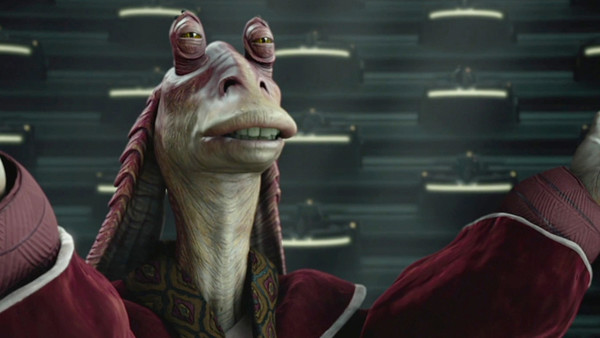
When you consider the facts, Jar Jar Binks (Ahmed Best) is effectively responsible for the rise of the Galactic Empire.
In Attack of the Clones, he acts as a delegate to the Galactic Senate, and his impassioned speech convinces them to grant Chancellor Palpatine (Ian McDiarmid) emergency powers.
This eventually leads to Palpatine overthrowing the senate, the Empire rising and democracy ending for trillions of people.
And you know what? It's one of the prequel trilogy's more fully-formed ideas...in theory. The notion of Palpatine exploiting a trusting and naive politician to his own nefarious ends makes a lot of sense, and has a ton of real-world relevance, but...did it have to be Jar Jar?
Given that the character served as nothing more than merch-bait in The Phantom Menace, integrating him into the plot in such a significant way here places an unnecessary dramatic black mark on the Empire's rise. The Sith will now forever be linked to Jar Jar's stupidity.
Defenders of the plot point argue that Palpatine would've just tricked another politician if not Jar Jar, so...why wasn't that what happened?
It's fair to say that had Lucas introduced a new politician character and had him be the pawn in Palpatine's game, it would've been decidedly easier to swallow down than the jabbering dope that is Jar Jar being in any sort of position to influence galactic policy.
8. Nobody Wears A Helmet On An Uncharted Planet - Alien: Covenant

There are many, many silly decisions made by the characters of Ridley Scott's Prometheus, none more so than scientists freely removing their helmets on an uncharted planet.
The fan outcry was strong enough that Scott promised the sequel, Alien: Covenant, would rectify this issue while hewing closer to the core Alien mythos fans know and love.
And then, the movie came out.
Even accepting Captain Oram's (Billy Crudup) ill-advised choice to detour from their planned route to check out a nearby planet for possible habitation, the fact that the colonists set foot on the planet's surface without any protective gear, let alone helmets, is just infuriating.
Just because the air is said to be breathable, that doesn't mean it's also fully free of toxins and micro-organisms, nor that there aren't harmful flora and fauna in the vicinity.
Unsurprisingly, it's not long before a member of the team becomes infected with a black goo spore, which could've been prevented by wearing a helmet, and alas, you know what happens next.
Nobody's asking that these movies have entirely water-tight character logic, but repeating one of Prometheus' most universally reviled decisions just smacks of either laziness or arrogance - or both.
7. Superman Gives Lois An Amnesia Kiss - Superman II
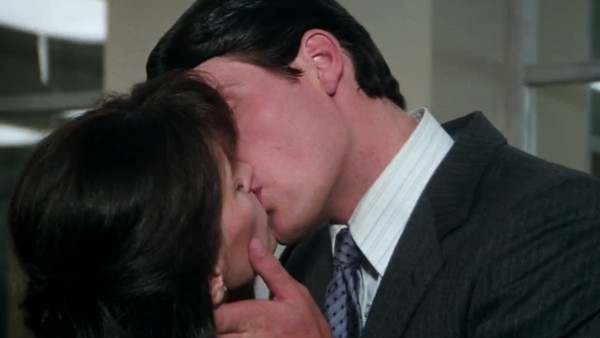
In Superman II, Lois Lane (Margot Kidder) finds out that Clark Kent (Christopher Reeve) is indeed Superman, and the end of the film sees her struggling to come to terms with this fact.
So, Clark decides to ass-pull a new superpower totally out of nowhere, by planting a passionate kiss on Lois' lips which erases her memory of his superhero alter-ego.
Even if you can accept the totally nonsensical mechanics of the power, it's creepy at best and downright rapey at worst. Because let's face it, how would anyone with this power not use it in their favour on a regular basis?
But more frustratingly, it takes an icky "ignorance is bliss" approach to the Lois-Clark dynamic, and undoes the genuinely intriguing wrinkle of Lois knowing that Clark is Superman.
Diminishing Lois and Clark's romance had the knock-on effect of relegating her to a mere cameo role in the third film, and though she returned for a more substantial part in the fourth, her relationship with Clark took a backseat once again, this time to...Nuclear Man (Mark Pillow). All because of that damn kiss.
Thankfully the amnesia kiss isn't present in the Richard Donner cut of the movie, but the version that most people have actually seen is unmistakably tainted by Clark effectively giving Lois a roofie kiss.
6. Leonidas Pisses Off A Vindictive Hunchback - 300

Zack Snyder's visually stunning historical epic was never going to be a paragon of smart storytelling or deep character work, yet it ultimately ends up depicting Sparta's King Leonidas (Gerard Butler) as basically entirely responsible for the demise of himself and his brave 300 soldiers.
Early in the film, Leonidas meets with deformed Spartan Ephialtes (Andrew Tiernan), who wishes to join Leonidas' ranks and even provides intel of a secret path the Persians may use to flank them.
Leonidas rather curtly rejects his request, due to Ephialtes' inability to hold up a shield as a result of his hunchback.
Ephialtes consequently defects to Persia, telling Xerxes (Rodrigo Santoro) about the secret passageway and more-or-less handing the Persians an (admittedly Pyrrhic) victory.
This all could've been easily avoided had Leonidas simply given Ephialtes something else to do that made him feel vaguely part of the action - have him work intel, send him off to fight with another army, or even just place him behind the Spartans' precious phalanx.
Letting the man who knows your army's only weakness walk into the enemy camp is mind-bogglingly stupid from a military strategy perspective. Leonidas basically played himself, which sucks a lot of the epic majesty out of his "heroic" final moments.
5. Q Plugs Silva's Laptop Directly Into MI6 - Skyfall
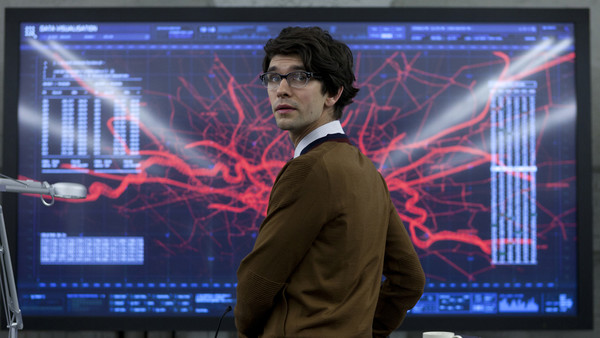
After MI6 captures Raoul Silva (Javier Bardem) mid-way through the movie, his laptop is given to Q (Ben Whishaw), who plugs it directly into the MI6 mainframe in order to decrypt its contents.
Unsurprisingly, Silva's laptop then hacks MI6 and allows Silva to make his escape, all while anyone with even the most rudimentary tech know-how is wondering why a supposed gadget genius would plug a cyber-terrorist's laptop into a government's computer system.
You don't need much knowledge of I.T. or state security policy to know that such a test should be conducted in a separate, closed system, and Q flouting obvious protocols so brazenly infuriated fans enough that a fan theory, suggesting he was a double agent all along, was created in order to explain it away.
As many great things as there are in this film, Q's inconceivable stupidity here presents a logical hole so big you could drive a tube train through it - which, incidentally, is exactly what happens.
For the rest of the film, it's tough to shake the nagging feeling that Silva would still be in jail if not for Q acting uncharacteristically dumb "because plot."
4. Laurie Hesitates To Kill Michael - Halloween: Resurrection

One of the reasons that Halloween's Laurie Strode (Jamie Lee Curtis) became an iconic "final girl" in the first place is that she was presented as both smart and resourceful, traits that were completely thrown out with her fan service-heavy, paycheck-grabbing appearance in 2002's awful eighth film, Halloween: Resurrection.
The film opens with Laurie confined to a psychiatric facility, having been waiting for her murderous brother Michael Myers to pay her a visit since the end of the last movie, Halloween H20.
But of course, Laurie has a trap set for Michael, yet even when he takes the bait and ends up hanging upside down, Laurie hesitates to cut the rope and send him to his death, fearing that she might again end up killing the wrong man.
As a result, she slowly tries to remove Michael's mask and confirm the kill, forgetting that The Shape still has his hands free, allowing him to get the better of her and eventually stab her to death.
Now, Halloween: Resurrection is a craptastic entry into the franchise for many reasons - the worst, in fact - but this not only got the film off to an immediately sour note, it fatally undermined a character known for making smart decisions.
Furthermore, the marketing implied that Laurie had a much larger role than a mere opening cameo, and fans had to wait an entire 16 years for Laurie's dumb, self-inflicted death to be undone with last year's soft-reboot-sequel.
3. Don Kisses His Obviously Infected Wife - 28 Weeks Later

The sequel to Danny Boyle's cult classic horror flick peaks in its very opening scene, as Don (Robert Carlyle), his wife Alice (Catherine McCormack) and a few fellow survivors find their idyllic cottage getaway attacked by a horde of rabid people infected with the Rage virus.
Don makes the impossible decision to escape without his wife after he sees her being overcome by the infected, but it later turns out that Alice in fact survived, and is an asymptomatic carrier of the virus.
Don, overcome with shock at Alice's survival, enters the room where she's being held and begs her forgiveness, which she grants him.
Don then passionately kisses her, transmitting the Rage virus to him, at which point he immediately turns violent and murders Alice by driving his thumbs into her eye sockets.
Now, while you can argue that Don didn't know about his wife being a Rage carrier and you can maybe cut him some slack because he assumed his wife was dead, you also don't need to be a scientist to appreciate that you might not want to slobber over your partner's lips when they've been missing for ages and aren't looking too healthy.
Even if you're unaware of the concept of asymptomatic infection, it's definitely sensible to err on the side of caution. A hug probably would've been fine, to be honest.
2. Evelyn Gets Pregnant During An Alien Invasion - A Quiet Place

A Quiet Place is a terrifically well-crafted thriller about a family trying to survive an invasion by a blind alien species with supernatural hearing abilities.
But sitting back and enjoying the movie requires audiences to leap over one significant dramatic hurdle - the fact that Evelyn Abbott (Emily Blunt) and her husband Lee (John Krasinski) decide to conceive a child well aware they're in the midst of an alien apocalypse.
The movie's defenders will argue that they did so to replace the child they lost in the film's opening sequence, but maybe it's a smarter decision to focus on saving the two children you've got left, and yourselves, rather than bring a screaming banshee into the world?
Sure, the conception could've been an accident, but the pregnancy plot ultimately just feels like sentimental baggage intended to artificially up the tension in a movie where it's already thoroughly palpable.
No matter how well-directed and sharply acted the film otherwise is, it's incredibly tough to reconcile this character logic.
1. Basically Everything Charlie Does - The Purge
The original Purge movie is often cited as a giant missed opportunity, taking a neat concept - murder is legal for 12 hours - and bungling it with a confined, low-budget approach that scarcely hints at the wider mayhem taking place across the U.S.
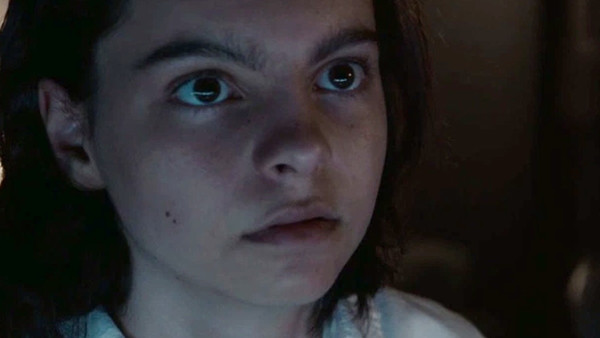
But what truly drags the film down is the characterisation of the Sandin family's son, Charlie (Max Burkholder), who effectively sets the movie's primary conflict in motion through his multi-faceted idiocy, ultimately getting his own father James (Ethan Hawke) killed.
After The Purge has begun and the Sandins are safely locked down in their fancy home, Charlie notices a wounded man (Edwin Hodge) calling for help outside, and rather than maintain the safety of their family fortress, he disables the security system and lets the man inside. Remember, this is Purge night and he has no idea who this man is.
This leads to a gang of murderers demanding they send the stranger outside or risk having their house broken into.
While the rest of the family tries to track the man down, Charlie actively helps him hide within the house, almost getting his mother (Lena Headey) and sister (Adelaide Kane) killed in the process.
Finally, even when James captures the stranger, Charlie guilts him into fighting the attackers instead, which inevitably causes his death.
There's compassion, and then there's blindly doing something without even remotely thinking about the consequences to yourself and others. It's just not very believable, and underlines the film's general dramatic disappointment.
Thankfully the first two sequels ramped up both the action and social satire, and added Frank Grillo for good measure.