10 Insanely Long Movie Takes That Changed Cinema Forever
10. The Rectum - Irreversible
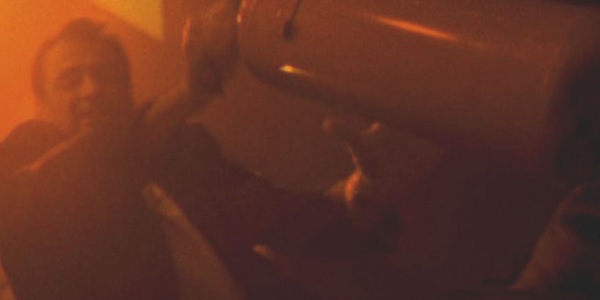 One of the first scenes in Gaspar Noé's highly controversial film features Marcus (Vincent Cassel) and his buddy Pierre entering a gay club called The Rectum, in search of the man who raped Marcus' girlfriend, Alex (Monica Bellucci). The scene features high-frequency noise and disorientating camerawork to unsettle the viewer, as the two venture around the club - which is full of men pleasuring themselves - and finally come across who they believe is the rapist, Le Tania. After a scuffle, Marcus gets his arm broken, leading to one of the most disturbing deaths in cinema history, as Pierre attacks the assailant with a fire extinguisher, caving his head in and finally smashing it into meaty chunks. The irony is that we can deduce from this scene later on that, in fact, they killed the wrong man, and Le Tenia was standing nearby. Though the scene was heavily digitally enhanced, it is a clever use of the long take, to distend viewer discomfort and prevent us from having any editorial distance from the material whatsoever. We are right there. How It Changed Cinema: Noé created a vision of Hell quite like no other, one that has influenced countless filmmakers ever since (Nicolas Winding Refn consulted him for the head-smashing effects on Drive).
9. Copacabana Tracking Shot - Goodfellas
 In Scorsese's inimitable classic, mobster Henry Hill (Ray Liotta) takes Karen (Lorraine Bracco) to the Copacabana club, and in order to fix a practical issue - the club's owner wouldn't let Scorsese bring a camera through the front - the scene unfolds as a seamless pass through the back of the club, out of the kitchen and onto the main floor, where Karen is subsequently seduced by the overwhelming power of Henry's success. It's one of the most popular tracking shots in movie history, largely because there's so much going on and so many moving parts to consider, from the hundreds of extras milling about in the background, to setting up that table quickly. How It Changed Cinema: This super-slick, time-economic introduction told us all we needed to know about the two main characters and their relationship dynamic inside of 3 minutes flat. No need for superfluous dialogues; this is it.
8. The Hallway Fight - Oldboy
 Running roughly three minutes in length, the famous hallway fight scene in Oldboy is one of the most visceral and authentic fight scenes in recent cinema history, with protagonist Oh Dae-su (Choi Min-sik) taking on a gang of assailants with no more than a hammer. The scene was genuinely filmed in one take - the take used in the film was #17, after 3 days of shooting - as Chan-wook Park's camera dollies back and forth along the hallway, the only additional flourish being a CGI knife protuding out of Dae-su's back. The intimate nature of the fight meant that Choi Min-sik couldn't rely on a stunt double for a single second of the scene, making the achievement all the more laudable; this is a grueling shot that asked a lot of its leading man, though I'm sure that most will agree the result seems extremely authentic, all the more so than crafty editing and a stuntman would have allowed. How It Changed Cinema: It pushed its leading man to the limit, a reminder of true suffering for your art, and that sometimes, a stuntman just won't cut it. If the guy in the frame is real, it feels more real to us.
7. Real Time - Before Sunset
 For me, it's hard to pick one particular shot that truly defines Before Sunset as a game-changing work of cinema. This spellbinding sequel unfolds over real-time, with estranged lovers Jesse (Ethan Hawke) and Celine (Julie Delpy) poring over 9 years of lost time inside of 90 minutes, and director Richard Linklater opts to film the pair in a series of long, intimate, unbroken takes, the longest running in at a whopping 11 minutes. Not only does this approach push its actors to the limit, it also allows them to deliver more emotionally honest performances; we feel like intruders overhearing a conversation we shouldn't be, and knowing that the pair don't have long to spend together, they have to make every word count before Jesse gets on that plane home (or as it turns out, doesn't). How It Changed Cinema: These gorgeously shot sequences managed to imbue the tender, conversational narrative with unexpected urgency as it hurtled towards its soul-stirringly tense conclusion.
6. Hospital Shootout - Hard Boiled
 Hard Boiled was a seat-of-your-pants production in every aspect, but that didn't stop it completely revolutionising the landscape of action movies forever. The climactic shootout takes place in a hospital, with Tony (Tony Leung) and Inspector Tequila (Chow Yun-fat) blasting their way through hordes of enemies in a single take, which includes a trip into an elevator to catch a breather. Reportedly, the scene was to unfold as any conventional shootout scene would, with a lot of editing and shot transitions, but the crew had become long tired, so director John Woo opted to cut everyone a break...by turning it into a single-take sequence. What's truly amazing about the scene is how meticulously planned and composed it all comes across as, despite the fact that it wasn't even the original plan, and lax health-and-safety on set resulted in Leung going to hospital after real glass went into his eyes. Was the result worth it? For Mr. Leung, who knows? For action fans the world over, absolutely. How It Changed Cinema: It raised the bar and changed the game as far as action cinema was concerned. An elevation of John Woo's signature style for sure, as soon as audiences got an eyeful of this, Western filmmakers had a lot of catching up to do.
5. 17-Minute Discussion - Hunger
 Steve McQueen's debut feature depicts the 1981 Irish hunger strike, specifically that of Bobby Sands (Michael Fassbender), which results in his later death. A pivotal scene in the movie occurs when Father Dorn (Liam Cunningham) visits him in prison, and over the course of a staggering 17-minute, single-take conversation, tries to talk him out of his strike. Sands responds by outlining his reasons why, and the result is absolutely jaw-dropping in terms of the conviction from both actors. Cunningham reportedly moved into Fassbender's flat ahead of shooting so that they could rehearse the sequence for at least a dozen times a day, which by the standards of movie actors is pretty goddamn insane. Those of us who attend the theatre regularly might take it for granted, but as far as movie productions go, this is some next-level acting. How It Changed Cinema: In adapting the cinematic medium to most closely resemble a play for 17 solid minutes, Steve McQueen demonstrates that the two forms don't have to be a million miles away from one another. More to the point, this intense dialogue reinforces the power of the spoken word over action.
4. The Restaurant Battle - The Protector
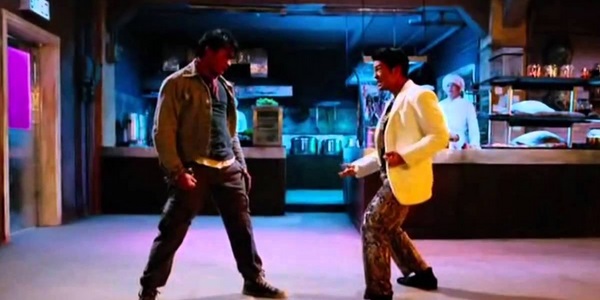 The Protector is a cracking Tony Jaa-starring martial arts flick that absolutely demands your attention, especially the four-minute steadicam sequence that sees Jaa's protagonist fighting his way through a restaurant, ascending several flights of stairs as he dispatches countless goons. This is a scene that really exemplifies Jaa's physical prowess, for he has virtually no time to rest and has to be "on" for the entire four minutes, hitting the right cues and making the entire enterprise look as authentic as possible. And does he pull it off or what? Like a video game come to life, Jaa kicks ass, takes names, and is respectfully out of breath by the time he reaches the top. Who needs fancy filmmaking tricks when you can just film a guy punching and kicking people while running up some stairs? How It Changed Cinema: Martial arts sequences don't need epileptic, ADD-addled cuts and shaky camerawork to be entertaining and exhilarating. With its slick, steadicam movement, Tony Jaa is no less an indefatigable martial arts master.
3. A Movie Of Ten Shots - Rope
 Alfred Hitchcock's 1948 crime thriller is without question one of his best and most ambitious films, an experiment in which he aimed to seamlessly blend 10 long takes to give the impression of one singular, fluid 80-minute segment. Hitchcock memorably masks his edits by closing into dark objects and then emerging out of them, and though we as savvy, contemporary audiences might be able to see them coming a mile off, there's still an undeniably astounding level of craft there, one which no doubt has influenced more than a few of the entries on this list. How It Changed Cinema: A masterclass of movie editing both for its time and ever since, Rope is a testament to the hypnotic power of editing, to trick the brain and cover all of the seams that comprise the filmmaking craft.
2. The Car Attack - Children of Men
 This gut-wrenching sequence, in which Theo's (Clive Owen) car is attacked by an armed gang, results in the death of his ex-wife Julian (Julianne Moore). The four-minute, single-take scene is a masterclass in how to convince an audience of something they're not really seeing. CGI is too often employed over-emphatically, but here, Alfonso Cuaron blends numerous elements - apparently six individual segments filmed in four locations, joined with five digital transitions - into a wholly convincing final product, one we're never doubting is anything less than 100% authentic. It's the sort of scene that has you watching it again and again just to try and feel out the seams or eye some creaky CGI. It is utterly astonishing. How It Changed Cinema: An evolution of Hitchcock's Rope, Alfonso Cuaron used a more modern bag of tricks to make us totally believe in the intense energy of this artificially-constructed set-piece. Never are we in any doubt that this is unfolding as we see it, and that is rare these days.
1. An Entire Movie Filmed In One 99-Minute Take - Russian Ark
 Impressive though Children of Men's scene was, it still hasn't got anything on the King of the single-take sequences, the 99-minute Alexander Sokurov movie Russian Ark, which is a film recorded in a single...freaking...take. That's right, and this isn't some talky indie film, either; it's a massively ambitious production with enormous sets, elaborate song and dance numbers and...basically everything that makes a long take seem like utter Hell. Sokurov got the take right on a third attempt, and to lighten the load, the sound was all re-dubbed later (apparently because cinematographer Tilman Büttner kept swearing at minor screw-ups). Needless to say, this is one of the most daring and audacious film projects ever undertaken, and though the narrative might not be the most engaging, it is an utterly beguiling jaunt through Russian history, and absolutely something you should watch. Reports continually emerge that films have topped Russian Ark's single-take feat in terms of run-time, but none as of yet, it appears, have been able to match its scope and style. How It Changed Cinema: It threw the gauntlet down to every other filmmaker out there, a dare to eschew the wasted hours of re-jigging lights and re-applying make-up, proof that a movie can be made inside of 100 minutes (excluding pre-production time, of course). We couldn't include them all, so which other incredible long takes do you love? Let us know in the comments below.