10 Intricate Movies You Will Never Stop Analysing

Sometimes lacking an all-explaining thematic wrap-up scene can be infuriating, but sometimes it'll make a film go down in history.

Film criticism is not for the faint of heart. If you dare offer up a particular reading into whether it was all just a dream, or consider if Deckard is a replicant or not, or assert a moral center to three hours of Jordan Belfort's antics, you'd better be ready for those who disagree with you to come out of the woodwork with freshly-sharpened pitchforks. Hollywood seems to be leaning towards more big-budget films with an ambiguous or philosophical edge. Recent examples include blockbusters like Inception and Prometheus, which made box-office killings due in large part to the debates they sparked among filmgoers €“ was Cobb dreaming at the end or not? What the heck was that black goo all about anyway? While these are mostly action movies at heart, they also pack a healthy wallop to the cerebellum. There€™s no shortage of films like that, but there is another genre of Hollywood film that seems specifically designed to drive audiences nuts. Sure, there are directors that immediately leap to mind in this category, and you€™ll certainly find the likes of David Lynch and Alejandro Jordowosky represented here. Other lesser-acquainted auteurs foray into the frustratingly-oblique only once, and for one reason or another end up turning out films that are abstruse, irrational, or downright nonsensical. Yet some big-budget abstract films can hit on something more profound. Here are ten such movies, in no particular order, that you will never stop analysing...

10. The Fountain (2006)

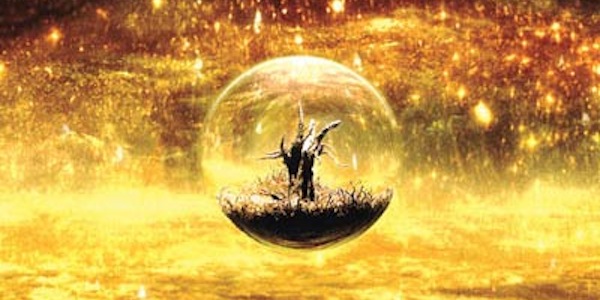
With the Russell Crowe-starring biblical epic Noah currently in theaters, one could have expected another wave of critical controversy along with the waves of that famous flood (read the Noah review here). Director Darren Aronofsky always seems to turn out divisive stuff, from his directorial debut Pi to the impossibly bleak Requiem for a Dream to the pirouetting Black Swan. The Fountain, Aronofsky€™s third feature film, takes his oeuvre to another level. Starring Hugh Jackman and Rachel Weisz as a husband-wife scientist team (the kind that seems to exist in Hollywood and nowhere else), the film covers three distinct periods in time €“ the past, where Jackman€™s explorer discovers a great and ancient tree, the present, where Jackman€™s scientist seeks a cure for death, and the future, where Jackman€™s monk-like hermit floats through space in an organic orb. As is the case with most of these entries, a simple synopsis like the one above barely manages to break the surface of what The Fountain is all about. These three periods in time are distinct, yes €“ but this seems like one story, one long timeline, and perhaps one character who has defied death. At what cost has he earned this immortality? Is death a disease worth curing, or even a disease at all? These are weighty themes, obviously, and Aronofsky certainly goes all out while probing the possibilities. As is also the case with most of this list, what Aronofsky ultimately provides is perhaps not an €œanswer€ exactly. The pieces are all present, but the viewer has to do a whole lot of legwork to make something out of them. Wrapping your mind around The Fountain isn€™t easy, but then again immortality probably isn€™t either.

9. Magnolia (1999)

The contemporary master Paul Thomas Anderson loves the San Fernando Valley, having set several of his early films there, calling Magnolia €œthe epic, all-time great San Fernando Valley movie€. The film never garnered as much praise as a few of his other efforts (like There Will Be Blood), but it does boast an impressive cast including Tom Cruise, John C. Reilly, William H. Macy and the late, great Philip Seymour Hoffman. It also boasts one of the strangest turns in modern cinema. The opening of the film is unique and admittedly unorthodox, yes €“ but the information it imparts is understandable on its own, even if the application to the movie as a whole is unclear. From there, the film progresses in a manner simple enough. We have a cop stricken by a young woman, a womanising motivational speaker, a young quiz-show genius, a washed-up quiz show genius, and several satellite characters that serve to colour the overall story. It€™s all written beautifully and would make for an excellent film if Anderson stopped there. But something falls from the sky, literally, at a crucial point in the story. This event is so strange, so out of place, and so surprising that the characters in the film are just as perplexed as the viewer. Part of what makes it so strange is the otherwise €œnormal€ façade put up for the majority of the runtime €“ if this freak occurrence happened along at the end of The Fountain, no one would look twice at it. Magnolia exudes the elusive I-Know-Something-You-Don€™t-Know quality attempted by so many directors and achieved by so few, and it remains the undercover powerhouse in Anderson€™s sterling canon.

8. Barton Fink (1991)

The Coen Brothers hardly ever make a "straightforward" film - there's always something there to make you scratch your head, whether it's the looming tornado of A Serious Man, the frustrating cycle of Inside Llewyn Davis, or the unexplainable villain of No Country for Old Men. But their fourth directorial effort - a film which the brothers penned in three weeks during a bout of writer's block while filming Miller's Crossing - became something of a cult classic, largely due to the heavy symbolism and the endlessly complex finale. Barton Fink begins as a simple tale of a moderately famous playwright enticed to Hollywood to write for the pictures. Barton arrives, meets with colourful Californians, and begins writing - but a slow descent to a dark place has been occurring all the while. Barton's strange, sudden friendship with John Goodman's Charlie Meadows is both the crux of the film and the source of critical discussion. Charlie is one of Goodman's greatest roles - if not his greatest - and the impenetrability of his character only seems to intensify as the movie progresses. The symbolism is heavy throughout Barton Fink, but Goodman's character continues to drive the analysis of the film more than a decade after its release. There is little doubt that Barton Fink is the Coens' weirdest, most oblique film - but it's also one of their best.

7. Naked Lunch (1991)

William Burroughs's 1959 novel Naked Lunch is one of the grossest, most hyperactive things you will ever have the pleasure of reading. Structured as a series of chapter-length "routines" that can really be read in any order, the discombobulated and confusing book may seem like an unlikely candidate for a film adaptation. And David Cronenberg's adaptation certainly plays with that idea - of truth in "adaptation", and in art in general - by presenting itself as a kind of metatextual palimpsest to Burroughs's life and work. The novel is in there, somewhere, but so are elements of Burroughs's life. The writing of the book intersects with the author's severe drug addiction, making for one of the most visually striking and philosophically intriguing films in the past 25 years. There's definitely a lot to dislike in this sick and clammy flick, but there's a lot to dig through as well. It's interesting that Naked Lunch debuted the same year as the Coens' Barton Fink because both are so obsessed with the writer, the art creator, the inspiration, the drive. The films couldn't be more dissimilar at first glance. Still, there's something that Barton and Bill Lee and Burroughs and Cronenberg and the Coens all seem preoccupied with, something John Goodman's Charlie Meadows would call "the life of the mind." This is what makes Naked Lunch so ripe for analysis, and what makes it relevant to this day.

6. Enter The Void (2010)

When Oscar, a young American living in Tokyo, is shot and killed in a police raid on a neon-lit nightclub, the people in his life are unavoidably affected. Oscar is, too, as he somehow continues to witness the events following his death from a floating, ghostly vantage. His past and present meld into this unearthly future, the void he enters untethered by time or space. Praised as much for cinematic technique as anything else, Enter the Void does indeed present a complex visual landscape that invites analysis. The character development is surprisingly unique, though, and it's where a lot of the drive of the film stems from. Oscar's "story" strays from the narrative to the meditative, taking in all of life simultaneously and asking "what is this? what does this mean?"; Gaspar Noe's trick is that Oscar's story is our story, and by shooting the film mostly from a pin balling POV perspective, we die when Oscar dies and rise again when Oscar rises. The official trailer offers a mini-Enter the Void, containing many of the surreal, transcendent, epilepsy-inducing elements of the one-of-a-kind movie: https://www.youtube.com/watch?v=bKRxDP--e-Y

5. El Topo (1970)

Film school snobs, rejoice! Alejandro Jodorowsky's 1970 spectacle El Topo easily secures a spot on this list, remaining to this day one of the most symbolism-stuffed feature films in history. It's difficult to classify or even describe El Topo - Wikipedia would have you believe it's a "western film", but that hardly seems to cover it. The titular character is a black-clad gunslinger making his way through the desert with his naked son, who he apparently wants to ensure gets really sunburned. The first half of the film follows the violent El Topo through shock, anger, guilt, grief, and a surreal western landscape. The second half - which Wikipedia again brands "a love story of redemption and rebirth" - is a fevered and terrifying adventure through the mind of El Topo and the mind of Jodorowsky. The symbolic patterns woven throughout El Topo are impossibly numerous, and impossible to notice upon a single viewing. This is a story very much based in visuals, and the depictions of violence on the screen are very often nearly to much to handle. Ultimately, El Topo opens itself to viewers of any religion, moral inclination, or artistic preference, asserting itself as a slightly juvenile but incredibly passionate gem in Jodorowsky's crown.

4. Mulholland Drive (2001)

As with several other directors on this list - especially Cronenberg and Jodorowsky - David Lynch has built his reputation on films that welcome multiple readings and interpretations. Nearly any movie from his filmography could fit in this slot, perhaps with the exception of his godawful Dune adaptation (which, coincidentally enough, is at the heart of a new documentary about Jodorowsky's doomed version). It's odd to call Lynch's 2001 film Mulholland Drive accessible, but the structure and overall aesthetic of the film really is quite endearing. It's certainly more likeable than Lynch's first film Eraserhead, while still boasting a relatively similar degree of impermeability. Set across California, Mulholland Drive begins with a car crash that leaves a woman unsure of her own identity. Several strange occurrences and visuals leak out of a more-or-less "normal" story€at least at first. By the third act of the film Lynch has opened the floodgates and dared you to try to wrap your head around it. Several LOST alumni - it being the television show most comfortable in the company of these complex films - appear in Mulholland Drive, including Mark Pellegrino and Patrick Fischler. Their appearance in both works is a coincidence€or is it?

3. Melancholia (2011)

Melancholia opened at the 64th Cannes Film Festival to rave reviews and immediate awards predictions. Though the ripples from that initial splash may have died down quicker than expected, the movie still holds all of the allure of a very bold effort from a very bold filmmaker. The story revolves around two sisters, Justine and Claire, played by Kirsten Dunst (in one of her best roles) and Charlotte Gainsbourg (Lars von Trier regular), respectively. Justine is newly married, and Claire is likewise in a loving relationship. All is well...oh, except for the fact that a rogue planet is going to collide with Earth and destroy it forever. Lars von Trier is, again, an extremely bold filmmaker - his new release Nymphomaniac promises a healthy dose of unhealthy sex, and his 2009 film Antichrist is one of the most appalling things ever released in cinemas. By those standards, Melancholia is nearly "normal". Still, it's a deeply-felt film that touches on important emotional and psychological issues, and even if you're as turned off by it as von Trier intends you to be, you'll still find yourself thinking about it in the days and weeks to come.

2. The Tree Of Life (2011)

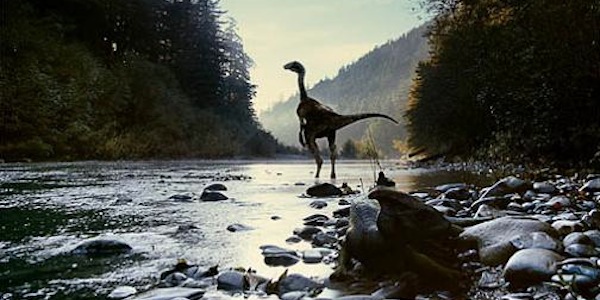
If anyone takes his time making movies, it's Terrence Malick. Between 1973 and 2005, Malick only directed four films - Badlands (1973), Days of Heaven (1978), The Thin Red Line (1998), and The New World (2005). Perhaps the care Malick takes with each of his films necessitates these long gaps, or maybe he just doesn't want to churn out 18 films a year like a conveyor belt. Whatever the reasoning for the slow pace, things seemed to have changed for him; he has more films in production in the last three years than in that entire first three-decade span. The film that one could argue was the starting point of this career-reinvention was 2011's The Tree of Life; a sprawling tale of life on our planet starring Brad Pitt, Jessica Chastain, Sean Penn...and two dinosaurs. Yes. Why, you may ask upon watching this film, are we treated to such an immensely long timeline, from the birth of the universe to the end of all things? And why do we pause in Waco, Texas, of all places? How are we supposed to read the dominance of one dinosaur over the other against a family drama in the 1950's? The Tree of Life is big in just about every way, and the questions that Malick raises still overflow from every careful shot.

1. Synecdoche, New York (2008)

Writer and sometimes-director Charlie Kaufman is primarily known for his brilliant metafictional comedies Being John Malkovich, Adaptation, and the painfully beautiful Eternal Sunshine of the Spotless Mind. Synecdoche, New York is the most recent film from the not-so-prolific writer, unless you count a "script revisor" credit for Kung Fu Panda 2... Starring the late Philip Seymour Hoffman as Caden Cotard, a struggling playwright and theatre director, Synecdoche, New York welcomes interpretation just as often as Kaufman's other efforts (if not more). Caden creates a life-size replica of New York City in a massive warehouse, ostensibly as part of a new play, and casts actors to play everyone in his life including himself. Of course, for a writer like Kaufman, that premise alone is not nearly confusing enough. Throughout the film, increasingly noticeable - and increasingly weird - angelic, motorised sounds hum in and out over the visuals of the film, causing home viewers everywhere to check their headphones and reset the sound output on their computers. The visuals themselves are increasingly strange, too, including a woman calmly touring a house that just so happens to be on fire. As you do. Which films do you find yourself analysing and overanalysing? Suggest them in the comments below!

Contributor

Matt is a writer and musician living in Boston. Read his film reviews at http://motionstatereview.wordpress.com.