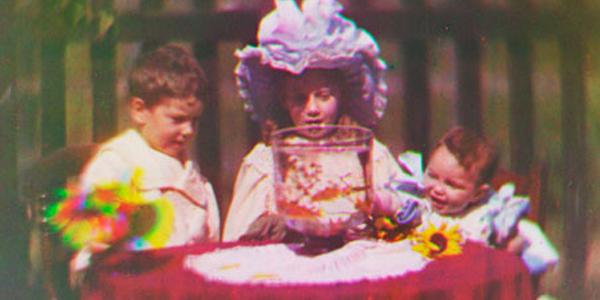
10 Landmark Movies That Were The First Of Their Kind

Think you know your movie history? Think again.
The debate between whether audiences should prefer originality or familiarity in their movies is ongoing and irresistibly enduring. Many movie fans rave over films that try something daring and new with their plot and/or style, but general audiences rarely seem to be averse to cliches or plots they've seen a million times before if the box office performances of certain unnamed films are any indication (cough *Transformers* cough). Of course, neither side is necessarily right in this matter, as too little innovation is boring and too much is incomprehensible and unrelatable. For those moviegoers that appreciate an opportunity to see something new when watching a movie, imagine watching something almost no one had ever seen before of a type that would fundamentally change filmmaking for generations. Picture being one of the first people to see moving colour images, or even being the first person to see a moving images at all. The sensations must have been incredible and awesome in the oldest sense of the word, and a distilled version of the pleasure modern audiences experience when even the slightest innovation creeps in to their cinema experiences. The milestone movies described in this article might not be as slickly executed as most movies you€™re likely to see today - and in fact a few of them were ridiculed somewhat in their own time for their clumsiness or bad taste - but for sheer creative novelty, it€™s difficult for movies today to come anywhere near their importance.

10. The First Horror Movie - The Haunted Castle
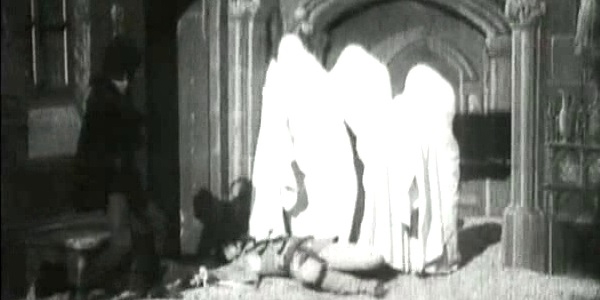
Decades before Frankenstein and Dracula became the first household names in horror films due to their hit 1931 movies, George Melies created the first horror film in 1896. Essentially it€™s about a warlock/vampire in a pretty modest castle who creates some monsters in a cauldron and then menaces an everyman hero before being subdued by a cross. Today it seems more like a play by particularly enthusiastic high school students than a horror film, particularly when you consider that at about three minutes into the running time part of the set starts to fall over. Still, using the trick of €œstop the camera, change something, start the camera again€ to make skeletons and beasts suddenly appear is a nice touch, and the film offers photographic proof that the sort of jump scares favoured by the horror crap of today like the Paranormal Activity movies really are the oldest trick in the book. https://www.youtube.com/watch?v=OPmKaz3Quzo

9. The First Movie - Roundhay Garden Scene
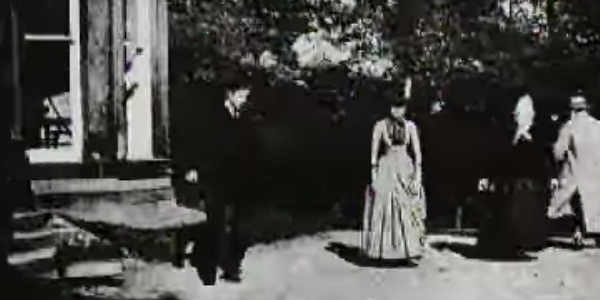
1888 saw the creation of the first strip of celluloid ever shot that survives today: a two second shot of a man walking across a yard while some ladies mill about known as the Roundhay Garden Scene. Even beyond the importance of the strip in cinematic history terms, there€™s an interesting story regarding the aftermath of shooting this little film, as it was said to have left a cursed legacy that did for its major players. First, the director Louis Le Prince disappeared from a train a few years later (one of the suspects in that case was Le Prince's rival Thomas Edison, who will be featured repeatedly in this list later on,) before, in 1902, the man walking across the shot was shot dead for reasons unrelated to the film, and Le Prince€™s mother-in-law - who also made an appearance in the film - died only ten days after the filming was completed. If there€™s any truth to this curse, it means that the first bit of film ever shot is much creepier than the first horror movie. https://www.youtube.com/watch?v=F1i40rnpOsA

8. The First Colour Film

Probably the earliest colour film the average viewer is likely to have seen is The Wizard Of Oz, but in fact the process was already 37 years old when that classic was released, despite the fact that almost no one knew it. The earliest surviving bit of printed colour footage was a test reel by Edward Turner from 1901 or 1902 of a busy street, his children with a goldfish tank, and a pet scarlet macaw. While hardly staggering, the colour and image quality for the film is pretty surprising for how new the process was and how badly maintained the film strip had been. Sadly, just as Turner was about to innovate photography forever by commercializing this very effective process, he died of a heart attack at the age of only 29. Apparently whatever curse that befell the makers of the Roundhay Garden Scene wanted to get one last film pioneer before it was done. This left what was thought to be the first practical use of full colour film as we understand it today to wait until 1922 when the Technicolor process was used for the film Becky Sharp. https://www.youtube.com/watch?v=VEhd-iq9QAY

7. The First Movie Ad - Admiral Cigarette

One of the more common and petty complaints about motion pictures is the presence of product placement in them, but by no means a modern phenomenon in the slightest, it dates back as far as 1897 with the early films of Thomas Edison. Since smoking before the 2000s wasn€™t so much a habit as something that 78.5% of people did in general, unsurprisingly the first ad was for the tobacco product Admiral Cigarette. The premise of the world€™s first film advert was that when four people of different classes and races (a British gentleman, a native American, etc.) were sitting on a bunch, a box burst open and out came Admiral Cigarette, a smoking woman in a naval uniform - unusual for the time as women smoking in public wasn't socially acceptable until the Women's Suffrage Movement. Anyway, she gives them cigarettes and drops a couple handfuls of cancer sticks on the ground, before the men on the bench then unfurl a banner that says €œWE ALL SMOKE!" It€™s a pretty curious slogan, as you wouldn€™t think you€™d want to advertise, for example, a restaurant by holding up a banner that just says €œPEOPLE EAT THINGS.€ By all the evidence, the commercial didn't work very well anyway and Edison and contemporaries stopped this sort of advertising fairly soon after. https://www.youtube.com/watch?v=Wk5Bqn6VlF0

6. The First Mickey Mouse Cartoon - Plane Crazy
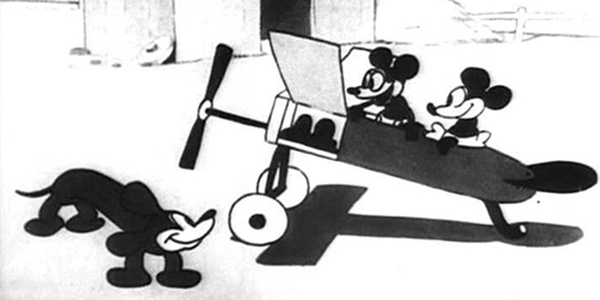
Most people that think they know much of anything about Mickey Mouse would probably offer up Steamboat Willie as the first cartoon ever to star the mouse since it was such a big hit and being one of the first sound sync cartoons gave it a significant place in film history. But they'd be wrong as the real first appearance of Mickey was in a 1927 cartoon called Plane Crazy, inspired by Charles Lindberg€™s famous solo flight across the Atlantic. The film was considered so uncommercial when it was created that it didn€™t even find a distributor - and neither in fact did the second one, The Galloping Gaucho. One of the most ridiculous things holding back Mickey Mouse at the time was a notion expressed by studio mogul Louis B. Mayer that women would be too scared if they saw a ten feet tall mouse on the screen. It€™s no wonder that the Disney Corporation doesn€™t do much to rectify the historical record and promote Plane Crazy. In this cartoon Mickey isn€™t so much a lovable scamp as he was meant to be in the cartoons as he is an insufferable asshole who forces Minnie Mouse to kiss him when their up in a plane and throws a horseshoe at her after she walks away from her among other things. While it€™s been a long-running complaint that Mickey€™s a bit milquetoast, this probably isn€™t what the complainers wanted. https://www.youtube.com/watch?v=kCZPzHg0h80

5. First Comedy Film - The Sprinkler Sprinkles
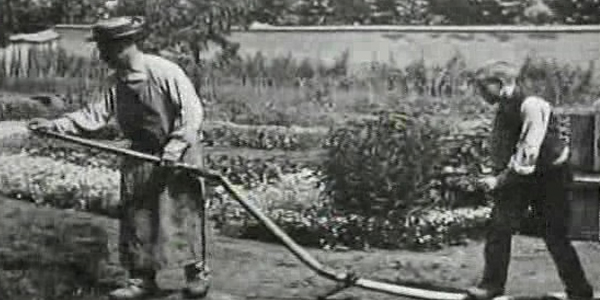
The idea of film comedy started in 1895 with a movie called L'arroseur Arrose (€œThe Sprinkler Sprinkled") - a forty-five second film by a couple of French film pioneers named the Lumiere Brothers. The plot, such as it is, is that a man is watering a garden when a kid sneaks up and blocks the flow of water in a move that would later be as well-phrased in comedy as the ladder goof or the water-shooting flower. The gardener then looks at the hose and gets sprayed in the face, to the collected amusement of everyone watching. Because of the moralistic time in which it was made, the gardener then chases the kid down and spanks him (rapidly, weakly, and to modern eyes kinda creepily) before shoving the kid away and resuming his watering. Probably the most interesting aspect of this vine video for the 19th Century is that this is also regarded the first scripted movie as well as the first comedy, although by then film fans were probably already snobbishly complaining that it didn€™t measure up to Roundhay Garden Scene. https://www.youtube.com/watch?v=IooPPi1YzkM

4. First Sports Movie - Boxing Cats

Boxing is such a manly, old timey sport that it€™s natural it would be the first athletic feat ever filmed (not to mention the fact it was one of the few which could be pretty fully conveyed with one shot from a stationary camera.) What might not be quite so natural was that the first film of it was also the first film ever of cats. Back in 1894 Thomas Edison managed a breath-takingly impressive moment of fore-sight that predated the advent of the internet by many decades, and made a film of two cats with boxing gloves tied on giving it all they had as some creepy guy (Professor Welton) watched from the rear, occasionally manipulating them like puppets so their behaviour looked more like boxers than cats. A similar idea was considered for the initially much more literally-titled 1980 Robert DeNiro film Raging Bull. Possibly. https://www.youtube.com/watch?v=k52pLvVmmkU

3. The First Alice In Wonderland Adaptation - 1903
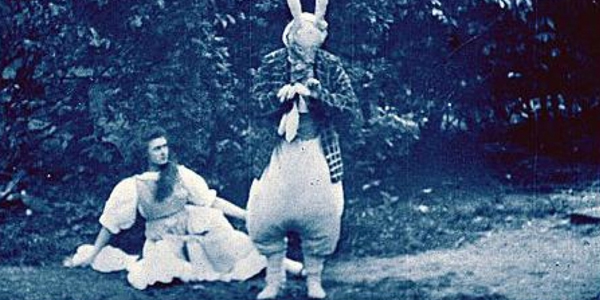
Since there have been more than forty-three adaptations of Lewis Carroll's Alice in Wonderland since it was written in 1866, it seems fair to say it€™s pretty much a film subgenre onto itself. The directors that got there first were Percy Stow and Cecil Hepworth in 1903 with their nine-and-a-half-minute version. Or at least nine and a half minutes is how much of the film survives, since two and a half minutes of it are lost. What remains is very heavily damaged. It looks as if the film might break apart and need to be spliced at any second even as you watch it on Youtube. Although for its time it was surely a special effects extravaganza, the story is mostly a pretty routine and condensed run through of the famous tale's plot points. As far as intrinsic entertainment value for the film itself, the definite highlight is this movie€™s version of the Cheshire Cat. Instead of any sort of smartass, creepy creature with a grin, it€™s a bored cat superimposed into the scene that doesn€™t even look at Alice. A really strange moment since everything else in the movie is played more or less straight and all the other creatures are played by people in animal costumes as you€™d expect. https://www.youtube.com/watch?v=zeIXfdogJbA

2. The First Cartoon - The Enchanted Drawing

Animation as a genre started off more or less as a magic trick and with a surprisingly small number of drawings. In 1900, a magician named J. Stuart Blackthorn collaborated with Thomas Edison on a cartoon called The Enchanted Drawing. The plot of the two minute short is that an artist draws a grumpy fellow in real time. He cheers the drawing up by providing it with a cigar and some booze, and by that I mean he holds a cigar and booze up to the drawing, and then there€™s a cut to the character redrawn holding these same things and looking happier while the real cigar vanishes. At one point he draws a top hat on the character then teleports it from the drawing into his hand. While crude and certainly less convincing in bringing a drawing to life than even cartoons made just a few years later, it€™s a creative way to have a human interact with a drawing for its time. It€™s certainly more effective at this novel form of interaction than Space Jam was. https://www.youtube.com/watch?v=rYDmH2B9XJw

1. The First Special Effect - The Execution Of Mary Stuart

Apparently wanting to do something simultaneously classy and lowbrow, in 1895 Thomas Edison staged the February 8, 1587 execution of Mary Stuart, the Scottish Queen and wife of Henry VIII. The seventeen-second movie doesn€™t have time to waste: The Queen (a man in drag) kneels down to put her neck on a chopping block, and through the miracle of using a cut to replace the actor with a mannequin the queen is beheaded. It€™s not the end of Ned Stark, but apparently it was more than good enough for audiences back then because reportedly audience members thought the execution was real. After all, this was the first time in the known history of film that any sort of special effect was done, and viewers would only have a couple seconds to study the film unless they paid extra to watch it a few times. Not to mention the fact that Edison movies weren't watched on large screens but by looking at small screens in boxes called "kinetoscopes." Naturally the mistaken impression that Edison was murdering people for entertainment was bound to create a lot of publicity, so the fake snuff film was a hit that Edison imitated repeatedly, including a recreation of president William McKinley's assassin Leon Czolgosz's execution. Some film historians claim America€™s obsession with movie violence started here too. It would have been nice for the first special effect to be a little more whimsical than simulating a brutal killing, but hey, that€™s what the times were like. https://www.youtube.com/watch?v=CK3yq8AlyeQ Did you enjoy this article? Share your thoughts below in the comments thread below.

 
Posted On: 
Contributor
Contributor

A librarian, but don't hold that against him.