10 Legitimately Masterful Made-For-TV Movies

Because where else are you going to see Michael Douglas as Liberace?

Hearing the words 'made-for-TV movie' doesn't exactly fill you with hope. Despite TV's rising reputation as a contender for the entertainment media crown (it's coming for you, film), TV movies still carry the reputation of being absolutely rubbish. They lack the credibility of cinema, because, if this crew and this cast couldn't make it onto the big screen, then Lord knows they were probably doing something wrong. TV movies are saccharine blobs of mush used to fill out the daytime TV schedule, lazily-directed feature-length soaps with no personality whatsoever - or so goes the myth. And yet in reality it isn't always the case. TV movies can be where great filmmakers of the future go to cut their teeth, or where old pros go to realise projects too risky for film studios to take on. There are gems to be found amidst the made-for-TV movie wreckage. Here are ten that weren't just adequate for the TV movie, but that were genuinely excellent pieces of work in their own right.

10. The Sunset Limited (2011)

Much of the talk surrounding Cormac McCarthy's 2013 original, The Counsellor, suggested that the novelist's talents didn't translate so well to script writing, with Ridley Scott's perhaps overly-reverential take on McCarthy's screenplay walking a fine line between profundity and ridiculousness. Reviews implied McCarthy might require the filter of professional screenwriters to make his bleak prose work, evidenced by the greater success of No Country for Old Men and The Road, based on his novels but penned by the Coen brothers and Joe Penhall, respectively. But that would mean forgetting HBO's excellent 2011 TV movie, The Sunset Limited. Adapted by McCarthy from his stage play of the same name, The Sunset Limited finds perhaps the perfect star and director in the terminally grumpy Tommy Lee Jones, playing the suicidal 'White' to Samuel L. Jackson's faith-driven 'Black'. Set entirely in Black's apartment, where White is brought after Black prevents him from committing suicide, The Sunset Limited is a dialogue-heavy, extreme two-hander, in which the two characters chew over the facts of life. Topics of religion, race, mortality and more are explored, as Jackson's Black desperately tries to convince Jones' White that life is worth living.

9. Bloody Sunday (2002)

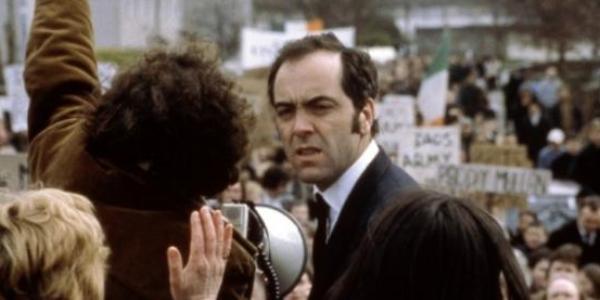
Made by Granada Television for ITV, Bloody Sunday is the film that got director Paul Greengrass the Bourne Supremacy gig, and subsequently propelled the filmmaker into the big leagues. And the documentarian style he's since become renowned for is evident as far back as here, in his retelling of Ireland's 1972 Bloody Sunday massacre; the closest cousin to Bloody Sunday would be United 93, or Greengrass' recent Captain Philips. Because the director is beholden to the facts here too, stepping out of the way and allowing you, the viewer, to make your own moral assertions. Greengrass' neutrality is something that's brought him criticism in the past, but the director is just telling the story from what knowledge he's gathered - here, he's a documentary-maker who's just happened to make the leap to fiction, using his background in journalism as a way to achieve his desired verisimilitude. Bloody Sunday puts you into the heat of the battle, in one that doesn't feel like a battle at all - it's a series of bloody incidents that appear to escalate from nowhere. But the realism isn't why Bloody Sunday stands out among Greengrass' impressive filmography - by being a tragedy about ordinary, desperate people, and by featuring a never-better performance from James Nesbitt as a real-life Northern Irish politician, Bloody Sunday remains Greengrass' most emotionally devastating film.

8. Conspiracy (2001)

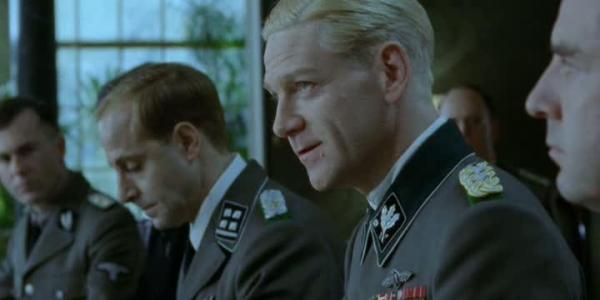
Cinema is no stranger to the horrors of Nazism; Schindler's List, The Pianist and more have shown the true extent of the Holocaust in unflinching detail. But BBC/HBO co-production Conspiracy is, if anything, even more chilling for showing just how anti-Semitism in Europe under the Third Reich reached its sickening conclusion: by having gluttonous, cackling government officials sit around a conference room and systematically weigh up the numbers. It's there, in a secret meeting, that Kenneth Branagh's Reinhard Heydrich, Stanley Tucci's Adolf Eichmann and others discuss the "final solution" to the "Jewish problem", formulating the best plan to eradicate the new German empire of the Jewish race. The script, by playwright Loring Mandel, depicts an epoch-defining power struggle confined to a board room, as hard-line Nazis talk down the more sensible voices in the room and push to exterminate an entire race over lunch. It helps to shed some light on and partially give an explanation for the madness of the Holocaust, by making the meeting appear mundane and by having the few dissenters seem like helpless drones, themselves at the mercy of a single-thought state. It goes without saying that Branagh, Tucci and their character actor counterparts do a stand-up job, turning a simple dialogue piece into a high-pressure play.

7. Behind The Candelabra (2013)

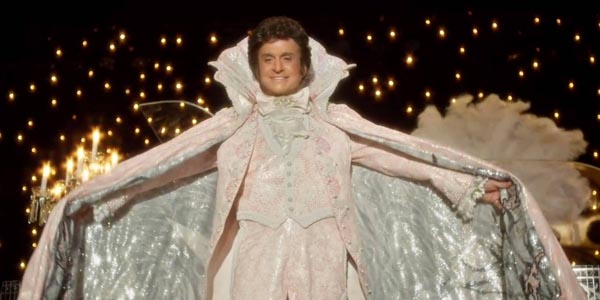
The point at which Steven Soderbergh crossed over from film to TV was through his long-gestating passion project, the Liberace biopic Behind The Candelabra. Considering Soderbergh had been developing the project for so many years, and acknowledging his years of prolific moviemaking, it's no big surprise that Behind the Candelabra turned out to be one of Soderbergh's best films, even if the lack of studio interest forced him to pitch up at HBO. Pared down to a small(ish) $23 million romantic drama, the film tells the story of Liberace's (Michael Douglas) poisonous relationship with Scott Thorson (Matt Damon). For Douglas, Behind the Candelabra obviously offers the role of a lifetime, one that stretches him further than ever, with the actor inhabiting the disturbed and domineering Liberace in a performance Oscar would have loved. Matt Damon is similarly impressive as Liberace's lover, his naive blankness turning to a sharp pout as his older squeeze subjects him to unwanted facial reconstruction and a life kept secret in the shadows. Even through the fights and the rampant gift-giving disguised as affection, though, there's something tender about the skewed relationship between Liberace and Damon's Scott - perhaps owing to the scaled-down production Soderbergh had to initiate when the movie studios rejected him, Behind the Candelabra is effectively an intimate two-man play. Albeit one with the most lavish set and costume design you'll likely see on TV for some time.

6. The Unloved (2009)

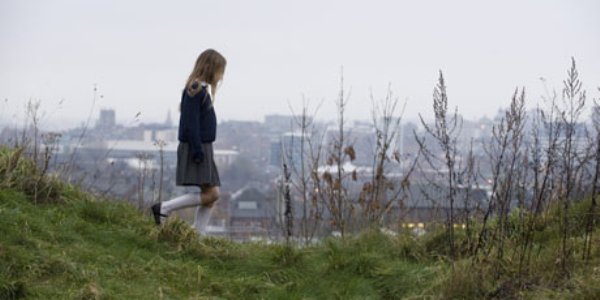
In the tradition of all great British dramas, Samantha Morton's directorial debut, The Unloved, is grim, grey and marginally upsetting. It's terrifically well-acted, too, in the way that at no point do the performances feel performed - made in the social-realist style of Ken Loach or Shane Meadows, plot is minimal, but character is paramount, with the actors making their roles feel lived-in. Of the names in the cast, there's perhaps only one you'll recognise - Robert Carlyle plays the absent father to Lucy (Molly Windsor), an 11-year-old girl placed in the UK's foster care system - but it's Windsor, and the phenomenal Lauren Socha as Lucy's volatile new roommate, who stand out. Heavily autobiographical (The Unloved reflects Morton's own childhood spent in foster care, and Windsor even bears a strong resemblance to the writer/director), the film provides the kind of understated, humanist drama that British cinema does so well. Only Morton did it for the small screen, at a fraction of the usual cost. And though talented as an actress, it's a shame Morton hasn't returned to the director's chair since The Unloved - the confidence of the movie, which has a style of Morton's own already set out, belies the fact that this is only her debut.

5. Red Riding (2009)

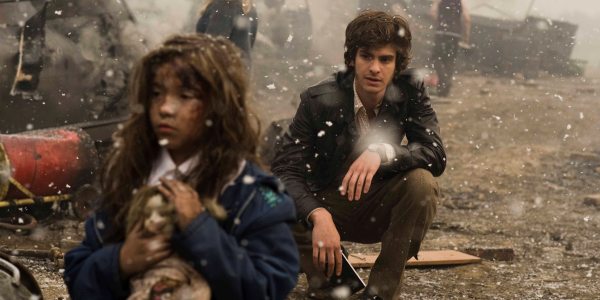
Yorkshire Noir is a largely under-explored sub-set of the crime genre, and yet not one, but three directors were committed enough to together make over five hours of shadowy 'ee bah gum' entertainment with the Red Riding trilogy. Adapted from David Peace's Red Riding novels, directors Julian Jarrold, James Marsh and Anand Tucker together direct connected tales taking place between 1974 and 1983, a time at which police corruption is rife and the Yorkshire Ripper looms large. A litany of British stars and character actors make up a cast that rivals any of cinema's ensembles, including (deep breath) Andrew Garfield, Rebecca Hall, Sean Bean, David Morrissey, Paddy Considine, Peter Mullan, Eddie Marsan, Daniel Mays, Mark Addy and Sean Harris. They're all on great form, matching the material, which is decidedly sinister stuff, depicting a grim, dilapidated world where the downtrodden are kept at the very bottom and the powerful make up some Illuminati-esque secret society looking only to increase their power. A gritty spin on the typical noir, Red Riding's world is harsh and overcast, and full of dark intrigue. In other words, Yorkshire.

4. Scum (1979)

Featuring king of the geezers Ray Winstone in an early starring role, Scum was originally a rejected 1977 Play for Today script, remade two years later by influential social-realist director Alan Clarke for Channel 4. And, looking back, it's not as explicit as its Mary Whitehouse, 'ban this sick filth!' reputation would suggest. Although certainly brutal, Scum doesn't feel exploitative: what violence it features feels not only suitable, but crucial. To make a statement about prison life, and about the vulnerability of youth within the system, Scum makes its desired impact and has it appear appropriate. As with all Alan Clarke's work, Scum's visual style is austere, the harsh light bulb-glow lighting the film and the dull brown, white and grey colour palette emphasising the defeat felt in this prison world. The film highlights the importance of small victories (often meal-related) in jail, as well as the heightened impact of loss. Scum's most powerful scene, though, remains the one in which Winstone's Carlin, unassuming and baby-faced, uses improvised weaponry to exact his revenge on the bullies at the top of the borstal's hierarchical chain, claiming his new place as "daddy" of the ward and turning violent bully himself in the process.

3. The Sorrow And The Pity (1969)

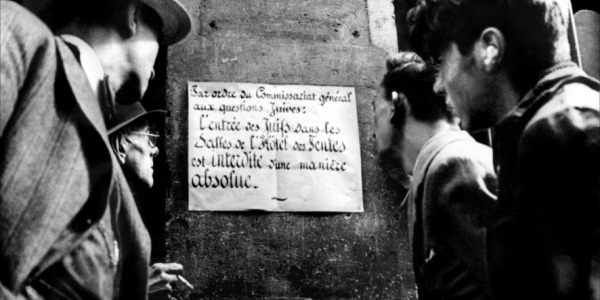
Though it wasn't actually shown on French television until 1981, Marcel Ophuls' documentary epic, The Sorrow and the Pity, was produced by French, Swiss and German TV production companies. At 265 minutes, it's a slog, but a rewarding one: featuring interviews with French and German politicians, former soldiers, teachers and farmers, Ophuls' project highlights the difficulty of living in Nazi-occupied France. Part one, The Collapse, charts the events that saw France sleepwalking into collaboration with Germany, but part two, The Choice, shows an aftermath that was even more problematic. Told mostly via interviews with the French men and women who lived through occupation, former Resistance fighters, Vichy French, Fascist sympathisers and the politically neutral all have their say - resulting in a complicated dialogue. The Sorrow and the Pity ultimately tells of one country torn apart by just four years of occupation - "Krauts didn't denounce people, bad French people did", remark a group of anti-Vichy French, as Ophuls asks how it is to live with neighbours who turned them in to German authorities. Most fascinating is interviewee Christian de la Maziere, a French former Fascist youth that fought on the Eastern Front for Germany, now living in deep regret. As popular French singer Maurice Chevalier is forced to protest his innocence in a 1944 television broadcast and his own hit Sweepin' the Clouds Away plays the film out, you get the sense of a country left irreparably divided.

2. Duel (1971)

In no other Spielberg film is the Hitchcock influence more obvious - it's there in Duel's high concept, in the almost silent approach to cinema, in the camera angles and in the intelligent manipulation of the audience. Before the 'Berg became a fan of self-seriousness and before he forgot how to end a film, Duel showed the director in a more playful light, eschewing much in the way of dialogue and character progression and favouring instead a mano-a-mano vehicular chase. It's one of Spielberg's most purely entertaining movies. Duel may have originally been made for television, but it's a masterful tale, of an average man selected by the universe as the victim of a bored, irate trucker. Instead of a giant comedy shark, Spielberg puts poor Dennis Weaver up against a gigantic steel truck, a smoke-spewing menace that'll stop at nothing to get Weaver's electronics salesman back for disrespecting him on the road. And if that mix of existentialism and wrong-man thrills doesn't sound like classic Hitchcock, then God knows what does - this is blockbuster filmmaking (you won't question the relatively small budget) with some of the most intense chase scenes this side of ol' Hitch. And it wasn't even made for the big screen.

1. Carlos (2010)

Though screened at the 2010 Cannes film festival in its bum-numbing 5 1/2 hour entirety, Olivier Assayas' Carlos was originally made for French pay TV channel Canal+ (it also got a limited theatrical release in the US and UK, albeit in a truncated form). Although made with a controlled, fastidious gaze, Carlos somehow works as a biopic of unscrupulous assassin Carlos 'The Jackal', without ever revealing much about the man, and is an even better depiction of the revolutionary 70s, as well as the less politically turbulent 80s and 90s, when only the dying embers of world revolution remained. Carlos is a fascinating portrait of a man, one who's vain, egotistical and opportunistic but also strangely compelling, and Edgar Ramirez is outstanding in the title role. Seducing women that naively believe in his legend and making deals with whatever revolutionary cause can make him an offer, Ramirez' Carlos fights for no one but himself, increasing his celebrity as his comrades run in chaos around him. Assayas' film is a jetsetting thriller, a tense action spectacular (particularly in its recreation of the 1975 militant raid on Germany's OPEC headquarters, a highlight), a historical epic and a showcase for one of the world cinema's most promising new actors.

Contributor
Contributor

Lover of film, writer of words, pretentious beyond belief. Thinks Scorsese and Kubrick are the kings of cinema, but PT Anderson and David Fincher are the dashing young princes. Follow Brogan on twitter if you can take shameless self-promotion: @BroganMorris1