10 Massive Movies Everyone Else Tried To Copy

Why does every fantasy movie think it needs to be The Lord Of The Rings?

Ever sat in the cinema watching a film and got the distinct feeling you've seen it all before? On top of franchising whatever property they can, Hollywood's a sucker for riding a trend. Or rather, making a trend after one film's rather successful. When a film proves to be popular studios will try their absolute best to try and get ahold a little bit of that magic, leading to a bunch of copycats that try to derive a formula from a one-off hit. And when you're dealing with absolutely massive movies, some of the biggest of all time, the imitations are only going to be more prolific. Naturally it's not always going to work; a big film tends to succeed down to many reasons, many of them unreplicable contextual factors. Today we take a look at ten films that were so damn big that just about every other film tried to copy from them. Some of the imitators ended up being enjoyable in their own right (heck some of them films themselves are guilty of riding a wave created by others), but with most its hard to get past that unshakable feeling they're desperate cash-grabs.

Honourable Mention - X-Men

In 2000 the evolution of film leaped forward. Treating its comic source with the upmost sincerity, Bryan Singer's X-Men showed the world how superhero movies could be more than genre pieces or toy commercials. But while it proved influential very little of the film itself was actually imitated; the majority of copying ends with the notion of a superhero blockbuster. Spider-Man et al merely used the success of X-Men as a jumping point, rather than trying to simply replicate it, so it can't legitimately be on the list (although it does deserve a mention).

10. Star Wars

The Offenders: Battlestar Galactica, Flash Gordon, a bunch of even cheaper films, Argo, and the rest of the genre for the aesthetic. Star Wars shook up everything in movie making. Finishing off what Jaws had started two years previously and creating the blockbuster, it also had a profound impact on the sci-fi genre in both the short- and long-term. Aside from reigniting popular interest in the genre and allowing the likes of the Star Trek movies and more home-based entries (E.T., Back To The Future) to thrive, George Lucas' mega-hit changed how sci-fi looked. Whereas before the future had been this abstract world where everything was either new and perfect or full on dystopian, Star Wars gave audiences a "used-future", where the world, while still pretty abstract, felt lived-in and not just unwrapped for the film. Then you have the copy-cats. Immediately after the film's release there came a slew of cheaply made attempts to cash in on the notion of space fantasy. Previously sci-fi had been just that, science fiction, but now it was much more crowd-pleasing; along came Battle Beyond The Stars, Starchaser, Hawk the Slayer and more of that sort of thing. These were painfully blatant rip-offs that wouldn't survive in today's franchise ran industry, but back then thrived; how else could Argo (the fake CIA production) have worked as a cover in the events of Argo (the Oscar winning film).

9. The Avengers

The Offenders: The Sinister Six, X-Men: Days Of Future Past, Batman V Superman: Dawn Of Justice. Every couple of years it gets raised that the superhero bubble has to burst soon. It's now been decades since X-Men marked the start of the modern superhero genre and like the western before, its critics have been waiting for audiences to find a new shiny thing. And yet whenever these concerns are raised a film comes along that shows there's plenty of places for the genre to go. The Avengers, with its witty interchanges and complete understanding of what made these characters work in the comics, brought together Marvel's heroes in brilliant form, knocking the socks of genre doubters by showing the scope these films could have. And then every other film decided instead of increasing breadth they'd just try and capture the same magic. Suddenly the central concept of superheroes shifted to being massive universes of interconnected, ever-building stories. Marvel had been doing this since Iron Man, but it was only when we got to see the pay-off four years later that other studios realised what was going on. Cue a rush to get other properties their big team-ups; D.C. and Warner are trying to get a Justice League film to work, while Sony have suddenly become a lot more interested in bringing together Spider-Man's villains than about the journey of Peter Parker himself.

8. Goodfellas

The Offenders: Casino, Blow, American Hustle, The Iceman. Every since a director was young they wanted to be Scorcese. One of the biggest injustices in Oscar history is Goodfellas losing out on Best Picture to Dances With Wolves. While Kevin Costner's film has the epic scale (and length) of classic Hollywood, Martin Scorcese's gangster picture (coming in half an hour lighter) is not only impeccably made, but also reshaped a whole genre. Any classical gangster film since owes a debt in some small part to Goodfellas. And some owe a lot more than that. It's easy to distill the seeming formula that made the tale of Henry Hill so successful - decade spanning story charting the rise and fall of our hero, constant-yet-necessary voiceover, popular music on the soundtrack - and make another similar film, but that's missing that it was a method specific to the real-life story of a gangster. That didn't stop directors from all walks taking it as a shortcut to greatness, with Blow and American Hustle prime examples of films that relied heavily on Goodfellas without the intrigue (what's the life of a gangster on the street like) to make it interesting. Even Scorcese wasn't beyond aping the formula. Casino, released four years later and from a script again by Nicholas Pileggi, shared the structure and style of its older sibling, although it stands out as one of the better imitators, using the style to tell its own story (the fall of gangster-ran Vegas).

7. The Lord Of The Rings

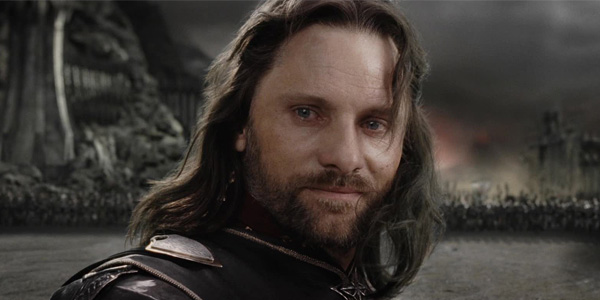
The Offenders: Harry Potter (later films), Eragorn, The Chronicles Of Narnia, The Hobbit, Maleficent, The Golden Compass. As the defining films of a generation, it's hard to imagine that at the time The Lord Of The Rings was a big gamble. High fantasy just wasn't cool at the box office, to the extent the trilogy was originally going to be cut down to one or two films, with the finished product only emerging thanks to some smart foresight on behalf of New Line Cinema. And although The Return Of The King sweeping the Oscars seemed to herald a resurgence in the fantastical, that's not really happened. The big issue is that while other genres tend to develop over time, allowing new styles to emerge, every major high fantasy movie has tended to stick close to the LOTR game plan. In the years following the big hit countless fantasy films were commissioned that essentially took existing ideas and tried to make then more epic (and it's still going on today - look at Maleficent). But it's not just obviously derivative fare either; if horcruxes weren't a big enough Tolkien parallel, the final Harry Potter descended into a Hogwarts assault that rings close of Helm's Deep. The worst offender, however, is The Hobbit, which sees Peter Jackson try to ape his own success in a tonally inappropriate way. The only major fantasy to find proper success is HBO's Game Of Thrones. Although it's certainly going that way, initially the show steered clear of high fantasy elements, instead going for a rough medieval feel. The impact of Rings, however, is still there; the defence of the Wall was very Jackson-y.

6. Toy Story

The Offenders: Every CGI animated film that immediately followed. You probably missed it due to Disney sneaking it into cinemas with little fanfare, but three years ago Winnie The Pooh was the last ever cell animation from the legendary Mouse House. This year saw the release of the The Wind Rises, Hayao Miyazaki's final film. It appears that after two decades on the brink, 2D animation is finally obsolete (in mainstream terms anyway). And it all began with Toy Story. 3D animation had been around for a long time and was used to tell stories as early as TRON, but it was the first feature in the medium from the geniuses at Pixar that sparked the revolution. It looks (and still does) amazing thanks to the decision to tell a story about plastic-y toys, which led to other studios such as Dreamworks and Disney to blindly begin going into CGI in an attempt to catch some of the gold. The results was mixed, mainly because they didn't quite understand the key to Toy Story's success (clue, it wasn't that it was made in a computer). Looking back at the early days, many misunderstood it as cute idea plus CGI equals quality product. Not quite. It was the story, with its relatable and well designed characters that caught the minds of kids and parents alike. Pixar knew this all along (why do you think The Good Dinosaur was delayed - it wasn't because the animation wasn't up to scratch) and with Frozen and How To Train Your Dragon it seems the initial imitators have caught up to.

5. Alice In Wonderland (2010)

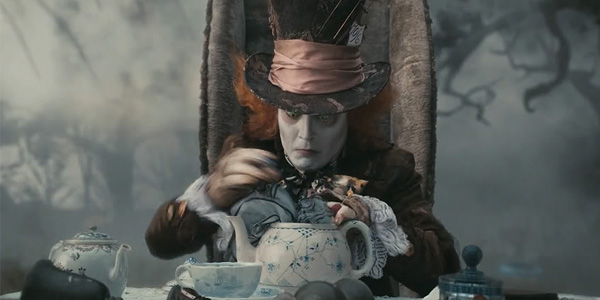
The Offenders: Snow White And The Huntsman, Hansel And Gretel: Witch Hunters, Red Riding Hood, Maleficent, Jack The Giant Killer. Alice In Wonderland is unique in this list in that it's not commonly regarded as a good film. Whereas the others were imitated because what they were doing was actually creative, in this case it was all about money. Even if you can't stand Captain Jack Hatter, there's no escaping the fact that Alice In Wonderland dominated the box office. Raking in over a billion dollars at a time when that was the reserve of super-duper franchises and James Cameron, Burton's film rode the Avatar 3D wave with gusto. Other studios saw just how much money a twisted version of a classic story with lots of CGI made and set about matching it. It's a foolish endeavour; not only were Burton's stylings sort of logically specific to the land of Underland (sigh), but the slew of fairy tale twists seem to have forgotten Alice isn't actually a folk lore tales. Based on the books by Lewis Carroll, the legacy of Wonderland is dominated by the Disney animation and so all the copycats went for that studio's territory. The bandwagon jumpers have been across the board mediocre and below, probably because fairy tales are grimm enough already. There's certainly a more general shift in blockbuster filmmaking taking place (more on that later), but within the confines of fairy tale reimagining Alice somehow started something.

4. Blade Runner

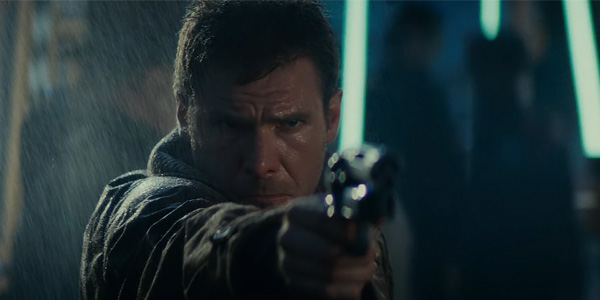
The Offenders: The Fifth Element, Total Recall (2012), most near-future, Earth-set films. Star Wars popularised the idea of a used future, but it was Blade Runner that gave all subsequent of sci-fi a ready-made design. The rain drenched L.A., with its towering skyscrapers and giant moving billboards, skewed close enough to reality that it was a conceivable world just a few decades from ours. And it feels like we've been living in that world for three decades now. Blade Runner's world was so convincing that filmmakers en masse bought into the idea, turning 'Blade Runner derivative' into an archetypal genre design. The problem with all this is that a world doesn't feel unique if we've seen it on screen countless times before. When thinking of the future there's an opportunity for a director to use their imagination to create something truly special, so to fall back on convention feels out of place in a genre that used to be all about the ideas. What the copying films really lack to pull off the look is the tone. Blade Runner is a fully immersed neo-noir that could only be more blatant about it if there was a drawling voice over (actually, scratch that). So the grime, rain and dingy light all really help add to that; the design has a purpose.

3. Batman Begins/The Dark Knight

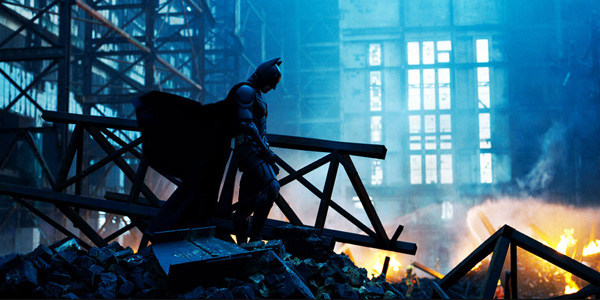
The Offenders: Iron Man, The Amazing Spider-Man, Man Of Steel, Godzilla, Alice In Wonderland, TMNT and many more. It's hard to decide which of the first two films in Christopher Nolan's Dark Knight Trilogy to attribute this next trend to. Although Batman Begins was first, it was The Dark Knight's unprecedented success that really caught people's attention. A necessary move after the door surfing of Batman And Robin, Batman Begins rebooted the franchise with a sense of grit lacking in the superhero genre up to that point. And as well as unwittingly providing the formula that the reboots of Spider-Man and Superman stuck to, Jon Favreau has stated he took a lot of inspiration for Iron Man's feel from Nolan. Talk about seismic shift. But it was The Dark Knight that really had an impact on non-spandex wearing cinema. Less a superhero film and more a crime drama that happened to have a superhero working his way through it, the movie created the illusion that the only way to make a big blockbuster is to go serious and realistic. Whenever people bemoan the current state of movies for taking itself serious (or are shocked when a Marvel movie dares to have fun), all roads lead back to Gotham. It's just a shame in all this one of the majors parts of the The Dark Knight Trilogy's success has been ignored; it feels so real because Nolan favoured practical effects, using limited CGI.

2. Pulp Fiction

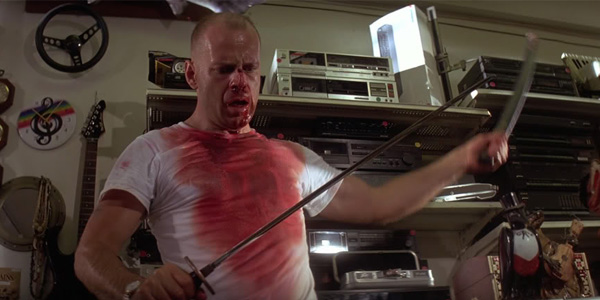
The Offenders: Destiny Turns on the Radio, Things to Do in Denver When You're Dead, 2 Days in the Valley, Lock Stock and Two Smoking Barrels, Seven Psychopaths. Himself heavily inspired by his own cinematic interests, in the mid-nineties Quentin Tarantino proved to be the upstart to beat. Reservoir Dogs, itself a copy/homage of Hong Kong actioner City On Fire, already had led to some films aiming for the same whip-smart script and heightened violence (amongst them double Oscar winner The Usual Suspects), but it was after Pulp Fiction when everyone really tried to copy his style. Boasting a non-linear narrative full of oh-my-god-so-cool moments and characters who would spend entire conversations blabbering on about things entirely unimportant to the plot, it felt like a wholly fresh movie. And, rewatching it twenty years later, it still does, although the same can't be said of the copycats. In the years after its release a bunch of blatant imitators with supposedly witty dialogue and ensemble casts tried to match the height of Pulp Fiction to laughably poor results. Even though the direct imitators eventually stopped, the influence can still be seen in modern crime films. It's interesting to see Tarantino an oft-mimicked director. His work is almost entirely rooted in homage, so to copy him po-faced seems to be missing the point a little.

1. 2001: A Space Odyssey

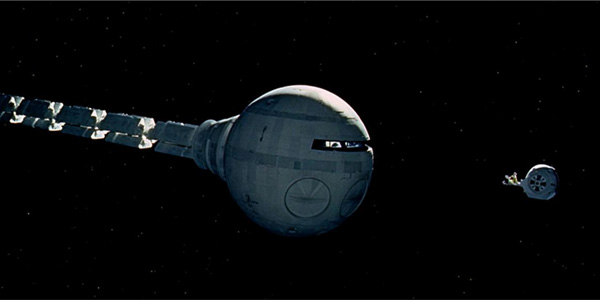
The Offenders: All proceeding sci-fi. We've already looked at how Star Wars and Blade Runner helped create an aesthetic that still defines many sci-fi films, but tracing their threads back leads to a film even more influential. Stanley Kubrick's 2001: A Space Odyssey may be (at least) thirteen years late on its prediction of the future, but we can overlook not having a pet Star-Child given how the film completely shook up the genre. It's so dominating most movies probably don't even realise that they're copying it. On a technical level it was truly groundbreaking. And not in an Avatar "we've updated technology a bit" way; Kubrick sank half the budget into effects, popularising processes that would remain commonplace until the CGI revolution in the nineties. Matte paintings and models weren't new concepts by any stretch, but the attention to detail and intense approach leaves us with a film that hasn't dated badly at all. It's in the designs, however, where many films took inspiration. The realistically constructed space-craft (NASA designers helped out with the production) seem so typical now, but that scientific thought was newly applied here and is probably 2001's greatest unsung influence. It was, after all, where Star Wars heavily borrowed from the film and we all know where that led. The plot, with psychotic computers and higher alien powers interfering with human development, have countless decedents too, but the impact feels rather insignificant given how seismic an influence the film was just on a visual level. Agree with out assessment? Which is your favourite copycat movie? Let us know down in the comments.

Contributor
Contributor

Film Editor (2014-2016). Loves The Usual Suspects. Hates Transformers 2. Everything else lies somewhere in the middle. Once met the Chuckle Brothers.