10 Mind-Blowing Facts About Quentin Tarantino Films

Wait, Reservoir Dogs was almost not directed by QT?!
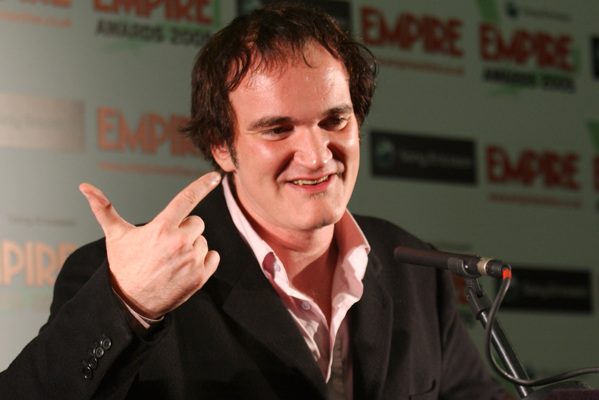
When it comes to diverse film-making, nobody does it better than Quentin Tarantino. From heists to war dramas to westerns, Tarantino is the master of intricacy, brilliantly capturing the spirit of a massive range of different kinds of film. His most recent project, The Hateful Eight, is a perfect example of his talent; dropping a bunch of characters into a single location for almost three hours and still managing to leave audiences gasping while perched on the edge of their seat. Nobody else working in the industry is so openly cine-literate while being so much damn fun. Though he has only directed eight films (according to the man himself, he intends to stop at ten, as it's a nice round number) his projects are always extremely dense and layered, full of in-universe references to other Tarantino films and homages to his own favourites. It naturally takes him years to create a film, so, with a long wait before he follows up The Hateful Eight, there's no better way to quench that Tarantino thirst than to brush up on your knowledge of his movies. After all, the man has frequently proven himself to be a genius. It's no surprise that such renowned, elaborately made films would have some seriously mind-blowing facts regarding their creation...

10. Nobody Knows What The Title "Reservoir Dogs" Means

Despite multiple contradictory reasons that are passed around in discussion, Tarantino has never given a proper explanation for the title of his 1992 feature film debut. Nevertheless that hasn't stopped people from speculating and spreading around various stories. Knowing that they'd demand an explanation, Tarantino himself told various film studio representatives that the term €œreservoir dog€ was used by gangsters in French films like Breathless and Bande A Parte. According to Tarainto, a €œreservoir dog€ was essentially a snitch or a rat. This wasn't true, however, and was just made up to appease investors. There's also the story that the name came from when Taratino famously worked at a video store; when he suggested a patron rent Louis Malle's Au Revoir Les Enfants they misheard the title as €œreservoir dogs€. This was debunked by the Tarantino expert Dale Sherman in one of his books about the writer, claiming Louis Malle's film wouldn't have been available to rent at the time.

9. German-Born Til Scheweiger Only Agreed To Be In Inglourious Basterds Because It Meant Killing Nazis

In Inglourious Basterds, Til Scheweiger plays Sergeant Hugo Stiglitz, one of the few non-Jewish members of the Basterds. Though Stiglitz is a rather quiet character, he's incredibly brutal, killing at least thirteen German officers. In one of the films more memorable scenes, Stiglitz stabs a member of the Gestapo in the face through a pillow. He also has a massive knife which he frequently sharpens. Interestingly, the knife bears the motto €œMeine Ehre heiŸt Treue", which means €œLoyalty is my honor€ in German €“ the motto of the SS. Before Inglourious Basterds, Til Schweiger consistently refused to indulge roles that required him to wear a Nazi uniform or the Nazi insignia. It was only when Tarantino told him that the role would involve killing Nazis, not portraying a loyal one, that Scheweiger broke this life-long career stipulation.

8. Bruce Willis Received No Acting Credit In Four Rooms (Because If He Had, He Would Have Been Sued)

If you haven't heard of Four Rooms, it's an incredibly interesting (although not entirely successful) anthology project involving four writers and four directors, namely Allison Anders, Alexandre Rockwell, Robert Rodriguez and Quentin Tarantino. Each of the four directors helmed one segment of the film, which is based on a bunch of short stories by Roald Dahl. Tarantino's segment is titled The Man From Hollywood, and tells the story of a party attended by famous director Chester Rush and his friends. One of the friends is played by Bruce Willis, who had a close relationship with Tarantino following Pulp Fiction. In fact, Willis took the part as a favour to Tarantino, and wasn't paid for his role. According to the Screen Actors Guild, all credited actors must be paid, and so Willis is never credited as appearing in the film during the credits or promotional material, because if he had been, he probably would have been sued by the SAG.

7. A Fight Scene In Kill Bill Is Timed Absolutely Perfectly
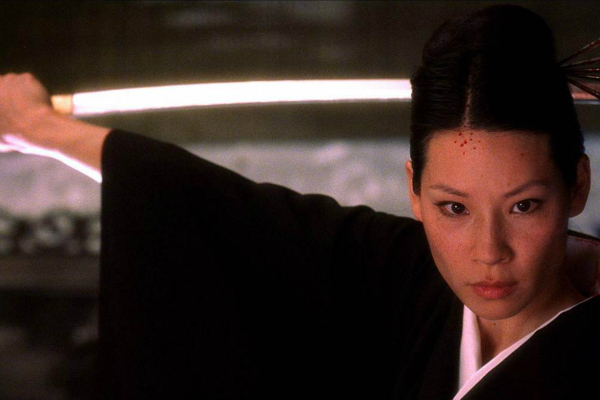
The intricacies of the fight scenes in Kill Bill are no secret. You've only to watch the film for a couple minutes to get a real sense of the masterful choreography displayed. Nevertheless, there's one particular fight scene that's notable for its amazing adherence to time. It's not uncommon for films to take excessive liberties when it comes to time. The amount of films that have, for example, sixty second countdowns that last several minutes is practically innumerable. Which makes it all the more impressive, then, that when Uma Thurman's character The Bride goes up against Lucy Liu's O-Ren Ishii there's some serious respect for diegetic time. Before the fight, O-Ren says in Japanese €œI hope you saved your energy. If you haven't, you might not last five minutes.€ The fight itself lasts exactly four minutes and fifty-nine seconds from when the music starts to when O-Ren is brutally scalped (okay, so it's slightly more than her scalp).

6. Tarantino Almost Didn't Direct Reservoir Dogs
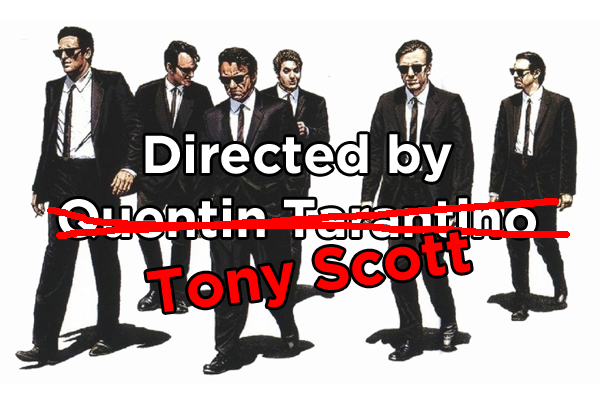
A world in which Tarantino never directed Reservoir Dogs is not a particularly pleasant world to imagine, yet nevertheless it was very close to reality. At the start of his career, Tarantino penned the screenplay for both True Romance and Reservoir Dogs, offering both to director Tony Scott (who was previously famous for Top Gun). Scott was keen to direct both scripts, but was told he had to choose one. Whatever he chose, Tarantino would direct the other. In the end, Scott chose True Romance, leaving the Reservoir Dogs screenplay with Tarantino. Had things gone the other way, who knows what might happened.

5. Leonardo DiCaprio Really Struggled With The N-Word

Though everybody knows the fact about Leonardo DiCaprio smashing a glass with his fist and bleeding everywhere while filming a scene as Calvin Candie in Django Unchained (DiCaprio's blood is totally visible in the final product, too), what you mightn't know is that DiCaprio was incredibly uncomfortable while filming for a different reason. During filming, DiCaprio actually had to halt the shoot because he became so uncomfortable with the excessive use of the N-Word (an issue that caused a huge amount of controversy when the film first released, with many claiming it was totally gratuitous). Apparently Samuel L. Jackson (who plays slave Stephen in the film) took DiCaprio aside and attempted to stub out this concern by simply saying €œMotherfucker, this is just another Tuesday for us€.

4. Tarantino Waited Almost Twenty Years To "Prank" Actor Sid Haig Using Django Unchained

This one might be slight, but it's incredibly Quentin Tarantino. Reportedly, American actor Sid Haig (famous for showing up in Star Trek, Mission: Impossible, The A-Team and Get Smart) was offered the role of Marcellus Wallace in 1994's Pulp Fiction, but turned the role down. Almost twenty years later, then, Tarantino's casting director Victoria Thomas told Sid Haig's agent that he was certain to get the role of Mr. Stonesipher (one of the men working for Leonardo DiCaprio's Calvin Candie). Tarantino scheduled two auditions for Haig, subsequently cancelling them both at the last minute. In the end, the role went to David Steen. Supposedly, this was completely intentional, and thought by Tarantino to be a humorous prank (though honestly, it plays more like a punishment) in response to Haig's previous rejection.

3. The Bear Jew's Bat Contains The Signature Of Anne Frank

The Bear Jew is one of the most memorable characters in the entirety of Inglourious Basterds, and also one of the most intimidating. Though portrayed by Eli Roth, Tarantino originally wanted Adam Sandler to play the role, though he had to turn it down due to scheduling conflicts (he was filming Funny People €“ what a trade off).

Donny €œThe Bear Jew€ Donowitz is notable for the baseball bat he uses to club people's skulls in. In the film's original script, more details are provided about this bat, including the fact that Donny purchases it in Boston, and asks a bunch of neighbours and friends to write on it the name of a loved one residing in Europe who is in great danger. This scene was actually filmed and was in the version of the film that screened at the Cannes Film Festival, but it was cut before general release.

In another version of the script, Donny simply collects the signatures of various Jewish people that he meets. Regardless of which reason for the signatures is canon (perhaps it's both?), there's one very impactful signature on there - Anne Frank's.

2. The Famous Adrenaline Shot Scene In Pulp Fiction Was Filmed In Reverse

Easily one of the most famous moments in Pulp Fiction takes place whenever Mia Wallace €“ portrayed by Uma Thurman €“ overdoses on heroin, leading John Travolta's Vincent Vega to desperately attempt to save her life. In order to do, Vega realises that he needs to administer an adrenaline shot to Mia's heart. It's one of the most frantic and tense moments in Tarantino's entire filmography: the audience knows what's about to happen, and truly has to struggle not to look away. What's interesting, however, is how they filmed the scene. In order to make it look as if Travolta's character is desperately slamming the needle into Mia's chest with amazing force, Tarantino actually placed the needle in Uma Thurman's chest (using make-up and effects, obviously). He then had Travolta rip the needle from its place, and when it came to editing, he merely reversed the footage, lending administration of the shot of adrenaline immense weight and realism.

1. The Idea For Death Proof Came From Tarantino Wanting To Buy A Volvo
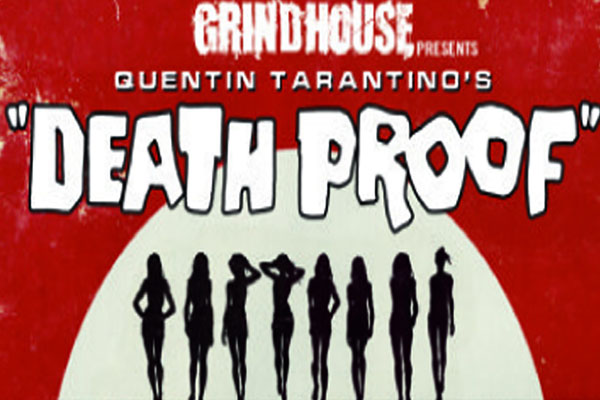
One of the things that marks a great storyteller is the ability to find inspiration in anything €“ even something as mundane as wanting to buy a vehicle. According to Tarantino, about ten years before directing Death Proof, he was speaking to a friend about buying a car. Specifically Tarantino wanted to buy a Volvo, as they were known for being particularly safe - he explicitly didn't want to die in a car accident like the one in Pulp Fiction. It was the friend he was talking to who provided the inspiration. Taratino's friend responded by saying that a person can buy any car they want and just give it to a stunt team (along with say, ten or fifteen thousand dollars) and they'd be able to death-proof it. The term €œdeath proof€ stuck in Tarantino's mind for a very long time, and it (along with the stunt link) eventually became the basis for the film. Do you know any more cool facts about Quentin Tarantino? Shout out any more down in the comments.

Contributor
Contributor

Commonly found reading, sitting firmly in a seat at the cinema (bottle of water and a Freddo bar, please) or listening to the Mountain Goats.