10 Mistakes Avengers: Infinity War Cannot Afford To Make

Thou shall not disobey these commandments.

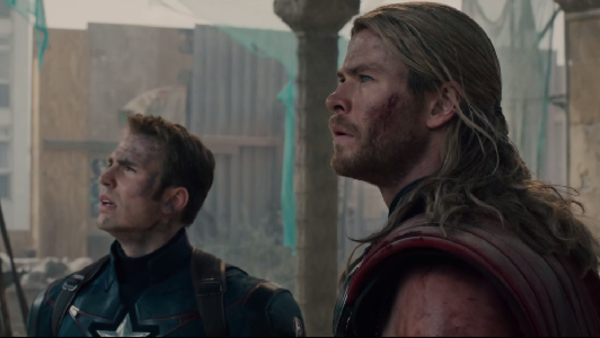
Avengers: Age of Ultron has been in cinemas across the globe for close to two weeks, and now that the dust has settled - and everybody has seen it at least twice (or three or four times) - it's time to cast an eye on the future with regards to the upcoming sequel. Avengers: Infinity War has been confirmed for a 2018 release, of course, and will find itself split - in that annoying Harry Potter/Twilight/Hunger Games way - into two parts, the second of which will make its way into theatres in 2019. Unlike those book adaptations, though, Marvel are free to do as they wish, which bodes well for a two-parter. Age of Ultron was met with mostly positive reviews, of course, but it wasn't perfect. There were a lot of things about Joss Whedon's sequel picture that could have been improved; whilst some aspects from the original movie were noticeably better, others were surprisingly unpolished - mistakes that Infinity War cannot afford to make all over again. So think of the following points as something akin to Infinity War: The Ten Commandments. That's to say, here are 10 things that Avengers: Age of Ultron fluffed, fumbled or f*cked up that its monumental follow-up - coming 2018, don't you know? - absolutely cannot afford to drop the ball on, 'less the Avengers franchise loses its way and is spoiled forever and ever...

10. Thou Shalt Bother To Explain The Infinity Stones In Proper Detail

There is no denying the fact that the mythology surrounding the Infinity Stones within the MCU has been mostly confusing thus far; Marvel fans know that these strange and powerful artefacts are set to play a huge part in future events, of course, but to date they have only been rendered as vague and interchangeable MacGuffins. The best explanation as to "what" these MacGuffins are - or what they're capable of - comes from Guardians of the Galaxy, when the Collector explains as follows:
"Oh, my new friends, before creation itself, there were six singularities, then the universe exploded into existence and the remnants of this system were forged into concentrated ingots... Infinity Stones."
And that's all has really been established: there are six of them, they are powerful, and forged as one they are infinity amazing. Oh, and Thanos - an intergalactic bad guy - wants them. Age of Ultron - as with pretty much every other MCU movie so far - doesn't offer up much in the way of further explanation, though; when it comes to Infinity War, then, Marvel need to ensure that audiences get a proper, thorough briefing regarding these artefacts.

9. Thou Shalt Not Resemble A Michael Bay Movie

Age of Ultron had too many ideas at its core and too many good jokes to actually be anything resembling a true Michael Bay movie, but it's the closest that Marvel have come to making a motion picture with all the dumb explosions that define said director's films. More than any other film to have hit cinemas in 2015, in fact, Age of Ultron probably contains the most scenes of large-scale destruction; it feels, at times, like you are actually watching a Transformers picture - not ironically, but genuinely. People tend to write off Michael Bay's explosives because they are deemed "mindless," but there is not all that much - if anything - separating the heat inherent to a Transformers sequel from the flaming carnage of Avengers: Age of Ultron. What Joss Whedon supposedly intended to be "smaller in scale" to that of the original flick ended up being anything but; at times Age of Ultron feels like an endless convoy of large-scale scenes of destruction. With Infinity War, there will be a temptation to make things bigger, but this is a temptation that Marvel must resist; having glimpsed so many explosions, they now feel redundant. It is necessary to give audiences more - to allow for some intimacy. Otherwise, why not just let Michael Bay direct the movie?

8. Thou Shalt Actually Shake Things Up

It's odd that a movie packed to the brim with so much plot and so many characters could feel ultimately inconsequential; somehow, Avengers: Age of Ultron did exactly that. By the time the credits were rolling, you didn't get the feeling that you'd just watched something important or world-changing; there was a sense that stuff happened and - next movie! Given what was at stake, it's strange, but the execution rendered most of it meaningless. Which is to say that Age of Ultron settled as being an arbitrary chapter in the MCU; it appeared as though a lot happened, but as with an episode of a sitcom, at the end everything just went back to how it was before. Infinity War will marks the point at which the entire MCU canon has been building towards, however; it needs to be bold, take risks, and offer up something more - a movie that leaves audiences feeling breathless, sad, confused, betrayed, passionate - anything!

7. Thou Shalt Have Good Reason For Splitting The Movie In Two

Given that Avengers: Infinity War is set to mark the defining point of all that Marvel have worked towards since Iron Man first hit screens in 2009, it is no surprise that it is likely to feature pretty much everybody and anybody contained with the MCU thus far. It's going to make for monumental cinema no matter what, but Marvel need to take their time to ensure that the separate halves of the movie are self-contained enough to warrant a split. You know, like how things were with The Godfather and The Godfather: Part II, and not The Hunger Games: Mockingjay - Part 1, which did not justify its existence as chapter one. Marvel know they can render an epic story that spans the length of two movies, of course, but there has to be a good, solid reason behind the split - one better than: "Duh, because more money, stupid!" Whilst it makes perfect sense financially to render Infinity War in two parts, it should make sense on a creative level, too. And yet one could certainly make a case for the fact that Age of Ultron was actually a two-part movie squashed into one - Joss Whedon has, after all, talked about a three and a half hour cut. You can certainly imagine a world in which Age of Ultron had been released in two parts - it did feel almost ridiculously jam-packed, and might have even benefitted from it.

6. Thou Shalt Take It Slow

Expanding on the previous point, then, Infinity War has the span of two whole movies - presumably both at around two hours in length - to unleash an epic narrative of the highest order; one that takes its time to explore the characters and render a plot that sucks you in and doesn't let you go until it's all over. It's going to be tempting, given the title, to unleash hell from the off; but Marvel would be wise to build slowly to an epic battle instead of littering the movie with huge fight scenes just 'cause - make audiences wait and the results will be far more satisfying. Whilst Avengers: Age of Ultron felt like its writer's well-intentioned attempt to put as much stuff in the movie as possible, it suffered as a result. Whedon ultimately didn't have time to expand or elaborate on anything, and lots of aspects of the picture that needed better clarification were left hanging in the air. Which brings the article to...

5. Thou Shalt Make Actual Sense

The plot holes. There were a lot of plot holes. There were a lot of plot-holes inherent to Avengers: Age of Ultron, many of which left audience members scratching their heads in the same capacity as if they'd just stumbled out of the theatre and into the light after a screening of Transformers: Revenge of the Fallen. Which is a pretty mean way of saying that Age of Ultron settled to be one of those movies that fires its plot points at you at such a speed that it hopes you can't really register what the hell is going on. Not the sort of thoughtful writing you'd expect from somebody like Joss Whedon, whose scripts have almost always felt consistent and - best of all - coherent. Why is the Falcon absent from the movie? Where does Thor go during the final battle? Why are Ultron's powers so vague? Why doesn't he find a better way to destroy the world than the awkward one that he chooses? What the hell is the Water of Sight that Thor uses to have a vision? All of these questions and no good answers. Infinity War...you have work to do.

4. Thou Shalt Not Screw Up Thanos

Thanos is the "big bad" of the entire MCU; he's been pulling the strings behind the scenes for years now, and by the time Infinity War swings around it'll be time for him to shine. Marvel have screwed the pooch somewhat as far as Thanos is concerned, though; despite a few minor appearances, they've done nothing to ensure that this character is truly exciting - as far as most fans are concerned, he's probably no different from the arbitrary villains inherent to movies like Thor: The Dark World and Guardians of the Galaxy. To have paid so little attention to this aspect seems like a crucial mistake on Marvel's part. It might have been better to establish a personality with regards to this character early on; audiences only know that he's the big bad guy and that he's going to raise hell because they've been told that. But the MCU hasn't allowed us to feel that yet, which is a shame. Could you imagine how exciting it would be if the MCU has teased Thanos properly, as a fully-developed individual? Fans would be practically salivating at the thought of Infinity War, knowing that - after years of waiting - they were about to get the villain they deserved.

3. Thou Shalt Not Introduce Any New Villains

Simple, really: Thanos should take the focus of the movie as its major villain. As outlined in the previous point, he's a monumental character who deserves to be rendered as something more than just a bad guy for a bad guy's sake; audiences need to understand his motives. So given the extent to which the MCU is already packed out with tons of characters, both good and bad, it's important that the movie doesn't try to implement further bad guys for the sake of it - you know, just to make the trailers look good. Age of Ultron learned this lesson the hard way with Andy Serkis' painfully unnecessary Ulysses Klaue. He just wasn't needed. If the movie ends up splitting its time between Thanos and Loki, that's fine; Loki is already positioned as a rich and interesting character - unlike Thanos, he needs no introduction.

2. Thou Shalt Embrace The Space

Guardians of the Galaxy is arguably the best picture to have come out of the MCU canon thus far; it was frantic, fun and did not take itself too seriously - not to mention its crazy characters were insanely likeable (and yes, that includes both the talking racoon and the tree who can only say his name like a Pokemon). Guardians of the Galaxy, of course, is entitled to a far larger scope than that of, say, the Iron Man or the Captain American movies. Being set in space, the entire galaxy acts as a sort of playground - and though Avengers: Age of Ultron tries its hardest to play down the fact that outer space is very much alive with alien creatures and other worlds, it comes off as a little weird that the full extent of the Marvel "universe" at large are overlooked. For God's sake, one of the Avengers is an alien! Like, an actual alien. Shouldn't that be a bigger deal to everyone, and not something they just trivialise with self-aware wisecracks? Infinity War needs to ensure that it embraces the cosmic nature of the MCU in as many ways as it can, then; the story need not explode all over the galaxy, but it would be wise to bring things full circle. Perhaps by introducing the Avengers to a particular set of Guardians...?

1. Thou Shalt Not Be Such A Downer

There were funny scenes, sure, and more self-aware gags than you could count of two hands. And yet, for one reason for another, Age of Ultron was a little depressing; it didn't embrace the gun-ho bravado of its predecessor in as much as it settled to be the inevitable "darker chapter" that so many sequels aspire to be - almost as a matter of obligation. Infinity War could essentially emerge as something of a downer; it has the capacity, after all, to be a motion picture filled with death and destruction on a scale that MCU fans are yet to see. Spread that across two parts, throw in a few unexpected character demises and city-wide battle sequences, and you've got yourself a super gritty motion picture extravaganza. But who wants that, really? Age of Ultron was downbeat enough, and it didn't really work; instead, the movie came across as a little weird - like a broody teenage, unsure of whether or not he or she is actually of any worth. Infinity War will thrive on its ambition to be fun - to be entertaining and colourful and crazy. Less Avengers, more... well, Guardians of the Galaxy.

Contributor

Sam Hill is an ardent cinephile and has been writing about film professionally since 2008. He harbours a particular fondness for western and sci-fi movies.