10 Modern Movies That Will Be Viewed As Classics In Years To Come

Brilliant now, masterpieces in the future.

It's always difficult to tell what films will stand the test of time. After this year's Oscars, it's fairly easy to see which among the nominees will go on to attain classic status after the requisite number of years have passed: for example, 12 Years a Slave and Gravity, this year's big winners, are bound to endure. Unanimous praise from critics and big box office numbers, plus Oscar recognition, will ensure 12 Years a Slave and Gravity will go on to be referred to as 'classics' in the future. There are other modern classic movies that are harder to spot, however. These are the sort that were perhaps critically divisive on release, or largely ignored by awards bodies or audiences at the time. Time will go on to rank some of these as classics regardless - after the dust has settled, the contemporaneous critical and audience reception won't mean a thing; all that will matter will be the reputation of the movies after film-lovers have had years to study and dissect them. Here, in no particular order, are ten recent films that will no doubt find their way to classic status in the years to come.

10. All Is Lost (2013)

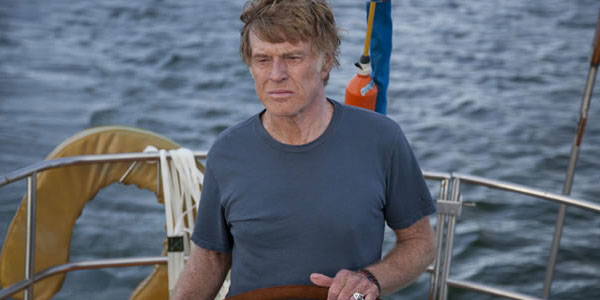
Like a Gravity of the waves, J.C. Chandor's All is Lost is a tale of survival, pitching man against the elements - this time the vast sea - and watching him struggle in territory where he's totally out of his depth. Instead of a zero-G, zero-oxygen environment, All is Lost puts its lead - Robert Redford's Our Man, sailing around the world on his yacht for nothing but adventure when a rogue shipping container punctures the hull and leaves him floating helplessly in the ocean - back on Earth, and the terror arises from the idea that, even on home turf, mankind is still at the mercy of mother nature. If anything, All is Lost is a superior film to Gravity - as good as Alfonso Cuaron's sci-fi is as a visually and aurally breathtaking thrill-ride, it's still emotionally cold. All is Lost, on the other hand, is rich with feeling, and is just as full of visual splendour, thrills and, in particular, transcendent orchestral cues. The original score, by musician Alex Ebert, is every bit as good as Stephen Price's Gravity soundtrack, if not better. As a film with no dialogue, save for an opening monologue by Redford and a scattering of curse words by his increasingly desperate mariner, Ebert fills in the blanks and deepens the film, reflecting Our Man's thoughts and feelings through his music. Redford gives the performance of a lifetime (literally - he's carrying the weight of his entire career in this movie) and Chandor reveals himself as a master of economical filmmaking.

9. Killing Them Softly (2012)

Andrew Dominik's The Assassination of Jesse James by the Coward Robert Ford arrived with a whimper on release - box office receipts were low, while the critics didn't exactly praise it to the heavens. Now it's considered a western classic. There's much to suggest Dominik's follow-up, the blackly comedic Killing Them Softly, which got similarly a cool reaction back in 2012, will become one for the crime flick history books. Taking the gangster movie and inflating it with mundane passages of criminals chewing the fat between jobs (which include gruesome hits and routine beatings), Killing Them Softly feels like one of the most realistic versions of gangster life committed to celluloid. On the fringes is Brad Pitt's scrupulous hitman Jackie Cogan, who likes to "kill people softly, from a distance", but he's the one composed professional amongst a cast of idiotic opportunists, drug addicts and depressed losers. Scoot McNairy and Ben Mendelsohn are pitch-perfect as the two lowlives who dare to steal from the mob, but it's James Gandolfini, as a depressive hitman with a penchant for hookers, who stands out. It's one of Gandolfini's last roles, and he plays on his sadsack archetype to create a character that's truly pathetic. The film's political subtext adds little, but it makes Killing Them Softly into a snapshot of a period in American history when everything seemed possible, yet the most tuned-in knew things were never really going to change. Pitt's closing speech on the lie of the American Dream is a masterclass of delivery and the cynical cherry on top of this dark gangster tale.

8. Inside Llewyn Davis (2014)

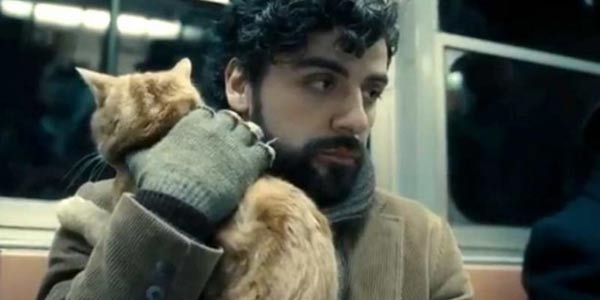
Largely ignored by Oscar (no Best Actor, Director or Screenplay noms, while nominations for Cinematography and Sound Mixing came across as mere participation medals), Inside Llewyn Davis managed to be the first Coen brothers film since No Country for Old Men that didn't receive a Best Picture nomination. That's despite it being a Cannes Jury Prize winner and one of the Coens' best-reviewed films in...well, ever. This fictionalised depiction of the New York folk scene circa 1961 is another existential lament from the brothers, and one of their most seemingly aimless films. In reality, it works on a much deeper level, and is infused with meaning. It's also their most feeling film to date. As the titular folk singer, Oscar Isaac is extraordinary, keeping Llewyn the right side of sympathetic even in his more despicable moments. The singer is wilfully difficult, scuppering chances at fame and fortune along his journey for the sake of artistic integrity, and the film has an alarmingly bleak message for struggling artists: you, like most people, are likely just ordinary, and destined for an average life. It's perhaps why Inside Llewyn Davis didn't chime so well with audiences - the Coens dial back the comedy for this one and make something close to a modern tragedy. But it's a compelling one, and a lasting experience thanks to Bruno Delbonnel's gorgeous photography, some catchy tunes and that breakout central performance.

7. Kill List (2011)

One of the most prolific horror directors of the moment, Ben Wheatley is also one of the most accomplished - his experimental mushroom odyssey A Field in England and warped comedy Sightseers could just as comfortably have taken a place on this list. But Kill List is the director's finest work to date, one that will some day be regarded alongside The Wicker Man and Witchfinder General as one of the classic British horrors. Nasty, gothic and raw, Kill List begins as a social-realist drama about two hitmen before veering off course into supernatural, pagan horror. Kill List is an unnerving film from its first shot, when a droning score plays over a scene of domestic strife, with soldier of fortune Jay (Neil Maskell) growing tired of life at home after a botched job the year previous sent him back to his family. When he and partner Gal (Michael Smiley) take on another job for the cash, in the form of a 'kill list', we realise something's off from the start: Jay begins to perform hits on names not even on his list, some of whom thank him and tell him "it's an honour", and a vicious hand wound spreads to the rest of his body, suspicious black marks eventually cabling across his torso. It all leads to an eerie scene of ritual sacrifice, and the suspicion that nothing you've seen in the film previous was even real.

6. Under The Skin (2014)

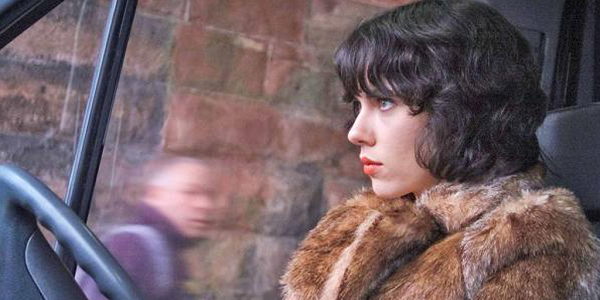
After not even a month on general release, Under the Skin seems already destined for classic status in the science fiction and horror categories. It's a film of wondrous, cosmic imagery, of countless indelible moments that have the potential to disturb and even scar, and featuring a career-best performance from Scarlett Johansson. As an alien roaming Glasgow disguised as a beautiful woman, Johansson has never been used so effectively - she's a seductive predator searching for young men to take home and feast upon, and a cold, naive extraterrestrial uncertain of the world she's now living in. Ostensibly a sci-fi, there's something deeply disturbing about Under the Skin's mixture of social-realism and stylised science fiction. By filming on the streets of Glasgow for real (many of the men Johansson approaches are not actors but people who just happened to be passing by), director Jonathan Glazer grounds a film that by all rights shouldn't be ground-able. But with the mix of visual splendour, an intriguing, swerving story and a beautifully ominous score by Mica Levi, Glazer's film just works. Even those who don't take to the film can't deny that it's unforgettable.

5. Only God Forgives (2013)

The critical ire initially levelled at Nicolas Winding Refn's Only God Forgives would suggest the film was a resounding failure, bound for future obscurity. But there were those critics who responded to it with enormous praise - The Guardian's Peter Bradshaw and Little White Lies' David Jenkins gave the film top marks and called it Refn's best work to date. And, slowly but surely, fan favour has been turning around to see the film becoming a cult favourite. As the film is re-evaluated, and viewers take another look at the astoundingly gaudy cinematography and dream-like storytelling, and as they give another listen to Cliff Martinez' classical-meets-electropop score, Only God Forgives heads on its way to becoming a modern classic. It's appropriate that Only God Forgives is so Lynchian in nature, because its style reflects a number of David Lynch movies that were dismissed upon release but that now have a much higher standing - think Twin Peaks: Fire Walk With Me (a favourite of Mark Kermode's), or Lost Highway. Sure, Ryan Gosling is wooden in his second collaboration with Refn, and it moves at a glacial pace, but that's exactly the point; the film is not meant to be taken as a representation of reality, but as one man's actual nightmare. Looking at the film in this way is the only way to see it - once you do, it becomes an entirely different picture. In short, it finally makes sense.

4. The Master (2012)

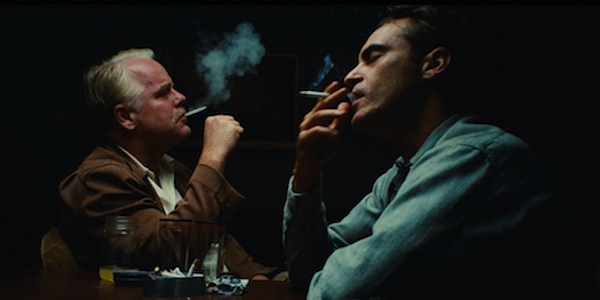
Paul Thomas Anderson is one of the greatest filmmakers on the planet. With Boogie Nights, Magnolia and There Will Be Blood, he created three sprawling American epics, and with Punch-Drunk Love he made an Adam Sandler rom-com watchable. The Master was a bit more divisive - though it largely received critical acclaim, the film baffled audiences and failed to garner a Best Picture nom at the Oscars. This was supposed to be the L. Ron Hubbard origins story, a thinly-veiled document of the beginnings of Scientology, with the mighty Philip Seymour Hoffman playing Hubbard stand-in Lancaster Dodd. What it actually was was much different. A rambling, frequently strange movie about an alcoholic, manic-depressive drifter, played by Joaquin Phoenix, navigating his way through post-WWII America and eventually coming under the influence of Hoffman's Dodd, an egotistical mystic slowly forming his own cult - that's what audiences actually got. This film was unexpected, but a visual and musical treat regardless (Jonny Greenwood's score is almost as good as his work on There Will Be Blood), featuring two actors pushing each other to give their finest individual performances. The relationship between Dodd and Phoenix's Freddie Quell is oddly touching, and the film depicts depression and PTSD in a way no other film has. It's messy, but it's a gorgeous mess, and Phoenix and the late Hoffman here raise the bar for screen acting.

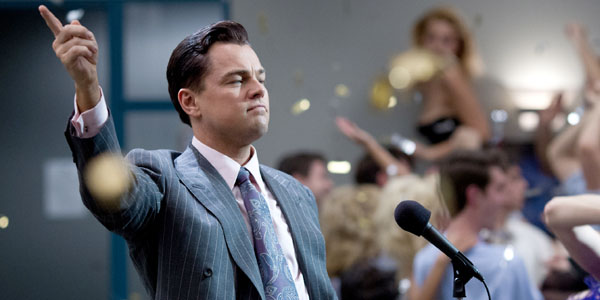
3. The Wolf Of Wall Street (2014)

When Martin Scorsese's Goodfellas was released in 1990, the critics were divided. There were criticisms of the film's apparent lack of morality and any sympathetic characters. Almost 25 years later, they were saying the same things about Scorsese's The Wolf of Wall Street. This was a film undoubtedly made by a master of cinema, a 71-year-old director investing more energy than most directors would in their 20s, but where was the soul? Most found Wolf to be an exhilarating, hilarious character study, and surely this will be the majority opinion held in years to come - The Wolf of Wall Street is Scorsese's best since Goodfellas, the film that so many compared Wolf to, but which has one big difference: this time, you're not supposed to sympathise with any of the characters. The Wolf of Wall Street may be laugh-out-loud funny - check out Matthew McConaughey McConaissancing it up in a surreal cameo - but it's as close as Scorsese has come to making a horror (Shutter Island notwithstanding) in the guise of a black comedy. Jordan Belfort (Leonardo DiCaprio), you see, is a psychopath, and The Wolf of Wall Street is the story of how he and his similarly unhinged associates steal from the poor to line their own pockets, wantonly ingest drugs and generally show care and concern for nobody but themselves. Wolf is a scary film, albeit a hugely entertaining one, and Scorsese mines from DiCaprio an iconic whirlwind of a performance.

2. To The Wonder (2013)

He'd had good reviews his entire career, and the critics were just waiting for Terrence Malick to slip up. After The Tree of Life received outstanding praise, followed by a swift backlash, Malick's next film - To the Wonder - was the one to receive the brunt of critics' frustrations. The work was certainly more experimental than anything Malick had done before - it's almost a silent movie, told through a flow of dazzling images - but was it deserving of Malick's first critical drubbing? Certainly not. In fact, the film is arguably a better movie than even The Tree of Life, and an encapsulation of everything Malick stands for as a filmmaker. The story of a romance between Neil (Ben Affleck) and Marina (Olga Kurylenko), as well as the trials of faith for Javier Bardem's Father Quintana, To the Wonder is spiritual, almost religious in its execution. It's Malick's first film set in the modern day, and his first that's strictly a romantic drama and nothing else; the director's focus is undeniable, his technique unquestionable. There's never been a bad-looking Terrence Malick film, but this one lives and dies by its visual storytelling, and recently Oscar-minted cinematographer Emmanuel Lubezki shoots To the Wonder with an improvised vibrancy. As he finally does away with dialogue almost entirely and completely indulges his obsession with magic-hour scenery, To the Wonder is the most Terrence Malick film that Terrence Malick has ever made. It's only a matter of time before it's recognised as one of his most visionary.

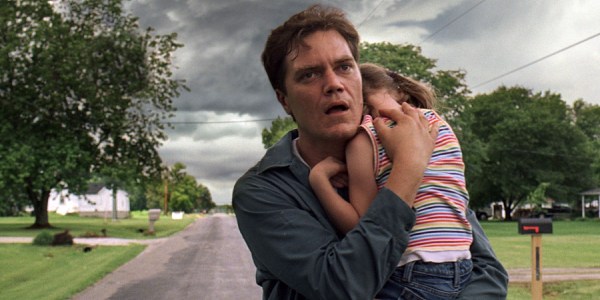
1. Take Shelter (2011)

There are few actors working today that can match Michael Shannon for intensity, and Take Shelter is the best showcase for his talents to date. As a man with apocalyptic visions who becomes obsessed with building a hurricane shelter for his family, Shannon is terrific, but writer/director Jeff Nichols, Shannon's regular collaborator, builds a movie of biblical power around him. Shannon's Curtis comes from a family with a history of mental illness - are his visions part of some new-found power to see ahead, or a result of his own burgeo ning mental health problems? Take Shelter doesn't offer any solid answers, but watching this normal family man spiral into despair and paranoia makes for fascinating viewing. It's Nichols' expert grasp on simple, effective storytelling that elevates Take Shelter beyond mere familial drama - Curtis' descent, and the rippling effect it has on the people around him, is believable even when things take an extreme turn. Curtis' breakdown during a church feast, at which he flips a table in a moment of madness and begins to berate the friends who've turned their backs on him, stands as one of the most powerful movie scenes from the past few years. Shannon will continue to give great performances, and Nichols will continue to make great films, but whether they can top this effort is another matter.

Contributor
Contributor

Lover of film, writer of words, pretentious beyond belief. Thinks Scorsese and Kubrick are the kings of cinema, but PT Anderson and David Fincher are the dashing young princes. Follow Brogan on twitter if you can take shameless self-promotion: @BroganMorris1