10 More Deleted Movie Scenes That Explain Confusing Moments
Key context on the cutting room floor.

Who doesn't love watching a film's deleted scenes? There may not have been a place for them in the final edit, for a plethora of different reasons, but that doesn't mean that they can't offer something outside the walls of the finished product.
In some cases, these deleted scenes can actually give vital context that can't be found anywhere else through the story, as previously looked at in our 10 Deleted Movie Scenes That Explain Confusing Moments. Movie scenes rarely happen in a vacuum, they will often lead to something else, no matter how big or small, or will inform a subsequent moment later in the story. If a scene is to be cut, then everything it affects surely has to be considered, but this is not always the case.
Moments have been left out of movies that have explained character motivations, given context to conversations that without them made absolutely no sense, and even solved massive plot holes that almost overshadowed the entire thing.
The following moments may have been left on the cutting room floor, but they still offer insight and answers to some highly confusing questions left by their absence.
10. The Lies About Luke Skywalker's Father - Star Wars - Episode VI: Return Of The Jedi

Darth Vader (James Earl Jones & David Prowse) revealing himself to be Luke Skywalker's (Mark Hamill) father in The Empire Strikes Back is one of the biggest twists in cinema history and was only made possible by Obi-Wan Kenobi (Alec Guiness) keeping the young Skywalker, and thus the audience, in the dark from the very beginning.
Instead, Ben told Luke that his father had been killed by Darth Vader, something that has always been a point of contention among the Star Wars fandom. In reality, it simply wasn't decided yet that this was the path the story was going to take, but in-universe, why would Obi-Wan keep such vital information from the future Jedi Master?
Yoda (Frank Oz) did actually explain the lies and secrecy to Luke on his deathbed, though the dialogue was cut from Return of the Jedi's final edit. Obi-Wan didn't tell Luke the truth because Yoda told him not to.
Yoda was counting on Luke defeating Vader, and as soon as he found out that this meant killing his father, there was a weakness within him. Some doubt or sentiment was always going to show itself when the truth came out, and with Luke essentially being less than a Padawan at the time, with a fight against one of the greatest Jedi ever on the horizon, this was a weakness they could not afford.
9. Bill's Skill With A Blade - Kill Bill: Volume 2

Quentin Tarantino fills his movies with gorey brutality and always has, from Reservoir Dogs right through to Once Upon a Time... In Hollywood. That, and bare female feet, are kind of his trademarks, and Kill Bill is no different thanks to the Deadly Viper Assassination Squad.
The group, comprising of O-Ren Ishii, Vernita Green, Elle Driver, and Bud (Lucy Liu, Vivica A. Fox, Daryl Hannah, and Michael Madsen, respectively), are all violent master killers, and while David Carradine's Bill himself is one of Tarantino's most compelling villains, it's arguably because he is completely on the other end of this particular scale. Evidence of Bill being anything other than stoic and calm are few and far between, with even his final fight with Beatrix (Uma Therman) lasting no longer than 30 seconds or so.
So, how exactly did a man like this come to lead the Deadly Viper Assassination Squad? The answer, although never truly shown in the film, is simply that he is arguably the deadliest of them all.
When confronted by five men who want to kill him, Bill dispatched of the first four without even taking his hand out of his pocket, before killing the fifth with not a sweat broken. With this in mind, it's no wonder why he is at the head of this infamous team of killers.
8. J. Jonah Jameson's Spider-Man Secret - Spider-Man 2
There is just so much to love about Sam Raimi's Spider-Man trilogy, one of the biggest being J. Jonah Jameson. J.K. Simmons portrayed the character to perfection, being a true test of Peter Parker's (Tobey Maguire) patience and often his morality, and there was a huge celebration when the character crossed over to hate on Spider-Man in a whole new universe in Far From Home and No Way Home.
That said, did Jameson actually hate Spider-Man? Based on everything the character has shown on screen, yes, with the exception of one moment. When the Green Goblin (Willem Dafoe) burst into The Daily Bugle and grabbed Jameson by the throat, asking about who brought him the pictures of Spider-Man, Jameson could have easily pointed him in Parker's direction to get the ball rolling on the hero's downfall.
But he didn't. Rather, he stood his ground and lied to the Goblin's face, telling him he didn't know. He could have been protecting Parker, but ol' J. Jonah never seemed like the most scrupulous man in the world, and odds are he'd have sold Peter's skin to save his own in a heartbeat. No, instead the answer comes in a deleted scene from Spider-Man 2 that shows the gruff old man wasn't as hard on the Webslinger as he made out.
Would anyone but a super fan of the superhero put on the suit and jump around the office like he did?
7. Ferris Bueller's Financial Situation - Ferris Bueller's Day Off

If we're all being completely honest, is there anyone who has never called in sick when they weren't really sick? We've all done it, but most of us wouldn't have gone to anywhere near the lengths that Ferris Bueller (Matthew Broderick) did. But then again, no one's likely to make a movie out of our sick days, are they?
After manipulating his friend Cameron (Alan Ruck) and girlfriend Sloane (Mia Sara) to spend the day with him, they went all in, taking Cameron's dad's car all around Chicago before Ferris wound up miming on a parade float in front of the whole city.
Their day took the three to the Sears Tower, a fancy restaurant, a high-end art museum, and a baseball game, with cab rides in between. Not a cheap day by any means, particularly for someone like Ferris, a high schooler rather vocal about his lack of money. There was a scene written that explained where Matthew Broderick's character got the cash from, but it was ultimately never filmed.
When Ferris' dad phoned him from work, the youngster would have manipulated him into confessing where his stash of savings bonds were. It's a good thing this never made it into the film really, because although it left the unanswered question of how Ferris afforded his famous day off, this surely would have shifted him from loveable rascal trying to do his friend a favour into a common thief.
6. David Learns About The Alien's Tech - Independence Day

It doesn't matter how good or popular a movie is, if there is a plot hole, or at least a perceived plot hole, in the story, there is a risk of it overshadowing everything. Take, for example, Roland Emmerich's Independence Day.
The film is beloved certainly, but there is always the looming question of how exactly Jeff Goldblum's David Levinson was able to infect the invading alien tech with a computer virus. Particularly, when considering that much of the problem in facing the extra-terrestrials was that their technology was way too advanced for anyone on Earth to crack or reverse engineer.
Yet, all it took was his dad telling him not to catch a cold, and he figured out how to beam a virus up to the mothership and disable it long enough for an attack to destroy it. Audiences wondered for years exactly how this was possible, and it wasn't until writer/producer Dean Devlin addressed the subject years later that some answers were given.
In spite of the aliens being described as much more technologically advanced than humans, the programming structure used was based around binary code, something that was relatively simple for David to decipher, similarly to how he figured out the countdown with their signals at the beginning of the film.
There is a deleted scene - at the 5:59 mark above - that shows David studying the tech a little further, and discovering how the communications worked. This context would have been very useful later on.
5. Why Nala Was So Far Away From Home - The Lion King

In order to really get invested in a movie, an audience often has to suspend their disbelief, and not ask the question that desperately needs to be asked. The Lion King is one of Disney's most popular outings ever, but even the 1994 classic is not free from this.
After Scar (Jeremy Irons) blamed Simba (Matthew Broderick) for the death of Mufasa (James Earl Jones), the would-be King ran far, far away from the Pride Lands to a life of peace. However, that all changed when he crossed paths once again with Nala (Moira Kelly), his childhood best friend and betrothed. His old life and all his responsibilities came flooding back.
Maybe it was the rush of emotion, but Simba never seemed to ever question what Nala was doing so far away from Pride Rock in the first place. The answer is given in a scene just creepy enough to earn going unused, but it would have eliminated any doubt.
Literally, the second that Scar decided he wanted a Queen, Nala entered his cave and he made his decision. He wanted her to bear his children, and he wasn't intent on giving her any choice in the matter. In the end, she refused, and so was banished from her home by her King forever, left to wander the same lands as Simba until they finally met once again.
4. The Octopus Attack Was Real - The Goonies

Is there a more wholesome or heartwarming story than the Goonies going after One-Eyed Willie's hidden treasure to save their houses from being demolished? The wonderful movie took Mikey (Sean Astin), Brand (Josh Brolin), and their friends on one hell of an adventure, some parts of which were more dangerous than others.
With the looming threat of a cave-in, and the Fratellis trailing behind them, the Goonies were always in danger, but there were plenty of moments when they genuinely could have been killed. When they were asked about their adventure by a news reporter at the end of the film, both Andy (Kerri Green) and Brand mentioned the pirate ship, and Chunk (Jeff Cohen) spoke about the Fratellis. Data (Ke Huy Quan), however, front and center, said about how scary the octopus was.
The group came up against plenty in search of the pirate's treasure, but there was no octopus in the film. And if someone was going to make this up, wouldn't it have been Chunk, who had a history of embellishing his stories and straight-up lying for attention?
In truth, there actually was an octopus, and it actually did attack the Goonies right next to Willie's ship, but the scene didn't make the final cut of the film. However, this pretty big reference to it did.
3. Faramir's Motivation - The Lord Of The Rings: The Two Towers
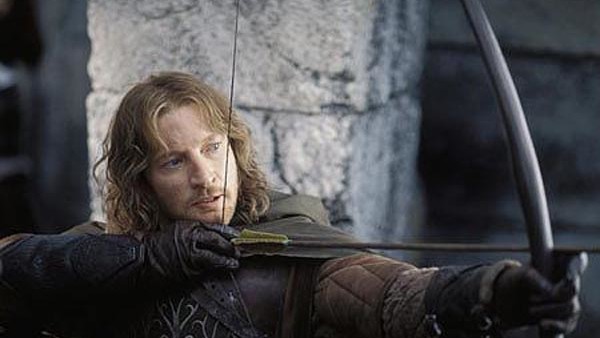
Quite famously, the Extended Editions of The Lord of the Rings trilogy are widely regarded as superior to the theatrical releases, with moments like Gandalf's (Sir Ian McKellen) final confrontation with Saruman, and the latter's death, enriching the story greatly.
While this moment further explored Christopher Lee's character, there was a similar scene in The Two Towers that delved deeper into the lives of Boromir, Faramir, and Denethor (Sean Bean, David Wenham, and John Noble, respectively), and the very unorthodox dynamic between father and sons. It also spoke of a mission given by Denethor to his first-born.
Upon hearing of Elrond (Hugo Weaving) calling a meeting, and guessing that the One Ring had been found, Denethor sent Boromir to Rivendell with the task of bringing the weapon back to Gondor. Though this makes Boromir a far deeper and more conflicted character throughout The Fellowship of the Ring, it is Faramir whose motivations are revealed more so.
Boromir's younger brother asked to go to Rivendell in an effort to prove his quality and worth to the father he loved, yet who despised him in turn, but he was shut down as only Denethor could.
This goes a long way to explaining why Faramir acted how he did when Frodo (Elijah Wood) and the Ring fell into his lap, and why he was so desperate to have it.
2. Ken & Harry's Past - In Bruges

Comedies really don't get much darker than In Bruges. Not many people could pull off a movie based around someone accidentally shooting a young child through the head and make it as funny as it was, but that holy trinity of Martin McDonagh, Colin Farrell, and Brendan Gleeson made it work.
It wasn't just funny though, there was real heart and emotion to the film, not just from Ray's (Farrell) shaken emotional state, but from Ken's (Gleeson) willingness to protect him, even against Ralph Fiennes' Harry. The latter, the pair's boss, wanted Ken to kill Ray for what he had done, but Ken was defiant in defending his friend.
This was such a big deal, because even though Ken and Harry didn't really seem to like each other, there was clearly a history of loyalty and respect between them. But why? Ken called Harry some not-so-very-nice names, so what fuelled the loyalty that was so difficult to break in defence of Ray?
In a deleted, far-from-finished flashback scene, Ken's partner was killed by a detective. Harry, played by none other than Matt Smith, strolled straight into the police precinct and beheaded the murderer as retribution.
It would be hard to ever turn your back on such a big moment as that, which is what makes Ken's decision to side with Ray so momentous.
1. How John McClane Rumbled Hans Gruber - Die Hard

Is John McClane (Bruce Willis) the ultimate action hero? He took on an entire group of terrorists by himself and made it out alive, he dealt with brotherly retaliation, and he took a helicopter out of the sky with a car because he ran out of bullets.
McClane could do the improbable, but at one point during Die Hard he did what seemed impossible. When Hans Gruber (Alan Rickman) went in search of the detonators to his explosives, he crossed paths with John McClane, who may well have taken him for a terrorist had the former not been able to pull off a convincing American accent.
He revealed himself only when John had given him a gun, but it was empty all along. McClane knew that "Bill Clay" was one of the terrorists, but nothing Gruber did gave the game away, so how did he know?
According to screenwriter Steven E. de Souza, there was a scene when the terrorists first arrived at Nakatomi in which they synchronised their watches, revealing that they all wore exactly the same style. As McClane took down more and more of the bad guys, he realised this, and even told the police on the ground, so when he saw Bill Clay with the same watch, he knew he was being lied to. Ultimately, the scene was cut as it betrayed that they had brought no ambulance with them as a means of escape = an aspect that was added later to the story, and required a bit of editing earlier in the film to make it work.