10 More War Movie Actors Who Were Actually There
More war movie actors who served and then starred in movies set in the wars they fought.

Plenty of actors have made a name for themselves as genre stalwarts, specialising in Westerns, film noir, science-fiction and so on, and the war movie genre is no exception. However, while scantly few actors can lay claim to sharing the lived experience of a Texas Ranger, private dick or astronaut, plenty have served in the military, with some even going on to star in films set in the conflicts in which they fought.
We've already taken a look at 10 notable war movie actors who revisited their wartime experiences for the silver screen, with a specific focus on World War II, but that only scratched the surface of performers who have held a wartime record. The Second World War had a profound impact on the film industry, with countless professionals finding their way into military service in the Allied armies of Britain, the United States, Canada, and so on. Many of the emerging talents of the 1940s and 1950s also served in the Second World War, carrying their experiences into Hollywood in notable, but also sometimes subtle ways.
World War II wasn't the only conflict of the 20th century, of course, and so it's not just veterans of that conflict who ended up revisiting their wartime experiences in front of or behind the lens of a camera. Veterans of the Korean War, Vietnam War, Gulf War, and, more recently, the War on Terror, have starred in films set during those conflicts, contributing greater authenticity to those productions, as well as an added layer of emotional gravity.
10. Jerry Della Salla - Green Zone

Jerry Della Salla might not be the most prolific actor going, but he did have a notable role in Paul Greengrass' underrated Iraq War thriller, Green Zone, which co-starred Matt Damon. Set during the 2003 U.S.-led invasion of the country, Green Zone focuses on the botched intel regarding Saddam Hussein's suspected Weapons of Mass Destruction program, which served as a key pretext for military action.
Della Salla starred in Green Zone as Platoon Sergeant Wilkins, a member of Damon's CBRN unit stationed in Baghdad during and in the immediate aftermath of the initial coalition invasion. Della Salla had trained as an actor in the 1990s and starred in several independent films, but decided to enlist in the United States Army following the September 11 attacks. He first saw combat in Iraq, most notably in the Battle of Abu Ghraib, before eventually he returned to the U.S. and resumed his acting career, working as both a technical advisor and as an actor on multiple productions.
Of these, Green Zone is arguably the one that has landed closest to Della Salla's wartime record. Speaking to The Hollywood Reporter in 2018, the former sergeant spoke candidly of his experience shooting Green Zone, recalling exchanges with crewmembers who were oblivious to his service, as well as shooting sequences that hit close to home:
"On the set it was a hodgepodge of looting and things imploding all around you, and it sounded like real artillery fire... “It was a challenge to deal with all of that again, and I’m thankful as an actor I was able to get through it. It was surreal, restorative and therapeutic.”
9. Basil Rathbone - The Dawn Patrol (1938)

Basil Rathbone is the definitive Hollywood swordsman, cementing himself into film folklore with his performance as Guy of Gisbourne in the Errol Flynn-led Adventures of Robin Hood. Rathbone would further flex his fencing techniques in films such as The Mark of Zorro as well as the perenially under-appreciated comedy masterpiece, The Court Jester, in which he starred opposite Danny Kaye. Rathbone's skill with a sword was more than just simple Hollywood theatrics, however - he had been a champion fencer during his service in the British Army, which occurred during the devasting First World War.
Rathbone's wartime exploits are typical of the harrowing conditions present on the battlefields of France during WWI, with the actor's brother, John, having been killed in 1918. Rathbone himself saw fierce combat with the Liverpool Scottish regiment from 1917 onward, having enlisted the previous year. His wartime experiences, like many soldiers of the war, have been preserved thanks to his own personal correspondence (and are well worth reading in full). The actor discusses life in the trenches candidly, recounting the squalid conditions present as well as the warmth and appreciation for his comrades in arms and his family. Later letters are more anguished, with Rathbone reeling over the death of his brother:
"I have been seething. I was so certain it would be me first of either of us. I’m even sure it was supposed to be me and he somehow contrived in his wretched Johnny-fashion to get in my way just as he always would when he was small. I want to tell him to mind his place. I think of his ridiculous belief that everything would always be well, his ever-hopeful smile, and I want to cuff him for a little fool. He had no business to let it happen and it maddens me that I shall never be able to tell him so, or change it or bring him back. I can’t think of him without being consumed with anger at him for being dead and beyond anything I can do to him."
Following John's death, Rathbone began volunteering for more dangerous patrols, conducting reconnaissance in camouflage during the day rather than at night time - which was not standard procedure, and ended up earning him a Military Cross. He would come to describe his years in France as a "long, terrible dream... there was no past or future."
After the armistice of 1918, Rathbone's career as an actor began to take off, starring first on the stage before making the move to Hollywood, where he successfully also navigated the transition from silent films to the talkie era. Of these films, he starred in only one set during WWI, a 1938 remake of Howard Hawks' The Dawn Patrol directed by Edmund Goulding, which focused on Royal Flying Corps pilots who fought over the battlefields of France.
8. Tyrone Power - An American Guerrilla In The Phillipines

Tyrone Power had one of the most intense gazes to have ever graced the big screen - never mind just Hollywood's Golden Age. Synonymous with the adventure genre pre-war for his starring turns in The Mark of Zorro and The Black Swan, Power's most iconic post-war roles were in film noir, namely as Stanton Carlisle in Edmund Goulding's Nightmare Alley (later remade by Guillermo del Toro with Bradley Cooper in the same role) and as Leonard Vole in Billy Wilder's peerless courtroom drama, Witness for the Prosecution. Power also starred in the occasional war picture, both of which revolved around the threatre in which he served during World War II - the Pacific.
Already an established screen presence by the time the United States declared war on Japan following the attack on Pearl Harbor, Power enlisted in the United States Marine Corps in 1942, advancing to the rank of Second Lieutenant after completing flight training. Power, a civilian pilot before the war, soon found himself in the cockpit of a Curtis Commando, delivering supplies and extracting wounded servicemen in the battles of Iwo Jima and Saipan. He ended the war with three campaign medals, and resumed his film career in 1946.
Prior to his deployment, Power had actually starred in two World War II pictures. The first, A Yank in the R.A.F., saw Power portray an American volunteer fighter pilot in the British military before the United States' formal entry into the war. The second was Crash Dive, a navy picture where Power played an officer aboard a submarine hunting Japanese targets in the Pacific. Neither truly reflected the actor's coming wartime experience, but it is intriguing to see him in that pilot role years before he enlisted.
The final World War II film Power starred in (and arguably the strongest) was American Guerilla in the Philippines, directed by the legendary Fritz Lang. Power again plays a torpedo boatman, only this time the action takes place during the Japanese invasion of the Philippine islands and Power's character (Chuck Palmer) joins the Filipino Resistance. Again, it doesn't come close to reflecting Power's actual wartime activities, but it remains an intriguing if not forgotten effort in the actor's filmography.
7. Marlene Dietrich - Follow The Boys

Marlene Dietrich was a hero of the screen and real life, not only commanding the stage and screen but also being an outspoken critic of Nazism in her native Germany. Dietrich had made the move to the United States in 1930 following the widespread success of The Blue Angel, quickly cementing herself as one of Hollywood's most iconic femme fatales with films like Shanghai Express and Desire.
Like fellow Weimar-era exiles Billy Wilder and Fritz Lang, Dietrich railed against Hitler and the Nazis, contributing significantly to the propaganda effort during World War II as an entertainer and by working with the OSS, the latter of which involved the actor recording special broadcasts and albums that mocked Hitler and Nazi ideology. As a part of the USO, Dietrich entertained Allied troops across the battlefields of Europe, delivering 500 performances and never being far from the frontlines. Dietrich went above and beyond in her duties as an entertainer, ending the war as a beloved figure among Allied troops, and having performed across the Italian, French and German campaigns.
Dietrich didn't star in any traditional war movies following her service with the USO. However, she did feature in films that were made with the express purpose of entertaining Allied troops as well as those whose stories hinged on the conflict. In the case of the former we have Follow the Boys, a 1944 musical in which Dietrich co-starred opposite Orson Welles, while in the latter there are several examples, such as A Foreign Affair and Witness for the Prosecution, both of which drew key inspiration from post-war Berlin.
In any case (and this probably goes without saying) Dietrich was a true legend - a committed performer who left her home country, became a huge star and a U.S. citizen, followed the troops across Europe, and delivered compelling propaganda to undermine the Nazi war effort. A frankly amazing story, led by an amazing individual.
6. Burt Lancaster - The Train

Burt Lancaster was one of the greatest leading men to grace the big screen, and was a truly fascinating presence off it. Breaking out with his screen debut in 1946's The Killers, Lancaster became an icon of the noir and Western genres, with his most acclaimed and iconic turns coming in Sweet Smell of Success, From Here to Eternity, and Gunfight at the O.K. Corral - all of which came in the 1950s.
However, while the fifties was the decade in which Lancaster reigned supreme, arguably the most interesting period of his career came in the 1960s. That decade gave us Lancaster's best Western (the criminally underseen The Professionals, directed by Richard Brooks), as well as gripping performances in Judgment at Nuremberg and The Swimmer. The sixties also marked the first of many collaborations with director John Frankenheimer, who in 1964 - and after collaborating on previous films The Young Savages, Judgment at Nuremberg, and Seven Days in May - directed Lancaster in the lead role of his new WWII picture, The Train.
The Train is one of the most artful and emotional WWII-set films ever made, with Lancaster playing the part of a French Resistance fighter attempting to stop a Nazi officer from plundering treasured artworks. Not one to miss, although I must add an obvious caveat for this specific list that Lancaster himself was not a member of the French Resistance. He did serve, but as a part of the USO, providing entertainment to U.S. servicemen fighting in Italy from 1943 through to 1945.
While most famed for his non-military acting roles, Lancaster did star in several other war pictures outside of The Train, including the Clark Gable-led Run Silent, Run Deep, as well as South Sea Woman, and Castle Keep.
5. James Garner - Sayonara

Noir and Western staple James Garner actually served in two wars prior to his acting career, joining the Merchant Marines as a 16-year-old at the tail-end of WWII and then enlisting in the army during the Korean War as part of the National Guard. Garner's division was deployed to Korea as the fighting escalated, which the actor described years later as "fodder to stuff up the gap."
Garner saw heavy combat in Korea, finishing his service with two Purple Hearts (one awarded belatedly decades after). After his honourable discharge in 1952, Garner made the move into acting, becoming a TV fixture in the late fifties before transitioning to the big screen, starring in seminal classics like The Great Escape and Darby's Rangers. In his later years, he also dabbled in voice acting, playing the role of military strongman Rourke in Atlantis: The Lost Empire and Shazam in two DC animated movies.
Garner's war films largely didn't stray close to his wartime record, but there were a couple that landed near-ish. 1957's romance-drama picture Sayonara cast Garner as a USMC officer opposite Marlon Brando during the Korean War, with the duo stationed in Japan, while Garner took to the seas once more in Up Periscope, in which he played a Navy Frogman.
One other WWII film of note in Garner's filmography is 36 hours. More of a spy thriller than a war picture, the film sees Garner's character - an army Major tasked with ensuring the false intel fed to the Nazis before the Normandy landings has been bought - get abducted by the Nazis, who attempt to convince him that the war is over so they can determine the Allies' invasion plans. It's a really tidy thriller, but also noteworthy for it marking an uncredited appearance by James Doohan of Star Trek fame. Doohan served with the Canadian Army in World War II, taking part in the landings at Juno Beach on D-Day.
4. Rob Riggle - 12 Strong

Saturday Night Live alum and regular comedy actor Rob Riggle has been a regular fixture of the small and big screens for over two decades now, and until 2021 he balanced that career while also being a Marine Corps reservist.
Riggle enlisted in the Marine Corps Reserve in 1992 and saw deployments across multiple countries, including Liberia, Kosovo (where he received the Combat Action Ribbon), and Afghanistan. Riggle also partook in the USO in Iraq while his acting and stand-up career took off, only fully retiring from the Reserve in 2021.
While most well-known for his work on SNL, The Daily Show, and films like Talladega Nights and The Other Guys, Riggle has made the occasional foray into the dramatic. One such occasion was 12 Strong, a 2018 film based on Doug Stanton's book, Horse Soldiers, which told the story of U.S. special forces troops operating in Afghanistan immediately after 9/11.
Riggle portrayed the real-life Lieutenant Colonel Max Bowers in the film, who was the commanding officer of the 5th Special Forces Group. Riggle actually met the real-life Bowers while deployed in Afghanistan too, which he discussed while speaking to The Hollywood Reporter: "It's a small world and interesting that it's come full circle like this and that I'm actually playing my old boss."
3. Michael Caine - A Hill In Korea

Michael Caine announced his retirement from acting in 2023 at the age of 90, bringing an end to a career that spanned seven decades and included such iconic efforts as The Italian Job, Zulu, Get Carter, and The Man Who Would Be King. Truly, one of the defining talents of British cinema across the last century.
Before he got his start as an actor, however, Caine - who came from a working class background - was enlisted into the army via national service. Joining in 1952 at the age of 19, Caine ended up serving in the Korean War as part of the United Nations forces combatting the North Korean and Chinese armies. Caine has discussed on multiple occasions how his experience in Korea shaped him as a person, recounting harrowing encounters with Chinese soldiers where he came close to death in his autobiography, The Elephant to Hollywood.
One such anecdote involved Caine and his fellow soldiers holding a defensive position on a hill when they were advanced upon by scores of Chinese troops, many of whom willingly laid down their lives by walking through minefields, artillery barrages and barbed wire:
"The searchlight sprang into life and there in front of us, a terrifying tableau was illuminated... thousands of Chinese advancing toward our positions, led by troops of demonic trumpet players. The artillery opened up but they still came on, marching towards our machine guns and certain death... they were eventually beaten off, but they were insanely brave."
The second encounter Caine describes is even more nerve-shredding. While on patrol, the actor recalls how his squad became surrounded by Chinese soldiers, with only the feint whiff of garlic (which was chewed recreationally by the Chinese and North Korean troops) giving them away. Caine and his fellow squaddies were able to mount a sudden surprise attack against their pursuers, and live to fight another day.
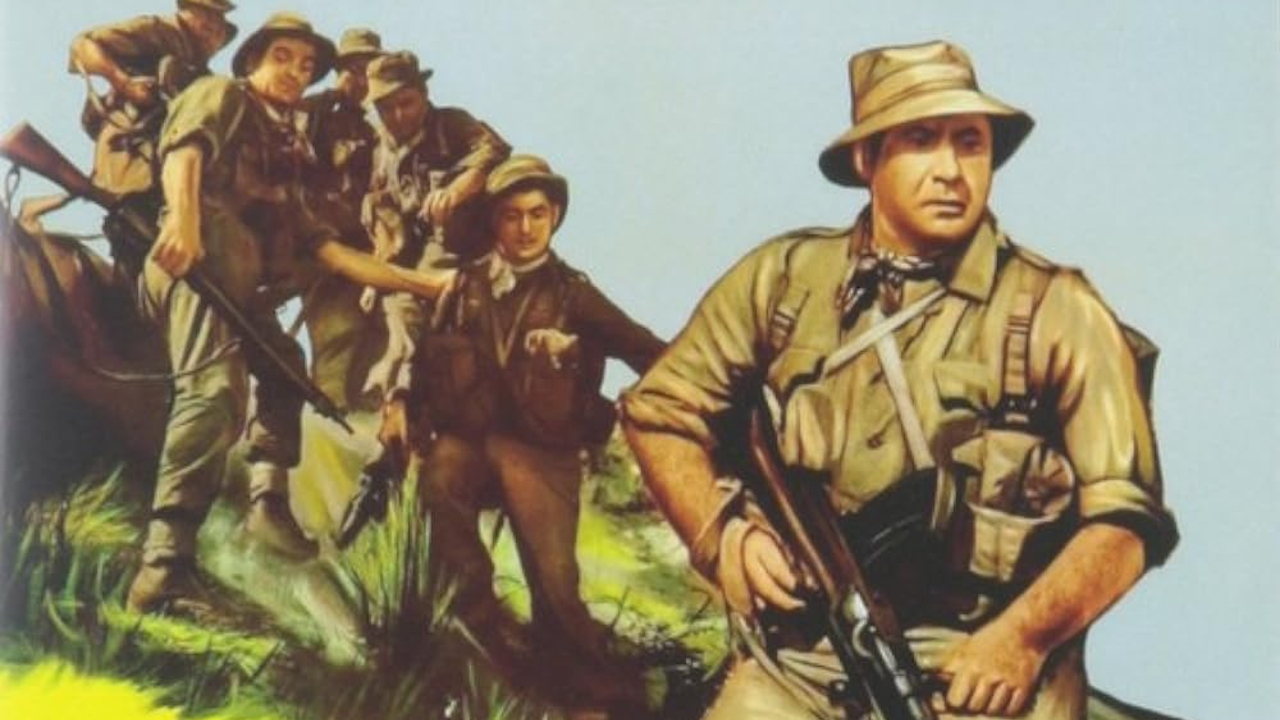
After his days in Korea, Caine regularly starred in war movies, boasting key parts in WWII pictures like The Battle of Britain, A Bridge Too Far, and Too Late the Hero. His film debut also came in a war film, albeit one that hit close to Caine's experiences as a soldier - 1956's A Hill in Korea, which saw the actor star opposite Stanley Baker, his future co-lead in 1964's Zulu.
2. R. Lee Ermey - Full Metal Jacket

Throughout his career, director Stanley Kubrick worked with some of the most esteemed talents in film history, including the likes of Charlton Heston, Kirk Douglas and Jack Nicholson, to name but a few. It is a testament, then, that Marine Corps drill instructor R. Lee Ermey held his own against them all in 1987's Full Metal Jacket, a film he initially wasn't even meant to star in.
Kubrick's scathing yet farcical Vietnam War drama delved into the psychological impact of the conflict, not just in the waging of war but also in the process of training men to become killers, reckoning with the destruction of someone's humanity that can come from mentally preparing to do the unthinkable. The first half of the film focuses on fresh-faced Marine recruits going through the rigours of boot camp, while the second takes place in Vietnam, all working towards the same deadly punchline.
Before entering cinema legend as Gunnery Sergeant Hartman in the film, R. Lee Ermey had been with the marines in Vietnam, serving first as a drill instructor in San Diego before he was deployed to South Vietnam in 1968, where he stayed for just over a year. After being medically discharged in 1972, Ermey would embark on a path towards the silver screen, working as a technical advisor on multiple war movie productions, and then as an actor, with Full Metal Jacket being his defining role.
Ermey wasn't initially considered for the part, but convinced Kubrick with some improvisational routines that went on to form the bulk of the insults Hartman hurls at his recruits in the film. The ensuing exchanges went on to become some of the most fearsome and haunting in the genre, as Hartman devotes the full extent of his abilities to shaping Vincent D'Onofrio's Private Pyle into a natural born killer.
1. Jimmy Stewart - The Flight Of The Phoenix

Perhaps the most famous actor-veteran of all, James Stewart was one of the most popular film stars of his day when he enlisted in the United States Army Air Corps in 1941. The first of many Hollywood stars to serve in the military, Stewart - already a trained pilot - was attached to the 8th Air Force and flew multiple combat missions over Nazi-occupied Europe in a B-24 Liberator, earning multiple decorations in the process along with plenty of anecdotes of his skill and bravery.
However, unlike many of his acting colleagues (and this is the reason why he was omitted from the first list) Stewart didn't actually take on many World War II movies when he resumed his career. In fact, he only starred in two - 1949's Malaya, where he played a civillian, and The Mountain Road, which was set in China, and saw Stewart in the role of a U.S. Army officer. Others, like Strategic Air Command and The Flight of the Phoenix, played on Stewart's wartime record, with both seeing him in the role of characters who served as pilots in the Pacific and European theatres respectively, only now placed in a Cold War setting.
Contemporary accounts lay the reasoning for Stewart's absence in this genre post-war as a result of his combat experiences in WWII, which is said to have had a profound impact on the types of roles and performances the actor took on and gave. He may not have starred in many WWII features, but the conflict loomed large over his career after 1945 and his experiences feel reflected in some of his roles, whether that be George Bailey in Frank Capra's restorative Holiday classic It's a Wonderful Life, or Lin McAdam in Anthony Mann's brilliantly vengeful Winchester '73.
In any case, Jimmy Stewart was a fascinatingly talented and brave individual - a peerless movie star who, like countless others, put it all on hold to serve his country and fight the Nazis.